#Eritreancycling: Congrats to All!
What a sprint! What a stellar performance! Biniam Girmay wins Stage 1 of Baloise Belgium Tour (https://t.co/Vm3CPd8jI7) 188.3 km
https://t.co/kI0wegeDOR
This is wonderful to witness. We all have a responsibility to contribute to the enhancement and advancement of our history, language, heritage, and culture. AI is an inevitable part of our world, and we should not only embrace it but also actively participate in the data feeds, model building and machine learning. I admire the passion displayed by this remarkable Eritrean.
#Eritrea
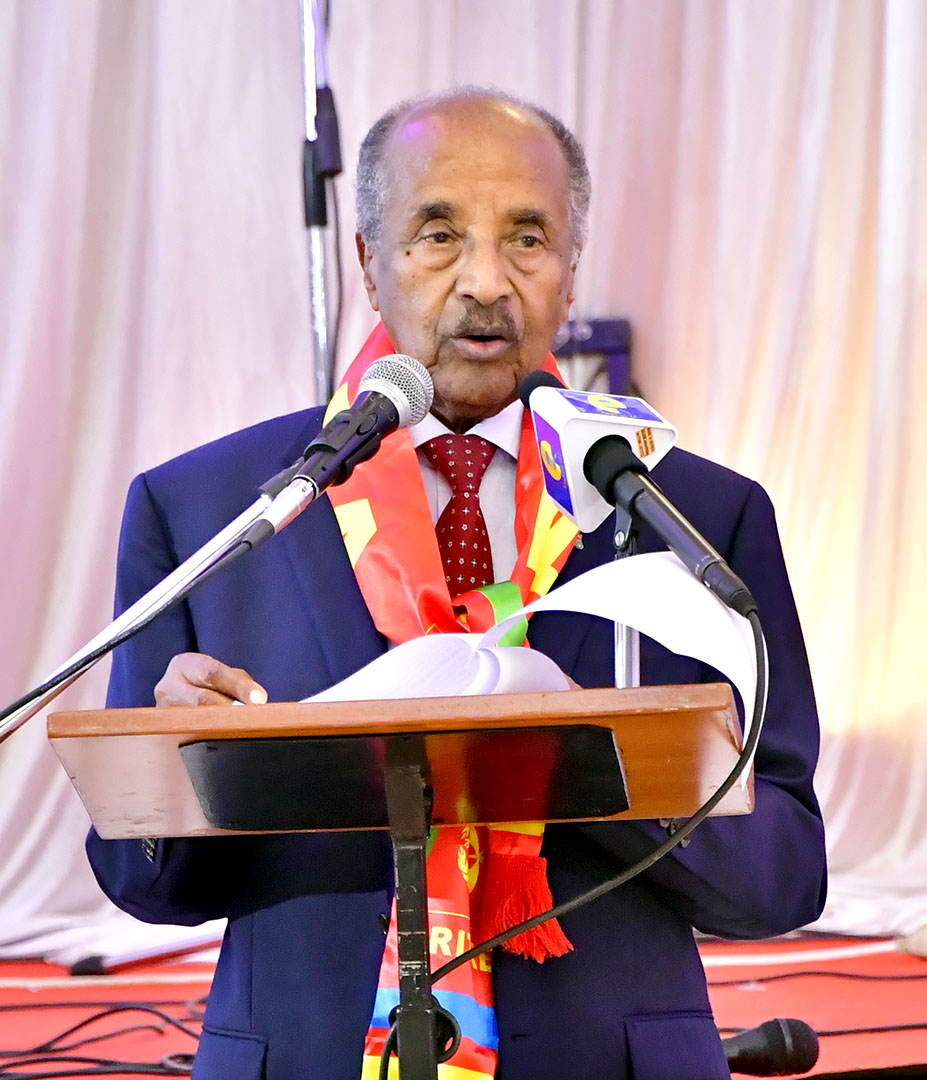
As part and parcel of the ongoing festivities for the 35th Anniversary of Independence Day, the Ministry of Foreign Affairs hosted a Celebratory Reception yesterday evening attended by senior Government/PFDJ officials, Members of the Diplomatic Corps and all MFA staff.
Keynote speech by Minister Osman Saleh (link below). Event featured cultural shows, dramas etc.
*"...Just as our people demonstrated extraordinary courage, sacrifice, and unwavering commitment during the years of the armed struggle, they have, in the post-independence era, mirrored that same indomitable national resolve, dignity, and sense of ownership over their country. This enduring devotion and patriotic spirit constitute one of the most remarkable chapters in Eritrea’s modern history".
*"...Eritrea remains steadfast in its conviction that the domestic affairs of sovereign nations must be resolved through nationally owned solutions, free from external interference, coercion, or imposition. Eritrea further maintains that the establishment of a just, balanced, inclusive, and genuinely representative international order is indispensable to the advancement of lasting peace, justice, stability, and equitable cooperation among nations. These principled positions, once deliberately dismissed, distorted, or marginalized, are today gaining increasing recognition and resonance among peoples and states across the world".
*"...To concluded, the Government and people of Eritrea reaffirm their unwavering commitment to principled engagement in international affairs and their continued readiness to contribute to the peace, stability, dignity, and collective prosperity of the peoples of our region, our continent, and the wider world".
https://t.co/k1do9grypJ
The Anatomy of Revisionism: Dismantling the Prosperity Party’s Hostile Campaign against Eritrean Sovereignty
Ministry of Foreign Affairs
Research and Documentation Center
19 May 2026
"The Prosperity Party’s three-year hostile campaign against Eritrea exemplifies a dangerous pattern of externalizing domestic structural failures through aggressive foreign policy...Throughout these sustained provocations, the Government of Eritrea has maintained a principled position grounded in international law and a prudent policy of patience and restraint".
https://t.co/swQXbwB0gg
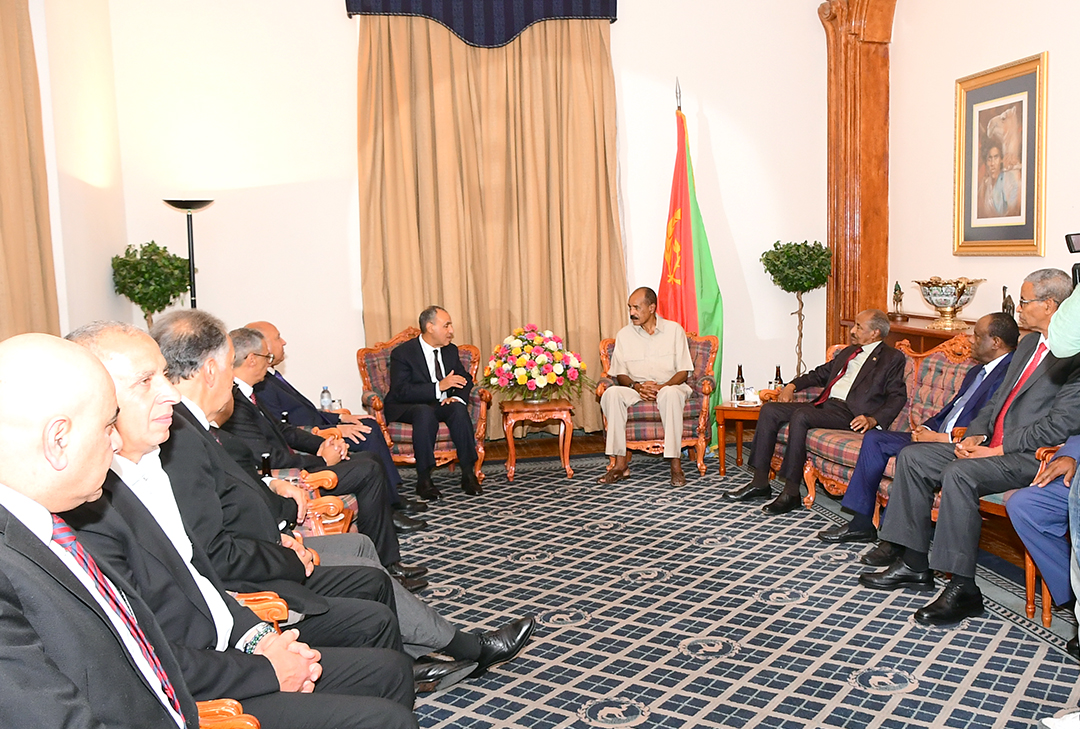
President Isaias Afwerki received, at the Denden Guest House in the late morning hours today, senior Egyptian delegation composed of Foreign Minister Dr. Badr Abdelatty; the Minister of Transportation, Lt. General Engineer Kamel Alwazir; and CEO's of several companies involved in the transport, energy and mining sectors.
The extensive discussions centered on further enhancement of all-rounded bilateral ties of cooperation as well as regional and international issues of mutual importance.
President Isaias underlined the significance of consolidating the all-rounded ties between Eritrea and Egypt to advance the mutual interests of the Eritrean and Egyptian peoples. In this respect, President Isaias expressed Eritrea's readiness to implement common projects in collaboration with Egyptian economic and trade companies.
Foreign Minister Badr Abdelatty, for his part, stated that the current visit was a manifestation and expression of the brotherly ties of friendship and cooperation that exist between the peoples of Eritrea and Egypt.
The principal purpose of the visit was to further consolidate economic and trade ties between the two countries in accordance with the guidelines charted out by President Isaias Afwerki and President Abdel Fattah el-Sisi, Dr. Badr noted.
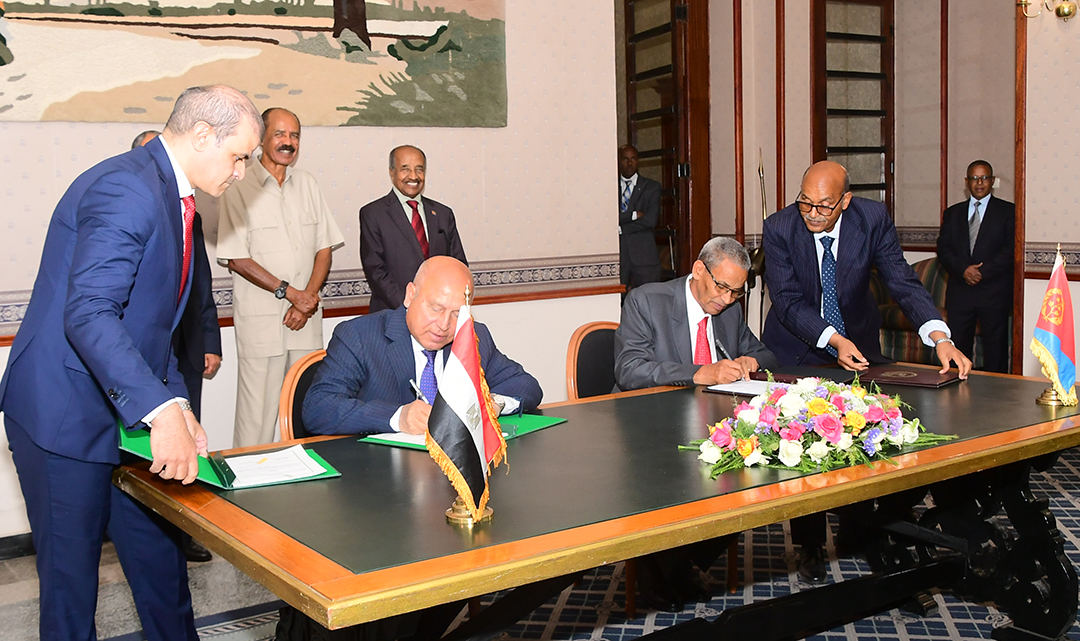
On the occasion, the two countries signed an Agreement on Marine Transport "for developing cooperation in the sector with a view to contributing to the development of international shipping on the basis of the principles of the freedom of navigation".
The Agreement was signed by Eritrea's Minister of Transport and Communications, Mr. Berhane Tesfaselassie, and Egyptian Minister of Transport, Lt. General Kamel Alwazir.
Foreign Minister Osman Saleh today met his Egyptian counterpart, Dr. Badr Abdelatty, and discussed modalities of implementation of the overall bilateral agreements of cooperation reached between the two sides.
Foreign Minister Osman underlined the significance of the visit of the senior Egyptian delegation and the importance of strengthening the bilateral ties of cooperation in these crucial times of fluid developments in the Horn of Africa region.
Dr. Badr, for his part, referred to the alignment of views and positions of the two sides on vital regional and international issues and stressed the importance of expediting the implementation of mutually agreed development programmes.
There has been a lot written about Eritrea in the last few weeks, and I have decided to respond to one of the many pieces coming out of Ethiopia...The IFA article titled “Eritrea’s Sovereignty Claim and the Insecurity It Conceals”.
This article rests on a selective interpretation of international law, an incomplete account of the history of the #Horn of #Africa, and a troubling attempt to recast legitimate concerns regarding #sovereignty and territorial integrity as evidence of political insecurity rather than lawful state responsibility. It is therefore necessary to address several of the issues raised in this selectively framed piece.
The title itself is particularly revealing. It reflects an increasingly common tendency in certain Prosperity Party (PP) political and intellectual circles to delegitimize Eritrea’s invocation of sovereignty by portraying it not as a foundational principle of international law, but as a form of concealment, obstruction, or paranoia. That framing is deeply problematic.
Sovereignty is not something #Eritrea must “hide behind.” Sovereignty is the cornerstone of the modern international legal order, enshrined in the Charter of the United Nations and the Constitutive Act of the African Union. For African states in particular, many of which emerged from colonial partition, territorial disputes, occupation, and prolonged external interference, the defense of sovereignty and territorial integrity cannot be dismissed as rhetorical posturing; these are existential legal principles rooted in painful historical experience.
For #Eritrea, these concerns are not theoretical. Eritrea emerged from a long anti-colonial and anti-annexation struggle following federation, annexation, and decades of war. #Ethiopia was not merely a neighboring state in #Eritrean historical memory; it was Eritrea’s former colonizer. That historical experience inevitably shapes Eritrea’s understanding of sovereignty, borders, and national survival.
As the Amharic proverb aptly states: “የወጋ ቢረሳ የተወጋ አይረሳም” — “The one who inflicted the wound may forget, but the one who was wounded never does.” The proverb captures an essential reality often ignored in external analyses of #Eritrea: historical memory shapes national security consciousness. States and peoples that endured annexation, war, occupation, territorial disputes, sanctions, and prolonged external pressure do not, and cannot, approach questions of sovereignty lightly or abstractly.
From an #Eritrean perspective, sovereignty is therefore not an abstract diplomatic slogan or tactical political shield. It is inseparable from the sacrifices made during one of Africa’s longest liberation struggles and from the determination to prevent any return, direct or indirect, to arrangements perceived as compromising Eritrea’s hard-won independence and territorial integrity.
To suggest that Eritrea’s insistence on sovereignty somehow masks illegitimate motives effectively reverses the legal burden. It implies that smaller states defending internationally recognized borders must justify their concerns, while larger regional powers, advancing inflammatory hegemonistic ambitions and openly invoking “historical rights,” “natural entitlement,” or “strategic necessity” regarding maritime access, are treated as merely pursuing economic pragmatism.
From Eritrea’s perspective, the issue has never been whether Ethiopia, as a landlocked state, possesses legitimate developmental interests in commercial maritime access. Eritrea has never disputed that principle. International law already recognizes the rights of landlocked states to negotiated access and freedom of transit. The issue is whether such ambitions are being articulated and pursued in a manner consistent with the UN Charter, sovereign equality, and the prohibition against the threat or use of force.
Article 2(4) of the @UN Charter prohibits not only the use of force, but also the threat of force against the territorial integrity or political independence of states. International law does not require states to wait for military invasion before taking seriously rhetoric, strategic signaling, or political discourse carrying coercive implications. Preventive vigilance regarding credible coercive signaling is fully consistent with the sovereign right of states to safeguard their territorial integrity and political independence.
Against this backdrop, Eritrea’s concerns regarding Ethiopia’s increasingly assertive discourse on Red Sea access are neither irrational nor propagandistic. Senior Prosperity Party (PP) officials, including Prime Minister Abiy Ahmed, have repeatedly framed maritime access in existential and revisionist terms, invoking notions of “historical rights,” “natural entitlement,” and strategic inevitability. #Ethiopia|n political discourse surrounding Red Sea access has at times gone even further, with prominent figures openly declaring that Ethiopia would obtain maritime access “peacefully if possible and militarily if necessary.”
This rhetoric has not emerged in isolation. It has been accompanied by a broader climate of increasingly normalized irredentist discourse on Ethiopian social and political media platforms, including circulation of altered maps depicting Assab and portions of sovereign Eritrean territory as part of Ethiopia. Independent fact-checking organizations documented multiple instances in which maps were digitally manipulated to incorporate Assab into Ethiopian territory amid heightened public debate surrounding #RedSea access.
Equally troubling were images and videos circulated from military-linked events and social media accounts showing #Ethiopia|n military figures displaying maps incorporating portions of southern #Eritrea into #Ethiopia during public ceremonies associated with special forces mobilization and nationalist messaging. Whether officially sanctioned or not, the widespread dissemination of such imagery contributed to a political environment in which revisionist territorial narratives increasingly entered mainstream discourse.
Taken together, these developments cannot reasonably be dismissed as harmless nationalist symbolism. In a region with a long history of interstate war, contested borders, and unresolved territorial grievances, such rhetoric and imagery carry legal and security implications that responsible states are entitled to take seriously under the precautionary logic embedded within Article 2(4) of the @UN Charter.
Prime Minister Abiy Ahmed himself publicly characterized Red Sea access as an existential issue for Ethiopia and suggested that the matter could not remain unresolved indefinitely. International media and regional analysts increasingly warned that such rhetoric, combined with military mobilization and nationalist agitation surrounding Assab, risked contributing to renewed regional instability and fears of interstate confrontation.
The 2024 Memorandum of Understanding between Ethiopia and #Somaliland further heightened tensions, particularly as Somalia formally rejected the arrangement as an infringement upon its sovereignty and territorial integrity. These developments underscore precisely why questions of maritime access in the Horn cannot be divorced from wider legal and security considerations.
Equally problematic is the article’s selective treatment of the 1998–2000 Eritrea–Ethiopia border conflict.
Eritrea’s borders were not undefined or ambiguous constructs. They were established through the 1900, 1902, and 1908 treaties concluded between imperial Italy and imperial Ethiopia. These treaties formed the legal basis upon which the Eritrea–Ethiopia Boundary Commission (EEBC), established under the Algiers Agreement, based its delimitation ruling.
Critically, the EEBC’s final and binding decision awarded Badme, the principal flashpoint and casus belli of the 1998–2000 conflict, unequivocally to #Eritrea. That fact is legally fundamental. It demonstrates that the territorial dispute centered on areas ultimately determined by the competent international arbitral body to fall within Eritrean sovereignty.
The article also misrepresents the role of the Eritrea–Ethiopia Claims Commission by implying that it definitively adjudicated the broader origins of the war. As legal scholars, including analyses published in the European Journal of International Law, have noted, the Claims Commission was not specifically mandated to comprehensively determine the origins of the conflict. The independent investigative mechanism envisaged under Article 3 of the Algiers Agreement for that purpose was never constituted.
Thus, no authoritative international process ever fully examined the broader antecedents of the conflict, including tensions arising from contested administration, local clashes, militia activity, mapping disputes, and allegations of encroachments into sovereign Eritrean territory during the 1990s, as well as the unprovoked assault by Ethiopian troops against an #Eritrean army unit in the Badme area on 5 May 1998. What was conclusively determined, however, was the territorial issue itself. And on that question, the #EEBC ruled in #Eritrea’s favor.
The defining legal and political crisis of the post-war period therefore was not Eritrea’s rejection of international law, but Ethiopia’s refusal, for nearly two decades, to implement a binding arbitral ruling it had expressly agreed would be “final and binding.” This remains one of the most consequential contradictions in discussions surrounding the rule of law in the Horn of Africa.
At stake was not merely a bilateral border dispute, but the integrity of international arbitration itself. If states may disregard binding arbitral rulings when politically inconvenient, the credibility of peaceful dispute resolution mechanisms under international law is fundamentally undermined.
The article’s treatment of the 2009 sanctions regime is similarly incomplete. From #Eritrea’s perspective, the sanctions imposed under United Nations Security Council Resolution 1907 emerged from a highly politicized process shaped by Ethiopia’s manipulation of #IGAD and the @AfricanUnion. The allegations underpinning the sanctions were strongly contested and were never established through an independent judicial process meeting accepted evidentiary standards.
For many Eritreans, the sanctions episode remains a troubling example of the instrumentalization of multilateral institutions for geopolitical purposes. Indeed, many #Africa|n observers viewed the process with deep discomfort, recognizing the damaging precedent of one #Africa|n state mobilizing punitive international measures against another amid contested allegations. The eventual lifting of sanctions in 2018 further underscored the fundamentally political nature of the process.
The article also presents Eritrea’s National Service Program in a highly reductionist manner. While external narratives often portray the program solely through a militarized lens, Eritrea’s national service system has long included substantial civic and developmental components. National Service graduates contribute across ministries, schools, colleges, hospitals, infrastructure projects, local administrations, and diplomatic missions abroad.
More importantly, the statutory 18-month duration of National Service was prolonged largely as a consequence of the prolonged no-war-no-peace environment and continued security threats emanating from unresolved tensions with successive Ethiopian governments.
At the same time, Ethiopia itself has, in recent years, undergone extensive military mobilization, major arms acquisitions, and repeated internal armed conflicts across multiple regions. Numerous international organizations, media investigations, and even #Ethiopian institutions have documented serious abuses in regions such as Amhara and Oromia, including extrajudicial killings, drone strikes affecting civilians, arbitrary detentions, mass displacement, and attacks on civilian infrastructure.
A balanced and credible analysis cannot selectively invoke human rights concerns only where they reinforce preferred geopolitical narratives while minimizing or contextualizing large-scale violence elsewhere.
More broadly, #Eritrea’s foreign policy has consistently emphasized sovereign equality, non-interference, regional ownership, and resistance to hegemonic arrangements in the Horn of Africa. #Eritrea’s invocation of sovereignty is not “camouflage”; it reflects the historical experience of a state that emerged from one of Africa’s longest liberation struggles and subsequently endured war, sanctions, prolonged territorial occupation, and sustained external pressure.
Regional integration and economic cooperation in the Horn are both necessary and achievable. Eritrea has never opposed negotiated frameworks for trade, connectivity, or maritime access grounded in mutual consent and international law. What Eritrea rejects, correctly, is the normalization of rhetoric implying that the strategic ambitions or demographic weight of larger states entitle them to exceptional arrangements at the expense of the sovereignty and security concerns of smaller neighbors.
Ultimately, the issue is not opposition to Ethiopia’s development. It is the insistence that all regional ambitions remain firmly anchored within the principles of international law: sovereign equality, territorial integrity, non-interference, pacta sunt servanda, and the prohibition against coercion enshrined in the Charter of the @UN.
As for future Eritrea–Ethiopia relations, or “settlement,” as the author characterizes it, prudence, realism, and historical experience counsel patience rather than premature and unrealistic optimism.
Genuine peace and stable relations between neighboring states cannot be manufactured through diplomatic slogans, external pressure, or intellectual wishful thinking. They must emerge organically, gradually, and on the basis of mutual respect, consistency, reciprocity, and trust built over time.
Lasting peace cannot be rushed, especially after the considerable goodwill and historic opportunity extended in 2018 were ultimately undermined by a leadership in Ethiopia that failed to consolidate reconciliation internally, regionally, and institutionally. Sustainable peace in the Horn of Africa will require seriousness, strategic patience, and above all, an #Ethiopia that is first at peace with itself.
Excellent Read- #Eritrea: Heritage and Society; by Dr. Tsegai Medin
*"...To speak of Eritrea is to speak of a land where history is etched into every mountain pass and where the air carries the scent of frankincense and the echoes of ancient civilizations. Eritrea’s cultural heritage is not just a collection of artifacts; it is a testament to resilience, diversity, and an unbreakable bond of society with the land".
*"...We hold our historic and cultural environments in high regard because they inspire passion, curiosity, and fascination. This appreciation arises from the remarkable history of our society and the deep emotional connection we feel toward it, helping us understand our place in the world and fostering a sense of belonging and attachment to these places".
https://t.co/RgFk6HPaj6
#ኤርትራውያን#መንእሰያት_ህግደፍ ሎሚ መዓልቲ ኣብ ስዊዘርላን ብወግዒ ተኸፊቱ።
#Welcome to the official live stream of the Opening Ceremony of the 20th YPFDJ Euro Conference, held in Switzerland from April 3-6, 2026.
Ethiopia: Belligerent Agenda of Regional Destabilization;
(Ministry of Foreign Affairs, Research and Documentation Division)
*"...Over the past two years, Ethiopia’s Prosperity Party (PP) regime has indulged in a reckless and insidious agenda of belligerence and destabilization against the State of Eritrea and the wider region. The hostile and unprovoked agenda has often been framed and rationalized in 'existential' terms; as the 'imperative for sovereign access to the sea' in the regime’s hyperbolic parlance".
*"...The elusive and toxic agenda continues to be flaunted by invoking and recycling fallacious and revisionist historical narratives; alluding to demographic factors that revolve around Ethiopia’s relatively big and growing population size; as well as reciting abstract economic parameters and correlations that are at odds, and in contravention with, foundational pillars of international law".
*"...From the foregoing chronology of events and facts, it is palpably clear that the PP regime’s misguided and deplorable agendas, which have no basis in law and history, are anathema to regional peace and stability. And while remaining committed to constructive regional engagement and peaceful cooperation, Eritrea, for its part, firmly rejects any claims or actions that infringe upon its sovereignty and territorial integrity in flagrant contravention of international law. As underlined on various occasions in the past two years, the Government of Eritrea has no interest or appetite to engage in an acronymous agenda of conflict and turmoil. It remains resolutely committed to peace, stability, and the responsible management of regional relations".
https://t.co/U4CYtu8L4s
The Potemkin Party's boringly sterile campaign of disinformation against Eritrea to rationalize its illicit and delusional agenda of "sovereign access to the sea" continues unabated by floating shifting ruses at different times.
Revisionist history bordering on political blasphemy; bogus economic and trade arguments for "legitimizing" brazen breach of foundational international pillars on sovereignty and territorial integrity... etc. were invoked in the past two years ostensibly to hoodwink its domestic constituencies and garner some external support.
When these gimmicks lost traction, the new ploy shifted to accusing Eritrea for "acts of regional destabilization" in order to re-package its irredentist and expansionist agendas in the language of "self-defence".
These days, the new variant/mutation seems to revolve on falsely portraying Eritrea as a "malleable proxy" of extraneous forces with detrimental ramifications to peace and stability in the Horn of Africa.
Eritrea's celebrated and well-known policies on political independence and national dignity in its international relations; its principled and consistent stance on nurturing its multi-layered ties of cooperation with its international partners on the basis of symmetry and mutual interest that eschew structural dependency, are too well-known to merit a long discourse here.
In the event, the PP's new ploy belie's its own track-record and innate proclivity to cater for external agendas that are not in consonance with the enduring interests and welfare of the nations and peoples of the Horn.
https://t.co/imtduVepDN
#Condolences: Funeral Services for Professor Asmerom Legesse held today at Asmara's Evangelical Lutheran Church Cemetery in the presence of senior Government Ministers and PFDJ officials, religious leaders and his family.
A prominent and illustrious academician and anthropologist who had produced seminal research work on various themes during his tenure at Harvard and other Universities, Professor Asmerom served his nation and people in various capacities in the past four decades.
These include, among others:
1. Professor Asmerom was Chairman of the US Branch of the Eritrean Relief Association from 1984 until independence in 1991;
2. He published well-researched documents on the atrocities that the Ethiopian regime perpetrated against Eritrea during the 1998-200 border war;
3. Professor Asmerom also documented and widely publicized the unlawful expulsions and gross crimes that the Ethiopian regime committed against Eritreans and Ethiopians of Eritrean origin in 1998;
4. Prof. Asmerom likewise documented and exposed extensive gender-based violence perpetrated by the Ethiopian army during its occupation of various areas, and particularly in the Senafe sub-zone during the border war.
Professor Asmerom passed away in the US at the age of 94 due to illness.
Ethiopia: Abiy's War Script and the Media’s False Balance on Eritrea; The Mesob Journal
Insightful and nuanced analysis that rectifies often simplistic narratives by external "pundits" and conflict entrepreneurs/ገናዞ; some with fixed agendas.
It is indeed refreshing to see, these days, profound and objective news analysis and well-researched papers by independent social media outlets - https://t.co/Q51uAA4wU4; https://t.co/512O7pb8z2 etc. - on complex and multi-layered current developments and trends in the Horn of Africa.
https://t.co/14LOwwJ3D2 #Ethiopia #Eritrea #Opinion via @MesobJournal
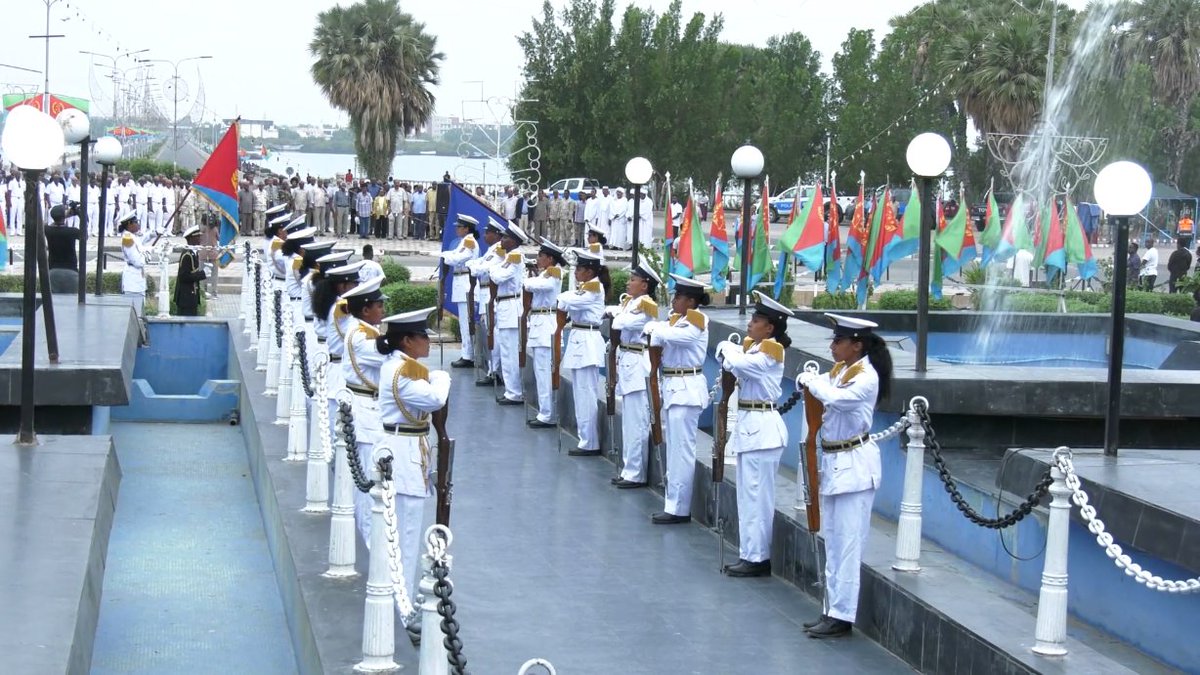
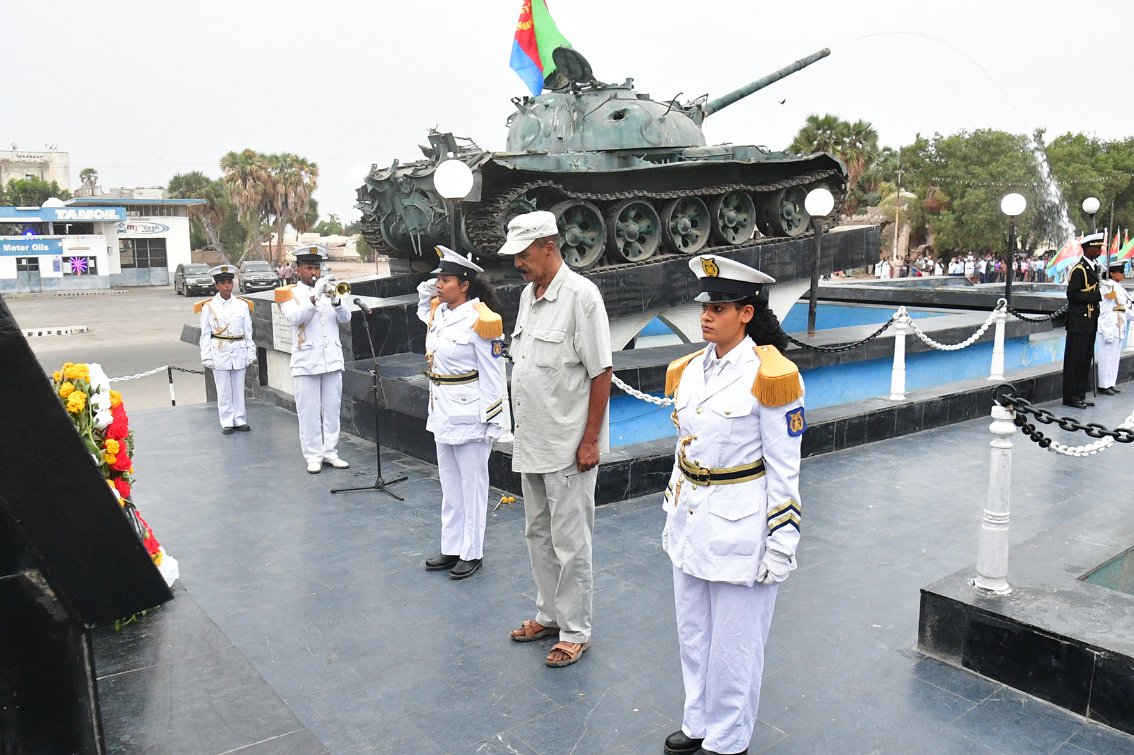
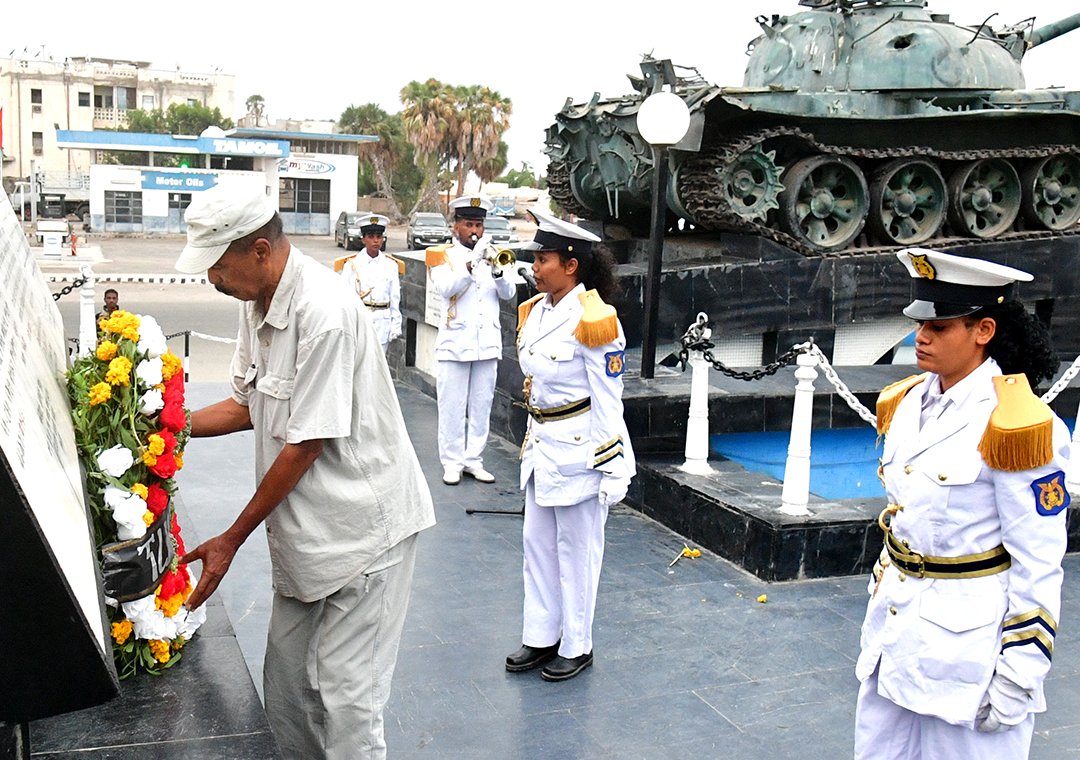
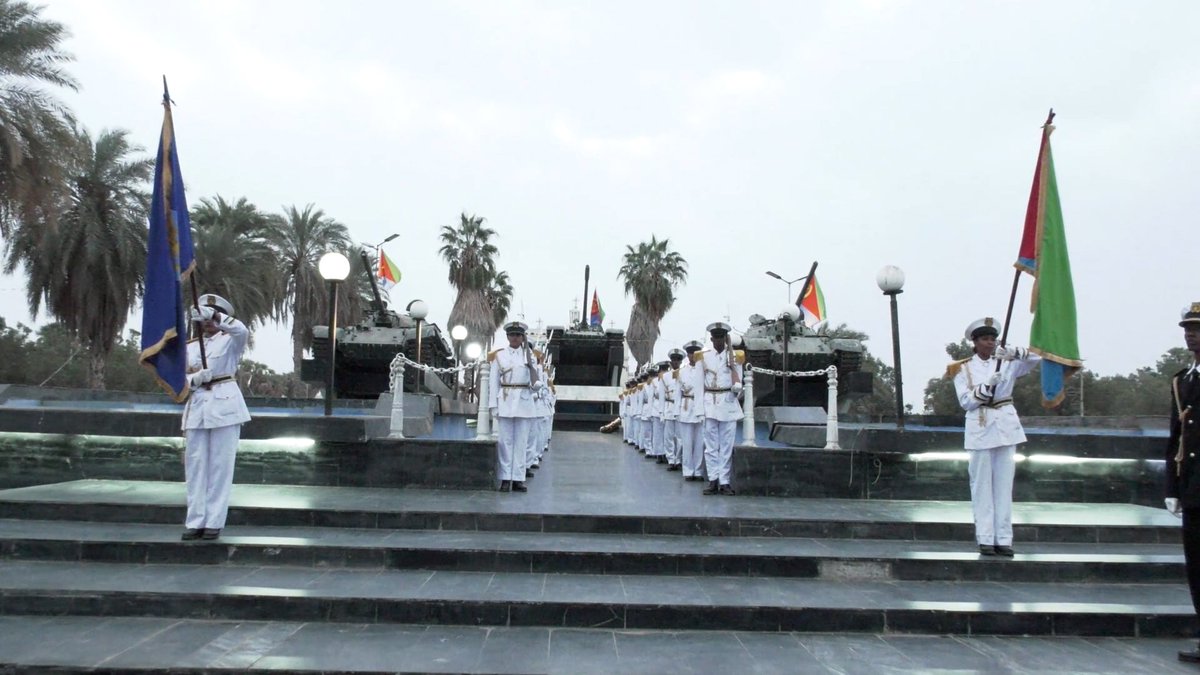
President Isaias Afwerki laid a wreath at Massawa’s Twalet Martyrs Cemetery in the morning hours today in commemoration of Eritrea’s best sons & daughters who paid the ultimate price in the epic Fenkil Operation for the liberation of Massawa.