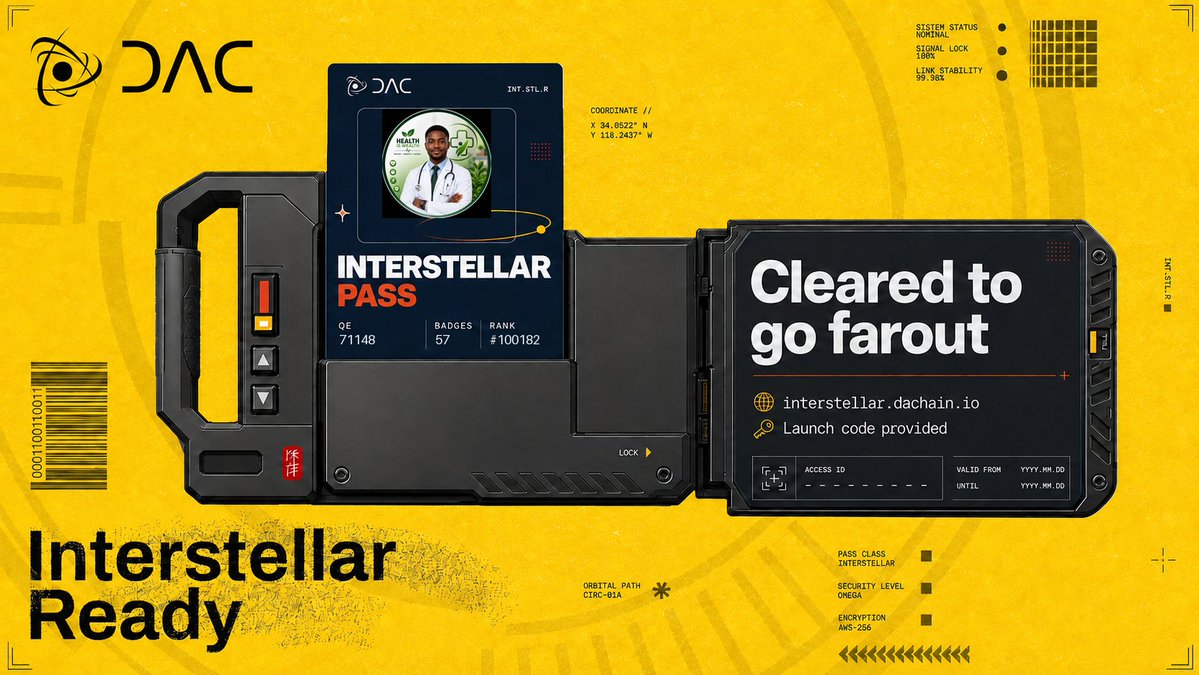
Health is the foundation of everything.
You can build wealth but without good health, it's hard to enjoy it. Invest in your body with good food, regular exercise, quality sleep, and peace of mind.
Your greatest asset isn't your Crypto wallet:it's your health.
#HealthyLiving
$ARC airdrop — few days left
1,930 $ARCT confirmed per user. 15% of supply going to the airdrop and community.
Spins, boxes and missions pay real ETH, BNB and SOL — withdraw daily. No TGE wait.
→ Connect X, clear the tasks, check in daily
→ Snapshot ends Sept 23
→ TGE + Gate listing Nov 1
Claim yours here: https://t.co/cMOgpw1LQ0
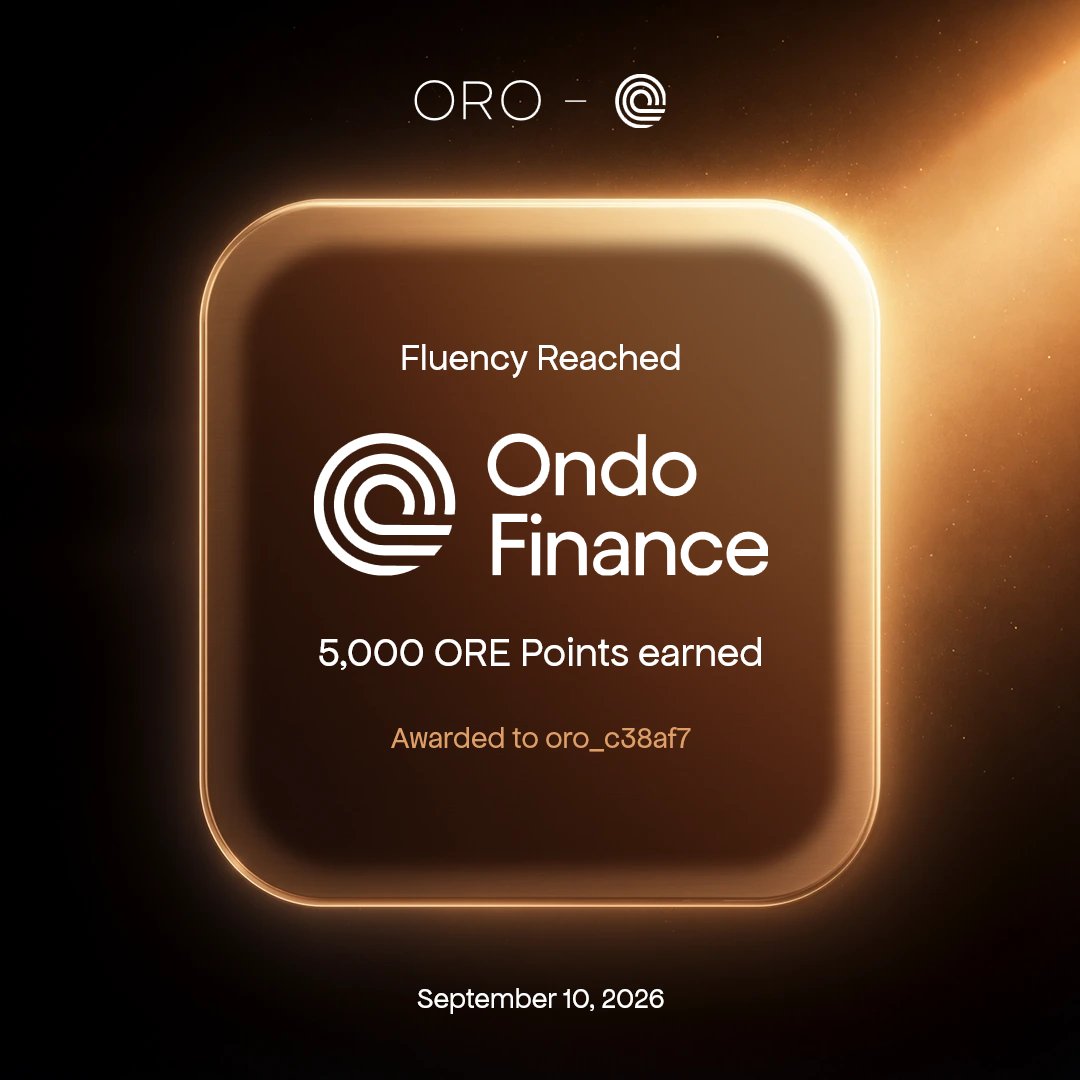
Just won 5,000 ORE points. That easy.
Learned how @Ondo actually works and used @Ask_ORO to do it.
Last chance to stack points before TGE.
Go see for yourself: https://t.co/0JexnYvKi0
@WURKDOTFUN is basically a crypto-native marketplace where humans and AI agents meet to get things done.Businesses, creators and agents can post micro-jobs while real people complete them and earn crypto rewards.
From social campaigns and feedback to testing and creative work, WURK turns small tasks into paid opportunities.
Check out the video for details:
Big Action Model announcement dropping today.
2PM UTC.
We've been working on this behind the scenes for a while, and it's finally time to share it.
Turn notifications on.
You don't want to miss this one.
ActionFi officially launches August 25th.
And our first partner is bringing a serious reward pool with them.
How serious? Guess the size of the reward pool below.
Partner reveal next week. Until then:
Sign up.
Download the Browser Extension.
Join Discord.
Gactions 👾
Twitch reveals Amazon is using users' streams, clips, images, chats and other content to train its AI models.
Amazon bought Twitch for $970 million in 2014.
12 years later, Twitch holds something increasingly valuable:
Years of video.
Speech.
Images.
Chats.
Human behaviour.
All created by millions of people.
Now that content can help train Amazon's AI model.
This is just one more example of people's data being used to build increasingly valuable AI systems, that only a handful of billionaires own.
If millions of people help create the value behind AI, shouldn't they have the opportunity to share in it?
That's why we're building Action Model.
A more ethical AI future, owned by the people who help build it, where the value it creates is shared with the community.
On August 25th, we're launching a new way to get rewarded for actually using products.
It's called ActionFi.
Instead of rewarding likes, follows and other vanity metrics, ActionFi rewards real product usage.
Partners create reward pools and choose valuable actions they want users to complete on their platforms.
You complete the actions.
Our Browser Extension verifies them from start to finish.
And here's where it gets interesting.
Every verified action earns you LAM Points, representing your contribution towards fractional ownership in Action Model.
On top of that, partners provide reward pools in partner tokens or stablecoins.
A portion goes to the users who complete the most qualifying actions.
Another portion goes into a lottery allocation.
Meaning even if you complete just one eligible partner ActionFi task, you're still in the running for a partner reward.
Contribute more. Climb the leaderboard. Or get lucky.
ActionFi launches August 25th.
What makes ActionFi different from every other incentive platform?
Simple.
ActionFi rewards real product usage, not vanity metrics.
From start to finish, our Browser Extension verifies that real actions are actually completed on partner platforms.
That means incentive spend isn't just generating fake engagement.
It's generating actual product usage.
Partners get valuable actions from real users, while users get rewarded for the value they create.
That's the difference with ActionFi.
Which project should launch an ActionFi reward pool next? Tag them below.
I have been looking into @CadeMarket lately and I think there’s something interesting happening here.
At first glance, Cade looks like another prediction market.
But the more I dug into it, the more I realized the interesting part isn’t simply “predict YES or NO.”
It’s the speed and the environment Cade is trying to bring prediction markets into.
Think about how crypto works.
A token can go from completely irrelevant to the center of everyone’s attention in a matter of minutes.
People are watching charts.
They’re watching livestreams.
They’re watching CT.
They’re watching what’s happening around a memecoin and trying to decide what comes next.
Cade is basically turning that behavior into a market.
The platform is built around fast-paced prediction markets where you can make predictions around an asset and get a result quickly instead of waiting hours or days for a market to resolve.
And this is where it gets interesting for me.
The markets can run for as little as 1 minute.
That changes the entire experience.
You’re not making some long-term prediction about where an asset will be next month.
You’re asking a much simpler question:
“Where does this go from here?”
Higher or lower.
Then you wait.
And the market resolves.
Another thing I found interesting is the way the prediction system works.
Cade uses a parimutuel model.
So you’re not playing directly against a house.
Participants put their predictions into a shared pool and the winning side gets a share of the losing side’s pool.
There’s also a time-based mechanism where earlier predictions can receive more shares.
That means timing matters.
Not just being right.
You can have the correct prediction but your position can still be affected by when you entered.
That makes the game much more interesting because you’re basically making two decisions:
What do I think will happen?
And how confident am I right now?
I also like the direction Cade is taking with its browser extension.
Instead of forcing users to leave whatever platform they’re already using, the idea is to bring prediction markets closer to where the conversation is already happening.
The docs specifically mention integrations around places like livestreams, Telegram and other platforms.
That makes sense to me.
Crypto users already spend their time consuming information in these environments.
Why make them leave that environment just to interact with a market?
Bring the market to them.
That’s the part I think could become much bigger than the simple prediction-market concept.
Because Cade isn't really competing for attention with another prediction platform.
It's trying to become part of the places where attention already exists.
And that is a very different approach.
I’m also watching what they’re doing around Meme Madness.
The campaign has already generated a lot of attention and the team recently said the launch was being pushed to the week of August 24 because of the scale of sign-ups.
They also increased the prize pool to $120K.
That tells me they’re clearly testing whether this kind of fast-paced prediction experience can handle a much larger crowd.
I’m still early in my exploration of Cade, so I’m not going to pretend I know exactly where this ends.
But I like the thesis.
Crypto already moves incredibly fast.
Prediction markets traditionally haven't always matched that speed.
Cade is trying to close that gap.
Short markets.
Fast resolutions.
Social environments.
Live events.
Memecoins.
And a system where being early can actually matter.
That combination could make prediction markets feel less like a separate financial product and more like another layer of the internet.
And honestly, that’s the part I’m watching.
Not just Cade as a platform.
But what happens when prediction markets become native to the places where people are already watching, chatting and speculating.
That could be a much bigger idea than it looks at first.
@CadeMarket
What makes ActionFi different from every other incentive platform?
Simple.
ActionFi rewards real product usage, not vanity metrics.
From start to finish, our Browser Extension verifies that real actions are actually completed on partner platforms.
That means incentive spend isn't just generating fake engagement.
It's generating actual product usage.
Partners get valuable actions from real users, while users get rewarded for the value they create.
That's the difference with ActionFi.
Which project should launch an ActionFi reward pool next? Tag them below.