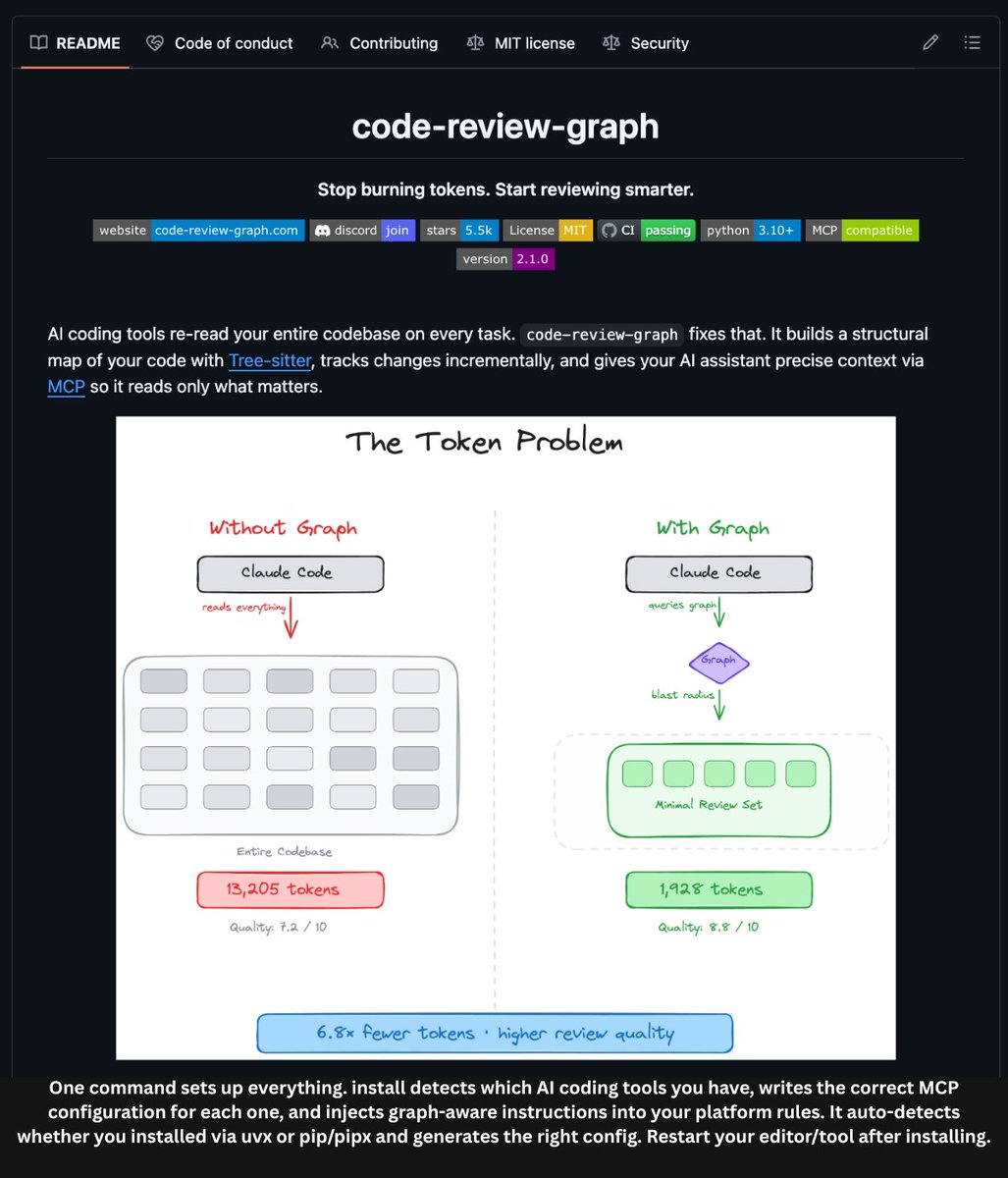
🚨BREAKING: Someone built a local knowledge graph for Claude Code that cuts token usage by 49x on daily coding tasks.
It's called code-review-graph and it builds a persistent structural map of your entire codebase using Tree-sitter so Claude reads only the files that actually matter instead of burning tokens scanning everything.
→ 8.2x average token reduction across 6 real repositories
→ Blast-radius analysis traces every caller, dependent, and test affected by any change
→ Incremental updates re-parse only changed files in under 2 seconds
→ Works with Claude Code, Cursor, Windsurf, Zed, and more out of the box
100% Opensource.
Link in comments.
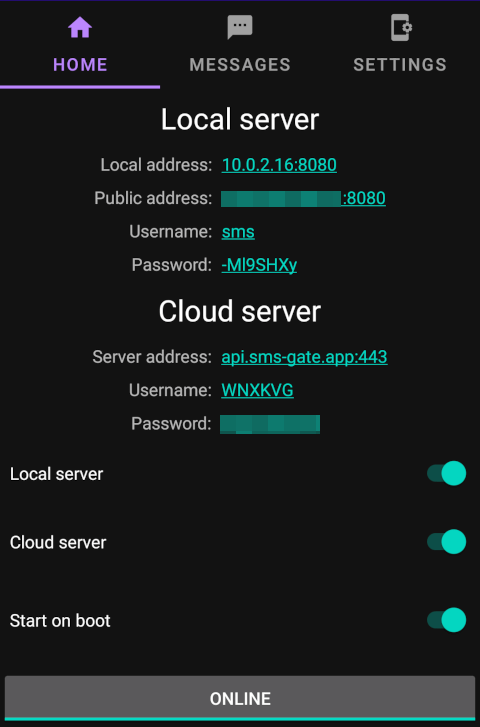
🚨 Twilio charges $0.0079 per SMS. Someone just turned any old Android phone into a free SMS gateway. Unlimited messages. $0.
It's called SMS Gateway for Android.
Install it on any Android phone. It becomes a full SMS sending and receiving server with an API.
No Twilio. No MessageBird. No per-message pricing. No contracts. Just an old phone and a SIM card.
Here's what's inside this thing:
→ Send and receive SMS through a REST API from any app or service
→ Works with any Android phone running 5.0 or newer
→ End-to-end encryption. Messages are encrypted before they leave the device.
→ Multi-SIM support. Use multiple SIM cards on one phone.
→ Multi-device support. Connect multiple phones to the same account.
→ Real-time webhooks for incoming messages
→ Multipart messages with auto-splitting for long texts
→ Track delivery status of every message in real time
→ No registration required. No email. No account in local mode.
Here's the wildest part:
That old Android phone in your drawer that you haven't touched in 2 years? Install this app. Insert a SIM card. You now have your own private SMS infrastructure.
Two-factor authentication. Order confirmations. Appointment reminders. Notification alerts. All the things startups pay Twilio thousands a month for.
Free. Running on a phone you already own.
Startups spend $500 to $5,000/month on SMS APIs. This costs the price of a SIM card.
875 GitHub stars. 359 commits. Apache 2.0 License.
100% Open Source.
bro created an AI job search system for Claude Code that scored 700+ job applications and actually got him a job.
AND IT'S NOW OPEN-SOURCE.
It scans multiple company career pages, rewrites your CV per job, and even fills application forms. The repo has:
> 14 skill modes (evaluate, scan, PDF, ...)
> Go terminal dashboard
> ATS-optimized PDF generation via Playwright
> 45+ companies pre-configured (Anthropic, OpenAI, ElevenLabs, Stripe...)
GitHub: https://t.co/PwrYBOAphi
Harvard made its Senior Engineer roadmap available to the public at no cost.
Stop paying for $2,000 bootcamps. Prof. Vijay Janapa Reddi just put the entire ML Systems (CS249r) curriculum on GitHub.
If you master these 6 pillars, you're ahead of 99% of the field:
🏛️ Architecture
🚿 Data Pipelines
🚢 Production
🛠️ MLOps
🔋 Edge AI
🔒 Privacy
This is the "Black Box" of Big Tech infrastructure, open-sourced.
Read. Learn. Bookmark.
This guy literally broke down how to use Claude Code like an expert:
1:40 - Code vs Cowork vs OpenClaw
6:51 - Setting up context status line
12:03 - Sub-agents
17:49 - Creating skills
23:58 - Ask user questions tool
33:33 - Tool-powered skills: Tavily
36:57 - CLI vs MCP vs API hierarchy
39:30 - Make slides skill w/ Puppeteer
43:32 - Auto-invoking skills with hooks
46:49 - Jupyter notebooks for data trust
55:09 - The operating system file structure
@ricosangel333@Cheddahjaymusic@Megatron_ron You are terrorist attending terrorist education. Justifying killing children and instead labelling the victims as terrorist.
Very very educated
If you want to become a world-class software engineer, learn these 19 system design case studies:
1 How Stock Exchange Works:
↳ https://t.co/iFNSX9TM9O
2 How Payment System Works:
↳ https://t.co/ARiLxGR43G
3 How YouTube Works:
↳ https://t.co/kHk3g6jz6t
4 How Google Docs Works:
↳ https://t.co/W57IkAjXpT
5 How Kafka Works:
↳ https://t.co/8rOy9KgCMo
6 How Pastebin Works:
↳ https://t.co/8NSUNlYM7q
7 How WhatsApp Works:
↳ https://t.co/VScq8QwHMr
8 How Airbnb Works:
↳ https://t.co/Bi5SAjfv5S
9 How Spotify Works:
↳ https://t.co/BxrH3oHIFS
10 How Slack Works:
↳ https://t.co/eIo29uOQOJ
11 How Reddit Works:
↳ https://t.co/o6Pw2hhj3T
12 How Google Search Works:
↳ https://t.co/jwOaC4bhnv
13 How Real-Time Leaderboard Works:
↳ https://t.co/HEChNTOHWb
14 How Twitter Works:
↳ https://t.co/pF2RYmPaIG
15 How Uber Computes ETA:
↳ https://t.co/hw1hYJqQmj
16 How Amazon Lambda Works:
↳ https://t.co/lx0BjeSRZt
17 How Amazon S3 Works:
↳ https://t.co/iReWAEHwmj
18 How Do AirTags Work:
↳ https://t.co/upWcgsXwKh
19 How ChatGPT Works:
↳ https://t.co/5lCKxq2g4N
What else should make this list?
——
👋 PS - Want my System Design Playbook (for FREE)?
Join my newsletter with 200K+ software engineers right now:
→ https://t.co/ByOFTtOihX
———
💾 Save this for later & RT to help others become good at system design.
👤 Follow @systemdesignone + turn on notifications.
Someone finally documented how to actually use Claude Code.
22K+ stars. claude-code-best-practice.
Direct from Boris Cherny and team:
→ Always use plan mode, give Claude a way to verify
→ Ask Claude to interview you using AskUserQuestion tool
→ Use Git Worktrees for parallel development
→ /loop - schedule recurring tasks for up to 3 days
→ Code Review - fresh context windows catch bugs the original agent missed
→ /btw - side chain conversations while Claude works
→ Make phase-wise gated plans with tests for each phase
→ Use cross-model (Claude Code + Codex) to review your plan
→ CLAUDE[.]md should target under 200 lines per file
→ Use commands for workflows instead of sub-agents
→ Have feature-specific sub-agents with skills instead of general QA or backend engineer
→ Vanilla Claude Code is better than complex workflows for smaller tasks
→ Take screenshots and share with Claude when stuck
→ Use MCP to let Claude see Chrome console logs
→ Ask Claude to run terminal as background task for better debugging
→ Use cross-model for QA - e.g. Codex for plan and implementation review
The community workflows included:
→ Cross-Model (Claude Code + Codex) Workflow
→ RPI (Research Plan Implement)
→ Ralph Wiggum Loop for autonomous tasks
→ Github Speckit (74K stars)
→ obra/superpowers (72K stars)
→ OpenSpec OPSX (28K stars)
The billion-dollar questions it addresses:
→ What should you put inside CLAUDE[.]md?
→ When should you use command vs agent vs skill?
→ Why does Claude ignore CLAUDE[.]md instructions?
→ Can we convert a codebase into specs and regenerate code from those specs alone?
The daily habits:
→ Update Claude Code daily
→ Start your day by reading the changelog
→ Follow r/ClaudeAI, r/ClaudeCode on Reddit
Repost it. Bookmark it.
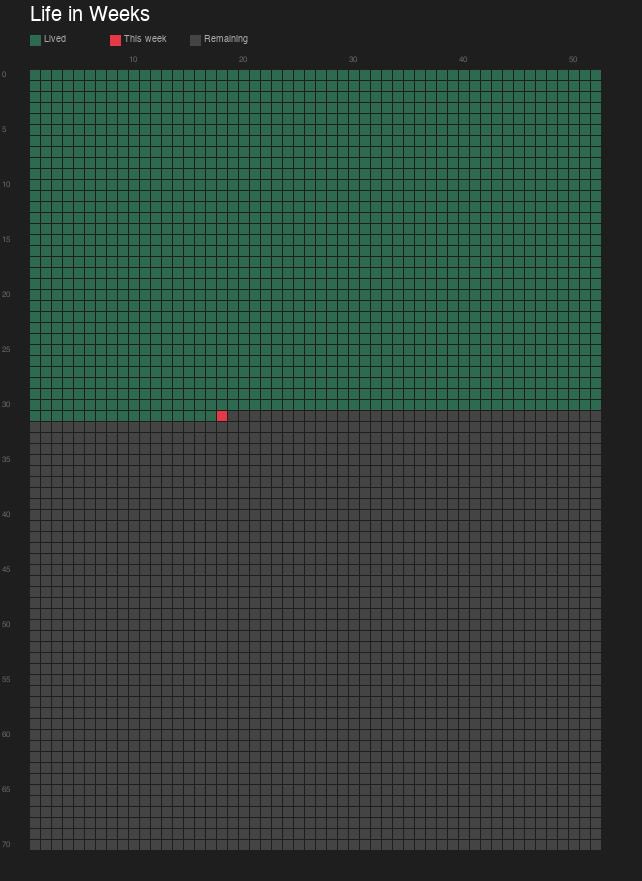
Your entire life fits in a 70x52 grid.
Each box = 1 week.
Green = lived. Red = this week. Gray = what's left.
I built this for Obsidian — it auto-updates every time you open it.
Free template + CSS snippet:
https://t.co/wYiUzxZK5W
🚨 BREAKING: Someone just open-sourced a full offline survival computer with AI, Wikipedia, and maps built in.
Project N.O.M.A.D. is an open-source offline survival computer.
Self-contained.
Zero internet required after install.
Zero telemetry. Everything runs locally on your hardware.
What it includes:
→ Full Wikipedia archives via Kiwix
→ Offline maps via OpenStreetMap
→ Local AI models via Ollama + Open WebUI
→ Calculators, reference tools, resource libraries
→ A management UI to control
everything from a browser
One curl command installs the entire system on any Debian-based machine.
Runs headless as a server so any device on your local network can access it.
Minimum specs to run the base system: dual-core processor, 4GB RAM, 5GB storage.
To run local LLMs offline, you want 32GB RAM and an NVIDIA RTX 3060 or better.
No accounts.
No authentication by default.
No cloud dependency.
No phone-home behavior.
Built to function when nothing else does.
The grid, the cloud, the API you depend on. None of it is guaranteed.
The people building local-first systems right now are the ones who won’t be asking for help when access disappears.
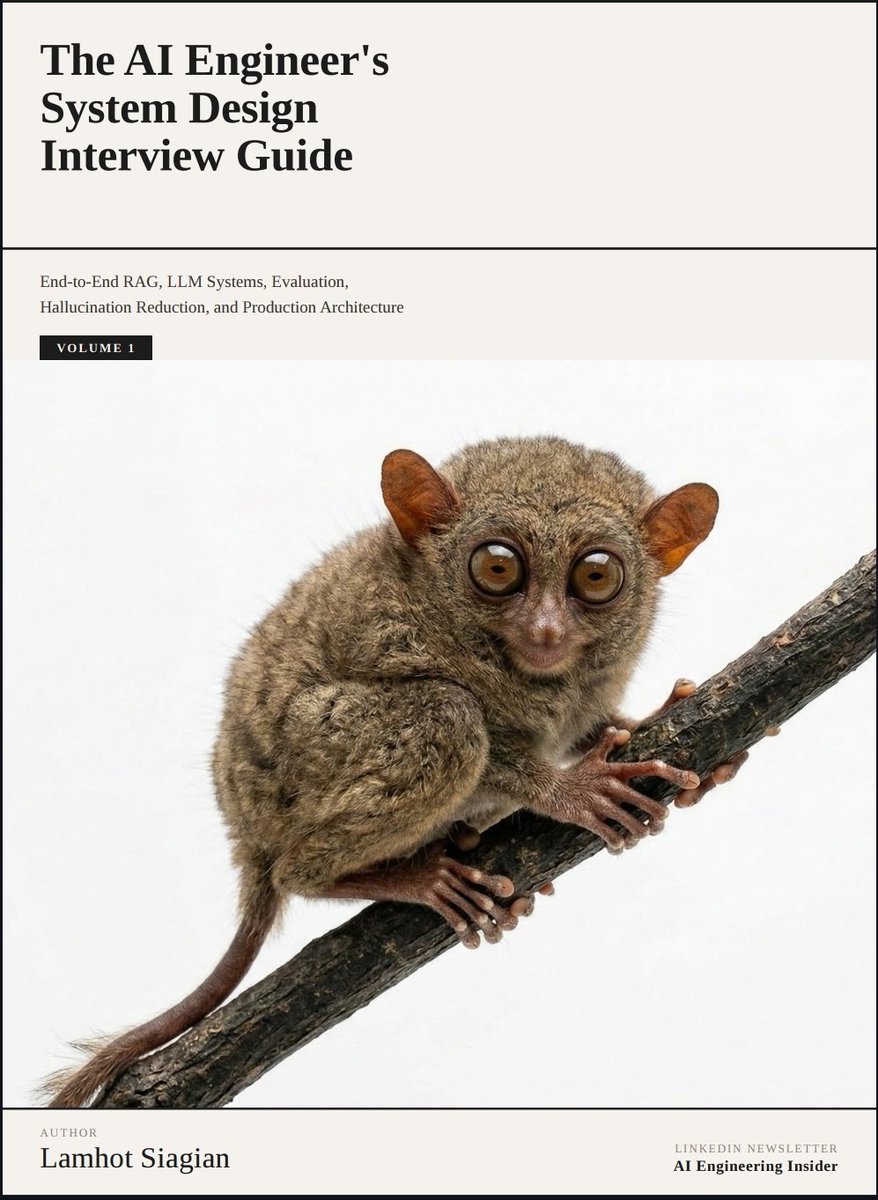
This AI System Design guide teaches RAG better than most courses.
And I'm giving it away for free (Only for First 4500)
Inside:
• RAG fundamentals & chunking strategies
• Hybrid retrieval (BM25 + vector search)
• Production-level RAG architecture
• Evaluation & RAGAS metrics
• Hallucination reduction techniques
• End-to-end LLM system design
How to get it:
• Follow me (must so I can DM)
• RT + Like
• Comment "book"
I'll dm you
Stop sleeping on AI
Obsidian + Claude Code = your own JARVIS.
Takes 1 hour to build.
Most people will scroll past this and stay unproductive.
The ones who stop and build it will never work the same way again.