The Exodus of 800,000 Jewish Refugees from Arab Lands & Iran to the State of Israel is an untold story!
@Aabhas24 presented yesterday at Israel’s Ambassador @ReuvenAzar ‘s residence new revelations from his recently published book “Hitler: The Proclaimed Messiah of the Palestinian Cause” on the Nazi role in supporting Mufti Haj Amin al-Husseini and other Islamist leaders, as well as on pogroms in the Near East, especially the Farhoud in 1941.
The Ambassador delivered a letter of appreciation from PM @netanyahu to Aabhas on the groundbreaking academic findings in the book.
My new book #BaburTheQuestForHindustan is causing visible discomfort in the Left ecosystem; and honestly, why wouldn’t it?
For decades, a carefully constructed fortress of myths around the Timurids (falsely romanticised as “Mughals”) has been guarded like sacred scripture.
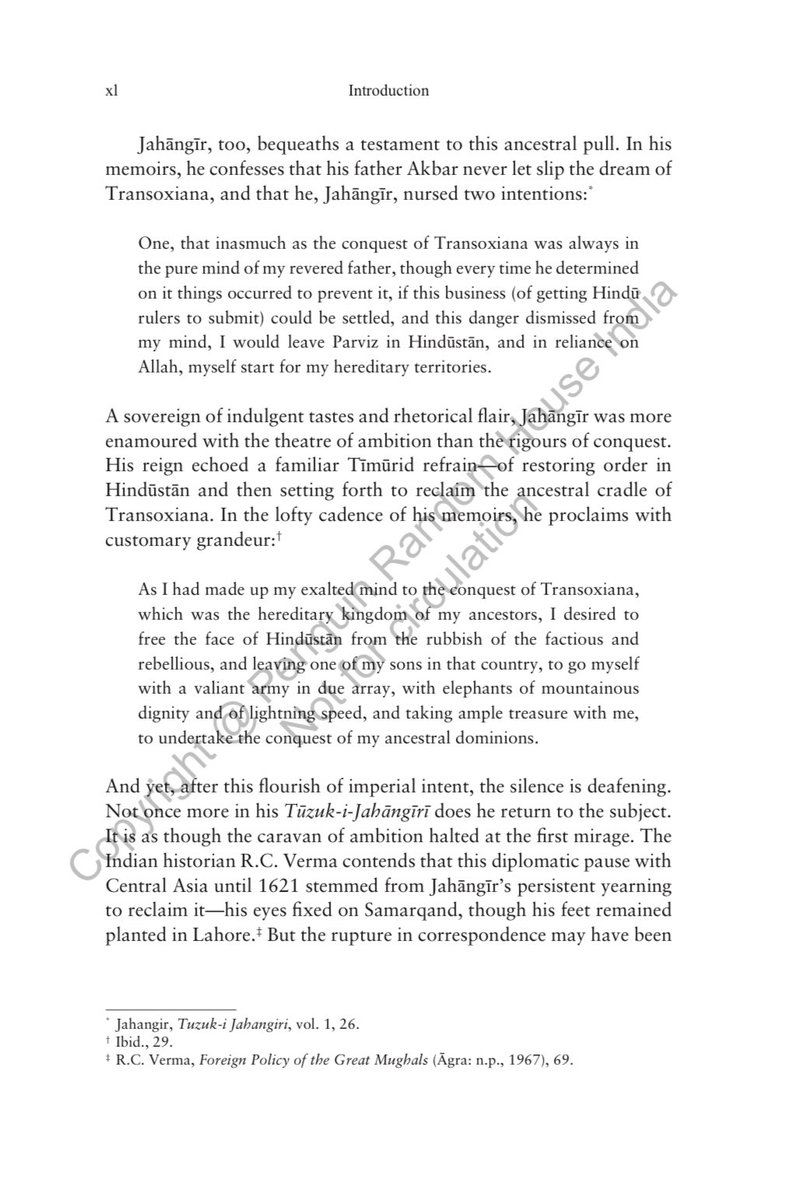
My work tears open that wallpaper of distortions. It shows; with primary sources, not political poetry; that Babur and his successors never saw Hindustan as their watan. Even Jehangir’s own writings (check image 1, where I quote Jahangir in my book) reveal a restless obsession with reclaiming Transoxiana, his true homeland.
This is the kind of evidence that rattles those who built careers on storytelling instead of scholarship.
So now, as expected, they have stopped attacking the facts; because they can’t touch them; and begun attacking me. The usual tactic: when history slips through their fingers, they clutch at the historian.
But personal attacks don’t change a single manuscript, a single folio, a single fact.
Let them rage.
Let them howl.
The walls of their narrative are cracking anyway.
With two volumes of Babur’s most definitive biography already out, this is only the beginning. Akbar, Jehangir, and the others are yet to come; and each will shake another glass palace built by the Left’s “eminent” myth-engineers.
Until then, for those who prefer facts over fables, the book is available everywhere.
A few links for convenience:
Amazon https://t.co/7pjoBG2Jm9
@PadhegaIndia_ https://t.co/BsftEJNoBI
Can’t thank @SirPareshRawal sir enough for his generous words on my work in history, especially on the Timurids (Mughals), while speaking about his upcoming film #TheTajStory (directed by @TusharAmrish) on @rajshamani’s show.
It’s truly heartening to be among those blessed by both @YoSwaroop ma’am and you; two voices who stand tall in art and intellect alike.
For those who wish to explore my most definitive biographies (published by @PenguinIndia ) on Babur—The Chessboard King (Vol. 1) and The Quest for Hindustan (Vol. 2), drawn directly from original Persian manuscripts, they are available at all major bookstores.
I’m also sharing a few online links here for Babur–II for your convenience.
Amazon https://t.co/Vohe0WTf2J
@PadhegaIndia_ https://t.co/BsftEJNoBI
PS: The challenge still stands, anyone who can prove that India grew richer under the Timurids (Mughals) is welcome to step forward, debate it openly, and claim the prize money.
Interesting sequence brewing in the “New Releases” of Political History.
Gaza. Hitler. Gandhi.
A strange sequence that speaks volumes about the chaos and contradictions of our times.
My latest book “Hitler: The Proclaimed Messiah of the Palestinian Cause” has already found a respectable position in Amazon’s bestsellers, even during its preorder phase. Heartfelt thanks to all of you for the love, curiosity, and support.
Yet, I’ll request you to preorder from @PadhegaIndia_ to make “Hitler: The Proclaimed Messiah of the Palestinian Cause” popular here. After all it’s our own indigenous bookstore.
Link https://t.co/ti9sBM7MTu
These are points to ponder:
A) Why did Adolf Hitler—arguably the most evil man of the 20th century—once regret that Islam didn’t conquer Europe instead of Christianity?
B? Why did many in the Arab world view him as a second Prophet?
These aren’t mere historical footnotes.
They are glaring warnings.
👉 My forthcoming book investigates the deep ideological links between Nazism and radical Islamism—uncovering the historical roots and global rise of what I term Islamofascism.
This isn’t just a normal book.
It’s a wake-up call to the world.
📘 Pre-order now:
1) @PadhegaIndia_ https://t.co/ti9sBM7MTu
2) Amazon— https://t.co/qHb44jC2Th
On this Gregorian birthday of mine, I bow to the Devatas and seek the blessings of my elders.
Today, I also invoke your support as I announce the pre-order of my new work:
“Hitler: The Proclaimed Messiah of the Palestinian Cause”
Pre-order now: https://t.co/jE3EPksv7W
———————————————
A brief note about book:
“Hitler was hailed by the Arab world as a messiah of jihad, while Hindu nationalists backed Israel early on.
This exposé by Aabhas Maldahiyar uncovers Nazi-Islamist links buried in global archives and myths.
From the Mufti’s indirect Holocaust plea to Himmler’s Quran bedtime, it reveals fascism’s romance with jihad.
A fearless, unfiltered dive into Islamofascism, Zionism, and the darkest untold alliance in modern history.”
Thanks a lot to @praveenBlu@BluOneInk for trusting the project.
———————————————
What began five years ago with a tweet by @ImranKhanPTI, blaming Hindu Nationalism for Nazi ties, became a fire I couldn’t ignore.
So I picked up the spade of scholarship and descended into a thousand archives across the USA, UK, France, Germany, and Israel.
What emerged wasn’t just history—it was a heresy to prevailing narratives.
This book isn’t just a manuscript. It’s a war cry of truth, rising from the ashes of deception, exposing how it wasn’t Hindus as collaborator of Nazis, but Hitler himself became the messiah for the Palestinian cause—venerated by those who would later wear the keffiyeh of resistance.
Read it, and you may never see the map of modern ideology the same way again.
Friends, do order the copies and spread the word. 🙏🏾
Pakistan’s Defeat in the May 2025 Conflict: A Detailed Account of India’s Strategic Strikes and Diplomatic Fallout
By OSINT(Open-source intelligence) - UK
In May 2025, Pakistan suffered a swift and decisive defeat at the hands of India in a brief but intense military conflict. Triggered by a terror attack in Indian-administered Kashmir, India launched a series of precision strikes that dismantled Pakistan’s terrorist infrastructure, air defenses, and military bases. As Pakistan’s losses mounted and its counterattacks failed, its leadership turned to the United States and Saudi Arabia for diplomatic intervention to avert total collapse. This article elaborates on the key events of the conflict, detailing how Pakistan’s military was overwhelmed and ultimately forced to beg for a ceasefire.
1. May 7: India Destroys 9 Terror Camps in a Single Night
The conflict began on the night of May 7, 2025, when India launched a massive operation targeting nine terror camps in Pakistan and Pakistan-administered Kashmir. These camps, linked to groups like Jaish-e-Mohammed (JeM) and Lashkar-e-Taiba (LeT), were accused of orchestrating a deadly attack in Pahalgam on April 22 that killed 26 civilians, mostly tourists. Dubbed Operation Sindoor, the Indian offensive involved 80-90 aircraft, including Rafale jets armed with SCALP cruise missiles and AASM Hammer glide bombs, alongside BrahMos supersonic cruise missiles and SkyStriker loitering munitions. The strikes obliterated the camps, marking a strong statement against Pakistan’s alleged support for terrorism. Pakistan denied the accusations, but the destruction left its proxy networks in tatters. The funeral saw the Pakistani military and the government standing together with a US-designated terrorist. This confirmed significant losses.
2. May 8: India Knocks Out Chinese-Made Air Defenses and Radars in Lahore
The next day, India escalated its campaign by targeting Pakistan’s air defense network in Lahore. Using precision strikes, Indian forces destroyed Chinese-supplied systems, including HQ-16 air defense batteries and radar installations critical to Pakistan’s ability to monitor and counter aerial threats. The loss of these assets exposed gaping vulnerabilities in Pakistan’s military infrastructure, particularly its reliance on foreign technology. Residents of Lahore reported widespread panic as explosions lit up the sky, with air raid sirens unable to mask the chaos. This move ensured that Pakistan’s skies were left defenseless, paving the way for further Indian operations.
3. May 9: India Flattens 11 Pakistani Airbases with BrahMos Missiles
On the night of May 9, India delivered a devastating blow by flattening 11 Pakistani airbases using BrahMos supersonic cruise missiles. Among the targets was the Nur Khan airbase near Rawalpindi, a key facility close to Pakistan’s military headquarters and vital for air refueling operations. Other bases, such as Rafiqui in Shorkot and additional strategic sites, were also hit with a combination of BrahMos, HAMMER, and SCALP missiles launched from Rafale jets. The scale of the operation dwarfed the initial strikes, crippling Pakistan’s air force and leaving its military leadership stunned. The precision and firepower of India’s assault underscored the technological and strategic disparity between the two nations.
4. May 9: Pakistan’s Counterattack Fails Against Indian Air Defenses
That same night, Pakistan attempted a counteroffensive, launching air and ballistic missile attacks aimed at Indian military installations. However, India’s advanced air defense systems, including the S-400 Triumf and the Integrated Counter UAS Grid, decimated the assault. Pakistani drones, missiles, and fighter jets targeting bases in Awantipura, Pathankot, and Bhuj were intercepted or shot down, with only minor damage reported. Pakistan’s claims of hitting significant Indian assets, such as S-400 or BrahMos systems, were dismissed by India as propaganda. The failure of this counterattack left Pakistan’s military humiliated and its options dwindling.
5. May 9: Pakistan Launches 6 Ballistic Missiles at Delhi, All Intercepted
Frustrated by its inability to retaliate effectively, Pakistani generals escalated the conflict by ordering the launch of six ballistic missiles toward Delhi, India’s capital. This desperate move aimed to shift the tide but was thwarted when India’s S-400 air defense system successfully intercepted all six missiles mid-flight. The interception prevented a potential catastrophe and showcased India’s robust defensive capabilities. For Pakistan, the failed strike was a tipping point, drawing international attention and raising fears of further escalation as its military strategy unraveled.
6. India Strikes Sargodha Airbase, Spooking Pakistan and the U.S.
In a bold and decisive strike, India next targeted the heavily guarded Sargodha airbase, a linchpin of Pakistan’s military operations. Sargodha houses the Combat Commanders School and serves as a hub for nuclear-capable aircraft, with underground facilities nearby believed to store part of Pakistan’s nuclear arsenal. The strike, executed with pinpoint accuracy, demolished key infrastructure and sent shockwaves through Pakistan’s leadership. The proximity to nuclear assets alarmed both Pakistani officials and the United States, raising the specter of a nuclear response. This move underscored India’s willingness to hit Pakistan’s most sensitive targets, pushing the conflict to a critical juncture.
7. Diplomatic Panic: Pakistan Appeals to Rubio, Vance, and Saudi Arabia
The destruction of Sargodha, combined with earlier losses, left Pakistan’s military on the brink of collapse. Fearing annihilation or a nuclear miscalculation, Pakistani General Asim Munir reached out to U.S. Secretary of State Marco Rubio, Vice President JD Vance, and Saudi Arabia’s Foreign Minister for urgent intervention. These leaders, in turn, contacted Indian Prime Minister Narendra Modi, Foreign Minister S. Jaishankar, and National Security Advisor Ajit Doval to broker a de-escalation. The diplomatic flurry reflected global concern over the conflict’s trajectory, with Pakistan’s pleas signaling its desperation to avoid further devastation.
8. May 10: Pakistan’s DGMO Requests Ceasefire, Seeks Face-Saving Exit
On May 10, Pakistan’s Director General of Military Operations (DGMO) contacted his Indian counterpart to formally request a ceasefire. After four days of relentless losses, Pakistan’s military was in disarray, its airbases destroyed, and its defenses shattered. The DGMO’s call came with a plea for a “face-saving off-ramp”—a way to end the conflict without admitting total defeat. With mediation from the U.S., Saudi Arabia, and 36 other nations, a ceasefire was agreed upon, taking effect at 5:00 p.m. IST on May 10. Though the fighting stopped, punitive measures like trade suspensions remained, leaving Pakistan battered and humbled.
Conclusion: Pakistan’s Collapse and the Cost of Escalation
Pakistan’s defeat in the May 2025 conflict with India was a stark demonstration of military asymmetry and strategic miscalculation. India’s destruction of terror camps, air defenses, and key bases—coupled with its ability to neutralize Pakistan’s counterattacks—left Pakistan with no choice but to seek foreign help to stave off collapse. The intervention of the U.S. and Saudi Arabia secured a fragile ceasefire, but Pakistan emerged from the conflict with its military crippled and its pride wounded. The episode serves as a cautionary tale of the perils of escalation in a region defined by tension and nuclear risk, with Pakistan’s losses a testament to India’s overwhelming response.
Photo 1: The debris of a likely PL-15 air-to-air missile, which is of Chinese origin and was used by Pakistan during the attack on India.
Photo 2: The wreckage of the Turkish-origin YIHA and Songar drones that were shot down by India
Photo source: @ANI
Once India hit their nuclear site, it was GAME OVER for Pakistan'
Every Indian & every Pakistani should watch this from Worlds Top most Air Historian, nothing but the ABSOLUTE TRUTH🇮🇳🎯
Sky News has found social media accounts that posted videos at the site of an Indian strike expressing support for a terror group linked to al Qaeda.
Sky's @Chesh reports.
https://t.co/gt9SHUNMNt
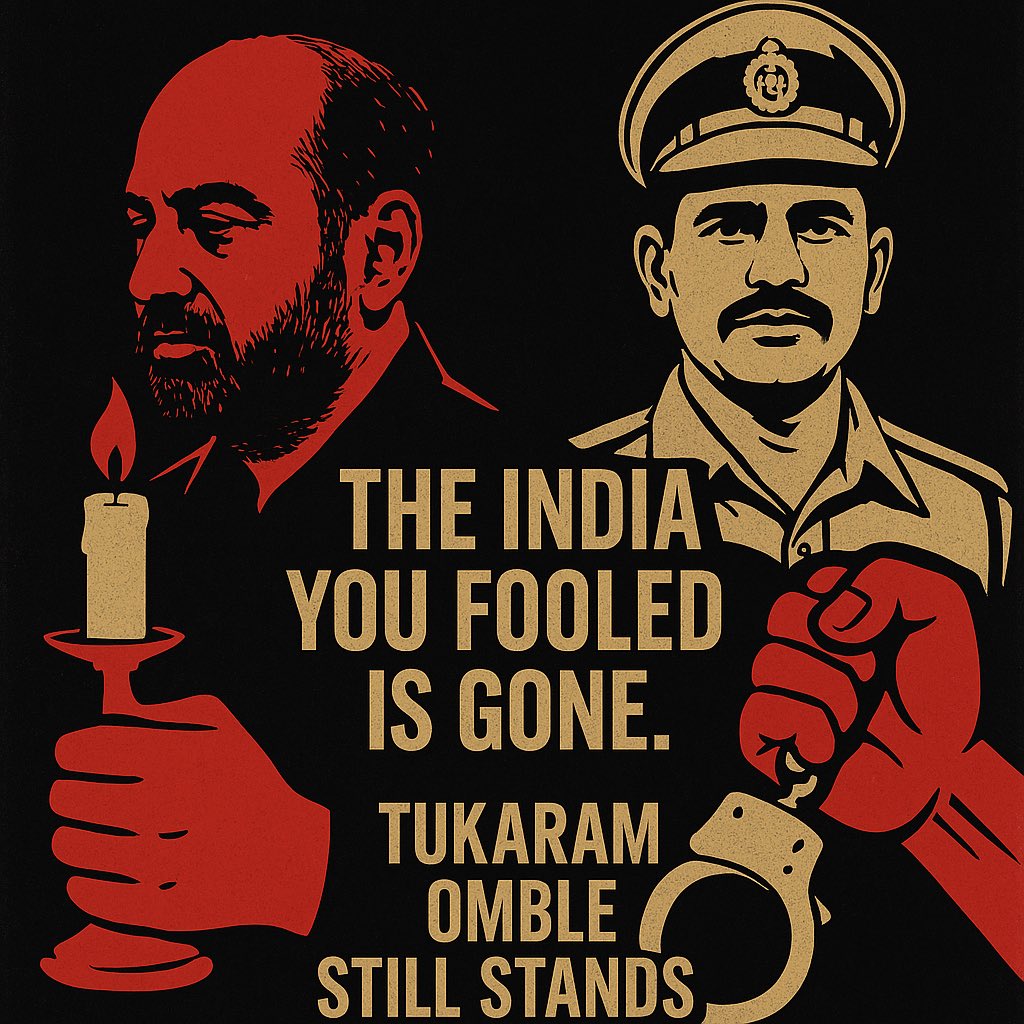
“Rana’s Flight Is Cleared. And India Isn’t Holding a Candle This Time.”
Once upon a time, in the corridors of ‘secular’ sainthood, they served cappuccino with conspiracy theories.
Somewhere between JNU and Geneva, a narrative was brewed — “The real threat is saffron.”
Not cross-border terror. Not the men who prayed with one eye on Mecca and another on Mumbai. No. They said your temple priest was the real ticking time bomb.
Meanwhile, Tahawwur Hussain Rana — soft-spoken, well-dressed — was busy signing fake Indian visas like greeting cards for terrorists.
He didn’t need a gun. He had a stapler.
He was the visa officer of jihad.
The HR head of Lashkar’s foreign desk.
The man who made sure David Headley reached Mumbai — not to attend a wedding, but to help plan a massacre.
And yet, for 15 years, Rana chilled in the land of “due process,” sipping American justice like diet Coke — light, fizzy, and completely useless.
Because back then, India was too ‘dignified’ to demand.
We wrote polite letters. Held peace summits. Lit candles like we were mourning a power cut, not a nation’s soul.
While we mourned, they mocked.
They told us to worry about Hindu terror.
That saffron was the new black.
That if you wore a tilak, you were one angry chant away from becoming a threat to national security.
The Lutyens crowd sold us bedtime stories where the villain always wore a janeu, and the hero held a press conference in a skullcap.
But real heroes don’t do press.
Tukaram Omble didn’t ask for a camera.
He didn’t have a bulletproof vest or a 5-star lawyer.
He had one thing: guts.
When Kasab spat bullets, Omble took them in his chest and still held on — bare hands, steel grip, no backup. He caught terror alive.
No “fact-finder” from The Wire ever wrote poetry for him.
No awards. No hashtags. Just the silence of a nation that was too polite to roar.
But now?
The silence is over.
Tahawwur Rana is finally boarding that plane to India. Not as a guest. But as a case file.
And this time, we’re not bringing candles. We’re bringing fire.
This isn’t just extradition. This is an obituary for the old India — the one that apologised for its rage and intellectualised its grief.
This is a slap across the face of every liberal peacenik who wanted us to hug the butcher and doubt the priest.
This is karma in khadi.
This is Bharat 2.0.
So welcome home, Mr. Rana.
We’ve got questions.
And you won’t need a lawyer — you’ll need a time machine.
Because the India you fooled is gone.
Tukaram Omble still stands.
And this time, the country stands with him.
Perhaps this merely is heaven!
The frozen water, sky-kissing mountains, and sparse human souls. When tranquility is sensed with the least we humans created.
The complexities of being an ambitious self aware adult are not discussed sufficiently in the cultural discourse. In pursuit of balance along the path!