Can a temple cure diseases that even doctors can't?
Know about Vaitheeswaran Koil in Tamil Nadu. Healing powers in this temple are well known that even doctors send their patients here. Shiva is Vaidyanatha swamy the divine doctor.
“Either I will come back after hoisting the Tricolour, or I will come back wrapped in it. But I will be back for sure.”
— Captain Vikram Batra
These weren’t just words.
They were courage. Conviction. Duty.
A nation’s soul is shaped by people who speak like this… and then live those words.
Not a day goes by without being inspired by him.
We will remember.
#KargilVijayDiwas 🇮🇳
This is so disgusting. Bollywood is falling day by day.
Are such scenes really meant to be telecast on television? You can put an 18+ disclaimer, but clips still appear in ads and promotional content. How will you stop children from seeing them?
Imagine kids watching this soft porn.
Censor Board should do something.
Look at this dilapidated Massive Bagawan Shiva temple 🛕
This is located in Kanchipuram district, Uthiramerur taluk, TN.
The deities (Thirumenigal) are so large, but look how it has fallen into ruin.
Bagawan owns 19 acres of land. It’s not one or two acres; the deity has 19 acres of land.
The deity’s name is Chidambareswarar. He is magnificent and beautiful, and the Nandi Lord is also very beautiful. Everything here consists of ancient deities.
This banyan tree has grown over a 1,000 to 1,500-year-old temple.
Please share this video as much as possible. Help restore this temple. We make a humble request to the HR&CE department to restore such ancient temples, restart regular worship, and hand them over to the local community. There are many devotees in the Kanchipuram region willing to properly maintain it and conduct prayers. We can find someone to perform the daily rituals.
Please spread the word about this video. Let everyone know that a Shiva temple like this is disappearing.
Soon, it will be completely gone. Please rescue the existing deities and keep them safely at the nearby Perumal temple for now. It is deeply saddening to see an ancient, historical temple crumbling right before our eyes.
Shivaaya Namaha. Trichitrambalam."
Alexander died of a simple fever in 323 BC.
Caesar died from 23 wounds in 44 BC.
But in 1527 AD…
One King in Bharat simply refused to die.
Maharana Sanga.
He fought with one arm. One leg. One eye.
80 wounds carved into his flesh.
80 Wounds. 1 King. Unkillable.
You are not a “Weak Nation”.
You are the bloodline of the greatest
Indestructible Warrior in human history.
When Maharaja Chhatrasal was around 80 years old and surrounded by the Mughal forces, with little hope left from other rulers, he turned to the one man he believed could save Bundelkhand Peshwa Bajirao I.
According to a popular tradition, Chhatrasal sent Bajirao the famous couplet:
“The plight of Bundela today is like that of Gajendra caught in the jaws of the crocodile. Bajirao, the fate of Bundelkhand now rests in your hands—protect our honor.”
The message moved Bajirao deeply. It is often said that he immediately rose from his meal. When his wife asked him to finish eating first, Bajirao is believed to have replied:
“If I am late, history will say that a Kshatriya cried out for help while a Brahmin continued eating.”
Without delay, Bajirao marched toward Bundelkhand with extraordinary speed. Tradition holds that he covered a journey of nearly ten days in just 48 hours with a small cavalry force of about 500 horsemen, riding relentlessly to reach Chhatrasal before it was too late.
Bajirao’s swift campaign forced the Mughal commander Muhammad Khan Bangash to retreat and lifted the siege of Bundelkhand. Overwhelmed with gratitude, Chhatrasal is traditionally credited with saying:
“The world has seen only two great Brahmin warriors Parashurama and Bajirao. One humbled arrogant Kshatriyas, the other humbled the Turks.”
Bajirao Peshwa was one of India’s greatest military commanders, remaining undefeated in every major battle he fought. Instead of celebrating fictional cinematic heroes, we should introduce our children to the lives of real warriors like Bajirao, whose courage, leadership, and sense of duty shaped the course of Indian history.
Why is this patriot missing from the pages of our history?
Seth Ramdas Gudwala was one of the greatest financiers and revolutionaries of the 1857 War of Independence, yet his name remains largely forgotten.
Born into a wealthy Agarwal family in Delhi, Ramdas Gudwala was among the richest men in North India. A prominent banker and businessman, his wealth was the subject of popular legends. It was said that he possessed immense treasures of gold, silver, pearls, and diamonds.
When the flames of revolution reached Delhi in 1857, thousands of Indian soldiers gathered to fight the British. However, feeding, clothing, and paying such a force became a major challenge.
At this critical moment, Seth Ramdas Gudwala stepped forward.
He placed his enormous fortune at the service of the nation, providing food, clothing, grain, animals, supplies, and financial support for the revolutionary forces. He also helped organize intelligence networks and communication channels across North India, connecting revolutionaries, rulers, and military camps.
His activities became a nightmare for the British administration.
Determined to crush the resistance, the British eventually recaptured Delhi. Seth Ramdas Gudwala was arrested and subjected to unimaginable brutality.
According to accounts, he was tied to a post and attacked by hunting dogs before being publicly executed in Chandni Chowk as a warning to others.
Historian Tara Chand, in his work History of the Freedom Movement, described Seth Ramdas Gudwala as one of the wealthiest men in North India, whose vast resources were dedicated to the cause of freedom.
Yet today, few Indians know his name.
The story of Seth Ramdas Gudwala reminds us that India’s freedom struggle was not fought only by soldiers on the battlefield, but also by courageous patriots who sacrificed their wealth, influence, and ultimately their lives for the motherland.
How many more such forgotten heroes are still waiting to be remembered?
मिलावटखोरी के कारण प्रतिवर्ष 20 लाख लोग बीमार होते हैं और 02 लाख अकाल मृत्यु होती है।
ऑस्ट्रेलिया में मिलावटखोरी पर न्यूनतम 10 साल की सजा होती है और भारत में?
@PMOIndia@HMOIndia
Dear @AsitKumarrModi Sir.
Currently, In Tarak Mehta ka Ooltah Chashmah story, Society Exterior is going into renovation & soon you will showcase a new renovated society.
Please make sure that the society did one addition during this renovation. They added a White strip in Society compound from Entrance near Soda shop uptill Jethalal's house.
Make one episode where other members ask why this white strip & chachaji explains about it and later everyone agrees to it.
You have a generational chance to create a harmony between Marathi, hindus and jains which FootagePathak is ruining for some clout.
Don't bottle it... Make it happen.
A Canadian street vendor sells Goli Soda on the street. Before opening his cart each morning, he prays to Maa Lakshmi, not because someone forced him, but because the beauty of Sanatana Dharma drew him in. No conversion. Only attraction. That is the quiet power of our way.
You slog through an engineering degree with a ₹20L loan, join TCS at ₹20k/month, get married and responsibly have one kid.
Meanwhile, he squats on Railway land, picks up a walking cane, begs ₹20k/month, pumps out 12 children, occupies more Govt land and scales his empire.
When will urban developers' obsession with palm trees stop?
Residential societies, shopping malls, and along highways, wherever you go, you see this "Dubaification", rows of mostly non-native palm trees.
Compared to traditional Indian trees like neem and banyan, they offer little value: minimal shade, poor support for local biodiversity, limited particulate trapping, higher maintenance. Yet they are everywhere just because they are perceived as elite, and "global."
His name was Yellapragada Subbarao.
He was born on January 12 1895 in Bhimavaram, in present-day Andhra Pradesh. His family was poor. Several of his siblings died young from disease.
He studied at Madras Medical College but his British professor deliberately gave him a lesser diploma instead of a full MBBS degree.
He scraped together enough money and sailed to America in 1923. He arrived in Boston with almost nothing.
To pay his fees at Harvard Medical School he worked as an attendant at a hospital, cleaning rooms and changing bedsheets at night. Colleagues called him the Indian who cleans toilets.
He did not stop.
At Harvard he began research with chemist Cyrus Fiske. Together they developed the Fiske-Subbarao method for measuring phosphorus in body fluids, still used in biochemistry today.
He then discovered the role of phosphocreatine and adenosine triphosphate in muscular activity. That discovery entered biochemistry textbooks worldwide.
It is what we now call ATP, the energy currency of every living cell.
Harvard denied him a full professorship. He was a foreigner and had few friends in the right circles.
His colleague Cyrus Fiske suppressed and destroyed many of his contributions out of jealousy. Years of Subbarao’s work had to be rediscovered by other scientists because Fiske would not let them be published.
He joined Lederle Laboratories instead. There he developed the first method to synthesise folic acid, Vitamin B9.
He showed it could treat megaloblastic anaemia and tropical sprue. He then helped develop methotrexate, one of the first chemotherapy drugs, still used today to treat cancer and rheumatoid arthritis.
He led the team that discovered Aureomycin, the first tetracycline antibiotic, more powerful than penicillin, which saved hundreds of thousands of lives during and after World War II.
He never became an American citizen. He lived in the United States for 25 years on a temporary visa. He applied for permanent residence and never received it.
On August 8 1948 he died of cardiac arrest in New York. He was 53 years old. No citizenship. No Nobel Prize. No fame.
A writer named Doron Antrim wrote this about him in 1950. “You have probably never heard of Dr. Yellapragada Subbarao. Yet because he lived, you may be alive today.”
The drug that treated your anaemia. The antibiotic that fought your infection. The chemotherapy that gave someone more time.
All of it traces back to a man from Bhimavaram who cleaned hospital rooms to pay his Harvard fees.
India forgot him. Science did not.
Follow for stories India deserves to remember.
A heated confrontation erupted at the Badami Cave Temples when a Hindu woman objected to a Muslim woman wearing footwear inside the sacred premises.
The woman, an employee working in an office located within the heritage site, was seen disrespecting Hindu religious sentiments.
Why is a Muslim woman employed at a Hindu heritage site? Would the same arrangement be accepted if roles were reversed, for instance, if a Hindu woman entered a mosque or dargah wearing footwear?
Why are only Hindu temples placed under direct government and Archaeological Survey of India (ASI) control, when these authorities appear unable or unwilling to safeguard even the basic religious sentiments of the Hindu majority, who are often treated as second-class citizens in their own country?
His name is Srinivas Narayanan.
Born in Chennai in 1974. He completed his https://t.co/MyPTIKghnU in Computer Science from IIT Madras in 1995. Then a Master's from the University of Wisconsin-Madison in 1996.
He started his career at IBM's Almaden Research Center. Moved to Tavant Technologies. In 2007, he co-founded his own startup, Viralizr, as CTO. In 2008, he joined Facebook as Vice President of Engineering and spent over a decade building large-scale engineering systems.
In April 2023, he joined OpenAI.
At that time, the Applied Engineering team had 40 people sitting on a single floor.
He built it into the team that launched and scaled ChatGPT and the developer API platform. Products that grew faster than almost anything in the history of technology.
In September 2025, he was elevated to CTO of B2B Applications at OpenAI.
On April 17, 2026, he announced he was leaving.
He said this to his team.
The last three years have been an incredible journey that felt more like ten. You built some of the fastest-growing products in history without any established playbook. I am so grateful to Sam Altman and Greg Brockman for this opportunity of a lifetime.
He is returning to India.
Not for a new job. Not for a new startup. He said he is going back to spend time with his ageing parents before deciding what comes next.
An IIT Madras graduate who helped build the product that changed the world.
Who is going home to be with his parents.
His name is Srinivas Narayanan.
Follow for real stories about Indians who make the whole country proud.
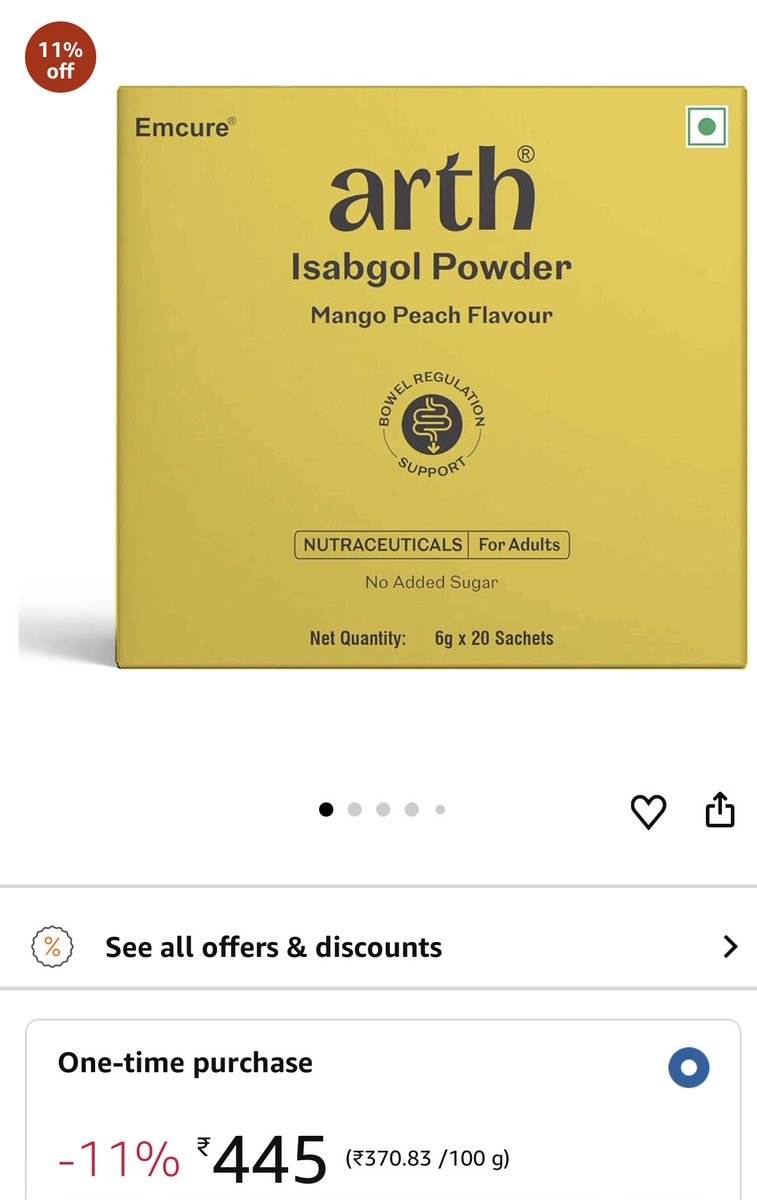
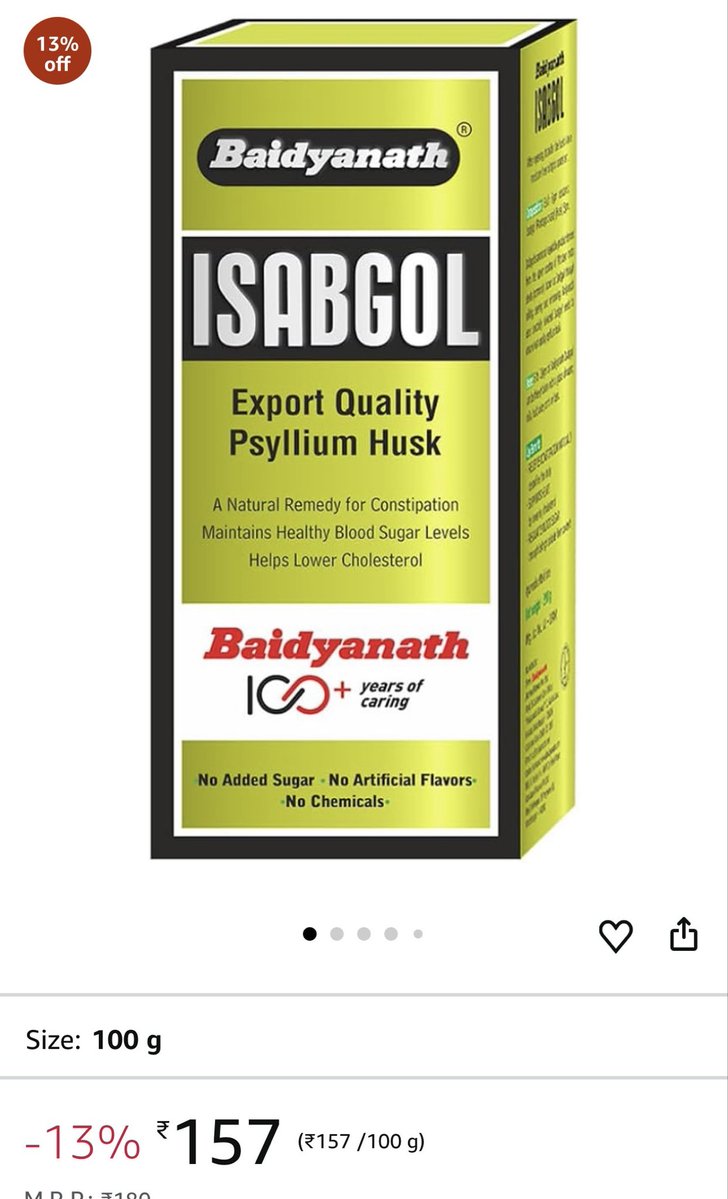
Difference packaging and PR can make! Baidyanath Isabgol, perfectly good Isabgol powder sells for 157 INR for 100 gms. Arth Emcure Isabgol sells for 370 INR for 100 gms, just for the addition of an artificial mango peach flavour!
If you are mad about this Namita Thapar person flashing her platinum victim card, solution is simple. Stop buying these products! Hit em where it hurts. Simple really, if you want Hindu money, learn to respect Hindu sentiments!