Everyone is talking about AI replacing human jobs, but I think we're missing two much bigger questions.
1. Who will buy what AI produces?
If AI replaces most human jobs, who will have the purchasing power to consume those products and services?
Today's economy runs on a simple cycle: humans work, earn money, spend it, and businesses generate revenue.
Break the employment-income-consumption cycle, and you risk breaking the economy itself.
In countries like India, replacing human labour with AI-powered robots could take decades. Human labour will remain cheaper and more practical across many sectors for a long time.
2. What happens to the next generation of humans?
Imagine a generation that uses AI for everything: thinking, learning, analysing, making decisions and solving problems.
Will they become more intelligent, or increasingly dependent on machines?
We already see how technology reduces the need to exercise certain mental skills. AI could take cognitive offloading to an entirely different level.
My concern isn't simply that AI will become smarter than humans.
It's that humans might gradually stop developing their own capabilities because machines can do everything for them.
The biggest risk might not be AI taking over the world. It might be humans becoming so dependent on AI that they eventually lose the ability to function without it.
AI should make humans more capable, not make humans unnecessary.
Are we preparing for that future, or just celebrating how powerful AI is becoming?
C# is dead.
.NET is replaced.
Monoliths are worthless.
Software engineering is done.
For the last year or so, there's been a post saying every piece of tech is dead.
Instead, everything that was supposed to be "dead", "killed", or "replaced" has been running in production for the last 20+ years.
Bringing customers and money. And will continue to do so.
Underneath, the art of software engineering is what keeps all those systems from falling apart.
So, instead of giving up on software engineering, embrace it.
Learn about it.
Build new things.
Ship to production.
Keep using "dead" tech to bring new ideas to life.
🐘 PostgreSQL 19!
Here are the biggest changes developers should know about.
→ Faster INSERTs
→ Better query performance
→ Less overhead
→ New features and improvements
Let's explore what's new in PostgreSQL 19 🚀 https://t.co/q0PVBg1DSI
🚨We urge orgs to immediately patch the recently disclosed Oracle Java vuln CVE-2026-114938. This critical memory-corruption vulnerability, known as “Java4Shell,” affects the Base64 decoder of the x86-64 HotSpot JVM, part of the Java Development Kit. 🔗https://t.co/SwrhdPFlZF
Microsoft is making moves again.
A quiet little Python tool just shot to the top of GitHub’s trending charts.
100,000+ stars.
It’s called MarkItDown.
And it does something deceptively simple:
It turns almost any file into clean Markdown.
PDFs. Word docs. PowerPoints. Excel files. Images.
Drop a file in. Get structured Markdown out.
Sounds small.
It’s not.
Because one of the biggest bottlenecks in AI workflows — especially RAG systems — is getting messy, real-world documents into a format models can actually use.
And real-world documents are brutal.
PDFs are chaotic.
Word docs are full of hidden formatting junk.
PowerPoints are messy and often image-heavy.
Spreadsheets can be a nightmare to parse cleanly.
That’s where this gets interesting.
MarkItDown strips away the friction and gives you something LLM pipelines can actually work with.
In other words: less preprocessing, less pain, faster AI implementation.
Even better, this isn’t some random side project.
It’s an official Microsoft open-source tool.
Free. Commercially usable. Practical.
I tested it on a 200-page PDF.
A few seconds later, I had Markdown that was shockingly clean.
And that’s what big tech does at its best:
They take an annoying, universal problem that everyone has been duct-taping together…
and turn it into a simple standard.
That’s why this matters.
It’s not just a file conversion tool.
It’s infrastructure for the next wave of AI applications.
Get it here: https://t.co/UDzes0sbDs
===
🚨 Want to learn how to build + ship AI and Data Science projects (that businesses actually want in 2026)?
On December 2nd, I am hosting a free workshop to help you get started with AI + DS projects in Python.
Register here (500 seats): https://t.co/onpLpRwkzH
Pulling in FluentValidation just to check if an email is taken always felt like overkill.
.NET 11 finally lets Minimal APIs validate asynchronously, out of the box 👇
Since they came out, Minimal APIs have been widely embraced.
Every new project I start that includes API work, I build with them.
But one thing always bothered me: how do I validate my models asynchronously?
Sure, FluentValidation can do it.
But for a simple rule like that, it's overkill.
Fortunately, .NET 11 brought support for async validators:
1. AsyncValidationAttribute for a property-level rule, like checking whether an email is already registered.
2. IAsyncValidatableObject for a rule that spans the request, like checking whether a room is available for the selected dates.
Now a custom attribute can query the database before your endpoint runs, without blocking a thread.
Invalid request? The endpoint never executes, and the client gets a 400.
One gotcha worth knowing: The sync methods are still required.
AsyncValidationAttribute still makes you implement IsValid, and IAsyncValidatableObject inherits Validate.
And if you call the synchronous Validator on a model with async rules, it throws.
Now that it's supported out of the box, would you still use FluentValidation for async validation?
Don't forget to subscribe to: https://t.co/fvaagl8ryA
.NET slopwatch 0.5.0 is out!
- Prevent evil LLMs from using `dynamic` to bypass your type systems
- Fixed baseline reporting for a bunch of other rules, you might need to run `slopwatch --init` again.
- Generated code no longer profiled by slopwatch
https://t.co/aqAQKXoOEz
Can I ask a DUMB question?
PostgreSQL can store JSON, do full-text search and run queues.
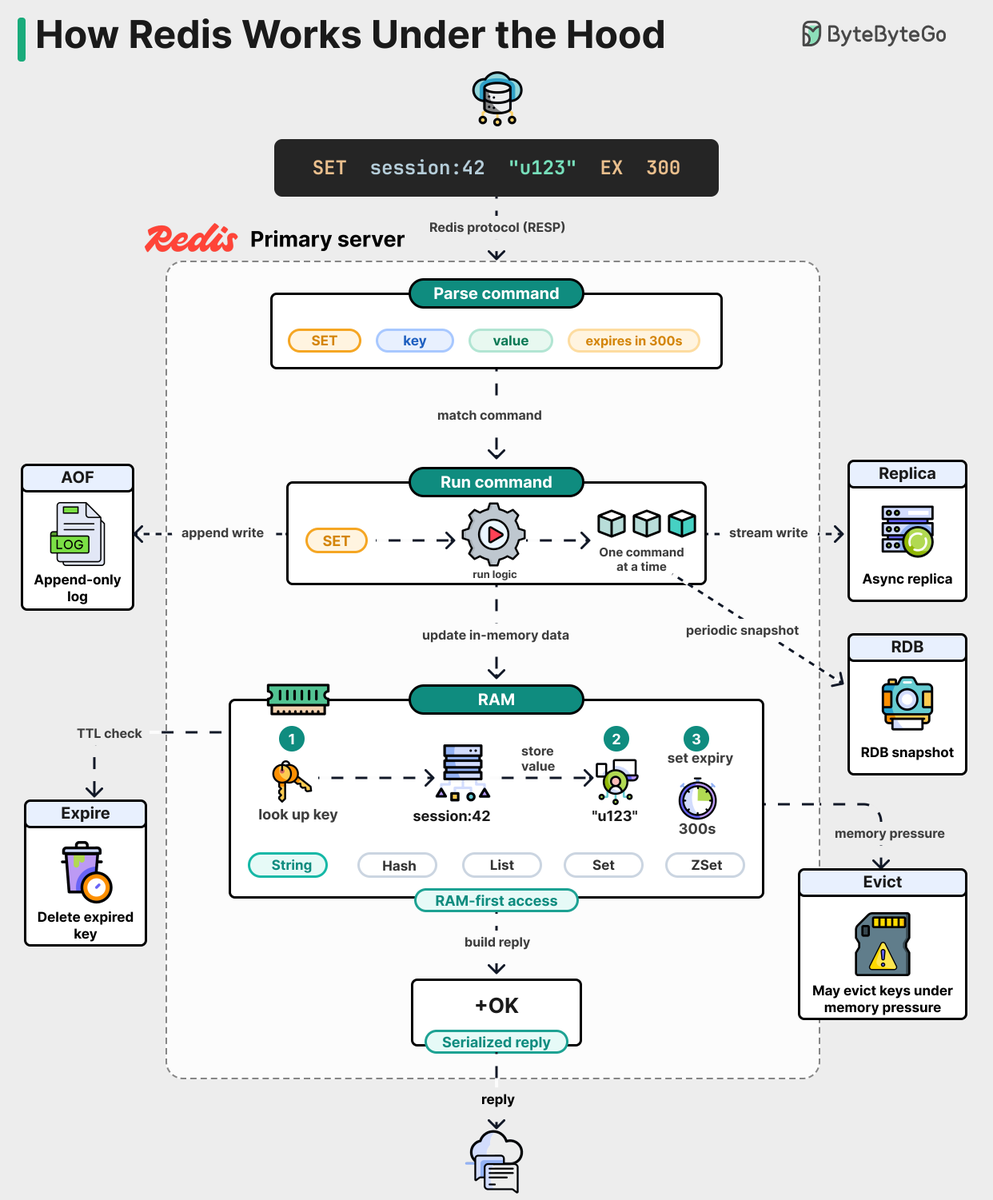
So why does anyone still use MongoDB, Elasticsearch or Redis?
@shrav_10 Website to my agent: 'Are you a human?' Agent: 'Define human.' Meanwhile I've failed the 'select all traffic lights' test three times this week, so the bar is unclear. 😅
If a mentor told me these three things early in my data career, I would’ve avoided so much pain
- focus on business outcomes, not pipelines
If you build 100 pipelines that don’t change business outcomes, you made Jeff Bezos rich, not your company.
How do you know something is impacting the business?
1. You get feedback from multiple analytics stakeholders (not just one data analyst or manager)
2. You directly supply the data to machine learning
3. You directly supply the data to experimentation
These 3 things will usually produce a MEASURABLE impact that you can claim on your performance review.
- technical debt is to be managed, not eliminated
Every business has bodies buried and you’ll create tech debt too as a data engineer. You won’t ever create the perfect data model.
It’s about creating the data model that produces 80% of the value with 20% of the effort. Leave the long tail requests out of the core data models. They are usually low value and a lot more work!
- once you hit senior engineer, your soft skills get you much further than your hard skills
Learning how to influence without authority is critical to growing to staff+ engineering roles. This requires deep understanding of persuasion and emotion.
These aren’t skills you can grind Leetcode to learn and mostly come from experience!