Today we go live on mainnet with the Fusion Rollup, the world's first multi-ledger rollup, connecting 74 blockchain networks in one unified environment, built for institutions.
When I started @quantnetwork in 2015, the vision was simple: make blockchain work for institutions at scale across any network, without the complexity and fragmentation that's held the industry back.
For years, institutions had two bad options: bet everything on a single chain, or stitch together insecure bridges across many. Fusion refuses that trade-off. It connects to many networks at once, moving assets, settling transactions, and messaging across chains as built-in capabilities, not workarounds.
The breakthrough is unified assets. A example of a stablecoin like USDC or tokenised fund like BUIDL or any other digital assetspread across 7 chains collapses into one: uUSDC or uBUIDL. One asset, one liquidity pool, instead of 7 copies and 7 fragmented pools. Each stays anchored to its origin chain and is withdrawable anytime. No custody or compliance trade-offs.
This isn't another layer 2 or a blockchain. It's a new category of infrastructure and it's live.
Read more on: https://t.co/MGfs1FgA6T
→ https://t.co/OQBfu2CEZb
→ https://t.co/4o9nnaA7zc
#QuantFusion #EnterpriseBlockchain #MultiLedgerRolleUp #FusionRollup
Today we go live on mainnet with the Fusion Rollup, the world's first multi-ledger rollup, connecting 74 blockchain networks in one unified environment, built for institutions.
When I started @quantnetwork in 2015, the vision was simple: make blockchain work for institutions at scale across any network, without the complexity and fragmentation that's held the industry back.
For years, institutions had two bad options: bet everything on a single chain, or stitch together insecure bridges across many. Fusion refuses that trade-off. It connects to many networks at once, moving assets, settling transactions, and messaging across chains as built-in capabilities, not workarounds.
The breakthrough is unified assets. A example of a stablecoin like USDC or tokenised fund like BUIDL or any other digital assetspread across 7 chains collapses into one: uUSDC or uBUIDL. One asset, one liquidity pool, instead of 7 copies and 7 fragmented pools. Each stays anchored to its origin chain and is withdrawable anytime. No custody or compliance trade-offs.
This isn't another layer 2 or a blockchain. It's a new category of infrastructure and it's live.
Read more on: https://t.co/MGfs1FgA6T
→ https://t.co/OQBfu2CEZb
→ https://t.co/4o9nnaA7zc
#QuantFusion #EnterpriseBlockchain #MultiLedgerRolleUp #FusionRollup
The BIS, Bundesbank, HKMA, and commercial banks across three continents have been building #tokenisation infrastructure on separate tracks, and their published work points to the same three-layer architecture for #digitalmoney.
1. Central bank money at the base for settlement finality
2. Tokenised deposits in the middle for programmable commercial payments
3. Public blockchain and stablecoins at the top for liquidity and market access
4. Underpinning all three is a horizontal #interoperability layer that makes them work as a coherent system rather than three separate silos.
We've mapped that convergence into a framework for any bank building tokenisation infrastructure this year, covering what each layer does, where the industry stands on deployment, and what to prioritise before committing capital to any single component.
https://t.co/6lzym4G4BV
#TokenisedDeposits #Stablecoins
I’m delighted to announce that @quantnetwork and Murex are partnering to bring tokenised deposits and digital bond settlement into MX.3.
Institutions have been asking the same question. How do we move forward with tokenisation without disrupting the trading, risk and post-trade operations we depend on?
The answer is now inside the platform they already use.
Tokenised RWAs just crossed $100 billion. DTCC has SEC approval to tokenise real-world assets from mid-2026 and major UK banks are already working with Quant through the Great Britain Tokenised Deposit initiative - all of which signals that the market is moving.
Users in banks, asset managers, insurance companies, pension funds, hedge funds, corporations and energy utilities in over 65 countries now have a production-ready path into tokenisation through the systems they already run.
The future of capital markets infrastructure is programmable: https://t.co/RmT2yVJ4SH
#Tokenisation #DigitalAssets #CapitalMarkets #Programmability
A decade in the making, we have published an ISO standard for blockchain interoperability.
This is a milestone I've been working towards since 2015, Remitt was founded with the conviction that blockchains could transform financial services but only if the industry solved interoperability and harmonised around global standards. Without that, blockchain would remain fragmented, siloed, and locked out of mainstream institutional adoption.
In April 2016, we published what was the world's first proposal for a blockchain standard (https://t.co/SL83Yl4Ejr) a bold move at a time when the industry was still largely focused on proofs of concept and competing protocol narratives, not standardisation.
The idea was simple but ambitious: if blockchains were going to serve global markets, they needed a common framework that transcended any single protocol or vendor.
Central to this thinking from the very beginning was the concept of a multi-gateway architecture, leveraging the know-how of 20 years of experience in cybersecurity to frame the principle that interoperability shouldn't depend on a single bridge or point-to-point connection, but on a layered gateway model that could abstract away the differences between underlying DLTs and connect them through a common interface. This was the architectural foundation of what would become Overledger, and it was also the design philosophy we brought to the standards process.
The belief was that a viable international standard for blockchain interoperability had to be protocol-agnostic and gateway-driven, enabling any DLT to communicate with any other DLT (any-to-any) and with existing networks, without requiring those ledgers to change how they operate. The standard and the technology were born from the same insight.
That same year, I worked closely with the team from @standardsaus (Standards Australia), who had the foresight in 2015 to champion the initiative at the international level. Together, we pushed for ISO to establish a dedicated Technical Committee for blockchain and not to be absorbed into an existing committee, but to stand on its own as a recognition that this technology warranted its own global standards programme. The industry demand was there, the use cases were multiplying, and the fragmentation was becoming a real barrier.
In September 2016, the New Work Item Proposal (NWIP) received global approval, and ISO formally gave the green light to establish a new Technical Committee (https://t.co/7biJjvHRk9). TC 307 — Blockchain and Electronic Distributed Ledger Technologies — was born (https://t.co/5SsFPIw0HH). The inaugural meeting was held in Sydney in April 2017, and from that moment the real work began.
As the standards work progressed internationally, the mission at Remitt was evolving too. What started as an effort to use blockchains for financial services and solve interoperability grew into something far larger, a full enterprise infrastructure platform for connecting any blockchain to any network. Remitt became Quant, and we built Overledger, the world's first blockchain operating system to deliver on that original vision. The multi-gateway architecture that informed the standards thinking became the core of Overledger's design: a technology layer that sits above all blockchains, providing institutions with a single integration point to access any DLT, any network, and any existing system. The interoperability challenge that drove the standards work was the same challenge we set out to solve commercially and the two efforts reinforced each other throughout.
For close to a decade since TC 307's formation, subject matter experts across the world have contributed their time and expertise to Working Group 7 — Interoperability is the committee I chair.
International standards are not built quickly they are built through consensus, technical debate, and relentless refinement. The same methodology and rigour that created the Internet, through publishing standards. The result is a published international standard for blockchain interoperability.
🔗 https://t.co/GRoR7fXNLQ
A huge thank you to @isostandards as the international standards developing organisation, to the team at @standardsaus who started the initiative in 2015 and worked tirelessly to get TC 307 approved and established globally, and to every subject matter expert who contributed to Working Group 7 over the years. This would not exist without that collective effort.
From a blog post proposing the world's first blockchain standard in 2016, to a published ISO standard in 2026 and from Remitt to Quant, from an architectural concept of multi-gateway interoperability to Overledger and a global standard, this has been a decade-long journey of building both the standards and the technology to make blockchain interoperability a reality for institutions worldwide.
There is still much more work ahead. More standards to develop, more to evolve, and more to build. But today, we mark a significant milestone.
#Blockchain #ISO #Interoperability #Standards #TC307 #DLT #Quant #Overledger
People liking GV synchronization Lab post👀
Big names for higher management MUFG, RBC (biggest bank in Canada), HM Treasury, Euroclear and more✅
1/2
$QNT
Quant has secured patent acceptance in Japan for its multi-DLT token innovation, marking a significant milestone in protecting the foundational technology that powers Quant Fusion’s rollup capabilities and multi-network #tokenisation.
The newly accepted patent covers a critical capability – updating a ledger by processing and executing instructions found across two or more different #distributedledgers, and publishing verification information of this update back onto at least one of the other distributed ledgers.
This patent protects Fusion’s rollup technology, the foundational capability that enables multi-network tokenisation. By securing intellectual property rights for this core innovation, Quant strengthens its position in delivering enterprise-grade #interoperability infrastructure.
Learn more in our latest article: https://t.co/1oQ0sL3mYn
#QuantFusion #DLT
Digital money isn't theoretical anymore.
Quant and Dentsu Soken are partnering to build #programmablesettlement & #tokeniseddeposit infrastructure in Japan.
The UK tested it in regulated systems. Now Japan is moving from pilot to production, combining regulatory experience with deep implementation expertise across Japanese financial institutions - learn more: https://t.co/l7qDo7M9z4
#FinancialInfrastructure #Payments
The @FT highlights how Lloyds Banking Group and other lenders such as Natwest, Barclays & HSBC are leading UK banking into a new era through tokenised deposits and programmable money, a shift that could fundamentally reshape how money moves, settles, and is used across the economy.
Tokenised deposits bring real cash onto blockchain infrastructure, enabling automation, real-time settlement, and smarter financial products from mortgages to payments and capital markets.
At Quant, we’re proud to be working with leading banks on this transformation. As our CEO @gverdian notes in the article, tokenised deposits represent the evolution of electronic money into digital, programmable money - unlocking efficiency, liquidity, and interoperability across the financial system.
This is about more than innovation. It’s about building the next generation of money and the infrastructure that underpins it securely, at scale, and connected across institutions.
Article: https://t.co/BPitmvYPDB
#TokenisedDeposits #ProgrammableMoney #Tokenisation #DigitalAssets #FinancialInfrastructure #Blockchain #FutureOfFinance
$QNT has been compressing for 4 years.
From $400+ highs to sub-$70, it’s been a masterclass in accumulation.
MA(7) and MA(30) are curling down, but RSI is neutral, MACD is bottoming.
Sentiment’s asleep. Perfect setup.
Why I think $QNT hits $1,000+
- Supply shock: only 14M tokens
- Real utility: enterprise-grade interoperability
- Regulatory tailwinds: ISO 20022, CBDCs
- Smart money never left they just stopped talking
- Mainnet launch approaching: the moment Overledger moves from theory to fully‑live infrastructure, enterprise adoption stops being speculation and becomes reality
When this coil snaps, it won’t be gradual.
It’ll be violent. Parabolic.
You’ll wish you bought the boredom!
$BTC $SOL $XRP $ETH $SUI $XLM $BNB $ADA $ICP
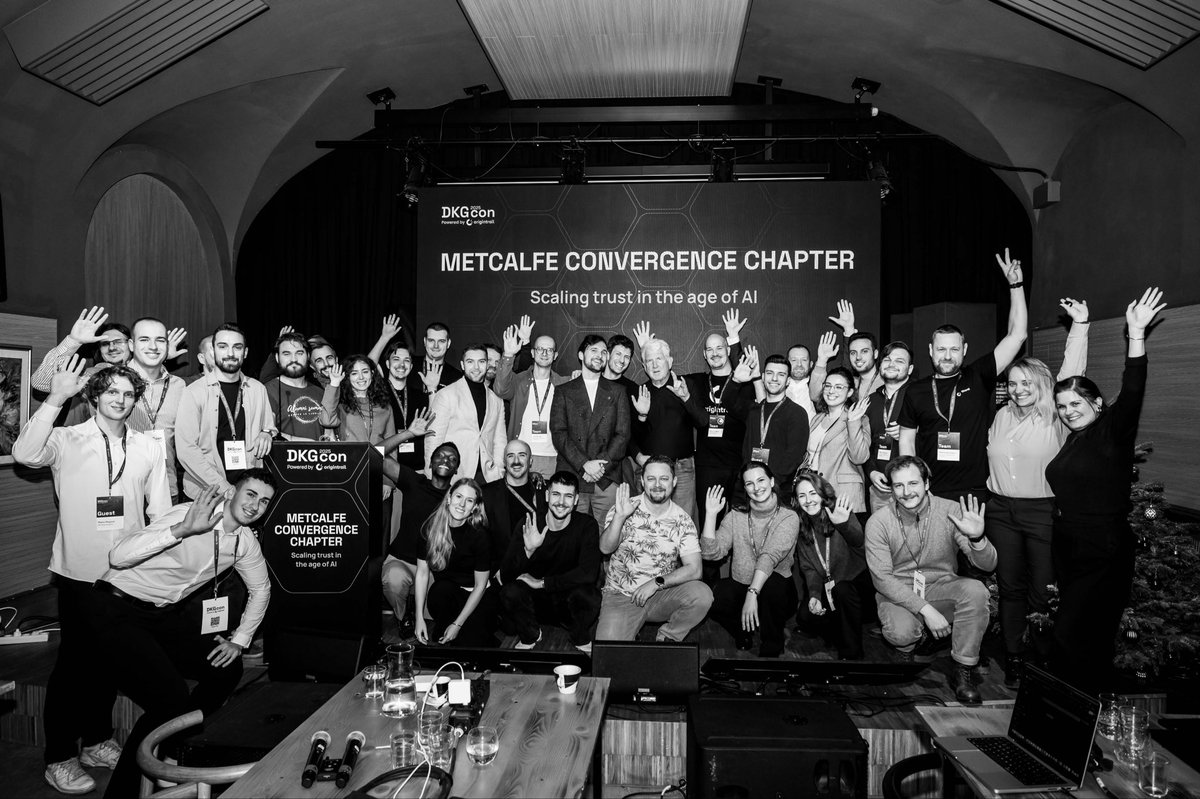
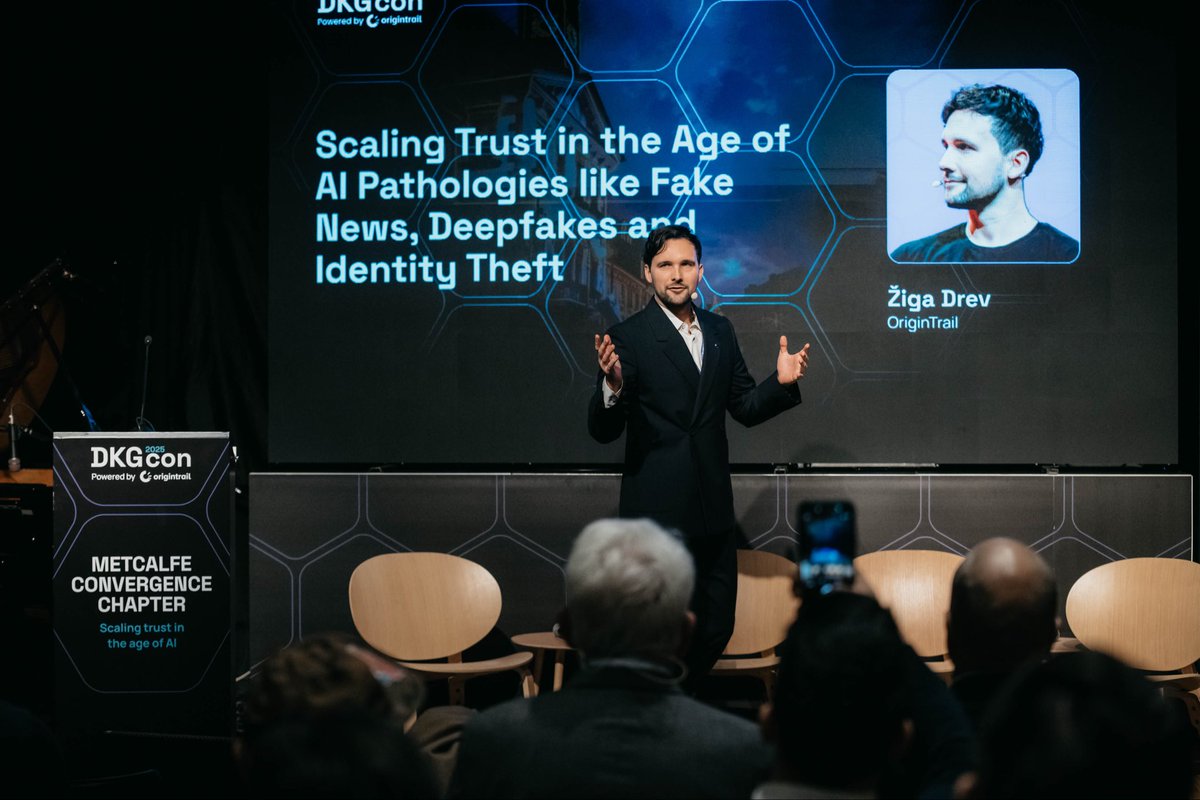
While the world is diverging, we’re opening a new chapter together with global giants and world-class organizations.
The Metcalfe Convergence Chapter is poised to scale trust in the age of AI by connecting what others isolate and fostering collaboration instead of confrontation.
I was beyond amazed to hear directly from ecosystem members’ representatives at @origin_trail’s DKGcon about just a fraction of the exciting new developments, including:
→ Talent- and oil-rich country building on the DKG
→ Most ambitious DeSci project with traditional pharma
→ Continuous protection for 1 billion users
→ @umanitek expanding into B2C
→ Most ambitious roadmap to date
Huge congratulations to the teams, ecosystem partners, and community—and special thanks to Dr. Bob Metcalfe for inspiring the journey we’re on!