Bilgi güçtür.
Norveç acayip bir haberle sarsılıyor.
Norveç ordusu, Çin ortaklığı olan bir firmadan araç kiralaması yaptı. Çinli şirkete ait kiralık araçlar Norveç ordusunun tatbikatında askerleri kaydetti: kim bindi, nereye gitti, kaç dakika kaldı. Üstelik askeri kapıların güvenlik kodları da kayıtta. Araçlar tatbikat boyunca kullanılmaya devam etti, çünkü ordunun başka aracı yoktu (Kaynak: Dagens Næringsliv)
The most important briefings of the day.
Karl Deisseroth, professor of bioengineering and of psychiatry and behavioral sciences, shares the news of his Nobel Prize with his kids.
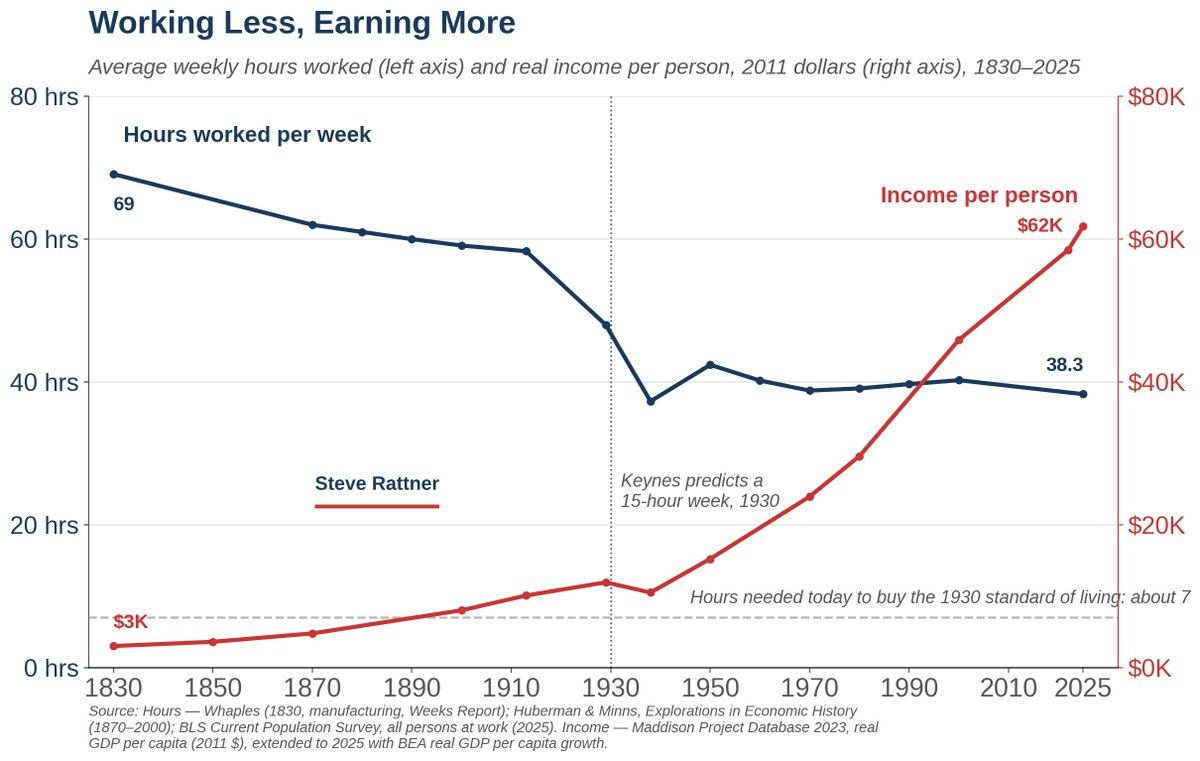
Since 1830, technology has cut the American workweek from 69 hours to 38 while raising real income per person roughly 20-fold.
Properly managed, A.I. can do the same.
My @nytopinion Chart: https://t.co/3WCBRg3gMx
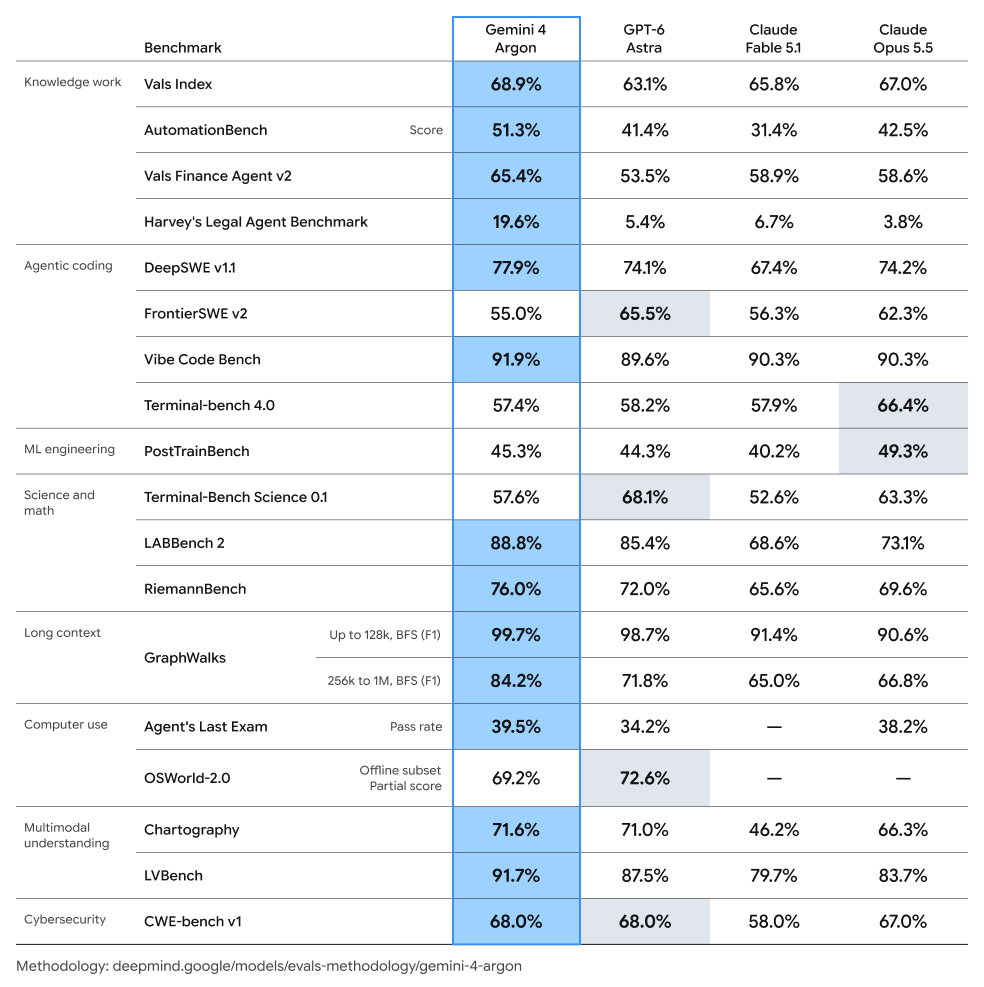
Introducing Gemini 4 Argon – our new frontier model.
It’s built for complex workflows across coding, enterprise knowledge work, and cybersecurity defense – rolling out today to a set of trusted testers through our Fairwind Program.
The future of math:
- Learning math will remain the best way of forming your brain to exact, quantitative, and abstract thinking.
- Abstract math as a quasi-spiritual domain of human prowess will remain.
- "industrial" math will be the machines' kingdom.
Nvidia CEO Jensen Huang questions whether some of the learning fundamentals are still relevant
“Basic math is being forgotten. Does it matter? I don't think it does.”
Kamuoyuna Duyuru
Beşiktaş Kulübü olarak sporda adaletin, şeffaflığın ve eşitliğin sağlanması yolunda her zaman lafla değil, somut ve kararlı adımlarla hareket ettik.
Dün oynanan müsabakada, kırmızı kart görerek oyundan ihraç edilmiş bir teknik direktörün açıklamalarının maç devam ederken canlı yayında adeta savunulurcasına aktarılması, yayıncı kuruluşun (beIN Sports) tarafsızlık ilkesini nasıl ayaklar altına aldığını bir kez daha açıkça göstermiştir. Yayıncılık ilkelerini ve sportif rekabetin dürüstlüğünü zedeleyen bu tutuma; pozisyonların ekrana ve VAR odasına yansıtılmasında sergilenen seçici ve manipülatif yaklaşımlara karşı duruşumuz sadece sosyal medya mesajlarından ibaret değildir.
Nitekim Kulübümüz, yayıncı kuruluş hakkında geçen hafta İstanbul Cumhuriyet Başsavcılığı’na resmî suç duyurusunda bulunarak Türk sporu adına tarihi ve somut bir hukuki süreç başlatmıştır.
Son günlerde yaşanan gelişmeler ve diğer kulüplerin de benzer şikayetleri dile getirmeye başlaması, attığımız bu hukuki adımın ne kadar haklı ve zamanında olduğunu bir kez daha net bir şekilde gözler önüne sermiştir.
Sporda adalet ve tarafsız yayıncılık talebinde samimi olan tüm Türk spor kamuoyunu ve kulüpleri, temennilerle yetinmek yerine başlatmış olduğumuz bu somut hukuki mücadelenin arkasında durmaya ve takipçisi olmaya davet ediyoruz.
Kamuoyunun bilgilerine saygıyla sunarız.
Beşiktaş JK
Ukrayna, gece boyunca Moskova’ya yönelik şimdiye kadarki en büyük İHA saldırılarından birini gerçekleştirdi.
Rusya, 1.600’den fazla İHA’nın düşürüldüğünü ve bunların yaklaşık 450’sinin Moskova’yı hedef aldığını öne sürdü.
Saldırılarda Moskova’nın en büyük petrol rafinerisi Kapotnya ile konut binalarının vurulduğu, Moskova bölgesinde 2 kişinin hayatını kaybettiği ve 400 kişinin tahliye edildiği bildirildi.
Some observations on Kimi:
1. It's a very good model! I don't think its performance can be explained away by distillation or anything like that. In agentic coding sessions, it seems pretty much on par with the best public models of Q1 2026. In my fairly limited use, it also seemed very token hungry. It's not obvious to me that this model is actually that cheap to run.
2. I am personally surprised the Chinese state continues to allow the open sourcing of models this good, given potential risks. To be clear, I *myself* might be fine with models presenting this level of marginal risk being open weight, but I am surprised that China is fine with it. I suspect the reason they are is 75% explained by strategic blindness/lack of AGI-pilledness (the CCP is very Yann Lecun-y in its views of AI). The other 25% or so is their lack of compute for customer inference (making China's open-weight strategy an unintended byproduct of US export controls) and the normal Chinese strategy of aggressive exports. For the companies, as opposed to the government, the decision to open source is partially ideological and partially because they are behind, and they know that very few people would pay for sub-frontier models from China.
3. Open-weight models are inherently decelerationist, and I'm continually surprised to see the so-called "accelerationists" so excited about open-weight models. I suspect the reason they are is that they know open-weight models are effectively ungovernable, and they simply like the overall cloak of ungovernability open-weight models create over the whole of AI. It's not a bad strategy; it reminds me of James Scott's recounting of the hill people in "the art of not being governed." Still, in the end, open-weight models deter further AI capex.
4. One probable outcome of an open-weight-model-dominant world is full AI communism, which is precisely what China proposes: rather than a market product, AI is a "public good" which will ultimately be provided by the state as a kind of "digital public infrastructure." This future strikes me as a dystopian hellscape, but I've never met an open-weight models advocate who doesn't ultimately concede this is where things end. You'd be surprised how many 'accelerationists' lobbied me, while I was in government, to support an eleven or twelve-figure federally funded data center so that startups could train models at a subsidy and then give them away for free. There was no other way for AI to progress, they said. Perhaps this is the logical end state of things. Nonetheless, I find myself surprised to see supposed accelerationists excited about such an outcome. I think many of them just don't know what they're doing. Many accelerationists do not view the creation and serving of frontier models as a legitimate business.
5. I would guess that the Trump Administration will at some point realize that their best strategy here would be to create large amounts of regulatory risk around the use of open-weight Chinese models. You don't need to "ban open source" (one of the dumber motifs of AI policy discussion). You just need to direct every agency to issue soft law that creates FUD. "A Federal Reserve Advisory Bulletin found that there may be backdoors in Chinese AI models." It needn't be that well justified. You just create enough regulatory risk that every regulated enterprise backs off. You probably don't want to create so much regulatory risk that you scare off the hyperscalers from serving Chinese models; this will just drive startups to sketchier providers. There's a happy middle ground here. I'd assume they will do some version of this.
6. It's probably true that open-weight models of this capability make the world a bit more dangerous, but not so much more that you'll really notice. At some point the models will be capable enough that you will notice. "A nonliving, invisible, dangerous, and infinitely self-replicating agent escaped from a Chinese lab," you say? Color me shocked.
A history of AI firms:
• Demis Hassabis convinces Peter Thiel to invest in DeepMind by talking chess
• Thiel shows the company to Elon Musk, who shows their AI solving Pong to Larry Page on a private jet
• Larry Page buys DeepMind; Hassabis takes them over Zuck's higher bid (and despite Elon's last minute effort) because Zuck was equally excited about 3D printing as AI at dinner
• Larry Page and Elon Musk fight over AGI; Page calls Musk a "speciesist" for favoring humans > machines
• Sam Altman convinces Elon to start a new AI firm to get back at Google; they have dinner with top people at Google and recruit Ilya Sutskever; Dario Amodei joins later
• Musk gives Altman an ultimatum: I take full control or you lose my funding
• Reid Hoffman (introduced to AI by Thiel; served as backstop for DeepMind seeking governance guarantees) convinces Satya to backstop OpenAI
• OpenAI goes its own way, Dario leaves over safety concerns, and Elon starts over with xAI/Grok
Today, Armenia has a railway connection with Russia through the territories of Georgia and Azerbaijan, and then with China through the territories of Russia and Kazakhstan. Now, it also has a connection with the European Union through the territories of Georgia and Türkiye. In the near future, the Armenia–Türkiye and Armenia–Azerbaijan railways will open, followed by the Armenia–Iran railway through Nakhchivan. We will witness these events in the near future as a result of the implementation of the TRIPP project.” @NikolPashinyan #CrossroadsOfPeace #Peace #Connectivity #Unblocking
Pleased to announce that following the Azerbaijani railway, the Turkish railway via Georgia, is now open for Armenian export & import.
This is a major develop for our country’s econ life. Express appreciation to our partners in Türkiye & Georgia for their constructive coop.