Nos han hecho creer que que es posible que una persona pueda combinar trabajar, caminar 10.000 pasos al día, cocinar, dormir 8 horas, leer, aprender idiomas, ir al gimnasio tres veces por semana, cocinar, mantener la casa limpia, hacer la compra, pasar tiempo de calidad con la familia, tener vida social activa, ver películas y series de moda, poder seguir el estado de tus redes sociales y estar siempre en tu prime físico.
Es mentira.
Solo lo ves en Instagram
InfoJobs, 6 de cada 10 trabajadores ya no quieren subir en la empresa: el 19% no quiere más responsabilidades y el 38% no le interesa ascender
La nueva prioridad es clara: calidad de vida > carrera
Los valores profesionales se reconfiguran https://t.co/b8qyvirONK
A Stanford neuroscientist published a paper a few years ago that quietly answered one of the oldest questions in human history, and almost nobody outside his field has heard of it.
The question is why we dream. Not what dreams mean. Why they exist at all. Why your brain spends a third of its sleep hallucinating images instead of just resting like every other organ in your body.
His name is David Eagleman.
He runs a lab at Stanford. The paper is called "The Defensive Activation Theory", and the moment you read it the explanation collapses every other theory you have ever been taught about dreams.
Freud said dreams were repressed desires. He was guessing. He had no brain scans. He had no electrodes. He had a couch and a notebook and a century of credibility that nobody has been able to fully scrub off the subject since.
Modern neuroscience replaced him with the memory "consolidation theory". The idea that dreams are your brain sorting through the day, filing things away, deciding what to keep. That story is partially true. Sleep does consolidate memory. But it does not explain the single strangest thing about dreams, which is that they are almost entirely visual.
You do not dream in pure sound. You do not dream in taste. You do not dream in smell. You dream in pictures. Vivid, detailed, often impossible pictures that activate the back of your brain so hard a scientist scanning you would think your eyes were wide open.
Eagleman started from one fact almost nobody outside neuroscience knows. The brain is territorial. Every region holds its turf through constant electrical activity. The moment a region goes quiet, its neighbors start invading. They take the silent territory and reassign it to themselves.
This is called "cortical takeover", and it is not slow. It is not a long process measured in years. In experiments where adults are blindfolded, the visual cortex starts processing touch and sound within an hour. One hour of darkness, and the territory is already being annexed.
In congenitally blind people, the visual cortex is fully repurposed. It runs language. It runs hearing. It runs touch. The hardware never went unused. It was just reassigned to whoever showed up first.
Now sit with the implication of that for a second.
Every night, when you close your eyes and fall asleep, the sun has set. The planet has rotated. The visual cortex, which takes up roughly a third of your entire cortex, is suddenly receiving zero input. For eight hours. Every single night. For your entire life. And evolution has shaped your brain inside a planet that has been spinning into darkness for billions of years.
If cortical takeover happens in an hour, the visual cortex should have been lost a long time ago. Stolen by hearing. Stolen by touch. Reassigned by morning. Humans should have evolved into a species whose vision works fine during the day and then degrades every time the sun goes down because the territory keeps getting renegotiated overnight.
But that did not happen. Vision works the moment you open your eyes. Which means something is defending the territory while you sleep.
Eagleman's claim is that dreams are that defense.
Every 90 minutes through the night, a precise burst of activity fires from the brainstem into the visual cortex. Pontine-geniculate-occipital waves. PGO for short. They are anatomically aimed. They are not general arousal.
They are a targeted volley of signal launched directly at the back of the brain where vision lives. The cortex lights up as if it is receiving real images, and you experience that artificial activation as a dream. The bizarre narrative your conscious mind invents around it later is just your brain trying to make sense of the noise.
The dream is not the point. The dream is the side effect. The point is keeping the territory occupied.
The evidence for this is the part that should haunt you.
Newborns spend roughly 50% of their sleep in REM. Adults spend twenty. Old adults spend fifteen. The amount of dreaming you do tracks almost perfectly with how plastic your brain is. Newborns have the most plastic brains on earth. Their visual cortex is in the highest danger of being overrun by neighboring senses while it develops.
So evolution gave them an enormous defense budget. As you age, your brain becomes less plastic, the takeover risk drops, and the defense system scales down accordingly.
Eagleman and his co-author ran the same correlation across twenty-five primate species. The more plastic a species' brain, the higher the proportion of REM sleep. The relationship held across the entire primate family tree. Plasticity and dreaming move together. They are two halves of the same evolutionary equation.
A species that ranks higher on flexibility and learning also dreams more. A species that is born ready to walk and survive dreams less. Plasticity is the asset. Dreaming is the insurance premium.
And the prediction the theory makes is the one that quietly closes the case.
Of all your senses, only one is disadvantaged by darkness. You can still hear in the dark. You can still feel in the dark. You can still smelll and taste in the dark. The only sense that depends on light is vision. Which is exactly the sense your dreams are made of. The defense system is targeted at the only territory that is actually vulnerable while you sleep.
Memory consolidation is real. Emotional processing is real. Your brain does do those things at night. But Eagleman's argument is that those functions piggyback on a much older system whose original job was simpler and more brutal. Keep the lights on inside the visual cortex while the planet is dark, or lose it.
For thousands of years, people have asked what dreams mean. Prophets wrote about them. Poets wrote about them. Freud built a discipline on them. None of them had access to the actual answer, which is that dreams may not mean anything in the symbolic sense at all.
They may be the visible flicker of a defense system running in the background, the way a screen saver protects a monitor by keeping the pixels moving even when nobody is looking.
The strangest thing about the theory is how cleanly it explains why dreams feel so real. Your visual cortex cannot tell the difference between a PGO wave and an actual photon. It is the same hardware lighting up the same way. The cortex does its job. It builds an image. Your conscious mind, half-awake, wraps a story around it and calls it a dream.
You are not seeing your subconscious tonight. You are watching your brain defend a piece of itself from being stolen.
Every animal that has ever closed its eyes on this planet has done the same thing.
A la gente de Tenerife,
Mi nombre es Tedros, y ejerzo como Director General de la Organización Mundial de la Salud, el organismo de las Naciones Unidas responsable de la salud pública mundial. No es habitual que escriba directamente a la gente de una sola comunidad, pero hoy siento que no solo es apropiado, sino necesario.
Quiero hablarles directamente, no a través de comunicados de prensa ni informes técnicos, sino de ser humano a ser humano, porque se lo merecen.
Sé que están preocupados. Sé que cuando escuchan la palabra “brote o epidemia” y ven un barco acercarse a sus costas, afloran recuerdos que ninguno de nosotros ha logrado superar del todo. El dolor de 2020 sigue siendo real, y no lo minimizo ni por un momento.
Pero necesito que me escuchen con claridad: esto no es otro COVID-19. El riesgo actual para la salud pública derivado del #hantavirus sigue siendo bajo. Mis colegas y yo lo hemos afirmado sin ambigüedades, y lo repito ahora. El virus a bordo del MV Hondius es la cepa Andes del hantavirus. Es grave. Tres personas han perdido la vida, y nuestro corazón está con sus familias. El riesgo para ustedes, en su vida cotidiana en Tenerife, es bajo. Esta es la evaluación de la OMS, y no la hacemos a la ligera.
En este momento, no hay pasajeros con síntomas a bordo. Un experto de la OMS está en ese barco y los suministros médicos están disponibles. Las autoridades españolas han preparado un plan cuidadoso y detallado: los pasajeros serán trasladados a tierra en el puerto industrial de Granadilla, lejos de las zonas residenciales, en vehículos sellados y custodiados, a través de un corredor completamente acordonado, y repatriados directamente a sus países de origen. Ustedes no tendrán contacto con ellos y sus familias tampoco. También quiero decirles algo más, algo que va más allá de la ciencia.
Agradecí personalmente al Presidente del Gobierno, Pedro Sánchez, la decisión de España de acoger este barco. Lo califiqué de acto de solidaridad y deber moral. Porque eso es exactamente lo que es. Quiero que sepan que la solicitud de la OMS a España no fue arbitraria. Se realizó en pleno cumplimiento del Reglamento Sanitario Internacional, el marco jurídicamente vinculante que define los derechos y obligaciones de los países y de la OMS cuando responden a eventos de salud pública de importancia internacional. Según esas normas, debe identificarse el puerto más cercano con capacidad médica suficiente para garantizar la seguridad y la dignidad de quienes están a bordo. Tenerife cumplió ese criterio y España lo honró. Casi 150 personas de 23 países llevan semanas en el mar, algunas de luto, todas asustadas, todas deseando regresar a casa. Tenerife ha sido elegida porque tiene la capacidad médica, la infraestructura y sé que la humanidad necesaria para ayudarles a llegar a un lugar seguro.
Y porque lo creo profundamente, estaré allí en persona. Tengo la intención de viajar a Tenerife para observar esta operación de primera mano, para estar junto a los trabajadores sanitarios, el personal portuario y los funcionarios que la están llevando a cabo, y para rendir mi homenaje personal a una isla que ha respondido a una situación difícil con dignidad, solidaridad y compasión. Su humanidad merece ser presenciada, no solo reconocida desde la distancia.
Como he dicho muchas veces: los virus no entienden de política ni respetan fronteras. La mejor inmunidad que tenemos es la solidaridad.
Tenerife está demostrando esa solidaridad hoy. El capitán del barco, Jan Dobrogowski, la tripulación y la empresa que opera el buque han mostrado una colaboración ejemplar en este momento tan difícil. En nombre de la Organización Mundial de la Salud, y en nombre de esos pasajeros y de sus familias en todo el mundo, agradezco al pueblo de Tenerife y a todas las demás personas involucradas.
Por favor, cuídense ustedes y cuídense los unos a los otros. Confíen en los preparativos que se han llevado a cabo. Y sepan que la OMS está con ustedes, y con cada persona en ese barco, en cada paso del camino.
Con respeto, cariño y gratitud,
Tedros
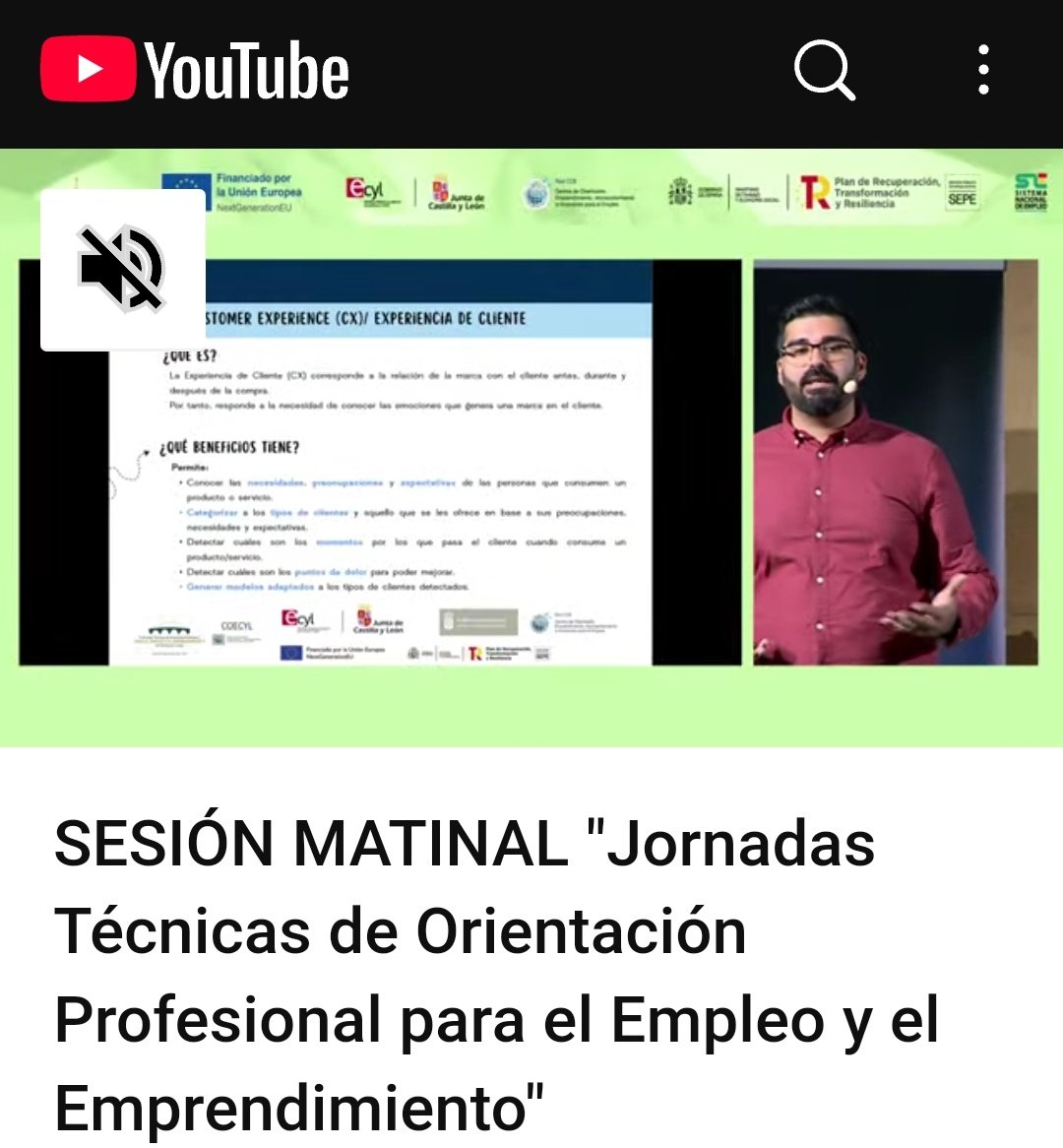
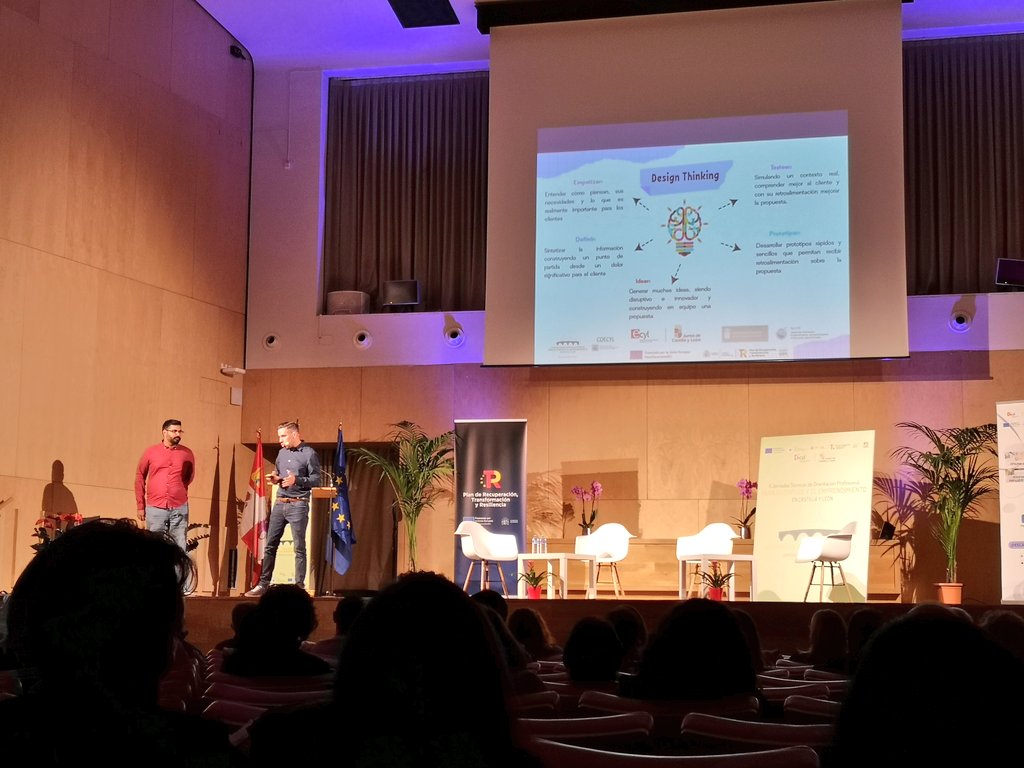
FORO 2
SPE CANARIAS
"Prototipando para
emprender" en directo
https://t.co/xNLHh2gxgw
II Jornadas Técnicas de Orientación Profesional para el Empleo y el Emprendimiento
https://t.co/R2CPuSSXqy
#ECyL#ECyLMRR#redCOE#COECyL
Voy a hacer un hilo sobre el periodo de prueba: ese tramo temporal en el que, al ser nuevo, te pueden chutar a la calle sin justificación alguna y sin indemnizarte. Eso sí, esta potestad tiene algunos límites, y a menudo se puede luchar por tus derechos. Veamos en qué casos🧵👇
@elcorteinglesac sugerencia de mejora: estaría bien que si no hay stock de algún producto:
- No apareciera para seleccionar o
- Apareciera un mensaje de no hay stock o
- Antes (no después) de añadirlo a la cesta, que salga un mensaje de no disponible.
Gracias