🚨 New research shows even a single daily alcoholic beverage physically shrinks your brain and accelerates aging by years.
Recent large-scale studies are overturning the long-held belief that moderate drinking is harmless, or even beneficial. A massive analysis of over 36,000 adults found that even light-to-moderate alcohol consumption—equivalent to one pint of beer or a single glass of wine per day—is directly linked to a reduction in overall brain volume. These changes affect both gray and white matter, with the hippocampus, a critical hub for memory and learning, being particularly vulnerable. Scientists warn that moving from one to two drinks a day can cause structural changes equivalent to aging the brain by two full years, leading to cognitive decline and increased "brain fog."
Beyond physical shrinkage, alcohol acts as a potent neurotoxin that damages the dendrites at the ends of neurons, effectively hindering the brain's ability to communicate internally. While chronic use is most damaging, the diuretic nature of alcohol also causes immediate dehydration of neurons, impairing mental clarity. However, there is a silver lining for those looking to protect their cognitive health: research suggests that the brain possesses a remarkable capacity for recovery. By reducing or eliminating alcohol consumption, individuals can allow their brain to regain some lost volume and repair vital neural connections, potentially halting or even reversing some of the damage caused by exposure.
Source: Daviet, R., Aradhye, H., Litt, G. W., & Nave, G. Associations between alcohol consumption and gray and white matter volumes in the UK Biobank. Nature Communications.
37 trillion cells make up your body. Not one of them is conscious. Not one knows your name, your memories, or that you exist. Yet somehow, together, they produce you — a mind aware of itself. Where does that awareness actually come from? Science still can't fully explain it.
Researchers at the University of Milan have identified that an enzyme called phospholipid transfer protein (PLTP) can effectively mobilize cholesterol from arterial plaques, sending it back into the bloodstream for natural disposal. This discovery is a potential game-changer because, unlike current treatments that primarily focus on preventing new plaque from forming, this method actually targets and dissolves existing blockages.
Atherosclerosis occurs when cholesterol and inflammatory cells create stable, hardened deposits in artery walls that resist traditional removal methods. When these plaques become too large, they severely restrict blood flow, often necessitating invasive procedures like stents or bypass surgery to prevent heart attacks or strokes.
The PLTP enzyme acts as a natural extraction system, pulling cholesterol out of the arterial wall and transferring it to HDL, or "good cholesterol," for transport to the liver. Scientists found that many people have naturally low levels of this activity due to genetic factors, which is why they have developed a gene therapy to boost PLTP expression directly where it is needed most.
In animal models, this localized boost in enzyme activity resulted in a 40% reduction in plaque volume in just three months, allowing narrowed arteries to reopen to nearly their original diameter. These results suggest that plaques not only become smaller but also more stable, which significantly lowers the risk of a sudden rupture that could cause a cardiac event.
While human clinical trials are currently focusing on patients with severe coronary artery disease who cannot undergo surgery, the long-term goal is a biological "reversal" of decades of arterial damage. If successful, this could shift cardiovascular medicine away from mechanical bypasses and toward a more natural, enzymatic cleaning of the circulatory system.
AI-equipped robot dogs are replacing security guards at US data centers and sports stadiums.
The security guard industry in the United States, which employs approximately 1.3 million people, is undergoing a massive shift as businesses deploy autonomous robotic quadrupeds.
Outfitted with high-tech sensors, cameras, and AI, these mechanical sentries are patrolling high-value locations such as data centers, agricultural sites, and sports stadiums. For companies facing an ongoing retention crisis, the financial incentive is stark: replacing a single 24/7 human security shift with a robot dog can slash annual costs by $80,000 to $130,000.
Damon Henry, CEO of the robotics firm Asylon, notes that the industry's high turnover and inconsistent staffing make automated alternatives increasingly attractive to budget-conscious enterprises.
However, this rapid transition raises serious concerns about the future of one of America's most accessible low-barrier occupations. According to data from the UC Berkeley Labor Center, the security workforce is disproportionately composed of vulnerable populations, with people of color filling about 60.8% of roles and older workers aged 55 or above making up 27.8%. While the average guard earns a median annual wage of just $38,390, the role remains a crucial source of income. Though researchers suggest human guards will not disappear completely—instead being redirected to higher-stakes, more complex duties—the increasing efficiency and dropping cost of robotic manufacturing mean that automation could soon reshape the labor landscape far faster than expected.
source: Business Insider. (2026). The security guard shortage is giving robots an opening.
A scientist created a biodegradable plastic made from cactus — and it dissolves in water in just a few days.
In a remarkable step toward solving the global waste crisis, researcher Sandra Pascoe Ortiz from the University of Valle de Atemajac in Mexico has developed a fully biodegradable plastic using the juice of the prickly pear (nopal) cactus.
Unlike conventional plastics that rely on petroleum and linger in ecosystems for centuries, this cactus-based alternative breaks down in soil in just a month and dissolves in water in a matter of days.
Most impressively, the material is completely non-toxic; its entirely natural chemical compounds are safe for both humans and wildlife to consume, eliminating the threat of microplastic poisoning in marine environments.
While the project began as a chemistry classroom experiment, it has quickly grown into a collaborative effort with the University of Guadalajara.
Currently transitioning from lab-scale trials to industrial applications, Ortiz and several corporate partners are testing its viability for mass production.
Scaling up this cactus-derived polymer could significantly curb the estimated 2.4 million metric tons of plastic entering the oceans each year, proving that natural alternatives are not only viable but essential for planetary recovery.
source: Snowden, S. Scientist In Mexico Creates Biodegradable Plastic From Prickly Pear Cactus. Forbes.
A scientist created a biodegradable plastic made from cactus — and it dissolves in water in just a few days.
In a remarkable step toward solving the global waste crisis, researcher Sandra Pascoe Ortiz from the University of Valle de Atemajac in Mexico has developed a fully biodegradable plastic using the juice of the prickly pear (nopal) cactus.
Unlike conventional plastics that rely on petroleum and linger in ecosystems for centuries, this cactus-based alternative breaks down in soil in just a month and dissolves in water in a matter of days.
Most impressively, the material is completely non-toxic; its entirely natural chemical compounds are safe for both humans and wildlife to consume, eliminating the threat of microplastic poisoning in marine environments.
While the project began as a chemistry classroom experiment, it has quickly grown into a collaborative effort with the University of Guadalajara.
Currently transitioning from lab-scale trials to industrial applications, Ortiz and several corporate partners are testing its viability for mass production.
Scaling up this cactus-derived polymer could significantly curb the estimated 2.4 million metric tons of plastic entering the oceans each year, proving that natural alternatives are not only viable but essential for planetary recovery.
source: Snowden, S. Scientist In Mexico Creates Biodegradable Plastic From Prickly Pear Cactus. Forbes.
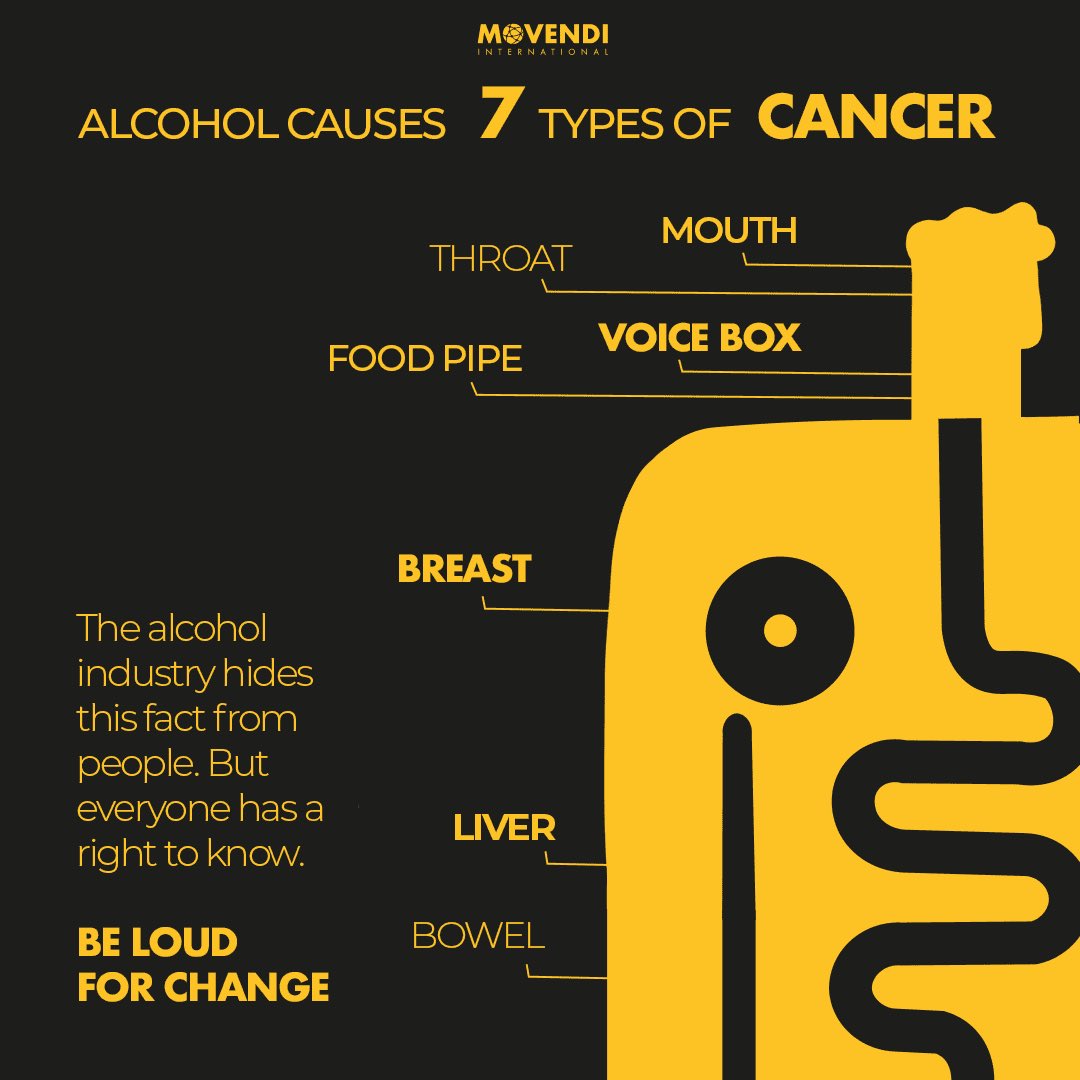
5 Facts about #Alcohol & #Cancer
1️⃣Alcohol causes at least 7 types of cancer
2️⃣The most common types of cancer due to alcohol are different for men & women
3️⃣The risk of cancer from alcohol use↗️from the first alcoholic drink
4️⃣Using tobacco➕alcohol multiplies cancer risks
We all have a role to play in stopping the spread of harmful disinformation online, which can result in people being left uninformed, unprotected & vulnerable.
Pause and verify facts before sharing content online. https://t.co/qFqoh7loX2
Did some comparison calculations on the increased electricity tariffs announced today.
This is just based on my knowledge of calculation and for information purpose only. If someone can verify this, would be great.
World Health Assembly Adopts Historic Global Alcohol Action Plan.
Movendi International Makes Four Recommendations For the Way Forward
💡https://t.co/OWOOBEWa3l
#AlcPolPrio#WHA75
Today is #EarthDay 🌎🌍🌏. Did You Know? ⬇️
Tobacco companies destroy 280K+ football fields worth of forests each year. It's estimated the tobacco industry contributes to about 5% of global deforestation. Let's #InvestInOurPlanet & save the world from being #BurnedByTobacco