Nigerian lecturers salary don turn “from suffering to premium suffering” 😭
Updated CONUASS estimates after Tinubu’s wage adjustments:
• Graduate Assistant — ₦170k–₦220k/month
• Assistant Lecturer — ₦200k–₦250k
• Lecturer II — ₦250k–₦300k
• Lecturer I — ₦350k–₦400k
• Senior Lecturer — ₦520k–₦570k
• Reader/Associate Professor — ₦600k–₦750k
• Professor — ₦850k–₦1m+
Imagine schooling for 10–15 years, publishing journals, supervising projects, surviving ASUU strikes… just to finally become “upper middle class” at age 50 😭
No wonder every lecturer is either selling handouts, running consultancy or saying “my friend in Canada…” 💀
Are you tired of battling p*rn and mast*rbation in secret? 😔
Do you keep falling into the same cycle, even after promising yourself “this is the last time”?
We’ve carefully selected 5 powerful sermons to help you understand the root of the struggle, renew your mind, and build practical systems for lasting freedom from porn and masturbation.
A Thread 🧵
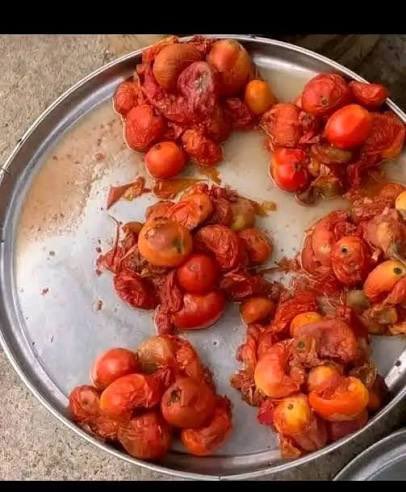
There is an urgent medical information I want to pass across. This will save your life, pls come close.
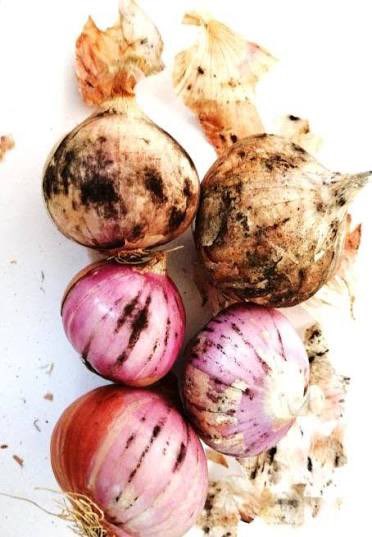
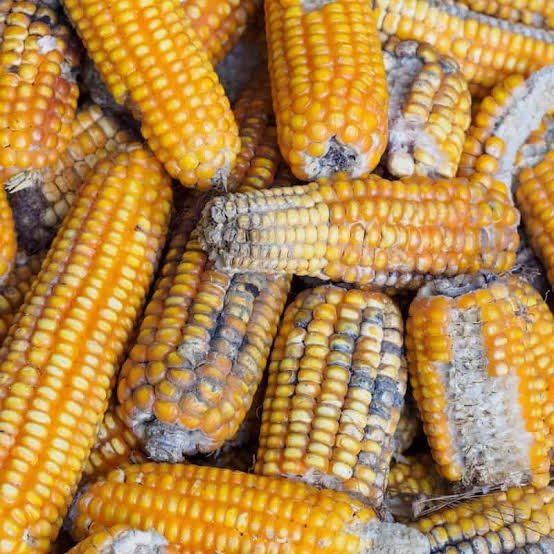
If you ever see rotten tomatoes that looks like these pictures I posted, or if you ever see onions with black spots on them or you see corn with mould on it,
PLEASE RUN FOR YOUR LIFE.
Why do I say this?
All these food items are contaminated with a poisonous fungus called AFLATOXINS.
Aflatoxins are notorious for increasing the risk of liver cancer. When you eat food that has this type of tomatoes, or you eat food cooked with this kind of onions or you eat this type of corn you are at risk of developing liver cancer.
Only eat fresh tomatoes, fresh onions and fresh corn. Avoid rotten tomatoes, blackened onions or corn with mould (even if they are cheaper to buy).
This is not a threat or a joke.
This is a real life serious medical issue.
Kindly share this information.
X% of Y is also Y% of X.
So if you want to find out what 7% of 50 is, you could instead find out what 50% of 7 is, which is 3.5.
This means that 7% of 50 is also equal to 3.5.
Happy Sunday.
Datti told Peter Obi to stay home if he cannot fight. Let me unpack that.
Datti’s core complaint is that Obi got the Labour Party ticket easily and should have stayed to fix the party’s problems instead of walking away.
But that is a dangerous argument. You do not fix a burning house by staying inside it. LP was not just structurally broken. It was being dismantled from within, with factional warfare, court cases, and alleged external interference. Obi leaving was not cowardice. It was triage.
Datti calling that “not ready to fight” while he himself just left Labour Party to join PRP is the most ironic thing I have read all week. You told another man to stay and fix the party. Then you left the party.
This is why you will go to NYSC camp and realize you hold the same https://t.co/vgfZdql9ca certificate with idiots that cannot write a formal letter.
Projects teach you a number of skills, minimum of which is the ability to do deep research, think critically, argue a specific point to a logical conclusion.
Y’all are just dense and obtuse, either intentionally or by unfortunate design.
I said what I said
THE WORLD GOES TO SCHOOL DIFFERENTLY:
1. Finland: No major exams until the final year of high school. Teachers are highly educated and respected. Consistently one of the best education systems in the world.
2. Japan: Students clean their own classrooms daily. Respect and responsibility are taught before academics. Character comes first.
3. South Korea: Students study until midnight. The university entrance exam is so critical that flights are rerouted on exam day. Burnout among young people is a serious national crisis.
4. United States: Standardized testing dominates everything. School quality depends on neighborhood wealth. Rich areas get better schools. Poor areas get what is left.
5. Germany: At age 10 students are placed into different school paths. Vocational training is taken as seriously as university. Youth unemployment stays low because of it.
6. India: The system runs on memorization and high-stakes exams. 1.5 million students compete for just 17,000 IIT seats. Pressure begins long before a child is ready.
7. Singapore: Ranked number one globally for math, science, and reading in 2022. Extremely competitive. Even the government admits student pressure has gone too far.
8. France: Philosophy is a required subject and counts toward the national exam. Students are trained to think critically and argue clearly from a young age.
9. Cuba: Education is completely free at every level. Literacy rate sits above 99 percent according to UNESCO. One of the most educated populations in Latin America.
10. Netherlands: Students are assessed at age 12 and placed into paths that suit their strengths. Academic and vocational routes are treated equally. No path is seen as lesser.
11. China: The Gaokao exam determines almost everything about a student's future. Pressure starts in early childhood and is carried by the entire family, not just the student.
12. Kenya: Primary school became free in 2003. Secondary school fees still push many families to breaking point. Dropout rates in rural areas remain high.
13. Russia: Historically strong in mathematics, science, and engineering. The system valued compliance over curiosity. That tension still shapes education today.
14. Brazil: Private schools are well funded and deliver strong results. Public schools are severely underfunded. Where you are born almost entirely determines the education you receive.
15. Denmark: University is free for Danish and EU citizens. Students also receive a monthly government stipend just for attending. Education is treated as a public good, not a personal expense.
16. Canada: Each province runs its own education system independently. Quality varies across the country. Indigenous history inclusion in the curriculum is real but still inconsistent.
17. Australia: Universities are strong and globally respected. Indigenous history is now formally part of the national curriculum. The debate over equal funding between public and private schools remains unresolved.
18. Sweden: No formal grades until age 12 or 13. Early pressure is believed to kill curiosity before it grows. Research consistently supports this approach.
19. New Zealand: Māori language and culture are officially part of the national curriculum. Legally protected but depth of teaching varies greatly between schools.
20. Switzerland: Two thirds of students enter vocational apprenticeships rather than university. Both paths are equally respected. Both lead to strong careers.
21. Norway: Public university is free for everyone including international students. Teachers must hold a master's degree. Teaching is one of the most respected professions in the country.
22. Israel: Schools emphasize critical thinking and entrepreneurship from an early age. Combined with technical military training, this directly feeds one of the most active startup ecosystems in the world.