New paper out in Environmental Modelling and Software: Transfer learning in environmental data-driven models: A study of ozone forecast in the Alpine region.
Link: https://t.co/B4mLsiYeJQ
Nutrient and irrigation inputs can enhance crop growth, yet their role in adapting crop production is overlooked. We develop an integrated strategy by optimizing irrigation and nitrogen inputs to provide sustainable solutions for climate adaptation https://t.co/2RCfC94rYi
📢 Aprende a gestionar nexo agua-energía-alimentos-ecosistemas, esencial para enfrentar los retos del #CC.
🗓️ 15-17 de enero 2025
👩🏫👨🏫Expertos de ETH Zurich, POLIMI, UPM y la UPV
📚 Convalidable por 2 ECTS
💶 Precios reducidos
🙌¡Últimos días para ✍️!
🔗 https://t.co/3nMltU1uSp
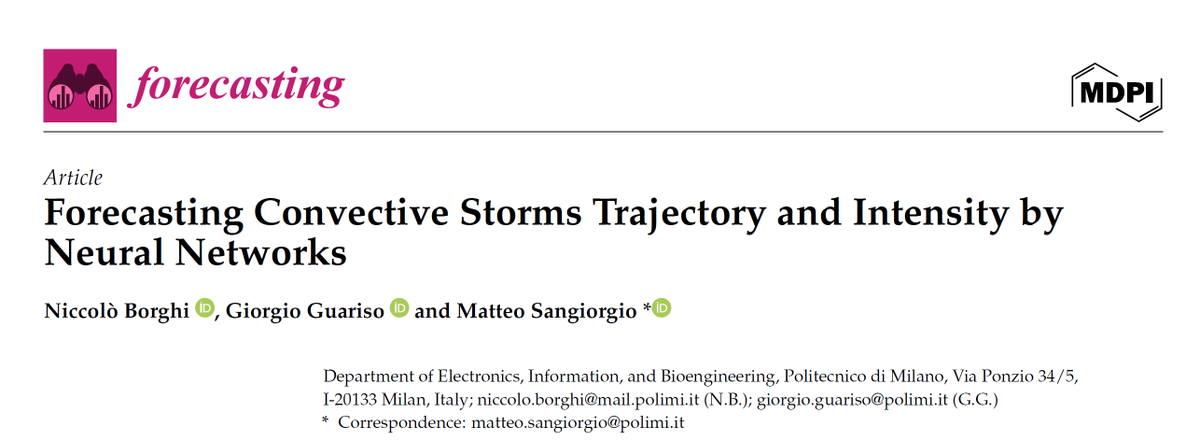
#MostViewedPapers in Forecasting MDPI
"Forecasting Convective Storms Trajectory and Intensity by Neural Networks",
by Dr. Matteo Sangiorgio @teos1992 from Politecnico di Milano @polimi, et al.
🔗 https://t.co/eVSQvS6l73
I'm excited and honored to welcome Andrea Citrini as a postdoc to my team at @carnegiescience#Stanford. Andrea brings extensive expertise in hydrology and water resources. We are thrilled to have Andrea on board and look forward to collaborating with him https://t.co/1bQ6o13k0W
📢We are looking for a highly motivated postdoctoral researcher with an interest in #IceOcean and #IceAtmosphere interactions!
🌍The position will be based at CECI/CERFACS (@CerfacsOfficial) in Toulouse, France.
More information and application deadline: https://t.co/dRJ0gMDNar
Our predictive model has been specifically tailored to the @MeteoSvizzera thunderstorm tracking system and can forecast the convective cell trajectory, radar reflectivity (a proxy of the storm intensity), and area.
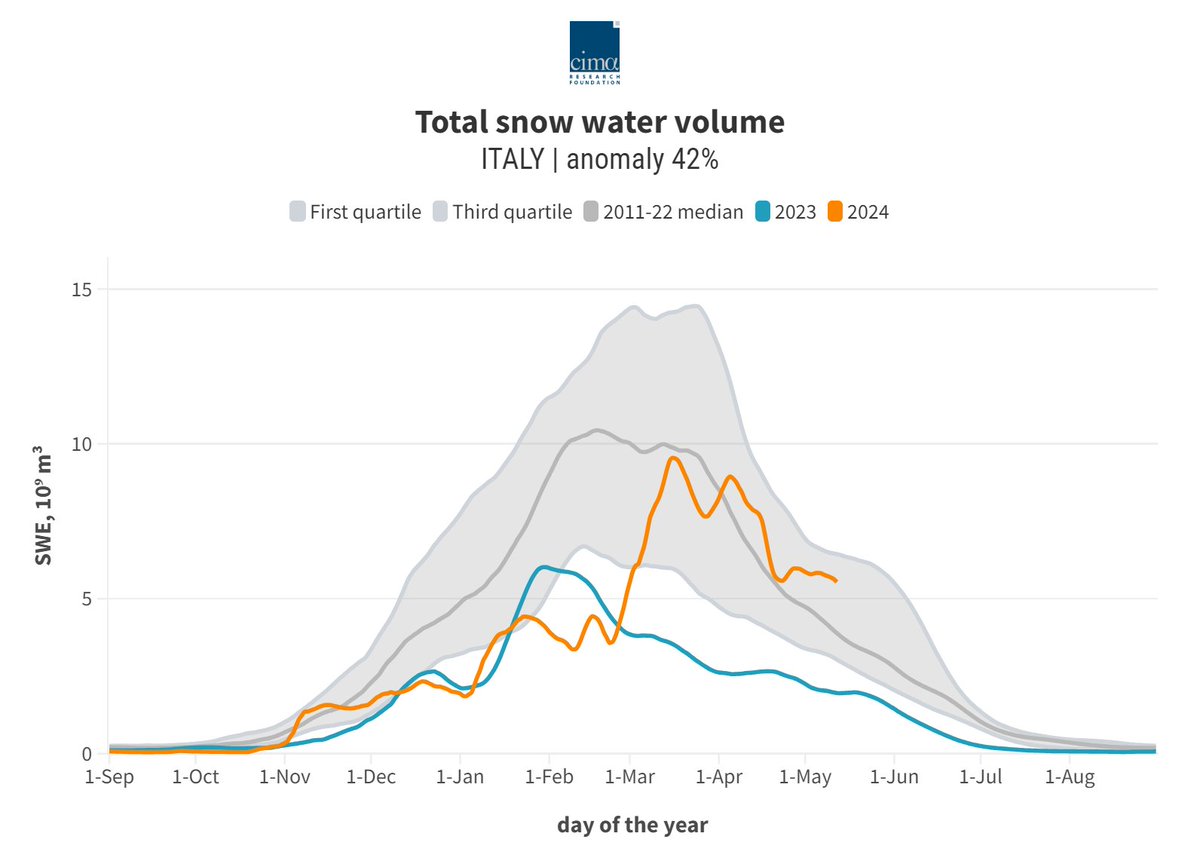
È tempo di un nuovo #aggiornamento sullo stato della risorsa idrica nivale in #Italia! Abbiamo superato il picco di marzo-aprile con un surplus importante (+42%), quindi tiriamo le somme per quest’anno.
Ecco 4 lezioni che abbiamo imparato e 3 messaggi per i prox mesi!
Thread🧵👇
We investigate the possibility of training a model in a data-rich site and reusing it, without retraining or tuning, in a new data-scarce site.
To this aim, we introduce the concept of transferability matrix and derive transferability indicators.
New paper out in Environmental Modelling and Software: Transfer learning in environmental data-driven models: A study of ozone forecast in the Alpine region.
Link: https://t.co/B4mLsiYeJQ
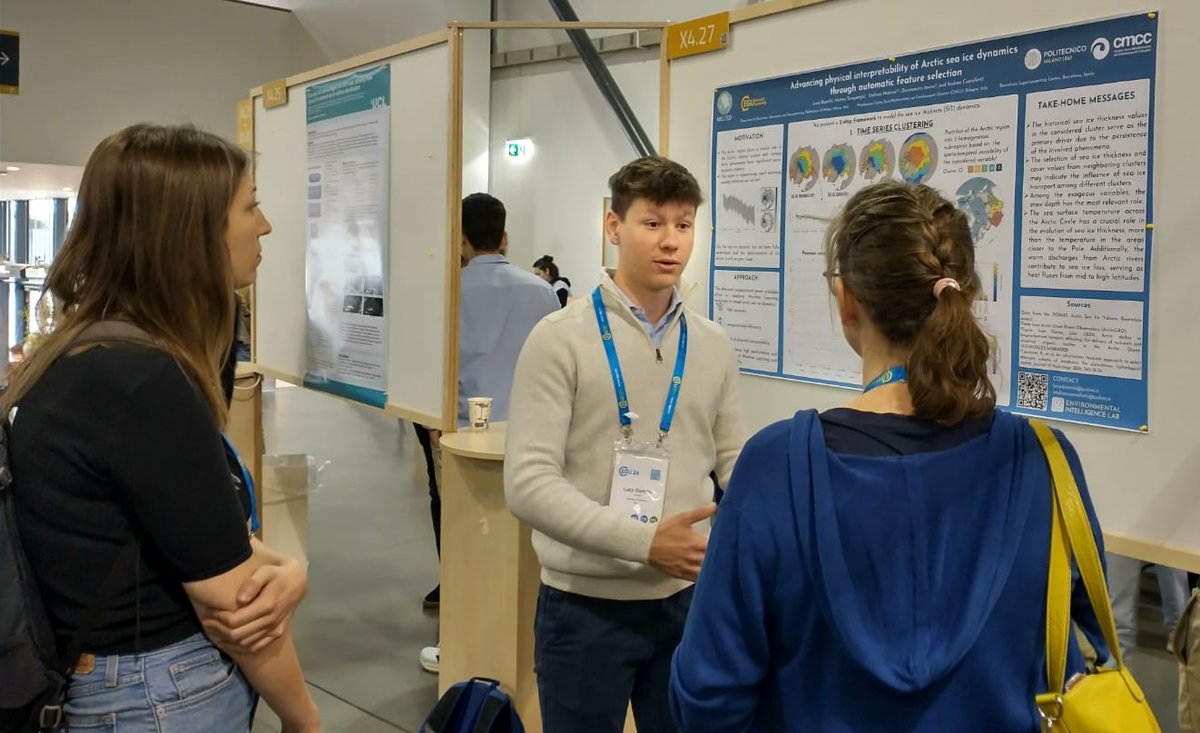
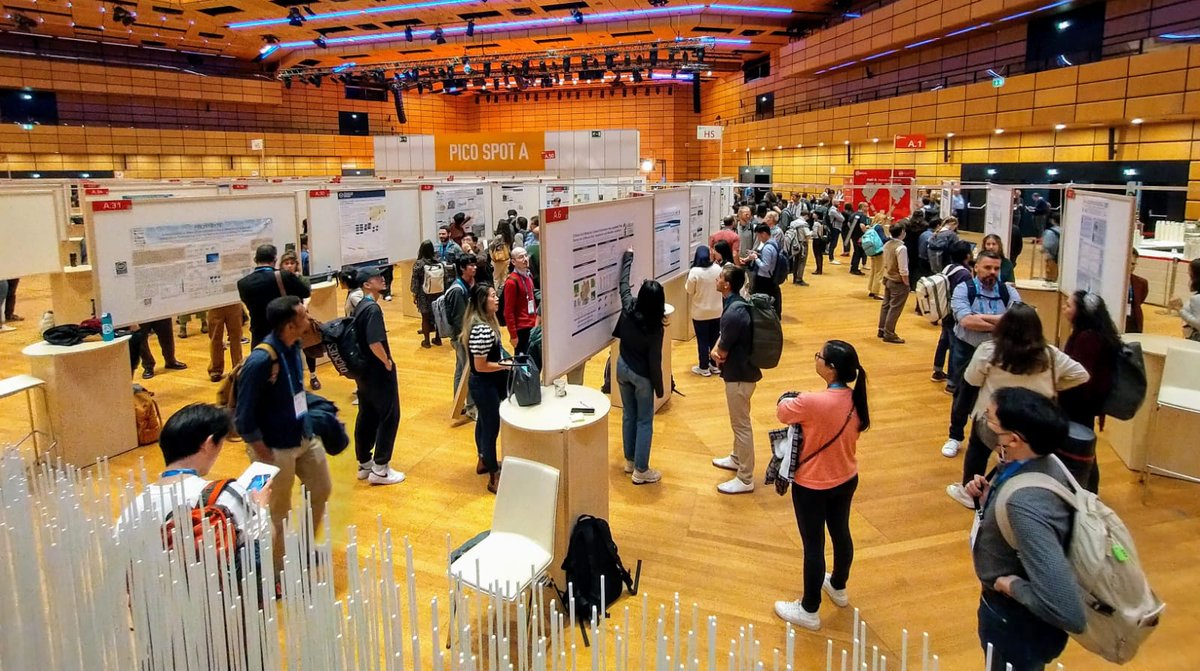
Luca Bianchi presenting our machine learning framework to identify the drivers of Arctic sea ice dynamics at #EGU24
Read more about our work here: https://t.co/SN5qy9a5wR
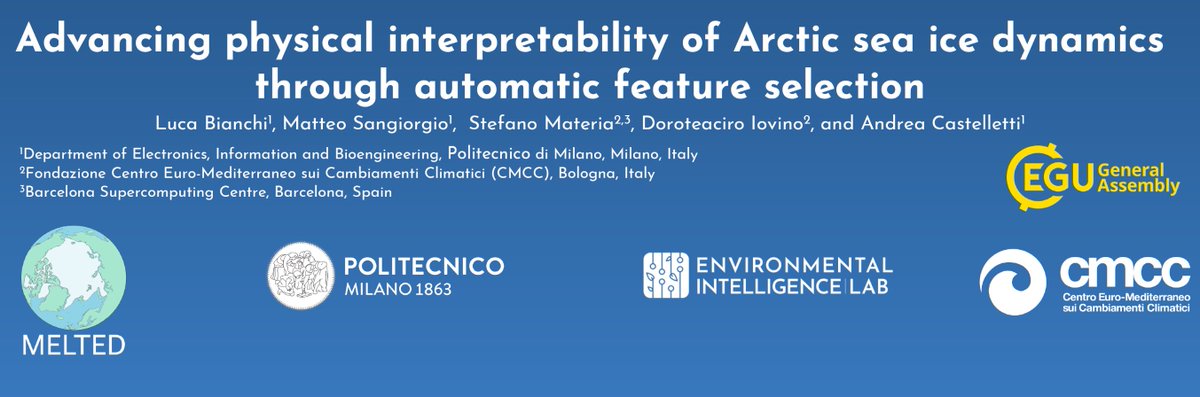
Interested in Arctic sea ice modeling by machine learning and feature selection techniques? Come to our poster #EGU24 tomorrow (Thu, 18 Apr) at 10:45 - Hall X4 (X4.27). See you there!!!
Abstract here
https://t.co/T7T4IW65KT
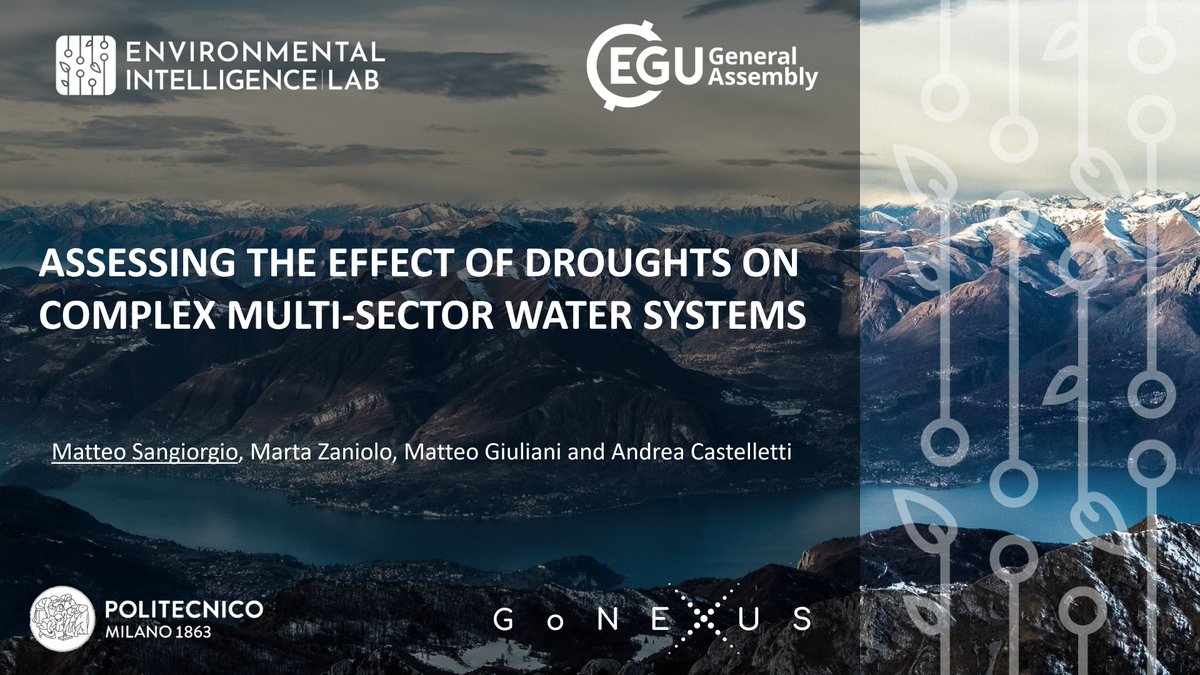
How can we assess the impact of droughts on complex water systems? Which are the most relevant drought features? Can we evaluate the effect of adaptation measures? We tackled these questions in our #EGU24 presentation.
Find out more at https://t.co/SHOFgc9hTN