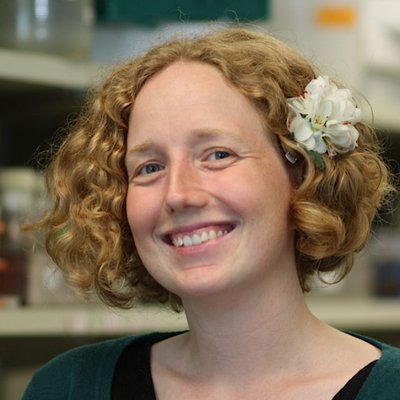
Assistant professor of Biological Sciences at Pitt, studying evolution, genes, and microbes. Now mostly hangs out at: @[email protected]. #NewPI She/her
🎉Our work on the ancestry of innate immune proteins is now published in PLOS Biology!
Great insights from postdoc Ed Culbertson on the connections between mammalian immunity and bacterial anti-phage immunity🦠
Original tweet thread on our findings here: https://t.co/k5E0lKVrpM
How did our #InnateImmune systems first evolve? Ed Culbertson & @tera_levin reveal origins of 3 families of #antiviral proteins: CD-NTases (incl #cGAS), STINGs & #Viperins; each reveals a different story connecting animal & bacterial immunity #PLOSBiology https://t.co/vtPDAxDGLW
A great program at UCSF to start your own small lab. Please alert graduating PhD students around you who you think have a strong track record and the potential to succeed with early independence.
We're hiring! If you have a background in any subdiscipline of #ecology (global change and microbial ecology particularly welcome) and would like to work with us, check out the job ad below. #editorjobs#ecologyjobs
https://t.co/CpNpjUj5hL
In a new study, we report the discovery of a human homolog of SIR2 antiphage proteins that participates in the TLR pathway of mammalian innate immunity!!
Co-led with @EnzoZ_P lab, in collab with @morehouse_ben
https://t.co/AvaPknd6XX
The University of Chicago has two faculty searches that should interest evolutionary biologists/geneticists. A fantastic university with lots of strong colleagues across departments.
Get in touch if you have any questions!
https://t.co/CIGQ8b9bXd
https://t.co/MeV2SUmqUN
VEuPathDB coming back online is terrific. BUT for now it is only a temporary reprieve that brings back a static version.
Please visit https://t.co/uzMgkUa18H to stay informed on what's happening and take the anonymous survey there to help inform discussion about the future
I’m pleased to announce my transition to Chair of the Department of Microbiology at NYU Grossman School of Medicine. As part of this role, we’re recruiting two junior faculty for 2025, focusing on infection biology. Learn more and apply: https://t.co/Dcf8ynAgWu
We are hiring! Assistant Professor in Microbiology (with emphasis on molecular and/or cellular biology). Please, spread the word:
https://t.co/D50PeZ7aWp
Our new article, “The Prokaryotic Roots of Eukaryotic Immune Systems,” is out. Immune factors from both prokaryotes (e.g., restriction-modification, CRISPR/Cas systems) and eukaryotes (antibodies) have been central reagents for the very emergence of modern biochemistry and molecular biology. But this historical course superficially indicated that the immune systems of prokaryotes and eukaryotes might have little in common. However, starting from our early work on domains involved in eukaryotic apoptosis in the late 1990s, it started becoming increasingly clear to us that there were deep evolutionary connections between eukaryotic and prokaryotic immune systems despite the extreme divergence that is a natural feature of them. These connections take multiple forms: 1. Direct homologies, where immune components were either vertically inherited or laterally transferred from the prokaryotic superkingdoms. This group includes the growing body of evidence regarding domains at the interface of immunity and apoptosis; 2. Then there are homologous domains that were drawn from different prokaryotic conflict systems e.g., those involved in interorganismal conflict and incorporated into eukaryotic immunity – e.g., the mutagenic AID/APOBEC -like deaminases. 3. Finally, there are the analogs that have convergently acquired comparable immune functions in the different superkingdoms. Together they make up a tangled tale of immunity of which we provide a brief account here. You will find little sketches of many domains of interest to the connoisseur and first-time explorer alike: SMODS and friends, TIR, Sirtuin, ADP-ribosyltransferase fold, Schlafen, base deaminases, viperins, caspases, FGS, ricin, GTPases, STANDs, TRADD-N, the Death-like fold and more. https://t.co/dHzdPcP1kX
We’re hiring in my Division of @BerkeleyMCB!
Come join a fantastic group of immunologists in a larger community of basic scientists in the department
https://t.co/Z0ysrFoqRM
VEuPathDB data will remain available beyond the day NIAID meant it to go dark, but no new data will be brought in.
Get involved with @VEuPathDB in the conversation about the future of shared data.
THREE assistant professor faculty positions in microbiology at Yale!
(1/3) Microbial Pathogenesis @YaleMicroPath: https://t.co/bUb0Boc23C, deadline 10/15. Virologists, please apply.
New Lab Content: @lf_cabo shows that Toxoplasma rewires placental trophoblasts with important developmental consequence. My fav part: infection suppresses trophoblast fusion, a critical process in maintaining the protective placental barrier. Read 👇 https://t.co/8lT7Wgs1c7
It’s difficult to wrap one’s mind around NIH’s decision to shut down the most important shared resource for work in many of the world’s most impactful infectious diseases.
https://t.co/OSdzyZpJoE
There have been some exciting new papers using anti-phage genes to discover new eukaryotic immune defenses... and vice versa! 🤯
These cross-kingdom evolutionary links are super cool. Check out our new Preview for an overview:
https://t.co/75K3MjAFqh
The link for the faculty position is now posted! Deadline is October 15th. Please share widely with talented scientists in your network. Come join us at UCSF!
https://t.co/Gccrtpl8ym