Happy Holidays from all of us at Terrapass!
As we celebrate 22 years of climate action, we're taking a moment to reflect on the people who have made our journey possible.
Since 2004, Terrapass has worked alongside dedicated customers, partners, and supporters who share our commitment to addressing climate change and supporting environmental projects around the world.
From our entire Terrapass team, thank you! We're truly grateful for your trust, collaboration, and continued support throughout the years.
As we enter the holiday season, we wish you and your loved ones happiness, health, and a wonderful holiday season.
Here's to 22 years of climate action and many more years of making a difference together!
6 Ways to Reduce Your Carbon Footprint This Holiday Season
Holiday dinners bring people together, and a few thoughtful choices can help reduce their environmental impact.
🥦 1. Add More Plant-Based Dishes
Include seasonal vegetables, grains, and plant-based alternatives to help reduce food-related emissions.
🛒 2. Shop Seasonal & Local
Choose seasonal ingredients and locally grown options when practical. Consider how foods are produced, not just how far they travel.
🍽️ 3. Plan Portions Wisely
Estimate how much food you'll need to avoid unnecessary food waste.
♻️ 4. Reduce Single-Use Items
Use reusable plates, utensils, napkins, and serving dishes instead of disposable alternatives.
🥡 5. Save Your Leftovers
Store extra food properly, share with guests, or turn leftovers into meals for the following days.
🚗 6. Travel Together
Encourage guests to carpool or share rides to help reduce transportation emissions.
Small changes at the dinner table can add up. This holiday season, celebrate with family and friends while making thoughtful choices for the environment.
#Terrapass #SustainableHolidays #CarbonFootprint #HolidayTips #FoodWaste #ClimateAction
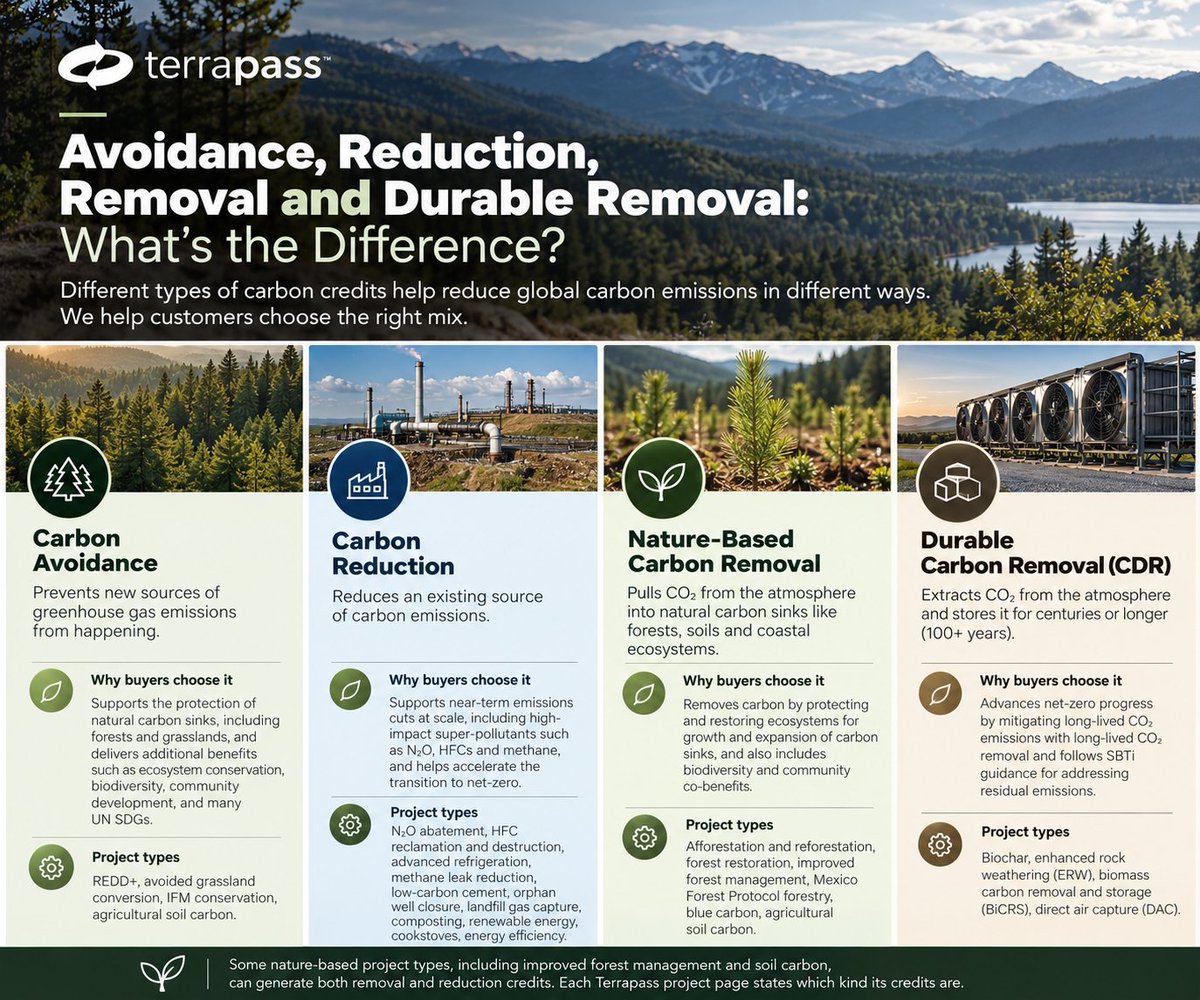
Carbon Avoidance, Reduction, Removal & Durable Removal: What's the Difference? Not all carbon credits work the same way. Different types of projects address greenhouse gas emissions through different approaches. At Terrapass, we help customers understand these differences and choose the right mix to support their sustainability goals.
🌳 1. Carbon Avoidance — Preventing New Emissions
What it does: Prevents new sources of greenhouse gas emissions.
Why buyers choose it: Protects natural carbon sinks, including forests and grasslands, while supporting biodiversity, ecosystem conservation, community development, and UN Sustainable Development Goals (SDGs).
Projects: REDD+, Improved Forest Management, and Avoided Grassland Conversion.
🏭 2. Carbon Reduction — Reducing Existing Emissions
What it does: Reduces emissions from existing greenhouse gas sources.
Why buyers choose it: Supports near-term emissions reductions, including powerful greenhouse gases such as N₂O, HFCs, and methane, helping accelerate progress toward net-zero.
Projects: N₂O abatement, HFC reclamation and destruction, advanced refrigeration, methane leak reduction, low-carbon cement, orphan well closure, landfill gas capture, composting, renewable energy, cookstoves, and energy efficiency.
🌱 3. Nature-Based Carbon Removal — Removing Atmospheric CO₂
What it does: Removes CO₂ from the atmosphere and stores it in forests, soils, and coastal ecosystems.
Why buyers choose it: Supports the restoration and expansion of natural carbon sinks while providing biodiversity and community benefits.
Projects: Afforestation, reforestation, forest restoration, improved forest management, Mexico Forest Protocol forestry, blue carbon, and agricultural soil carbon.
🔬 4. Durable Carbon Removal (CDR) — Long-Term Carbon Storage
What it does: Removes atmospheric CO₂ and stores it for extended periods, typically 100+ years.
Why buyers choose it: Supports long-term net-zero strategies by addressing residual emissions through durable carbon removal.
Projects: Biochar, enhanced rock weathering (ERW), biomass carbon removal and storage (BiCRS), and direct air capture (DAC).
💡 Did You Know?
Some nature-based projects, including improved forest management and agricultural soil carbon, can generate both reduction and removal credits. Each Terrapass project page identifies the type of credits offered.
💚 Different Approaches. Different Benefits. Solutions Aligned with Your Goals.
Terrapass helps individuals and businesses navigate carbon credit options and select projects aligned with their sustainability priorities.
🌐 Learn more at https://t.co/8CHG0IdtnL
#Terrapass #CarbonCredits #CarbonRemoval #CarbonReduction #CarbonAvoidance #ClimateAction #Sustainability #NetZero
♻️ America Recycles Day!
Small actions can make a difference. Recycling helps conserve natural resources, reduce waste, and keep valuable materials in use.
Today is a reminder to make recycling part of our everyday habits. From reducing unnecessary packaging to properly sorting recyclable materials, every effort counts.
Together, we can support a more sustainable future.
#AmericaRecyclesDay #Recycling #Sustainability #WasteReduction #Terrapass
Happy Veterans Day!
Today, we honor the men and women who have served our country with courage, dedication, and sacrifice.
To all veterans, thank you for your service and for the sacrifices you've made to protect the freedoms we enjoy today.
From all of us at Terrapass, we are grateful for you.
#VeteransDay #ThankYouVeterans #HonoringOurHeroes #Terrapass
Protecting Oregon’s Coastal Rainforest
Along Oregon’s northern coast, the Coastal Edge Improved Forest Management (IFM) Project helps protect 3,291 acres of rainforest in Clatsop County.
Owned and managed by the North Coast Land Conservancy, the Rainforest Reserve is home to diverse habitats and more than 25 miles of streams that support nearby coastal communities.
Through improved forest management, carbon financing helps make long-term conservation possible, supporting forest restoration, carbon storage, and the protection of these valuable ecosystems.
At Terrapass, we connect your carbon credit purchases with projects working to deliver measurable climate benefits.
Learn more about the Coastal Edge IFM Project and the work supported through carbon financing.
https://t.co/X0RwQ32SXE
#Terrapass #ForestConservation #CarbonRemoval #ClimateAction #Oregon
October is a good time to close the loop on what you learned.
Look at what changed, note which reductions are realistic, and identify the information you still need before making the next decision. Progress is easier to manage when the next step is specific.
What will you carry into November?
#ClimatePlanning #ClimateAction #Terrapass
World Sustainability Day is a reminder that different environmental goals call for different tools.
Reducing emissions, supporting verified carbon projects, purchasing Renewable Energy Certificates, and supporting water restoration are not interchangeable actions. A stronger sustainability approach starts with understanding the goal, then choosing the tool that aligns with it.
Which environmental goal is your organization focused on most right now?
#WorldSustainabilityDay #Sustainability #Terrapass
Home and business footprints use different records, but the same principle applies: start with what you can document.
At home, that might include energy, transportation, travel, and lifestyle inputs. For a business, it may include facility energy, fleet, travel, shipping, and other operational records.
Which side of the comparison would be more useful to see broken down further?
#CarbonFootprint #ClimateEducation #Terrapass
International Day of Climate Action is tomorrow.
Climate action is not one purchase or one perfect decision. It is an ongoing process of understanding impact, reducing emissions where possible, and using credible tools as part of a broader strategy.
What is one climate action you want to keep working on after the day is over?
#ClimateActionDay #ClimateAction #Terrapass
A climate goal is easier to use when the starting point is clear.
Before setting a target, define what you are measuring, choose a consistent baseline period, identify where direct reductions may be possible, and note any gaps in the data. A clear review process makes it easier to revisit the plan and explain what changed over time.
Which question would your team need to answer first?
#ClimatePlanning #CarbonFootprint #Terrapass
Seasonal routines can change where emissions show up.
As temperatures shift and travel patterns change, home energy use, transportation, and other daily activities may not look the same as they did a few months ago. Rechecking the inputs can help keep an estimate grounded in current behavior.
What changes most for you in the fall?
#CarbonFootprint #ClimateEducation #Terrapass
Operational reductions and carbon credit decisions are related, but they are not the same step.
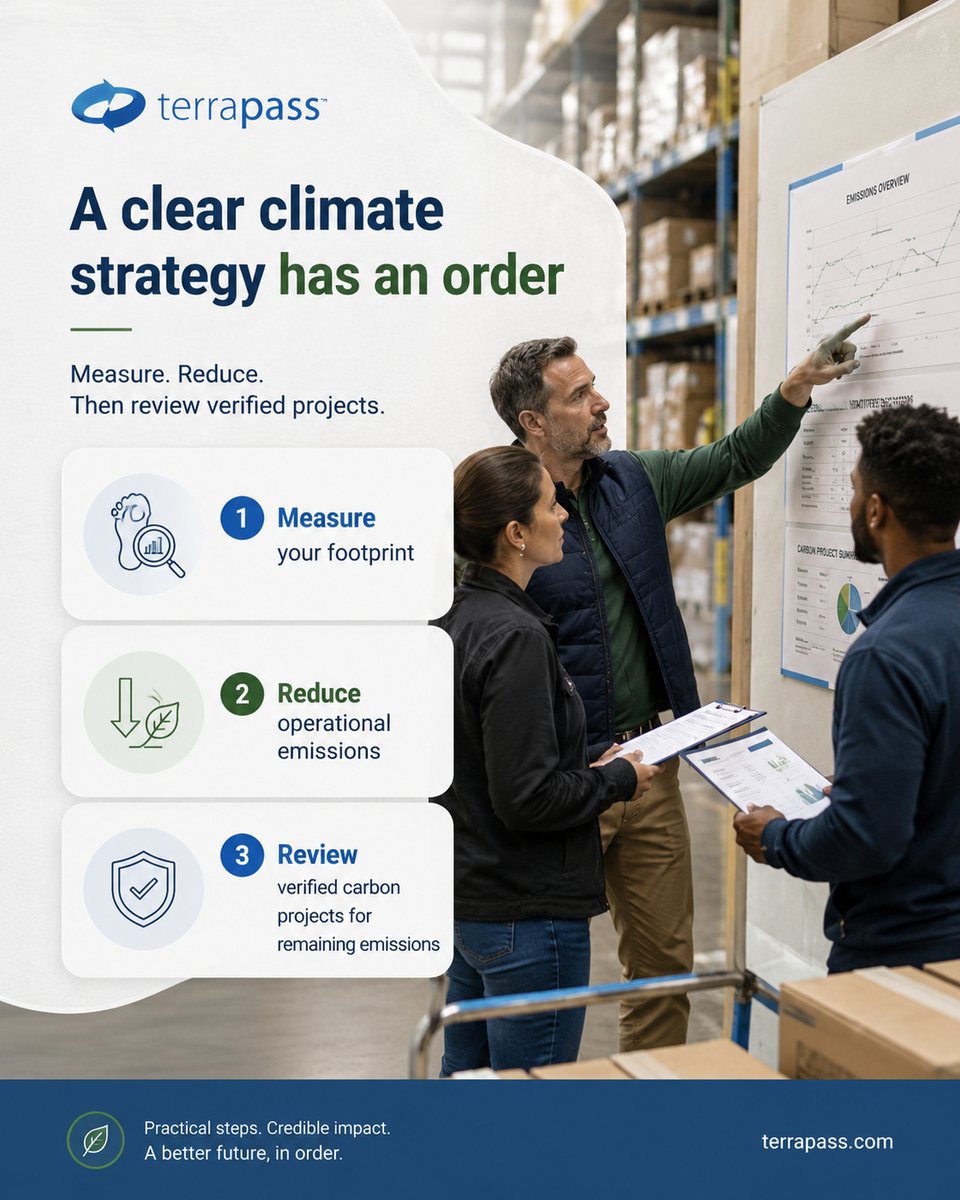
For businesses, a clearer sequence is to measure the footprint, identify realistic opportunities to reduce emissions, and then evaluate verified projects as part of a broader climate strategy. Keeping those decisions separate can make the process easier to explain and review.
Which part of that process creates the most internal questions?
#BusinessClimateAction #CarbonCredits #Terrapass
A project page should give you more than a headline.
Our project pages can include the location, project summary, methodology or protocol details, monitoring data, calculations, site inspections, independent third party verification, and other documentation when available.
When you compare projects, which detail do you look for first?
https://t.co/PmQdjAyt9s
#Terrapass #ProjectTransparency #CarbonCredits
Industrial emissions projects are very different from forest projects.
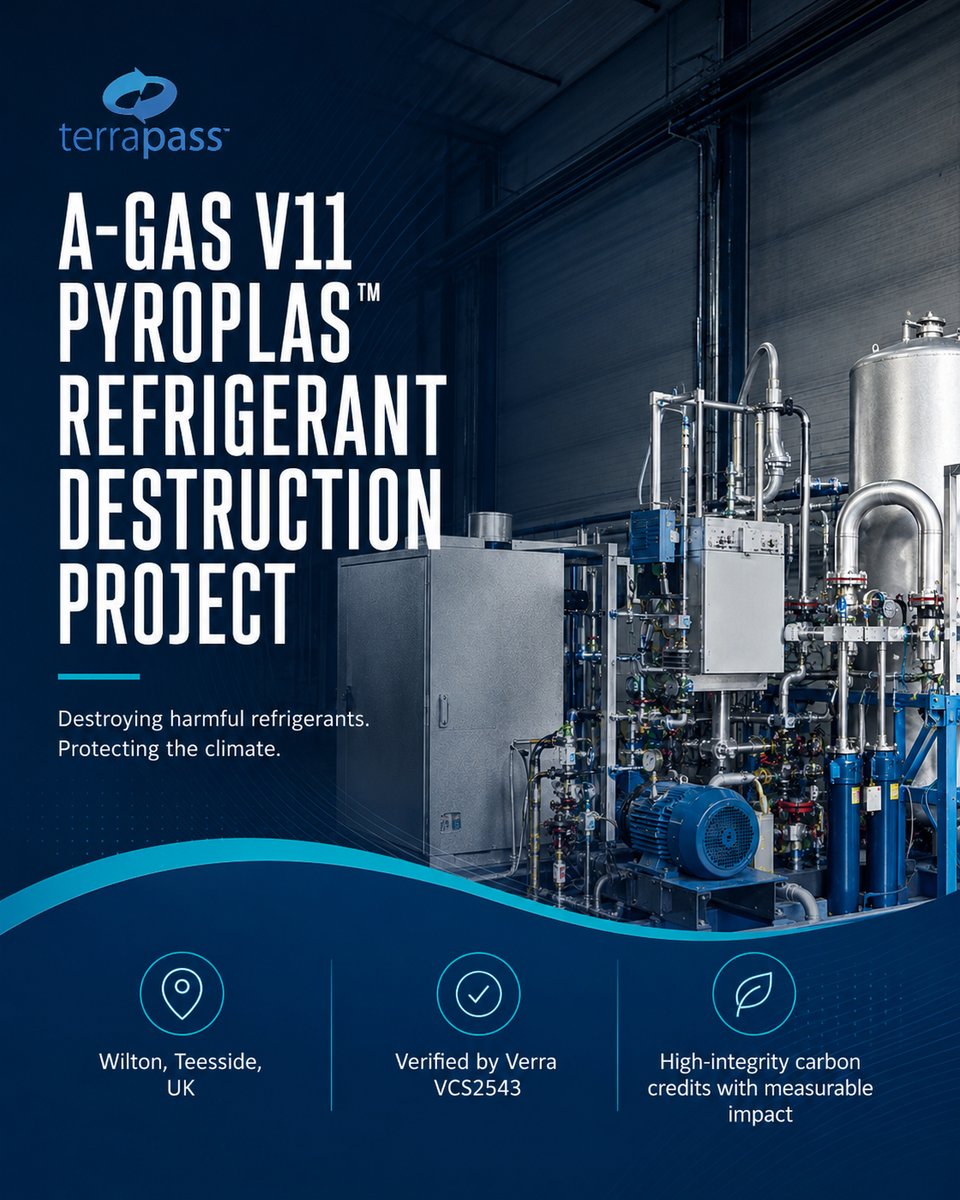
A-Gas V11 in Bowling Green, Ohio, recovers used HFC refrigerants from refrigeration and air conditioning equipment, then reclaims and repurposes them for reuse. Credit revenue helps support recovery, transport, and processing to virgin purity levels.
The project is third-party verified and registered with the American Carbon Registry as ACR827.
What about this project would you want explained next?
https://t.co/xIUfXEXj8S
#Terrapass #VerifiedCarbonProjects #IndustrialEmissions
Efficiency starts with the systems you already use.
A quick review of controls, schedules, maintenance, and equipment can help reveal where energy is being used when it does not need to be. The next step is choosing one realistic change and tracking what happens.
Which system would you review first?
#EnergyEfficiency #ClimateAction #Terrapass
Energy Efficiency Day is about using less energy to perform the same task.
For homes and businesses, practical reviews can start with lighting, heating and cooling, equipment schedules, and maintenance. The goal is not a perfect overhaul in one day. It is finding opportunities to reduce energy use without losing the function you need.
What is one system you would check first?
#EEDay #EnergyEfficiency #Terrapass
In forest conservation, the project area, pressures, and strategy must be clearly defined.
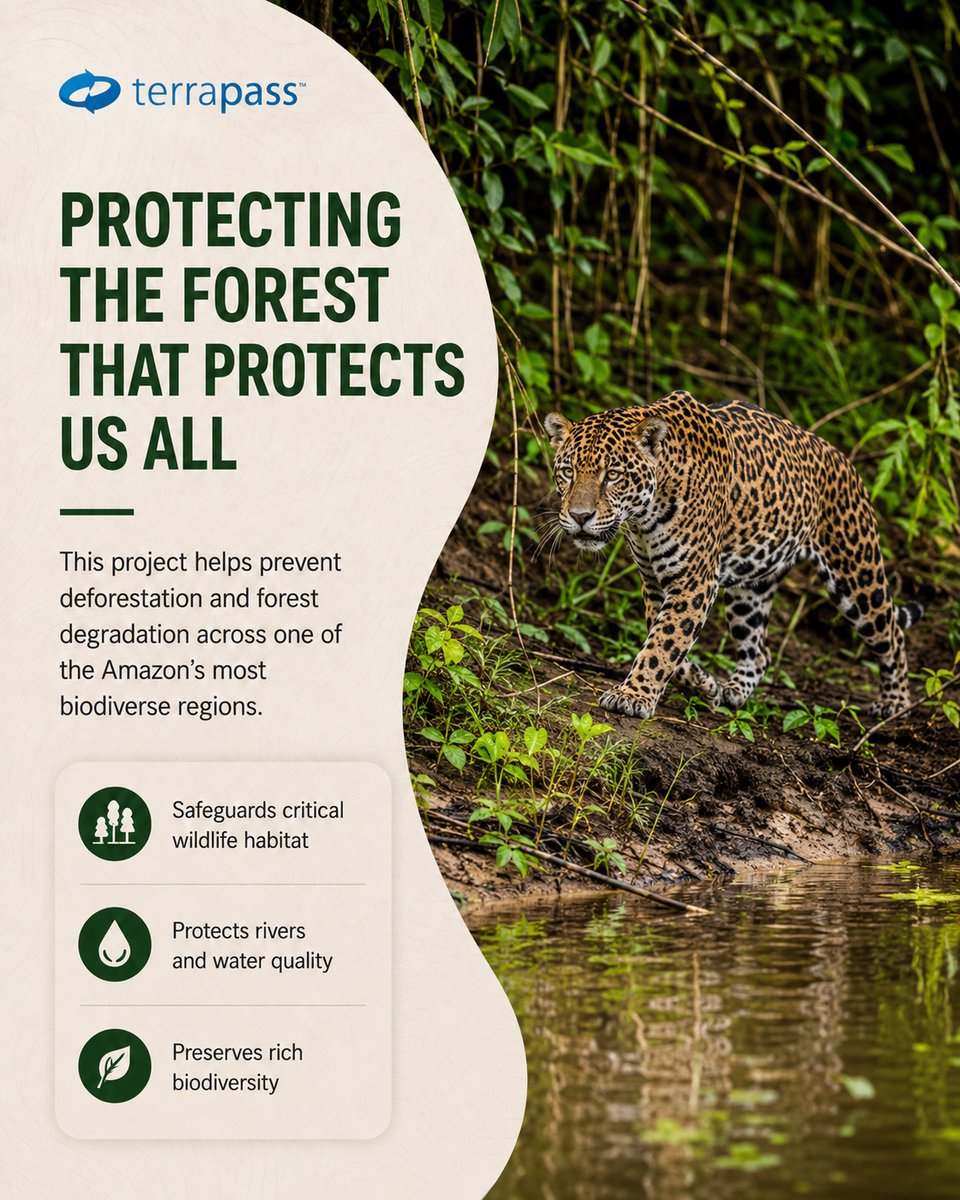
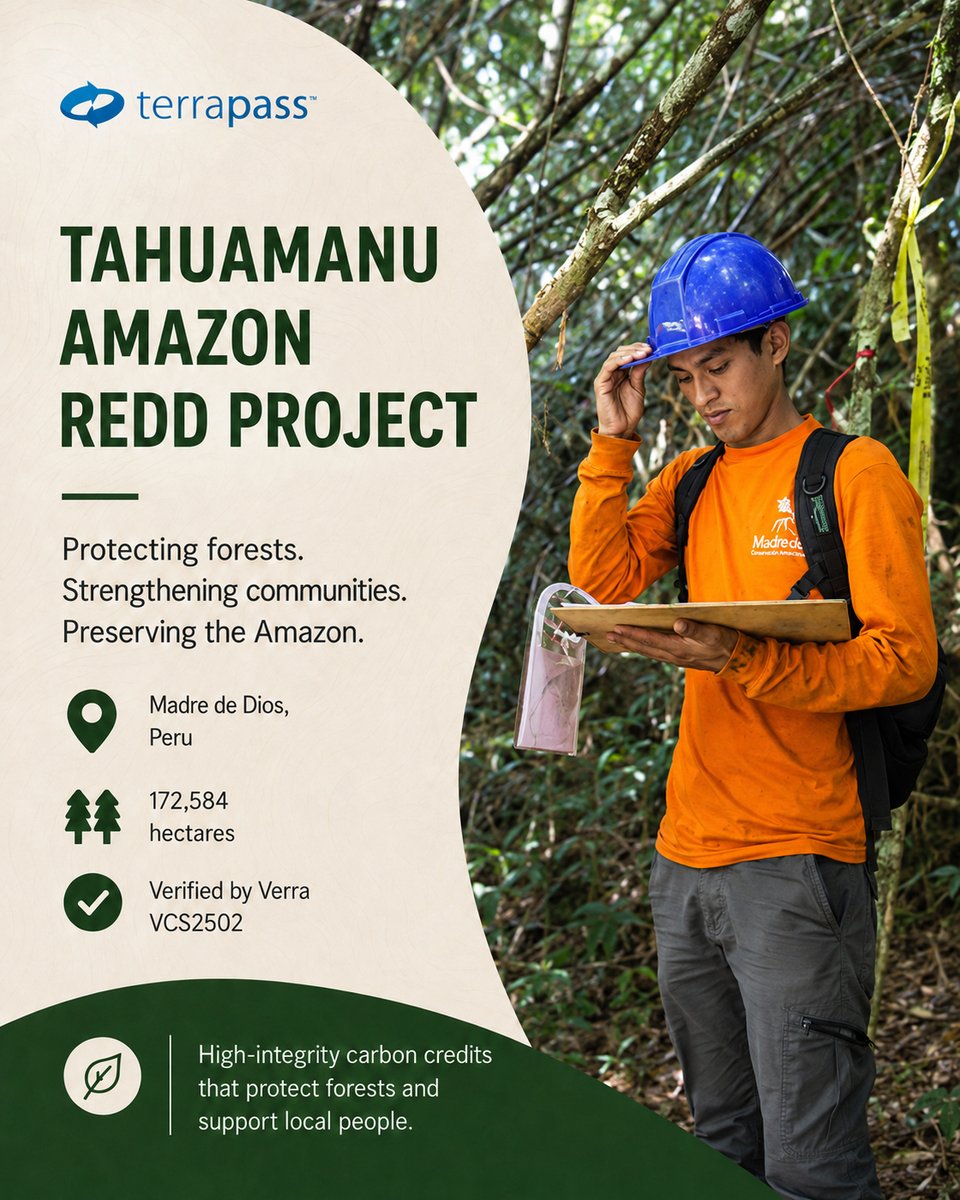
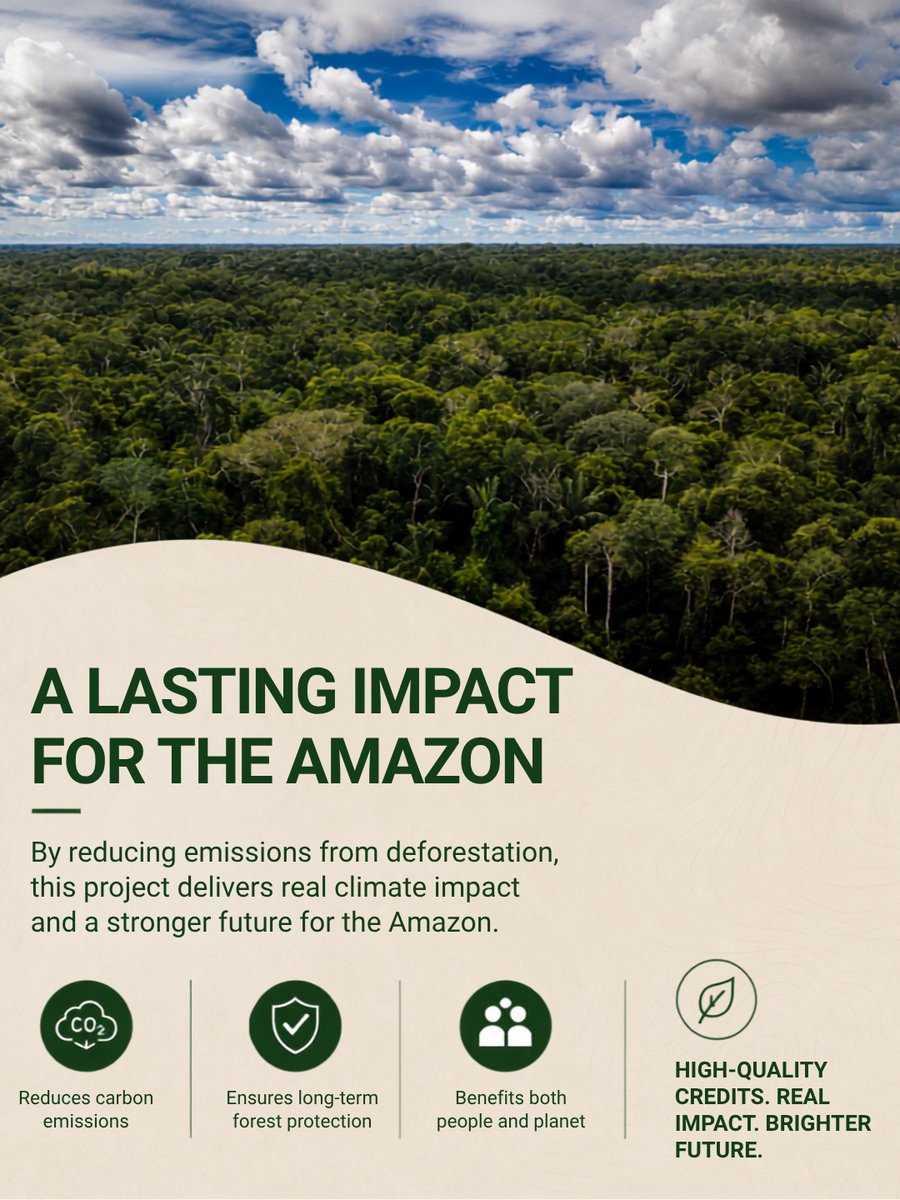
The Tahuamanu Amazon REDD Project is located in the Madre de Dios region of Peru and covers 172,584 hectares of lowland Amazon rainforest. The project addresses deforestation pressure associated primarily with small-scale agriculture.
The project activity includes forest monitoring, field assessments, and community support for sustainable livelihood initiatives, partnerships, outreach and training. The project is third-party verified and registered under Verra as VCS2502, with monitoring and validation reports available for review.
Which part of the project would you want to explore first?
https://t.co/CseabCGM2y
#Terrapass #VerifiedCarbonProjects #ForestConservation
Carbon footprint comparisons are more useful when the inputs are consistent.
If you are comparing one period with another, use the same categories where possible, keep the time period clear, and note any missing records instead of filling gaps with assumptions.
What is the hardest category for you to keep consistent?
https://t.co/sxWvgO1W2S
#CarbonFootprint #ClimateEducation #Terrapass
An annual carbon footprint review does not need to solve everything. Bring the operational records together, review the estimate, and choose your carbon reduction priorities for the next year.
If your team picked one operational priority, what would it be?
#Terrapass #BusinessPlanning #ClimateAction