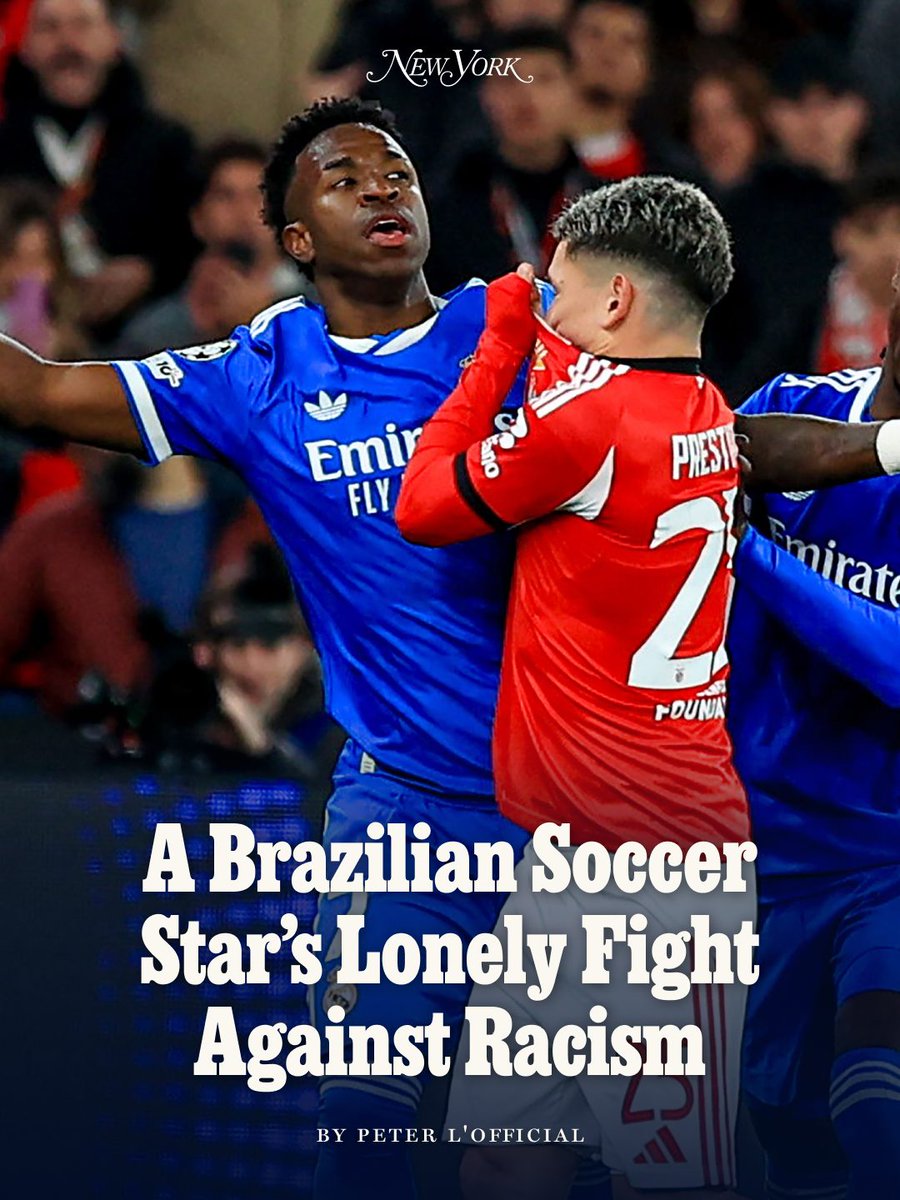
During his eight years in Spain, playing for Real Madrid, the Brazilian forward Vinícius Júnior has been a frequent subject of racist abuse, at least 20 times, by his count. Through Vinícius, and Brazil at large, we can see how players with roots in the African diaspora helped create the multibillion-dollar enterprise that is soccer today, writes Peter L'Official (@apostropheoh). The sport’s first global superstar, Pelé, was a Black man from southeastern Brazil, which makes it remarkable that one of his heirs, so many years later, has become a focal point for so much racist abuse.
Why? “The simple answer is he has never been the only one,” writes L’Official. As Vinícius prepares to take the field for Brazil at the World Cup — an event that will showcase on the global stage the ubiquity and virtuosity of Black footballers, representing nations as demographically different as Austria and Japan — it’s clear that soccer’s fraught relationship with race is both stuck in time and haunted by the sport’s ever more cosmopolitan future. FIFA likes to say that “football unites the world,” but Vinícius’s experience suggests football alone can do no such thing.
Read L’Official on how Vinícius can serve as a study for how to combat racism in soccer: https://t.co/oR6lpR5Fuc
Na boa? Por mais que eu goste do atual segundo uniforme da seleção (sim, sou uma voz solitária nessa opinião), eu acho que na próxima Copa, precisamos urgentemente voltarmos a combinação simples do azul+branco na camisa dois do Brasil.
Esse drip clássico é insuperável.👌🏿