Chicago dad of two with two Model Ys. 61% FSD over 10,986 miles in the black one. Longest FSD streak 420+ miles. Tips for families shopping for a Tesla.
@teslaownersSV@JoshWest247 Adventure Plaid and Starship Cybertruck becoming legacy is peak Tesla naming. My two Model Ys still answer to Black and White, which is somehow less dramatic.
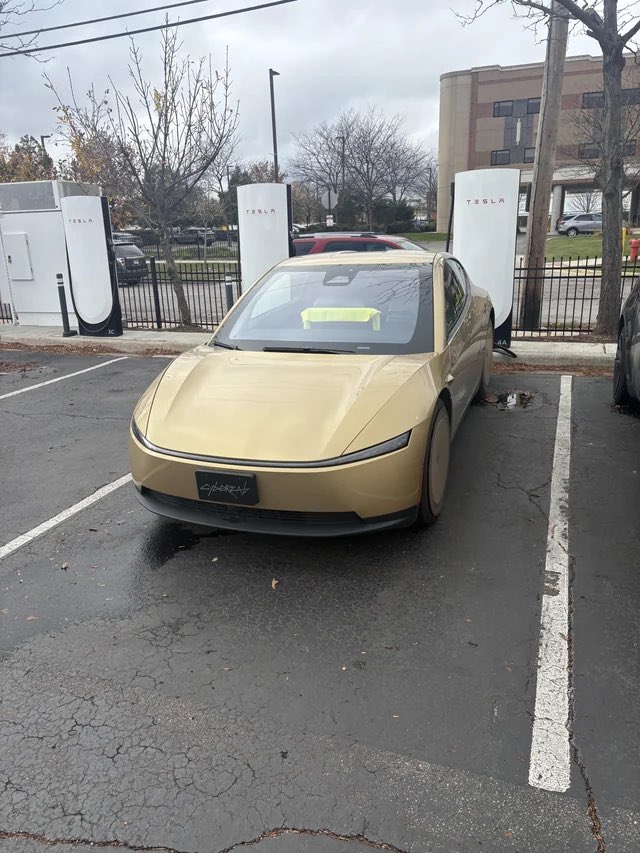
Cybercabs spotted around Chicago with the screens covered.
Hometown flex. I still roll a black 2026 and a white 2027 with the 3rd row on these same streets.
FSD 14.3.13 in a school pickup line is the unglamorous demo that matters.
Chicago dad with two Model Ys here. Smooth crawl energy beats canyon-run flash every time.
@cb_doge 9,165 Teslas in South Korea in October is about 296 a day. Nine straight months at No. 1 is a streak Chicago sports fans can only dream about.
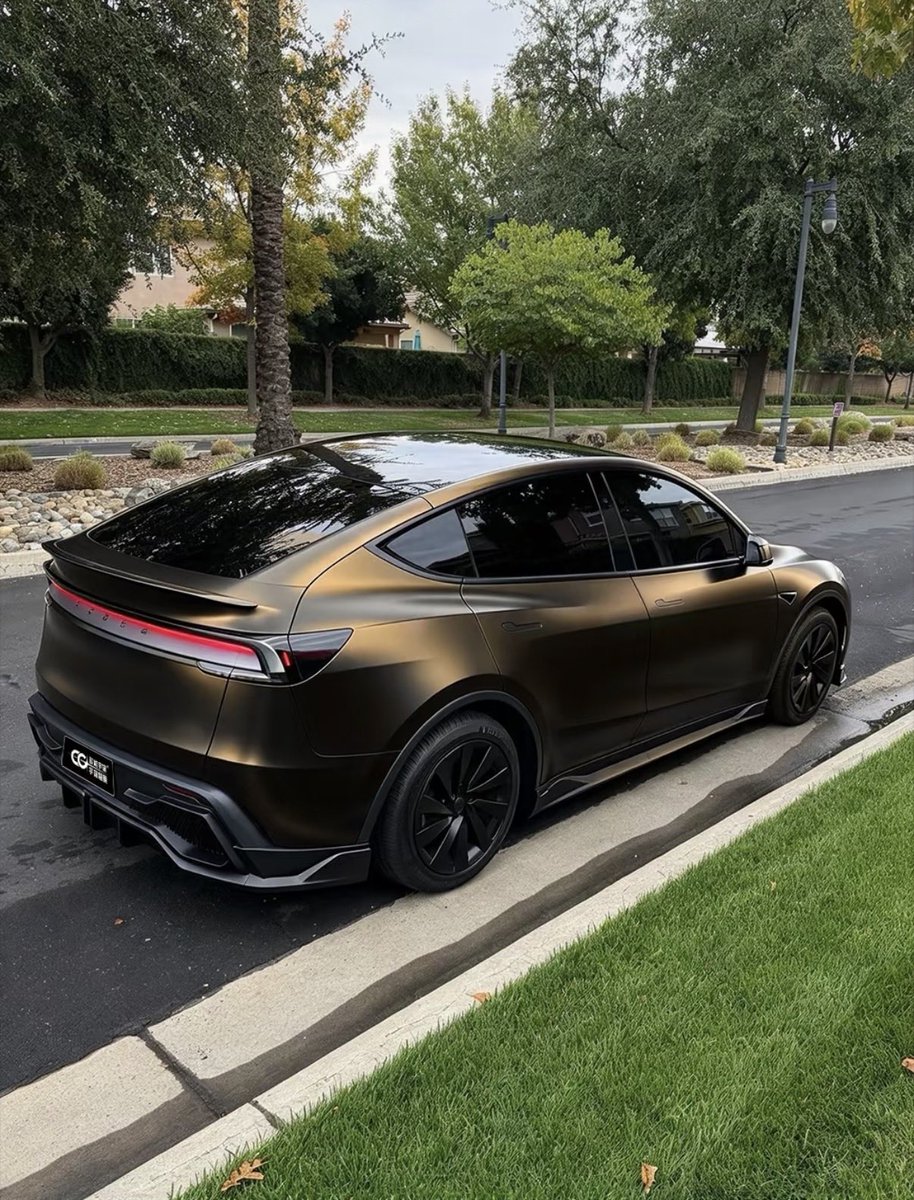
@DigitalDaisyX Matte black on a Model Y looks like it should come with its own soundtrack. Chicago road salt would have a lot to say about it by December 😂
Tesla's Berlin Engineering Center opened today: 30 labs, permit to operational in under a year. Tesla says the Berlin team helped develop Model Y.
So thanks, Berlin. Two of your homework projects live with me in Chicago, and the black one has 10,986 miles of field testing.
🔥🇩🇪 Tesla officially opens its Berlin Engineering Center today!
✅ A single campus featuring 30 different labs
✅ Located in Köpenick, just 30 minutes from GigaBerlin
✅ Built in less than a year, from permit approval to operation
✅ $100 million investment
✅ 250 engineers and technicians, with plans to expand to 500
✅ Tesla’s third engineering hub of this kind, after Fremont and Shanghai
2026.38.6 takes the Beta tag off Grok and adds Supercharger site maps with live stall status.
Grok graduating is cool. But for a Chicago dad with two Model Ys, spotting an open stall before pulling in is the real diploma.
Tesla is expanding the rollout of software update 2026.38.6.
Key updates include:
- Grok: Beta label removed from Tesla’s in-car AI assistant.
- Language Support: Latvian language support added.
- Supercharger: Improved station layouts and charger availability information.
- Headlights: Enhanced automatic headlight adjustment.
- Other Improvements: Security enhancements and Service Mode updates.
The update was first released on October 29, with wider rollout confirmed as of November 4.
The removal of Grok’s beta label is particularly notable, although availability still varies by vehicle and region.
https://t.co/p8kwGB9Ptl
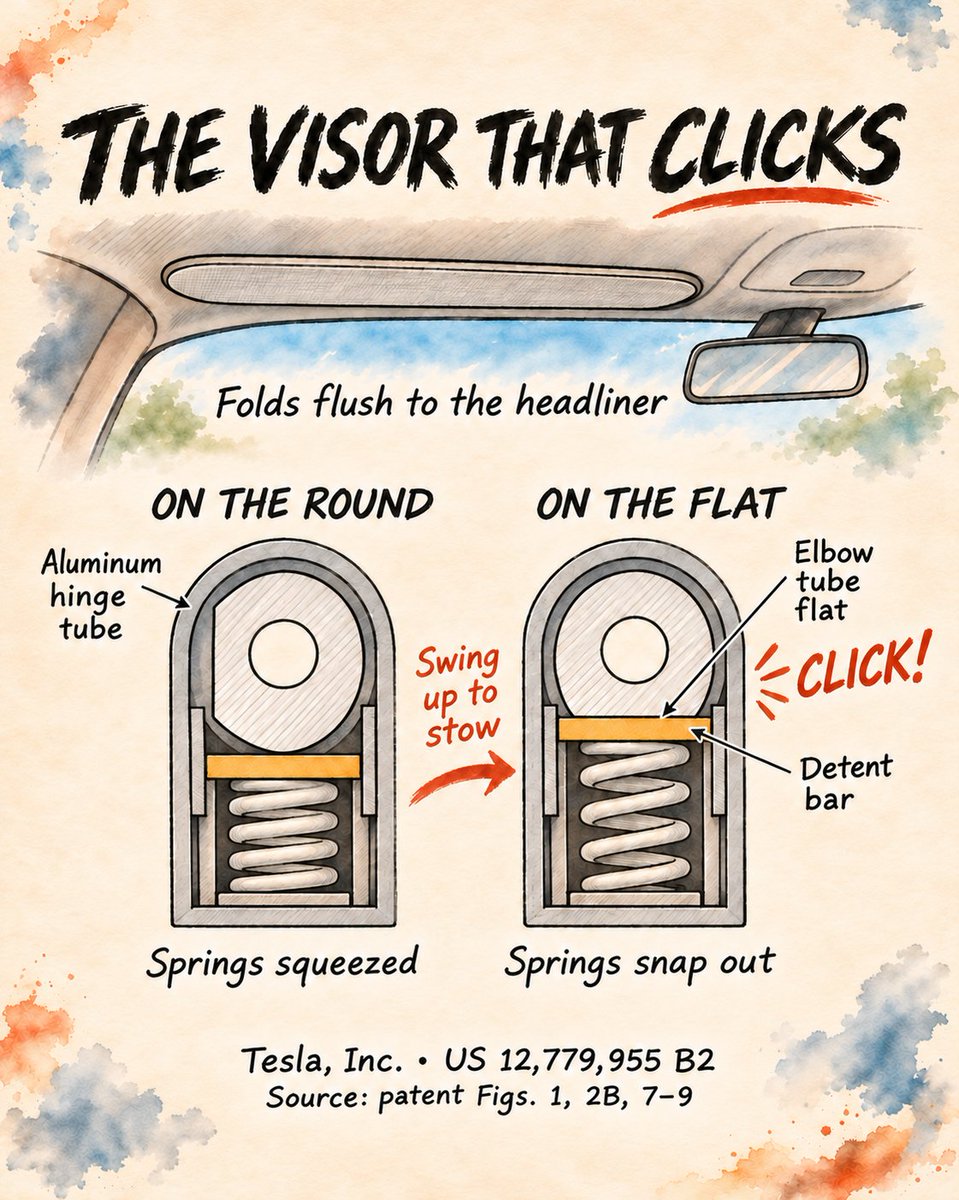
Tesla now holds a US patent on the click a sun visor makes when it snaps home.
Springs and a flat spot, all to nail one tiny click. 10,986 miles on my black Model Y and I finally found something at Tesla that cares about timing as much as my dad jokes.
ENGINEERING NEWS 🗞️ Tesla has patented a satisfying click that lets the sun visor slim down and snap firmly home 🔥
Tesla just poured serious engineering into the sun visor, and what it built is a feeling. It's that crisp little click in your fingertips when you push the visor back up against the roof, and pulling it off inside a panel this slim is a lot harder than it looks.
A visor takes a beating. Drivers yank it down into the glare, swing it over to the side window, and shove it back up without even looking, over and over for the life of the car. Every single time, it has to land right where it belongs and stay put.
At the same time, visors keep getting thinner. A slimmer panel frees up headroom and keeps the roofline clean, and in a Tesla cabin, clean is the whole point. The catch is that every millimeter you shave leaves less room for the hardware that holds the visor in place, and a bare spring pushing on a rod jams all its force into one thin line.
So Tesla tucked the entire hold inside the hinge.
The visor hangs on an L-shaped metal rod. One leg runs up into the roof bracket so the visor can swing sideways, and the other runs along the visor's top edge so it can flip down. Near the tip of that long leg, one side of the rod is flat, like a wooden dowel with a strip sanded level.
Wrapped around the rod is an aluminum sleeve with walls as thin as 0.4 millimeters in some versions, about half the thickness of a credit card. Inside it, right over the flat spot, three little coil springs push a flat bar hard against the rod.
Guide rails keep the bar moving straight in and out, like a drawer on its runners. A small cover holds the springs and bar together and braces against the sleeve's inner walls, so the whole mechanism lives inside the hinge itself.
This is where it gets fun.
When the visor flips down, the sleeve rotates around the rod, and the bar slides off the flat and onto the curve. The curve sits farther from the rod's center, so it pushes the bar back and loads up the springs. The edges of the flat work like tiny ramps, turning rotation into spring pressure.
On the way back up, the flat swings around under the bar again. The springs suddenly have room, and they slam the bar down onto it in one sharp step. That step is the click.
It's the same physics as a dowel with one flat side rolling across a table. It rolls along freely until the flat comes around, then drops onto it with a tap and stops dead. Tesla swapped the tabletop for a spring-loaded bar, so the visor tells your fingertips it's home and secure.
The springs don't clock out after the click, either. They keep pressing the bar onto the flat, which helps hold the visor steady against the roof while you drive.
The flat bar is the real genius move. A bare spring would jab the rod along a thin line or a single point. Tesla's bar meets the flat across a full surface, with the three springs spread along its length to share the load, the same way a snowshoe spreads a hiker's weight across fresh snow.
Tesla builds the whole visor around being thin. It heat-welds two shells of glass-fiber-reinforced polypropylene into one solid frame and ditches the foam layer traditional visors rely on. The hollow rod feeds power to the LED lamps, and some versions push even further, charging a small battery wirelessly through the headliner and turning the mirror into a screen for weather, time, and state of charge.
The best part of this design lives in the last few degrees of the swing. The flat comes around, three springs fire at once, and the bar drops into place with a click you can feel.
Thinner visors used to mean less room for a solid hold. Tesla hid that hold inside the hinge and gave it a click you can feel. That's the kind of obsessive detail that makes a Tesla feel like a Tesla.
10,986 miles on my black Model Y, and parking lots are still where I grade FSD the hardest. Backing up this clean to make room in a tight lot earns an A from me.
Tesla: POV you're a flying car.
My POV: 10,986 miles in our black Model Y and it hasn't left the ground once.
The white one got a 3rd row instead of rocket thrusters.
Roadster gets thrusters. Dad gets cupholders.
@jwwleonard $1.04 saved on a 13.9 mile day adds up fast. Run that math across the 10,986 miles on my black Model Y and the Chicago gas stations definitely miss me 😂
US owners: your Tesla might already be a 120V outlet. Check in 10 seconds:
1. Software > Additional Vehicle Info
2. Look for Powershare Support: Enabled
3. A Gen 3 Mobile Connector plus the Tesla Outlet Adapter gives up to 2.4 kW
What's the first thing you'd plug in?
@DirtyTesLa 10 miles in 31 minutes of nothing but loops and hairpins, and the screen still says FSD 100%. That route looks like a cat walked across the nav screen, and the car just went with it 😂
You can now try FSD for the price of a rental car.
Turo lets you book a Tesla with FSD turned on, verified with Tesla, and Turo charges nothing extra for it. Long highway stretches are where it shines, and you still supervise the whole way.
Would you try it on your next trip?
The future of road trips just pulled up. ⚡️
️
Tesla FSD (Supervised) is now on Turo, with eligible hosts getting a complimentary one-month trial to get more guest-favorite cars ready to go. 👀
@DavidTeslaTech_ 76% in month one is a strong start. My black Model Y sits at 61% over 10,986 miles, so you're already making a two Model Y dad look bad 😅