I’ve been saying since approx $30b market cap (more than a decade), that one of $NFLX biggest competitive advantages is its lowest content cost per subscriber.
Drew says monthly content cost per subscriber:
$NFLX: ~$5
$WBD + $PARA: ~$12
$PARA standalone: ~$18
With more than 325 million subscribers, every dollar they spend on content is spread across an enormous customer base. That translates into higher margins, greater pricing power, better returns on investment, and significantly stronger free cash flow.
And remember, $NFLX is already a free cash flow machine. If they eventually reach the 40% OM like Drew suggests, free cash flow will accelerate dramatically (from here), and really go gangbusters. That’s the real power of scale... 🌹
Peter Lynch famously said there's a "100% correlation" between earnings and stock price over time.
If that's true...
These 10 stocks may be screaming opportunity.
1. $NFLX - Netflix
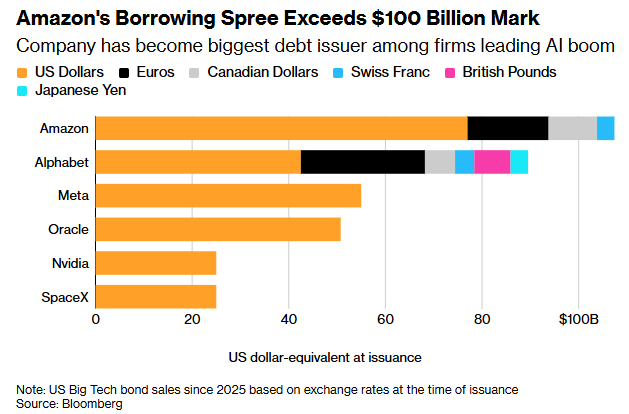
Amazon has borrowed more than $100 billion so far this year, including 40- and 50-year debt. Investors are growing a bit weary. https://t.co/W7E5fsLUOa
Wrong direction. This is like Nordstrom’s opening up Nordstrom’s Rack. But Neiman Marcus opens up Neiman Marcus Rack, Bloomingdale’s opens up Bloomingdale’s Rack, Dillard’s opened up Dillard’s rack.
In the end all it proves is there are too many clothes for sale.
Meta pops 9% as company makes cloud push to sell excess AI compute power capacity https://t.co/GlHKTs0QN5
BREAKING: Iran has issued an order to Saudi Arabia, Qatar, and the UAE to evacuate energy facilities following Israeli strikes on Iran's largest gas facility.
@michaeljburry Thanks for the opportunity of reading such a interesting article. Long, sometimes complicated, but insightful and brilliant. Thank you, Cassandra!
US energy secretary says US navy escorted a ship through the strait of Hormuz and oil drops -$5 instantly
then he deletes the post because it never happened and oil rallies +$5
thanks for playing
@michaeljburry I don’t think that the “oil story” ends here. Iran is not Venezuela and - from my (little) understanding - the situation is extremely difficult to control. Which company will put at risk its ships or its engineers?