The 2026 AP English Literature and Composition Exam scores:
5: 16%; 4: 26%; 3: 31%; 2: 16%; 1: 11%
The 2026 AP English Literature and Composition Exam was taken by ~440,000 students, about 3% of the U.S. high school population.
As an avid reader and former English major, I’m always eager to see which novels and plays students select from their AP English Literature and Composition courses as the focus of their AP Exam essays.
Throughout the course, teachers and students dedicate significant time to in-depth readings of novels and plays so that they have a repertoire of full-length works to draw upon when confronted with an essay topic that is not pre-announced.
Here are the top 6 works students most frequently selected as the focus of their essays this year, after the topics were revealed during the exam (topics vary by time zone):
In alphabetical order:
• Death of a Salesman
• Fences
• Frankenstein
• The Great Gatsby
• Romeo and Juliet
• Their Eyes Were Watching God
Other novels AP students frequently focused their essays on this year include: Animal Farm; Anna Karenina; Beloved; Bless Me, Ultima; Brave New World; Ceremony; Crime and Punishment; Divine Comedy; Great Expectations; The House of Mirth; Invisible Man; Jane Eyre; King Lear; Les Misérables; Macbeth; The Metamorphosis; Native Son; Nineteen Eight-Four; Othello; Pride and Prejudice; Song of Solomon; The Awakening; The Scarlet Letter; Things Fall Apart; and Wuthering Heights.
AP English Literature Multiple-Choice Questions (MCQ):
Students scored highest on questions about long works (novels and dramas); 16% of students – generally, the students achieving AP 5s, answered all of these questions without missing a single point, and students achieving AP 3s and AP 4s answered most of these questions correctly.
The most challenging genre was poetry, but many students nonetheless demonstrated strong abilities to analyze such complex and compact use of language: students achieving AP 3s and 4s and 5s answered most of these questions correctly.
The single strongest skill students demonstrated was analyzing the function of word choice, imagery, and symbols: students achieving AP 4s and AP 5s typically earned perfect scores across this body of questions, while students earning AP 3s generally missed no more than a single point on these. This skill of close reading is at the heart of literary interpretation, and indicates that successful AP English Literature students are reading for how a text creates meaning, not just what it says. Kudos to these teachers and students for the time and care spent working across such a variety of novels, plays, poems, and short stories to develop this skill.
AP English Literature Free-Response Questions (FRQ):
https://t.co/78VPI90tKw
The three free-response questions span the range of literary analyses: a poetry analysis, a prose fiction analysis, and an open literary argument. In the two hours allotted to this section, students seeking a score of 3 or higher needed to read several pieces of literature and then produce three complete, evidence-based analytical essays — each one demanding a defensible interpretation, well-chosen textual evidence, and clear reasoning about how an author builds meaning.
So: very big congratulations to the students who succeeded on this exam. Students closely analyzed a 1984 poem and a 2010 novel passage they had likely never seen before, and then argued an interpretation of a major work of fiction entirely from memory. This is rigorous, traditional literary study: thesis, evidence, and interpretation, performed three times over in 120 minutes, thus generating significant evidence of the student’s skills.
I also love that the committee anchored these prompts in texts of real literary merit and genuinely human subject matter — a runner’s fleeting memory of a sister, a child who tastes her mother’s hidden sadness in a birthday cake, and the timeless tension between old ways and new — the kind of material that has always been at the center of serious study of literature.
Another important consideration for the committee that designs the exam is selecting rich texts that have not been widely read in classes worldwide, as one of the most important aspects of the AP Exam is determining whether students, without coaching from a teacher or AI, can read a literary text they’ve never seen before and interpret it with sound evidence and reasoning.
Since AP scores are reported on a 5-point scale, the rubrics for these essays deliberately include some advanced points, designed to differentiate AP 5s from AP 4s, points of varying difficulty to separate AP 4s, 3s, and 2s, and more foundational points to distinguish AP 2s from AP 1s.
FRQ #1, the “Marking Time” Poetry Analysis, asked students to read Christopher Gilbert’s 1984 poem — in which a speaker observes his surroundings during a morning jog — and analyze how Gilbert uses literary elements and techniques to convey the speaker’s complex reflections. Each essay is scored across three rows: a thesis point, up to four points for evidence and commentary, and a single sophistication point.
Nearly all students (94%) earned the thesis point by establishing a defensible interpretation — a foundational skill, and one of the points that helps separate AP 1s from AP 2s (only the lowest performers did not establish a workable claim).
The extent to which students utilized literary evidence effectively and crafted substantive commentary distinguishes students achieving AP 3s, 4s, and 5s, from students receiving AP 2s, who typically earned 2 points for the quality of their evidence and commentary, whereas students receiving AP 5s earned all points possible for the textual evidence they identified and cited, and the commentary they crafted to make their argument clear and powerful for readers.
FRQ #2, the “Lemon Cake” Prose Fiction Analysis, presented a passage from Aimee Bender’s 2010 novel The Particular Sadness of Lemon Cake, in which a narrator discovers she can taste the feelings of the person who prepared her food. Students analyzed how Bender conveys the narrator’s complex experience of eating a cake made by her mother — a passage rich in tone, imagery, and shifting emotion.
93% of students earned the thesis point, again showing that students reliably develop their essays around a defensible interpretation.
So it’s the use of evidence and commentary that most determines whether students will attain a score of 3 or higher. As with FRQ #1, students receiving AP 2s typically earned 2 points for the quality of their evidence and commentary, whereas students receiving AP 5s earned all points possible for the textual evidence they identified and cited, and the commentary they articulated throughout their essay.
FRQ #3, the Literary Argument on the Tension Between the Old and the New, asked students to choose a novel or play and analyze how the tension between old and new contributes to the work’s overall meaning. Crucially, students wrote this essay about a full-length work entirely from memory.
Many students performed very well on this essay, the highest scoring of the three on this year’s exam.
91% of students earned the thesis point, demonstrating that they could commit to an interpretive argument about a self-selected text — a hallmark of independent literary thinking.
Where the students gained points in comparison to FRQ 1 and FRQ 2 was in their use of evidence and the quality of their commentary, with the majority of students earning 3+ points here.
In addition, the point for sophistication was earned by about 8% of students on this essay — the most on any of the three essays, yet still rare enough to sharply distinguish AP 5s.
Across all three essays, students achieving an AP 5 typically earn at least one point for sophistication, remarkable since these are timed essays without the opportunity for additional reflection or revision (which is why this additional citationpoint is not required across all three essays to earn an AP 5).
All subjects’ AP score distributions for 2026 will be posted here when available: https://t.co/OrkaQhPZYO.
Fresh off earning Rivals MVP honors at the Elite 11 Finals, Nebraska QB commit Trae Taylor (@Qb6Trae) is back to work. @KETV
Today marks day 2 of summer workouts with @MSouthFootball.
🚨 SPEAKER ANNOUNCEMENT 🚨
Excited to announce the first of four speakers for the #DLineU Pass Rush Summit Coaches Clinic…
TJ Martin
Defensive Line Coach — Millard South High School
Speaking Topic: Player Development & Teaching Progressions
Coach Martin brings 27 years of defensive line coaching experience, including 17 years at Millard South High School and 10 years at Omaha North High School. Throughout his career, he has built a reputation for developing tough, disciplined, and highly productive defensive linemen while helping lead programs to 3 State Championships.
Over the course of his coaching career:
• 14 defensive linemen have earned All-Nebraska or Super State honors
• 10 former players are currently competing at the collegiate level
(5 Division I • 4 Division II • 1 Junior College)
This past season, Millard South finished as back-to-back Nebraska Class A State Champions and ranked Top 25 nationally. Coach Martin’s defensive line unit delivered dominant production in just 11 games:
• Allowed just negative eight (-8) rushing yards for the entire season
• 41 sacks
• 112.5 tackles for loss
Coach Martin is known for his attention to detail, physical style of play, and ability to consistently develop high-level defensive linemen both on and off the field. He brings years of championship experience and proven player development to the #DLineU Pass Rush Summit Coaches Clinic.
#DLineU
Eli Goldsberry slams the door on the Warriors! Patriots Win! Patriots Win! Patriots defeat Omaha Westside 8-1 today to advance to the next round of the State Baseball Tournament! We will play Millard North HS tomorrow at 10:00 a.m. #GoPatriots#TPW@MSHS_Baseball
Hard launching some big news…
FAKE SKATING is officially becoming a major motion picture event, coming exclusively to movie theaters!!
Thank you to all the love you have shown Dani and Alec along the way. This film wouldn’t be possible without the fans!! 🏒🎬
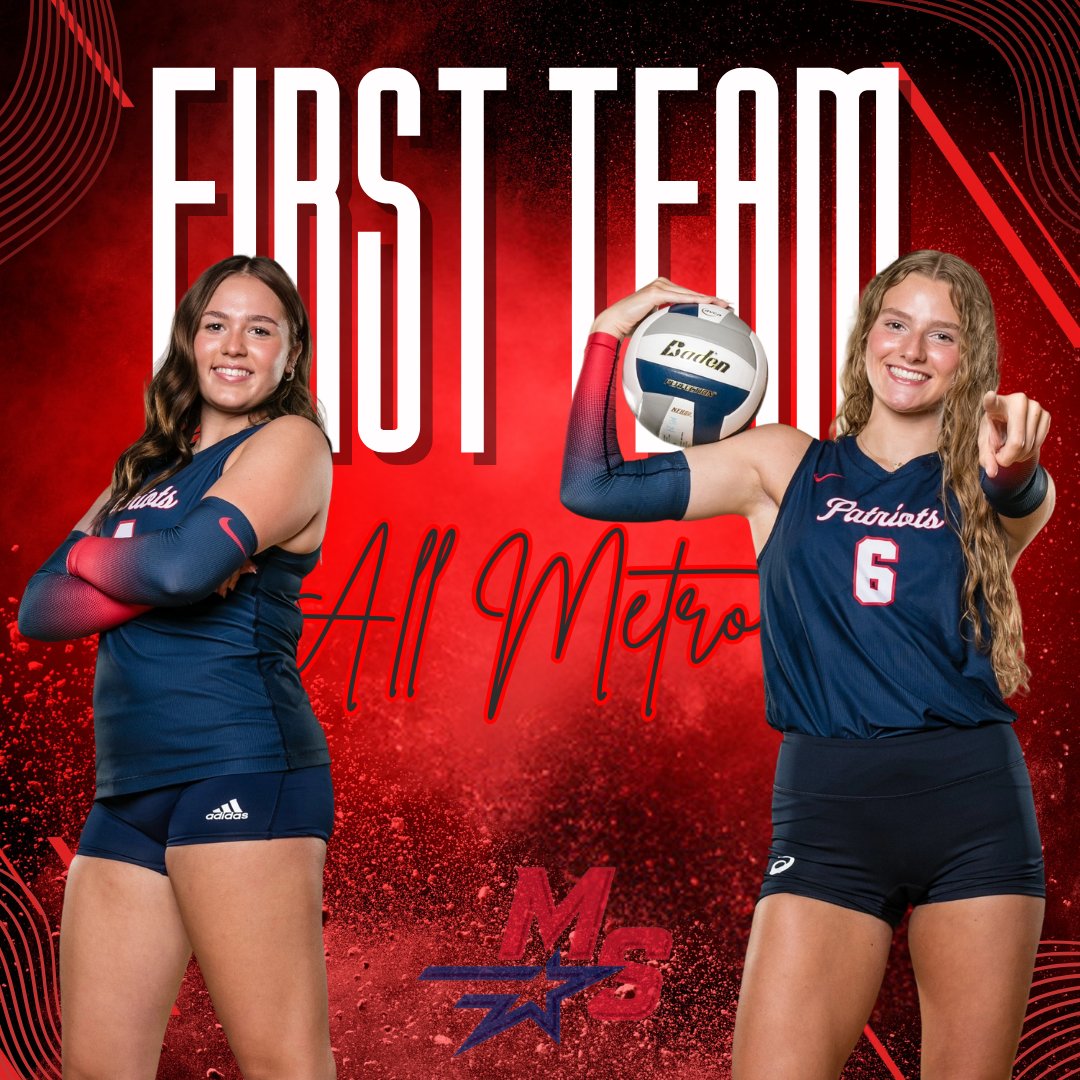
2025 All Metro Teams
1st Team - Bailey Wyzenski
1st Team - Scotlyn Erwin
2nd Team - Eme Myers
3rd Team - Lexi DeyErmand
Honorable Mention - Jamie Murcek, Nevaeh Jacobson, Sophia Varn, Liv Koziol, and Madyson Jacobson
Extremely thankful for the opportunity to coach this great group of players. Best LB crew in the state.
Part of a Defense that allowed thru 12 games:
-8 total rushing yds
54.4 passing yds per game
56.7 total yds per game
3.6 ppg
Great athletes but even better young men!!
“I’ve been playing with most of these guys since I was eight. I know I had to make it a big one for our last one.”
Zech finished with four receptions for 129 yards and three touchdowns in Millard South’s 49-0 win over Papillion-La Vista South in the Class A title game.
#nebpreps | @Borsheims
📺🏈: We're 1⃣ day away from the BIGGEST high school game of the year! 👀🍿
🇺🇸💪 Millard South vs Omaha Westside ⚔️🔴
📺 WATCH IN OMAHA 📺
-Cox: 116
-Allo: 190
-Antenna: 27.2
-Great Plains: 28
HOW TO WATCH NCN: https://t.co/uDXe3aLD7t
#nebpreps/@MSHSactivities/@MSouthFootball/@athletics66/@WHS_WarriorFB
Patriot Nation - Let's clap it up for Logan Wick! Logan is heading to Wayne State College next year to further his education and baseball career! @WSCBBis going to love this kid! @MSHS_Baseball#MillardSouthFamily#TPW
Congratulations to Oscar Edwards who signed a letter of intent today with Quincy University! @QUHawksSwim is getting one of the hardest working student-athletes we have ever had! Good Luck, Oscar! @AquaPats#MillardSouthFamily#TPW