AWS is tackling a common SageMaker deployment failure point with a CDK pattern for safer endpoint updates.
The AWS ML Blog details a construct that coordinates SageMaker AI endpoint changes with Application Auto Scaling registration, helping avoid race conditions and failed deployments when updating production inference endpoints. For developers managing ML infrastructure as code, this pattern can make CI/CD pipelines more reliable and reduce manual fixes around scaling configuration.
#AWS #SageMaker #MLOps #CDK #AIInfrastructure https://t.co/3BcAHamf39
AWS is showing developers how to train multi-turn AI agents on SageMaker AI using reinforcement learning with end-of-task rewards.
The guide walks through a practical setup where an agent improves across sequential decisions, with AWS reporting better Wordle performance in one model run. For builders, the takeaway is a clearer path to training agents for tasks where success depends on strategy over multiple steps, not just single-response accuracy.
#AI #ReinforcementLearning #AWS #SageMaker #AIAgents https://t.co/NZRfq808gr
Pathos AI raised $237 million to push its AI-guided drug pipeline forward, with its JSKN016 cancer therapy program as the top priority.
The Series E will fund four drug programs, signaling that investors are backing AI biotech companies not just as software platforms, but as drug developers with clinical assets. For builders, this highlights where AI in pharma is heading: systems that combine data infrastructure, model-driven discovery, and execution across the long, expensive path to trials.
#AI #Biotech #DrugDiscovery #HealthTech https://t.co/qIINLu8N1U
Start building a real app today, not just a mockup.
With Tevvio, describe what you want in plain English and create web apps with user logins, databases, payments, and working features. No coding experience needed. Sign up free and get AI credit to start building.
Start your first app today.
#VibeCoding #AIBuilder #NoCode #WebDev https://t.co/4uYKYgBU9z
Martha Minow is warning that AI should strengthen democratic thinking, not outsource it.
In MIT’s Compton Lecture, the Harvard legal scholar argued that AI risks weakening critical judgment if people rely on systems that summarize, rank, and recommend without transparency. For developers and builders, the takeaway is practical: design tools that support education, source evaluation, and access to reliable public information, rather than optimizing only for speed, engagement, or automation.
#AI #CivicTech #EdTech #ResponsibleAI https://t.co/Zo6YTJ7Tfm
AI agents are moving from demos to real-world systems.
Today’s signal: serious capital is flowing into AI drug discovery, AWS is sharpening ML infrastructure, and OpenAI is pushing agents into complex biological data mapping.
For builders, the message is clear: agentic workflows, interpretable models, and responsible access controls are becoming core product requirements, not research footnotes.
#AI #AIAgents #MachineLearning #VibeCoding #DevTools https://t.co/EkM4e2LuSA
AI adoption at work is still uneven, and employee training budgets are showing the gap.
A TripleTen-sponsored survey cited by MIT Technology Review reports that requests to use AI tools vary widely by industry, while workers also differ in how much they spend out of pocket on professional development. For developers and builders, the takeaway is clear: AI tooling is not spreading uniformly, so product teams should account for uneven user readiness, training access, and workplace mandates when designing AI-enabled workflows.
#AI #FutureOfWork #Developers #Tech #MachineLearning https://t.co/6B3uftSQvI
AWS is bringing schema-constrained outputs to Claude on Amazon Bedrock.
Claude can now return strictly validated JSON and tool inputs across Bedrock’s Converse and InvokeModel endpoints, reducing brittle parsing and post-processing in production apps. For developers building agents, workflow automation, or data extraction pipelines, this makes Claude easier to wire into typed systems, APIs, and downstream services with fewer reliability hacks.
#AI #AWS #Claude #Bedrock #Developers https://t.co/h3UNQYaM2H
AI agents are moving from demo hype to infrastructure decisions.
Today’s AI brief: OpenAI is shaping the narrative on what comes next, AWS and enterprise cloud are becoming the deployment layer, and agentic workflows are now a serious productivity conversation.
But skepticism is rising too: if LLM “reasoning” is still brittle, dev teams need tools that ship code, expose limits, and keep humans in control.
#AI #AIAgents #VibeCoding #DevTools #CloudComputing https://t.co/SwY3gE0L5d
DeepMind is bringing watermarking to AI-designed proteins with SynthIDBio, a marker meant to identify synthetic biomolecular designs.
For developers building bio-AI tools, this points to a future where provenance, safety checks, and audit trails may become core infrastructure, not optional extras. But Nature reports the signal can be erased by redesigning a protein, underscoring the same hard problem facing text and image watermarks: detection must survive real-world modification.
#AI #BioTech #DeepMind #SyntheticBiology https://t.co/RxIsdWMHZD
You describe the app. CoderVibe builds it. You publish it.
Turn plain-English ideas into real web apps with logins, databases, payments, dashboards, and production-ready features without stitching tools together or starting from scratch.
Sign up free and get AI credit to start building today.
#VibeCoding #AIBuilder #NoCode #WebDev https://t.co/CmUodqdAVg
MIT Transit Lab is building an open-source AI hub to help public transit agencies share tools, data, and decision support.
Backed by a three-year, $2.1 million https://t.co/tc0MqUvZl4 grant, the project aims to connect transit systems that often lack the budget or technical staff to build AI solutions alone. For developers and civic-tech builders, this could create a shared platform for deploying practical AI in scheduling, operations, accessibility, and service planning.
#AI #OpenSource #CivicTech #PublicTransit https://t.co/tCrhCvuBhK
Introducing Griffin, the first model to pass the video Turing test.
48% of people who talked to it live thought it was a real human. Previous systems have had a pass rate <3%. It is #1 on NVIDIA's benchmark for full-duplex AI video.
It’s the first Human Interaction Model (HIM).
Visual Studio 2026 is turning AI from a sidebar helper into a more flexible part of the dev workflow.
Microsoft’s September preview adds broader model choice, AI-assisted NuGet package fixes, pull request exploration, and debugging improvements. For developers, that means less context-switching across dependency management, code review, and troubleshooting, while teams get more control over which AI models fit their workflow.
#VisualStudio #AI #DeveloperTools #DotNet https://t.co/wryg0tRI3W
Pick one app idea. Ship it today.
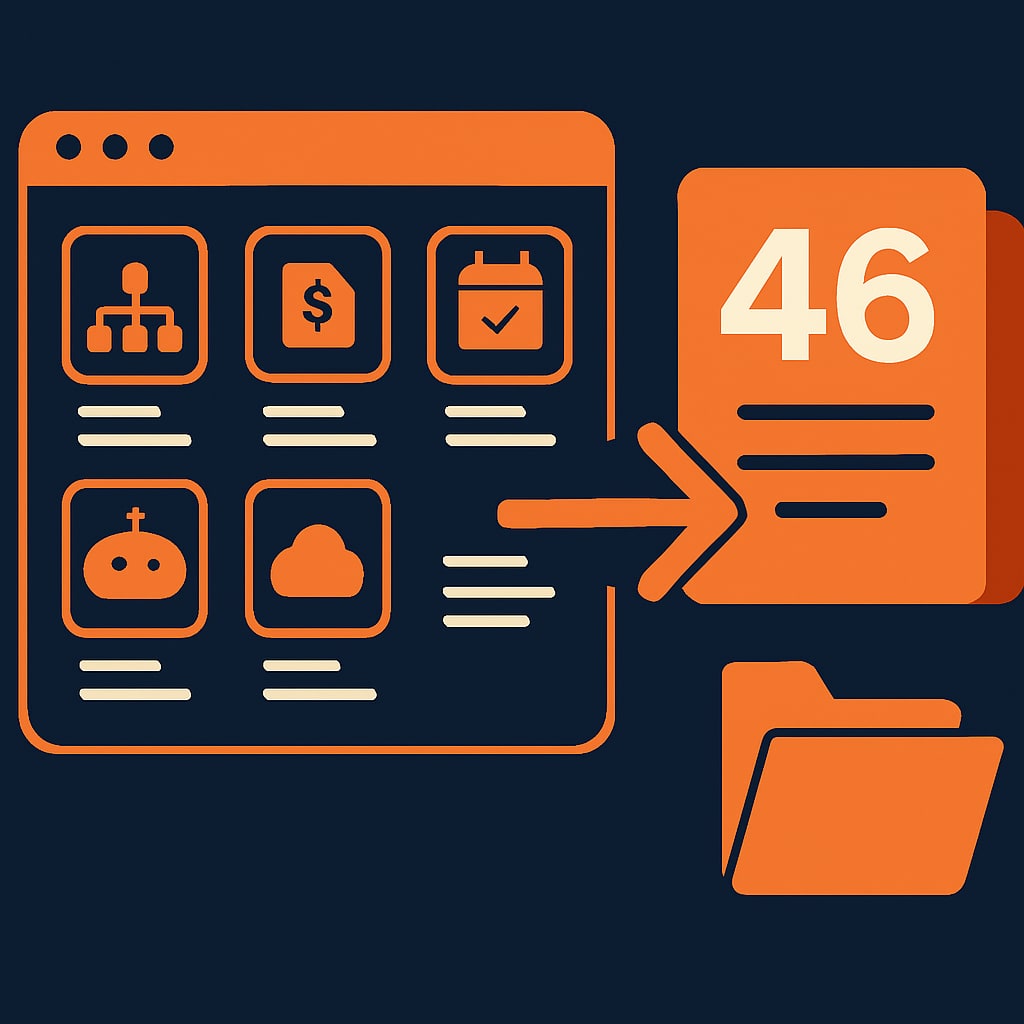
CoderVibe gives you 46 step-by-step build guides for real products: CRM, invoice app, booking system, AI chatbot, SaaS, AI agents, and more. Start with plain English, generate the app, connect logins, databases, and payments, then launch faster.
Choose a guide and start building now.
#VibeCoding #AIBuilder #NoCode #WebDev | Code: TECHWITHTIM20 (20% off) https://t.co/bgY0WicY7M
AWS is expanding region-bound Claude inference for Bedrock users in Asia-Pacific.
Customers can now run Claude Opus 5 and Sonnet 5 in Seoul, with Sonnet 5 also available in Singapore, keeping requests handled inside the selected AWS Region. For developers building regulated or latency-sensitive AI apps, this makes it easier to meet data residency requirements while using managed foundation models without routing traffic through distant regions.
#AWS #Claude #Bedrock #AI #Cloud https://t.co/DLxzHjxNUA
Owning AI infrastructure starts to make sense when experimentation turns into sustained demand.
An HPE-sponsored MIT Technology Review article argues enterprises should compare pay-as-you-go AI consumption pricing with the full cost of dedicated capacity once workloads become predictable. For developers and builders, the key tradeoff is flexibility versus control: utilization rates, power, staffing, model performance needs, and ops overhead can matter as much as GPU sticker prices.
#AI #Infrastructure #EnterpriseAI #CloudComputing https://t.co/Y05Xwlw3RV
AI is moving from hype to hard infrastructure decisions.
OpenAI pausing training over safety concerns is a signal: the next wave is not just bigger models, but safer, more controllable systems. Meanwhile AWS is expanding Bedrock and Claude regional support, pushing enterprise AI deeper into the cloud stack.
For devs, the takeaway is clear: AI agents, IDE-native workflows, and cloud model access are becoming the new software delivery layer. Build accordingly.
#AI #AIAgents #VibeCoding #DevTools #CloudComputing https://t.co/6oJ3HoutzS
Sherry Turkle is warning that chatbot “companionship” may be too frictionless to be healthy.
In her new book, the MIT sociologist argues that conversational AI can train users to prefer always-available, nonjudgmental machine interactions over the messier work of human relationships. For developers building AI companions, tutors, assistants, and support bots, the takeaway is clear: engagement metrics are not enough when products can reshape social habits and emotional expectations.
#AI #Chatbots #ResponsibleAI #UX #TechNews https://t.co/bJfb7bnDmz