Generally speaking I think humans want to do things that are... Fine. The way society is set up funnels people towards activities that are Not Fine, like overwork and numbing consumption and etc.
The aim is to be hard to kill, to be robust vs. Economic/natural/biophysical environmental perturbations. This frees up time attention energy for the important work of Doing Whatever You Want
On the upside, it helps to numb the frustration and anxiety inherent in 'modern life' that I'm fully capable of developing healthy lifestyle strategies to mitigate and overcome.
My engineer brain wants to solve everything. This predicament framework is useful for me to check myself. Am I seeking a solution to something that has none?
I reread JMGs The Long Descent recently. I liked his categorization of 'problems' as things that have possible solutions and 'predicaments' as things that have possible responses (along some range of appropriateness). Predicaments cannot be 'solved'.
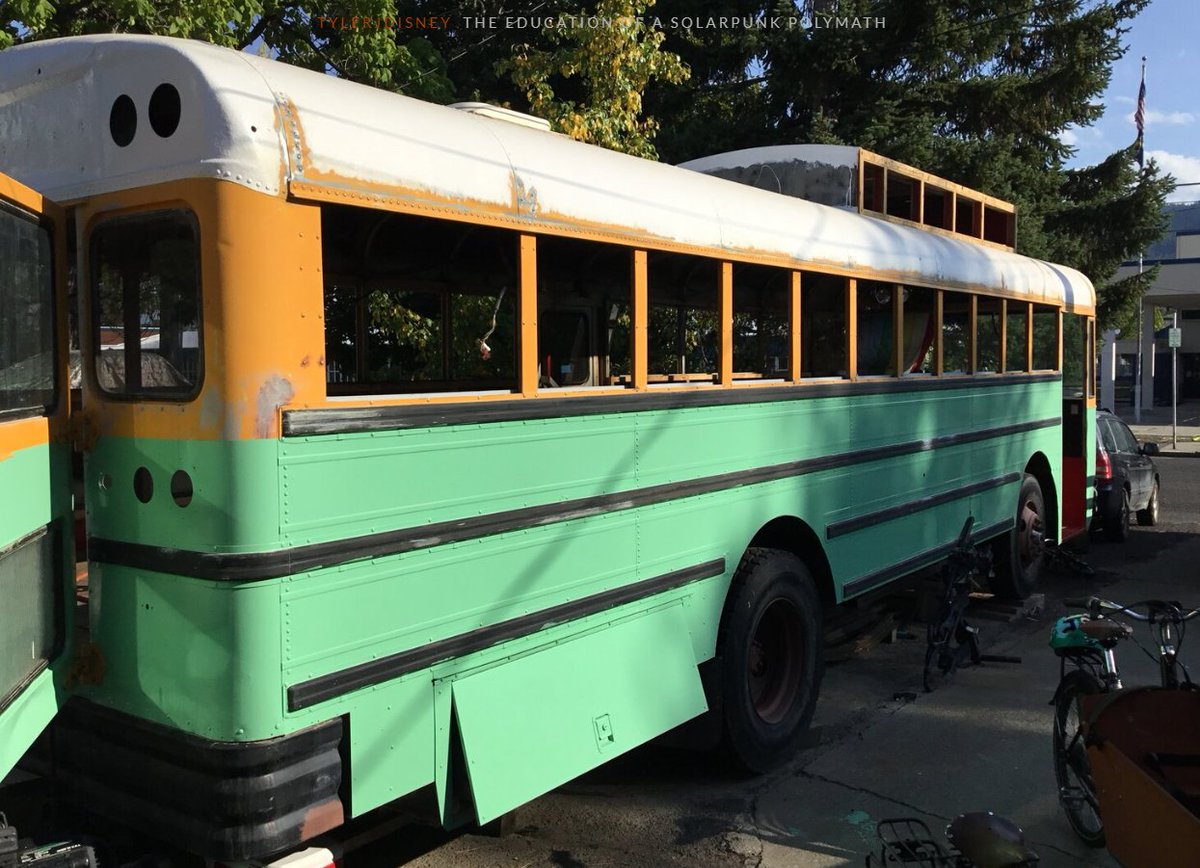
New podcast with my #skoolie friends!
We talk about skills, #buslife with a kid, getting over middle class baggage, living a life we find actually interesting despite what the world thinks, etc. Was great fun.
https://t.co/kHZs3Z0G6U
@wander_wealth Thought you meant $10k/yr at first, and I was like "oh hell yeah, my TTM CoL just got under 10k last month and I'm psyched!" and then... 😆
The point of postconsumer praxis isn't to reduce your personal neg impact.
It's to install the cognitive software required to imagine solutions/responses to The Predicament that aren't just greenwash.
A middle class lifestyle: "It's like, we gave it a shot, it sucked, and let's try something different."
😂
--Favorite line from podcast conversation with my #skoolie friends, coming next week.
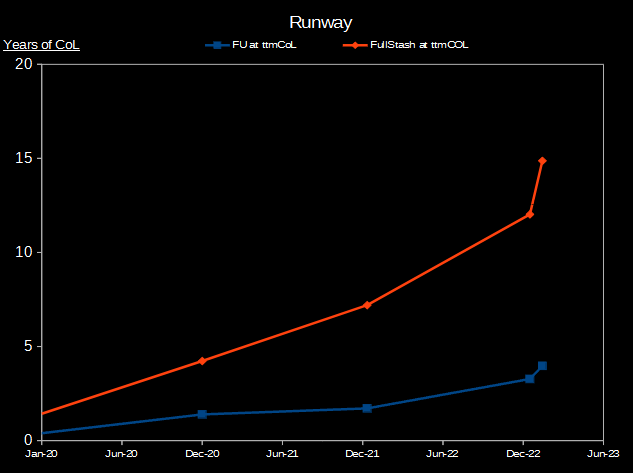
This is my runway. I've earned almost no money since June '21, but my runway has been getting longer. It took work. But now that I've bought myself a longer runway... it's time to focus on the 'making things other people will love' part.
"There are only two things you have to know about business: build something users love, and make more than you spend...
The less you spend, the easier it is to make more than you spend."
Been reading @paulg's essays recently. ^ is from https://t.co/HUOySad82E
@paulg Those essays are gold even if you don't want to start a 'real' startup imo.
I don't want to start a startup.
But I do want to make things other people will love.
The less I spend, the more I get to focus intensely on making those things.
There's more to this, though. I think that the high-skill low-spend end of that graph tends to result in a higher level of personal lifestyle resilience. Because you can lose money easier than you can lose skills.
This is approx. mental model for how much money I need to spend. The line is a constant Quality of Life curve. It's just as good to be at any point on that curve (roughly speaking).