A Cleaner Grid Still Needs Flexibility
Positive signs from Britain's electricity system: in August, 69% of electricity came from zero-carbon sources, reaching a peak of 94%.
Made in Britain. Built for airlines, governments, communities and industries around the world. Roughly 80% of our UK-made products are sold overseas, generating £8 billion in annual export value. Find out more about why we are an #EngineForGrowth: https://t.co/F3uizBi5nO
On Sunday #imports generated 28.7% of British electricity followed by nuclear 18.2%, gas 15.8%, solar 14.1%, biomass 11.5%, wind 8.0%, other 2.6%, hydro 1.2%, *excl. non-renewable distributed generation
Energy Touches Every Part of Our Lives – But Are We Thinking Far Enough Ahead?
It powers our homes before we wake up. It keeps hospitals running, businesses operating, and communities connected.
Energy isn’t just another industry – it’s the foundation of the UK economy.
Yesterday #wind generated 41.3% of GB electricity, more than imports 18.4%, gas 13.7%, nuclear 9.7%, solar 7.0%, biomass 5.0%, hydro 2.4%, other 2.4%, *excl. non-renewable distributed generation
Balancing costs are essential for grid stability as they help match supply and demand in real-time. 🔒What drives these costs? They're influenced by various system and market conditions. 👇 More: https://t.co/kYRddXzVMe
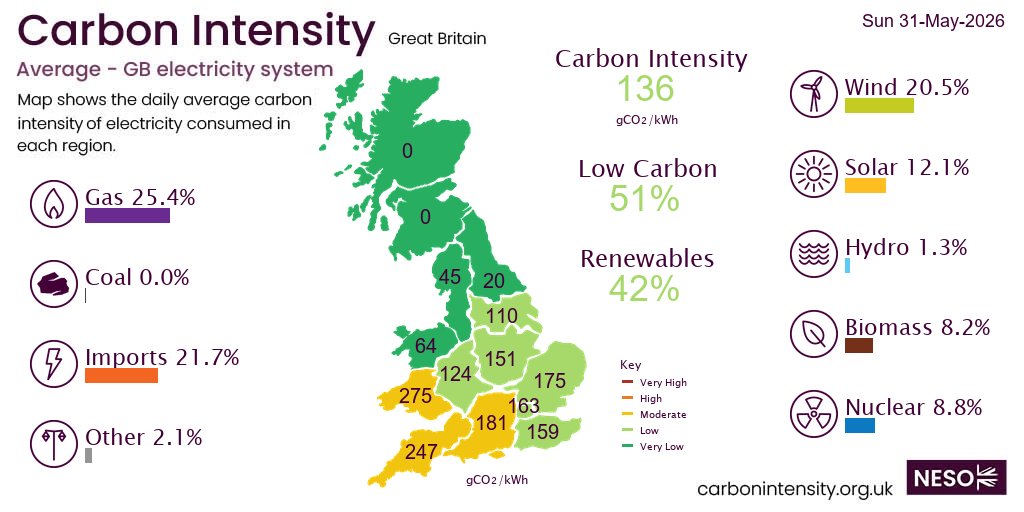
Yesterday #gas generated 25.4% of British electricity followed by imports 21.7%, wind 20.5%, solar 12.1%, nuclear 8.8%, biomass 8.2%, other 2.1%, hydro 1.3%, *excl. non-renewable distributed generation
🌞 During May's bank holiday, GB hit a record low transmission demand at 12.62 GW. Demand peaked at 31.23 GW in May and the system ran securely throughout, showcasing the network's resilience. 🔒 50% of our gas was distributed to homes and offices. More: https://t.co/VaYhrcN28a
Yesterday #wind produced 45.3% of British electricity, more than imports 16.7%, gas 11.9%, nuclear 8.1%, solar 7.4%, biomass 6.9%, other 2.4%, hydro 1.4%, *excl. non-renewable distributed generation
Three key pressure points came through strongly:
• Volatility driven by renewable variability
• Infrastructure readiness to support a more complex system
• Flexibility to respond when conditions tighten
https://t.co/6HTqpdSCou
On Monday #gas produced 35.7% of GB electricity, more than imports 16.8%, nuclear 16.5%, wind 10.8%, biomass 8.7%, solar 7.7%, other 2.1%, hydro 1.7%, *excl. non-renewable distributed generation
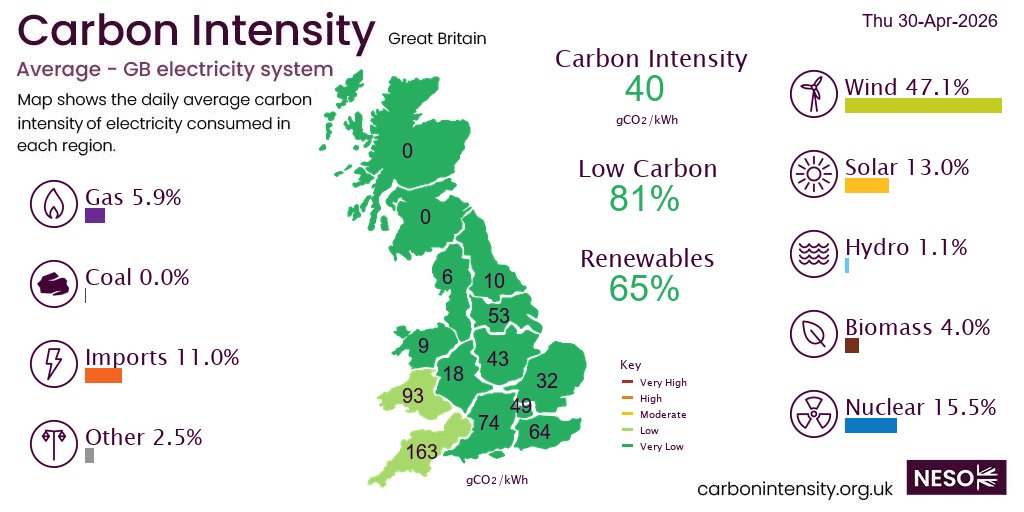
Yesterday #wind produced 47.1% of British electricity, more than nuclear 15.5%, solar 13.0%, imports 11.0%, gas 5.9%, biomass 4.0%, other 2.5%, hydro 1.1%, *excl. non-renewable distributed generation
On Wednesday #gas produced 35.5% of British electricity followed by wind 25.9%, nuclear 16.0%, imports 11.6%, biomass 8.8%, solar 2.2%, *excl. non-renewable distributed generation
⚡ Mid-week reality check:
We’re building a lower-carbon system…
But is it fully reliable?
When renewables drop, the system responds to available capacity - not targets.
Flexibility isn’t optional. It’s essential.
💬 Ambition or performance?
#UKEnergy#EnergyTransition