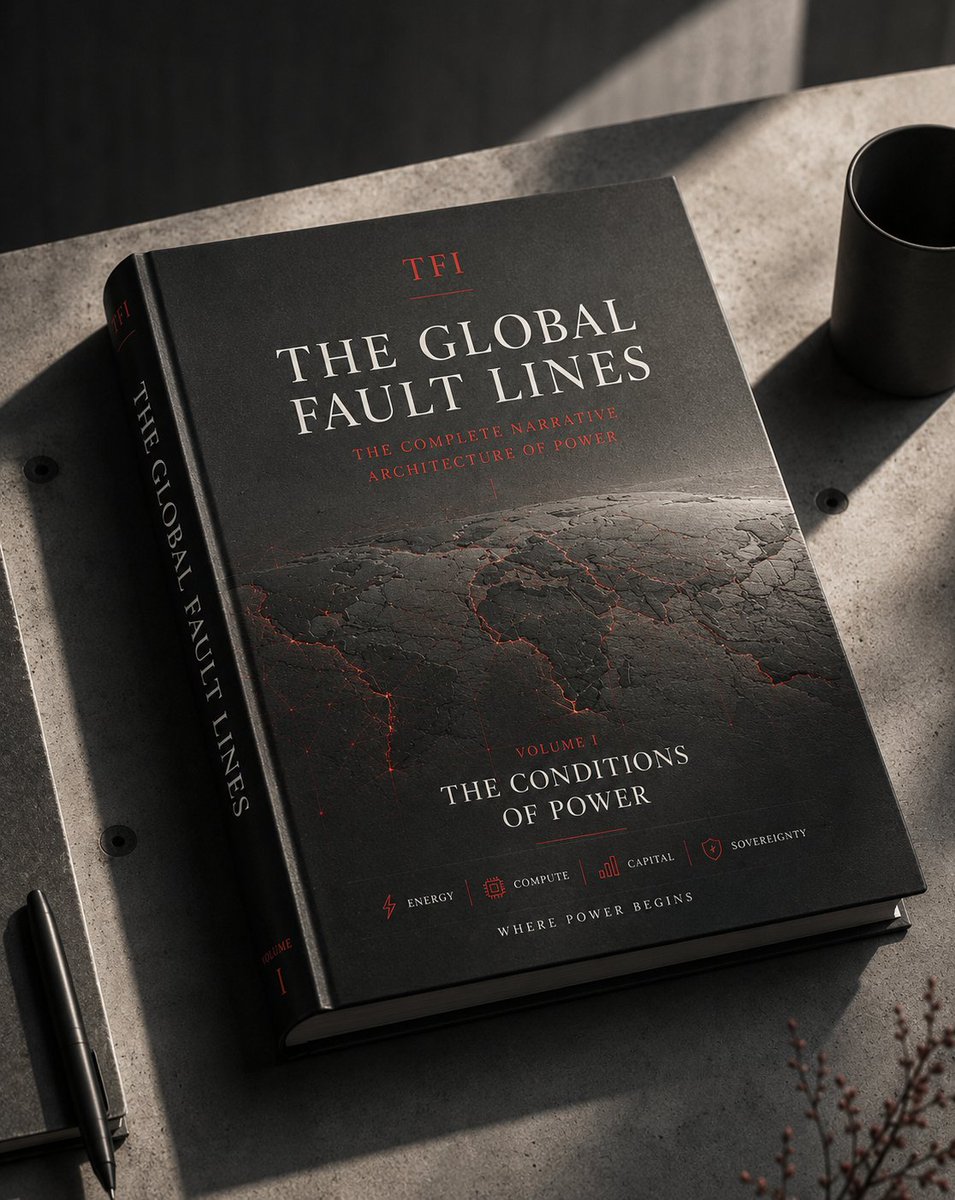
THE GLOBAL FAULT LINES
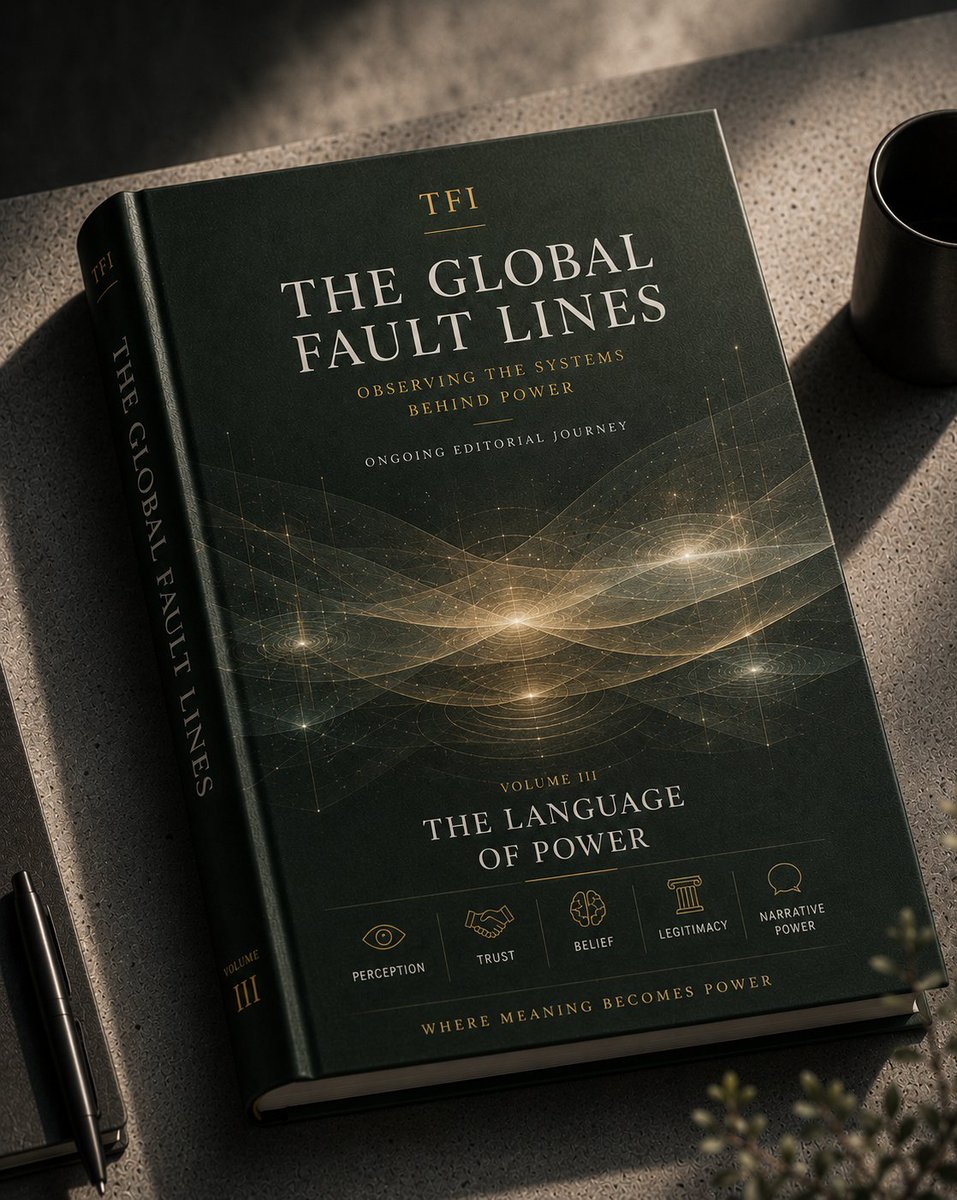
Volume III — THE LANGUAGE OF POWER
How does power become accepted?
Exploring how perception, belief, trust, legitimacy and narrative make power understood, accepted, and ordinary.
Status: In Progress
Follow the journey at @theflowinsight
The Global Fault Lines
Volume III: The Language of Power
Power is shaped not only by what societies build, but by what people see, trust and believe.
Volume III explores the language through which power becomes understood and accepted.
Follow the journey at @theflowinsight
The Global Fault Lines
Reflection: Looking Back at Vol.15–Vol.34
Power becomes easier to see when we stop looking for it in one place.
Looking back at these twenty essays, I find myself thinking less about the subjects we started with and more about the connections between them.
At first, energy, compute, capital, sovereignty, institutions, research, manufacturing and resilience seemed to lead in different directions. Some belonged to geopolitics, some to technology, some to economics. But the longer the series continued, the harder it became to keep them apart.
A question about energy could lead to infrastructure; infrastructure could lead to capital; capital could determine whether an idea survived long enough to become useful. Research could matter little if there was no way to build what it discovered.
The interesting part was not any one of those things. It was the space between them.
That is probably where my understanding of power changed most.
I used to think more naturally in terms of capabilities: what a country has, what it can build, what it can control. But capabilities do not remain equal to themselves. They become more valuable when something around them allows them to travel further, last longer or build on what came before.
And the opposite is true as well. A strength can remain surprisingly small when it has nowhere to go.
A society can have excellent researchers without an industrial base capable of carrying their work forward. It can have capital without the patience to wait. It can build sophisticated infrastructure while becoming dependent on a single route, supplier or system. None of these weaknesses necessarily appears in the headline. They reveal themselves in the connections.
That may be the quiet lesson I take from Vol.15–Vol.34: power is not simply accumulated. It compounds through relationships.
Once those relationships become strong enough, capability starts to feel less like something a society possesses and more like something it can continue producing.
Which leaves us with a different question: How does that capability become visible, trusted, believed, and eventually accepted?
That is where the next part of the journey begins.
──
The Global Fault Lines
The Architecture of Power
Some moments deserve to be observed more slowly.
The Global Fault Lines
Reflection: Looking Back at Vol.01–Vol.14
Power rarely begins where we first learn to look.
──
There are moments when moving forward is no longer the best way to understand a journey.
Distance has a way of revealing patterns that are difficult to recognize while we are still walking, allowing connections that once felt unrelated to quietly settle into place. Looking back after fourteen essays, what stands out is no longer any single event or location, but the growing realization that each observation had been pointing toward the same landscape all along.
At the beginning, every essay seemed to tell a different story. Wars unfolded in one part of the world while strategic waterways reshaped another. Islands, undersea cables, data centers, rare earth minerals, electricity, water, ports, shipping routes, the Arctic and, eventually, orbital infrastructure all appeared to belong to separate conversations.
Each essay began with a different map, a different headline and a different point of departure. Somewhere along the journey, however, those places quietly stopped being the destination of the story. They became different ways of looking at the same question.
Looking back now, Taiwan no longer feels like a story about an island, just as undersea cables no longer feel like a story about telecommunications or data centers a story about technology. Each became another window through which the same underlying reality could be observed. The further the series progressed, the less it became about individual places and the more it became about the conditions that allow modern power to emerge long before it becomes visible.
Somewhere along the way, the headlines themselves also became less important. They continued to change with remarkable speed, yet the systems beneath them seemed to move according to an entirely different rhythm. Energy, infrastructure, computation, geography, resources, continuity and movement rarely dominate public attention for very long, but they quietly shape the environment in which every geopolitical, technological and economic story eventually unfolds. They are not the visible expressions of power. They are the conditions from which those expressions become possible.
Perhaps the most meaningful realization was never contained within any single essay. It only became visible after the essays were placed beside one another. Read individually, they explored different fault lines. Read together, they revealed a single observation: power is rarely created at the moment we first notice it. By the time it becomes visible, the foundations beneath it have often been forming for years, sometimes for decades, beyond the attention of most observers.
That may be the quiet thread connecting everything we have explored so far. The purpose of this journey was never simply to explain current events. It was to slow down long enough to notice the invisible systems that quietly shape those events before they reach the headlines. Once those systems become visible, the world itself begins to look a little different not because it has changed overnight, but because our way of seeing it has.
Every journey changes the questions we carry forward.
If these pages have been an invitation to understand the conditions from which power emerges, perhaps the next stage begins by paying closer attention to the relationships between those conditions themselves. No single condition ever explains the world on its own. Over time they begin to reinforce one another, constrain one another and quietly reshape the possibilities around them.
Looking back, that may be the most important lesson these first fourteen essays leave behind. Power rarely emerges from any single condition in isolation. It gradually takes shape as systems interact, capacities accumulate and seemingly independent forces become part of something larger than themselves.
Perhaps that is simply where our observations now continue.
──
The Global Fault Lines
Some moments deserve to be observed more slowly.
──
The Flow Insight: Think freely. Moving quietly.
Every series begins with a question.
Sometimes it ends by revealing that the question was only the first layer.
What started as a collection of observations has quietly become something larger: an editorial journey exploring the conditions, the architecture and the language through which power becomes visible.
The journey is still being written.
Perhaps that is exactly how it should be.
Some structures are easier to recognize only after they have had time to emerge.
—
The Flow Insight: Think freely. Moving quietly.
@theflowinsight The TFI Foundation remains an evolving constitutional publication.
Future revisions and updates will be shared through @theflowinsight.
TFI Group publishes the first constitutional publication of The Flow Insight.
THE TFI FOUNDATION
Building the Language of Power
The foundation for every future publication across the TFI ecosystem.
Read the Foundation:
https://t.co/siuaMmZHUC
—
TFI Group | @theflowinsight
TFI Group publishes the second constitutional publication of The Flow Insight.
THE TFI LANGUAGE
Building the Language of Power
The language behind every future publication across the TFI ecosystem.
Read the Language:
https://t.co/E8YQ2gZj7a
—
TFI Group | @theflowinsight
THE GLOBAL FAULT LINES
Volume II — THE ARCHITECTURE OF POWER
How does power organize itself?
Exploring how nations transform strategic conditions into enduring systems.
Status: In Progress
Follow the journey at @theflowinsight
THE GLOBAL FAULT LINES
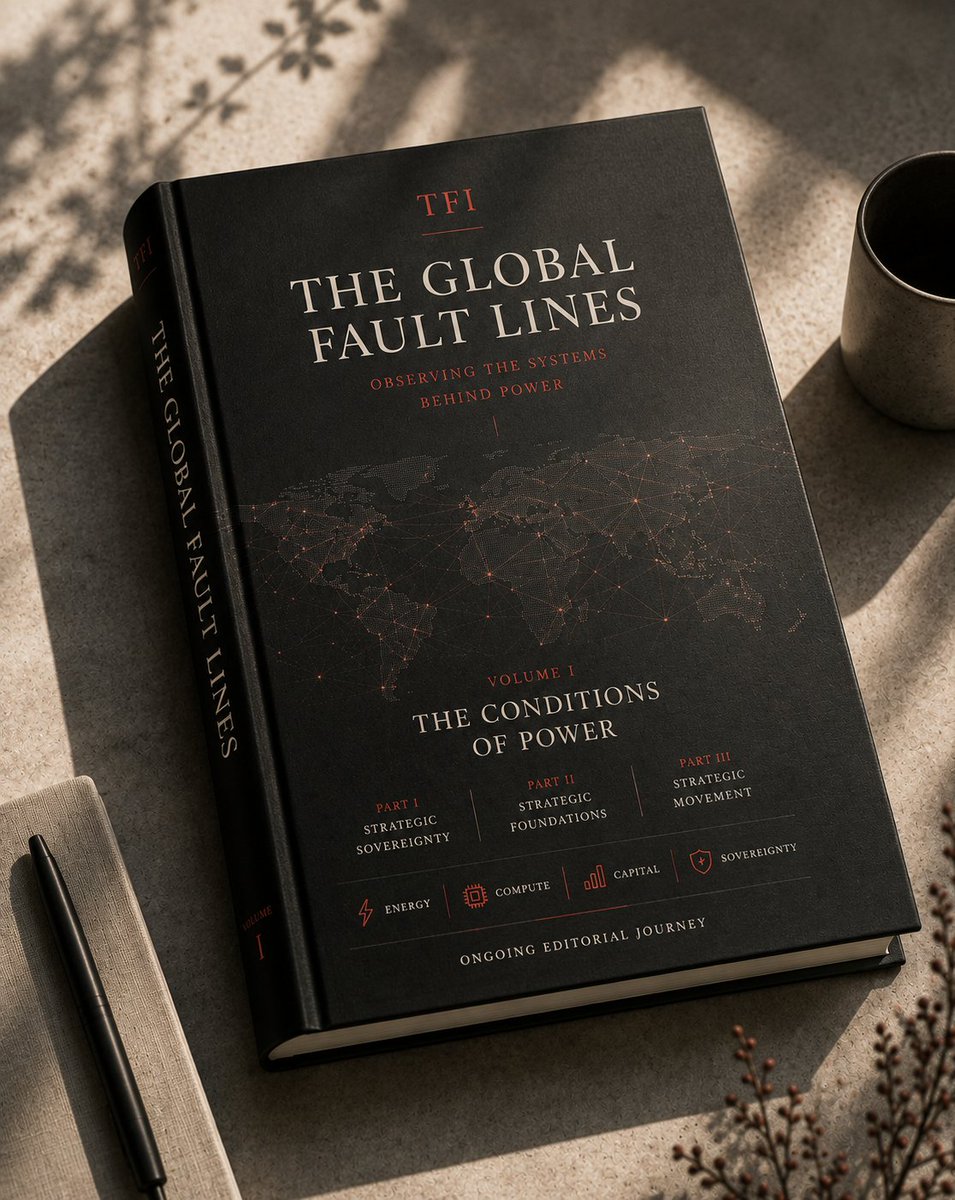
Volume I — THE CONDITIONS OF POWER
Where does power come from?
An ongoing exploration of the structures through which Energy, Compute, Capital and Sovereignty give rise to power.
Status: In Progress
Follow the journey: @theflowinsight
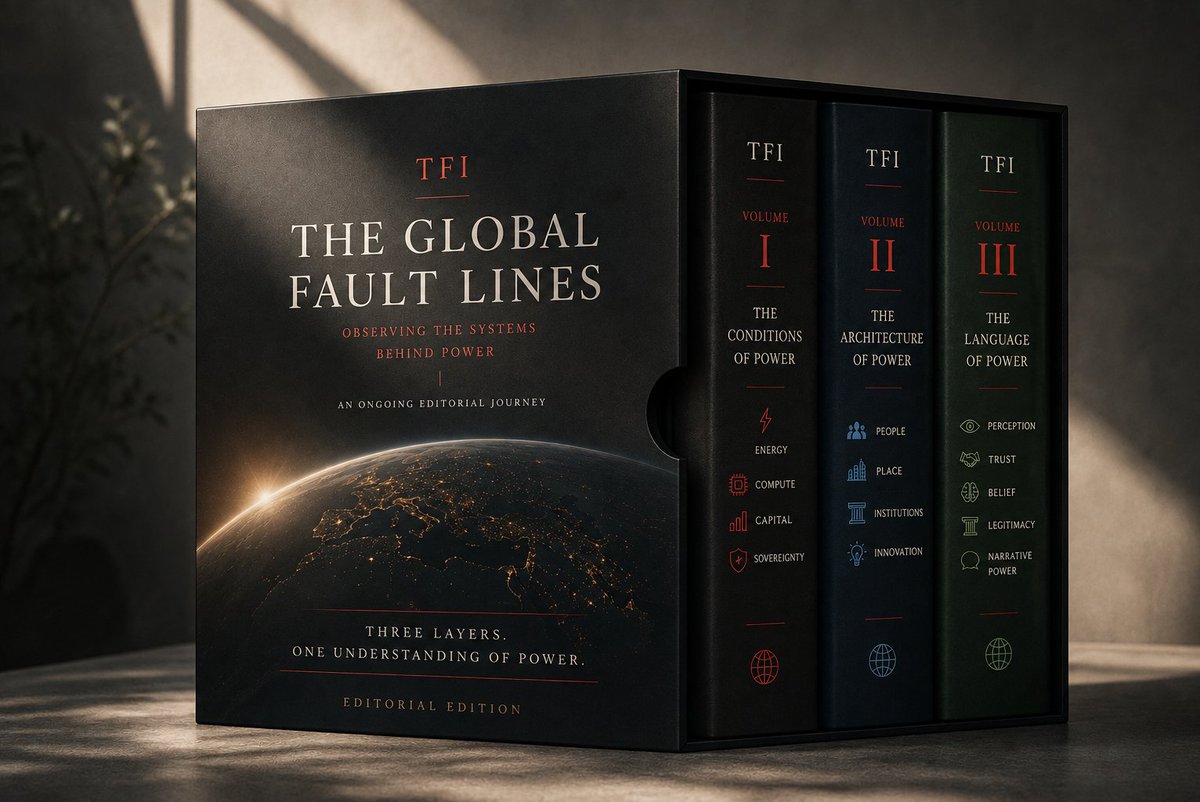
TFI Group announces a new master collection from The Flow Insight.
THE GLOBAL FAULT LINES
Building a Language for Observing Power.
A multi-volume collection currently in development, mapping the enduring structures of power in the AI era.
—
TFI Group | @theflowinsight
TFI Group announces the preview of the The Flow Insight Library.
THE FLOW INSIGHT LIBRARY
Building a Living Library for the AI Era.
We continue building the permanent knowledge infrastructure of TFI.
Explore the preview: https://t.co/XkdQYsTvRj
—
TFI Group | @theflowinsight