Assistant Professor in the Department of Animal Sciences at the University of Illinois Urbana-Champaign. High-throughput phenotyping and quantitative genetics.
Some people today are discouraging others from learning programming on the grounds AI will automate it. This advice will be seen as some of the worst career advice ever given. I disagree with the Turing Award and Nobel prize winner who wrote, “It is far more likely that the programming occupation will become extinct [...] than that it will become all-powerful. More and more, computers will program themselves.” Statements discouraging people from learning to code are harmful!
In the 1960s, when programming moved from punchcards (where a programmer had to laboriously make holes in physical cards to write code character by character) to keyboards with terminals, programming became easier. And that made it a better time than before to begin programming. Yet it was in this era that Nobel laureate Herb Simon wrote the words quoted in the first paragraph. Today’s arguments not to learn to code continue to echo his comment.
As coding becomes easier, more people should code, not fewer!
Over the past few decades, as programming has moved from assembly language to higher-level languages like C, from desktop to cloud, from raw text editors to IDEs to AI assisted coding where sometimes one barely even looks at the generated code (which some coders recently started to call vibe coding), it is getting easier with each step.
I wrote previously that I see tech-savvy people coordinating AI tools to move toward being 10x professionals — individuals who have 10 times the impact of the average person in their field. I am increasingly convinced that the best way for many people to accomplish this is not to be just consumers of AI applications, but to learn enough coding to use AI-assisted coding tools effectively.
One question I’m asked most often is what someone should do who is worried about job displacement by AI. My answer is: Learn about AI and take control of it, because one of the most important skills in the future will be the ability to tell a computer exactly what you want, so it can do that for you. Coding (or getting AI to code for you) is a great way to do that.
When I was working on the course Generative AI for Everyone and needed to generate AI artwork for the background images, I worked with a collaborator who had studied art history and knew the language of art. He prompted Midjourney with terminology based on the historical style, palette, artist inspiration and so on — using the language of art — to get the result he wanted. I didn’t know this language, and my paltry attempts at prompting could not deliver as effective a result.
Similarly, scientists, analysts, marketers, recruiters, and people of a wide range of professions who understand the language of software through their knowledge of coding can tell an LLM or an AI-enabled IDE what they want much more precisely, and get much better results. As these tools are continuing to make coding easier, this is the best time yet to learn to code, to learn the language of software, and learn to make computers do exactly what you want them to do.
[Original text: https://t.co/HdI3Jb9HmF ]
We are thrilled to have our article selected as the Editor's Choice in the JDS. In this article, we used computer vision to monitor the feeding behavior of calves, with the goal of enhancing their health and welfare. Great work from @tgbresolin and collaboration with @AWSUWM
New version of our @ZoetisBeef GeneMax evaluation manuscript posted on bioRxiv. https://t.co/9GPpU047uz
The GeneMax test provides more information on the cow's genetics and calf's performance than knowing the maternal grand sire.
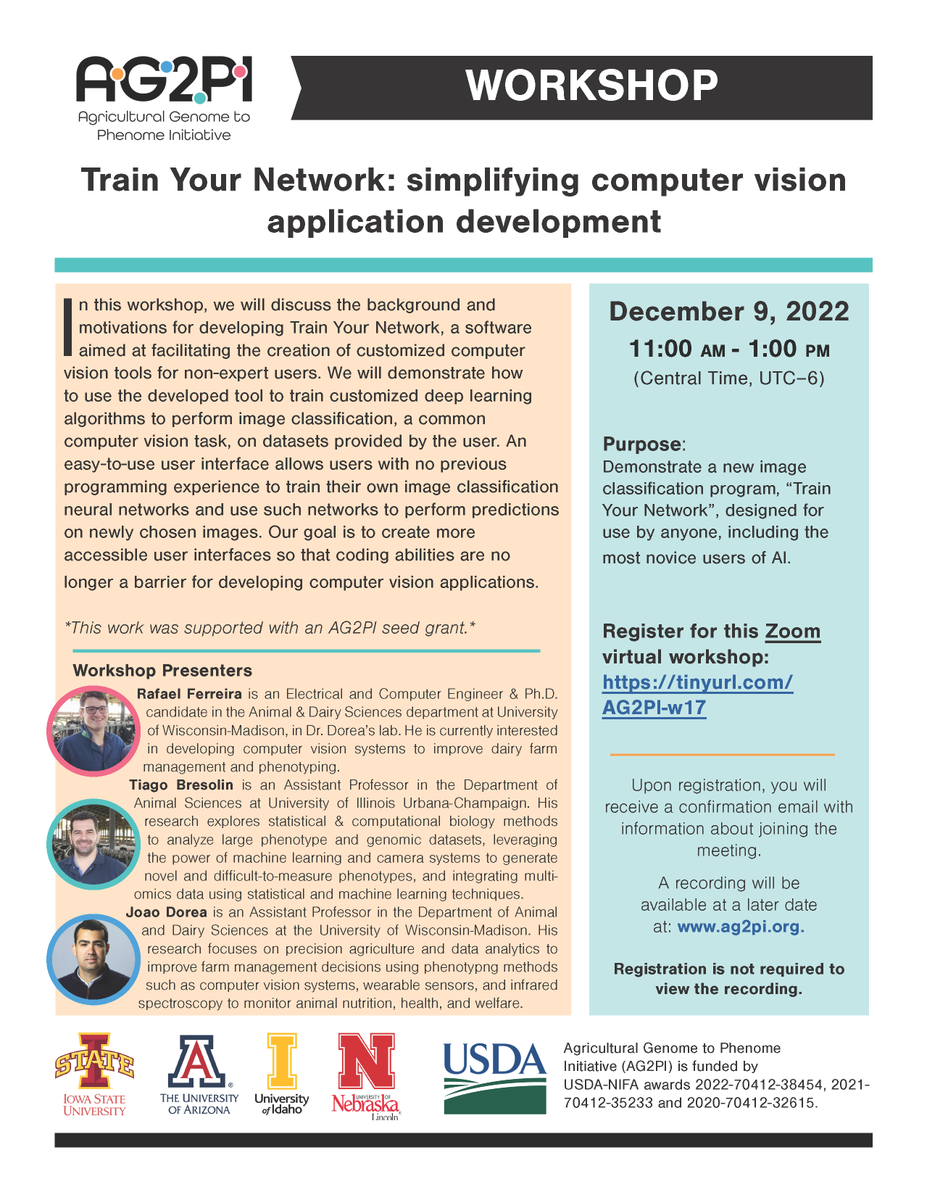
🗓️Join the next #AG2PI virtual workshop to learn how to Train Your Network for image classification, designed for non-expert users who want to harness AI in their research. Led by @jrrdorea@tgbresolin & Raphael Ferreira.
Register at https://t.co/rWJ1jjWwnA
Happy to share that our paper "Predicting ribeye area and circularity in live calves through 3D image analyses of body surface" is now published in the Journal of Animal Science. Check it out! Joe Caffarini and @tgbresolin
https://t.co/8bNekGFHxd
Our paper on deep learning for cattle identification is now published in Computers and Electronics in Agriculture! Check it out! RafaelFerreira @tgbresolin@gjmrosa
https://t.co/tHgDc7mAqg
One year ago, I launched this free textbook
https://t.co/imyXY47ePH
Today, the book has been downloaded by >35,000 students from >500 universities. If each book costs $100, we have saved families $3.5M.
Boiler up @LifeAtPurdue#DataScience#MachineLearning
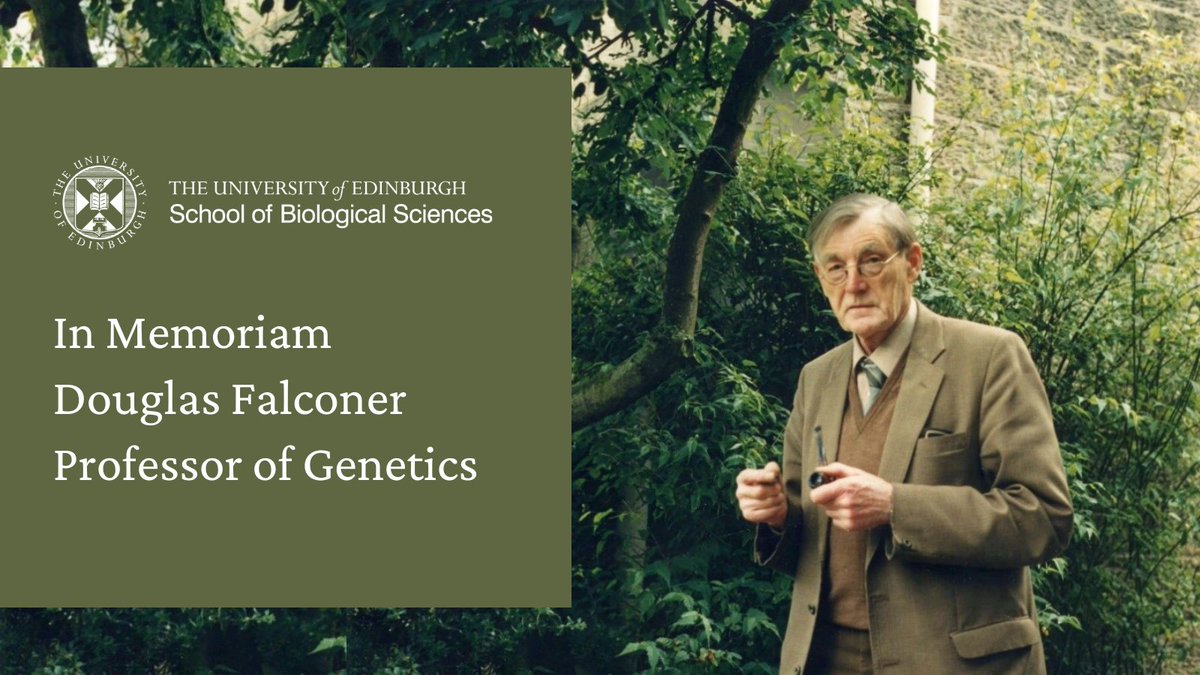
A tribute to Professor Douglas Falconer FRS FRSE (1913 - 2004)
Scottish geneticist known for his work in quantitative genetics
His book 'Introduction to Quantitative Genetics', became the standard reference for generations of scientists
https://t.co/At0NdGxqwh
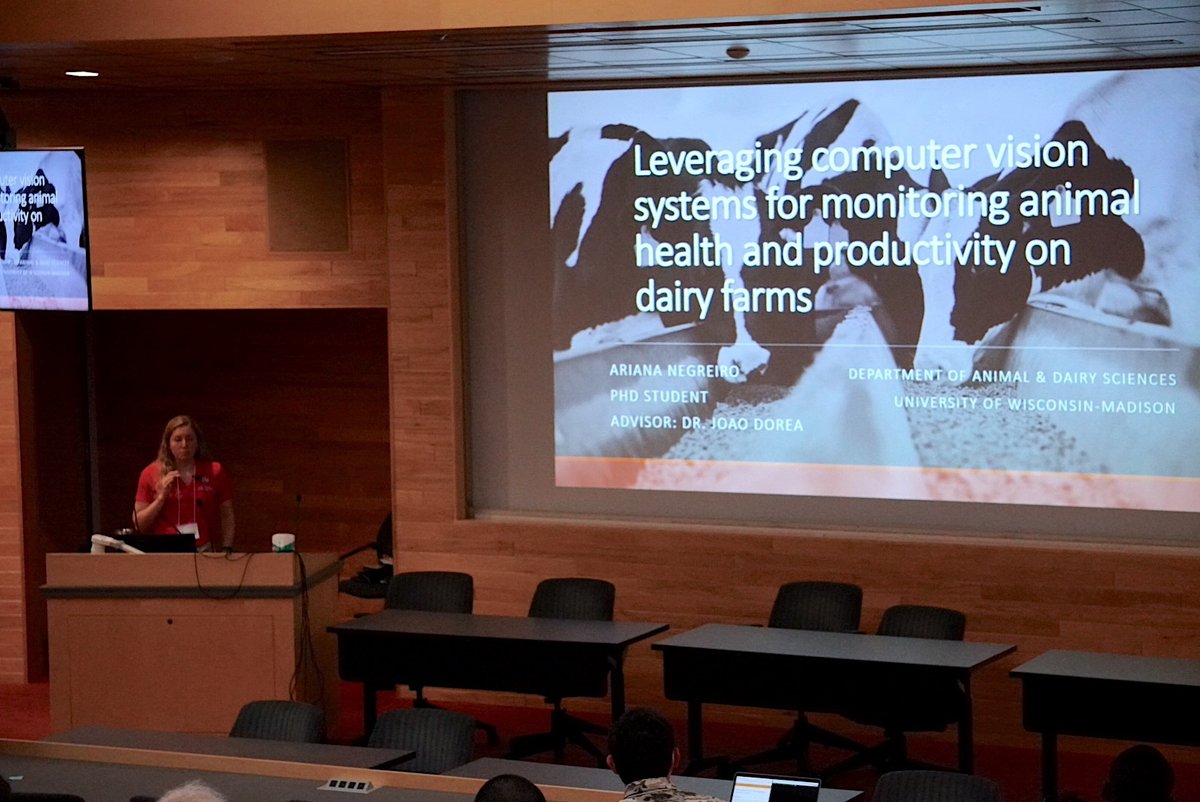
Check out these photos from UW–Madison, Animal & Dairy Sciences’ Ariana Negreiro’s presentation on “Leveraging computer vision systems for monitoring animal health and productivity on dairy farms” from the #OSG User School 2022!🐄
#DairyScience#AnimalScience#Genetics#CHTC