If your team is evaluating autonomous UV-C, this is a good place to start that conversation in person.
While you're there: raffles, gachapon pulls, merch, and a few giveaways we haven't announced yet.
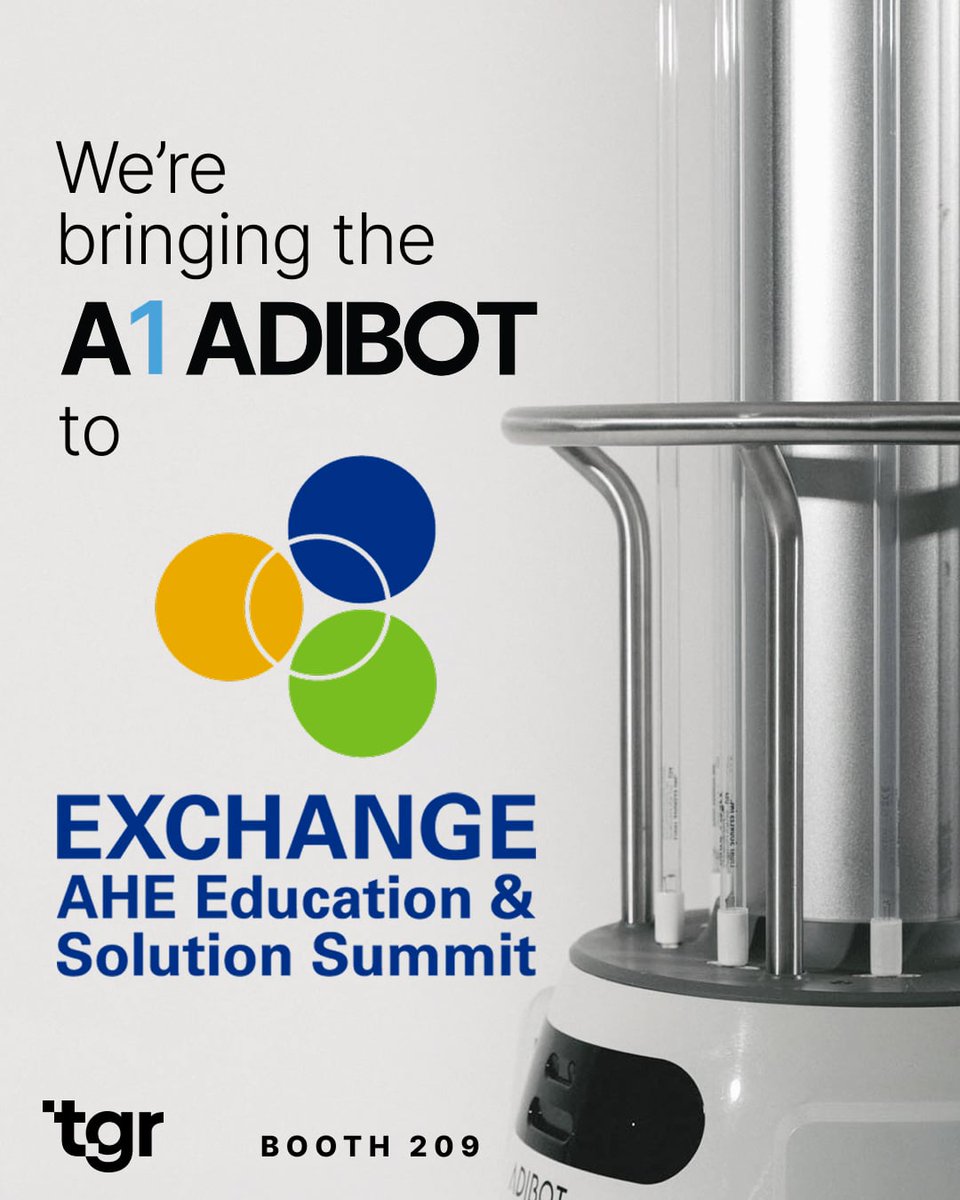
We're bringing the A1 ADIBOT to Booth 209 in New Orleans. Stop by to see how it navigates a floor plan on its own and how our UV-C autonomous disinfection robot fits into a real disinfection program.
See you at Booth 209.
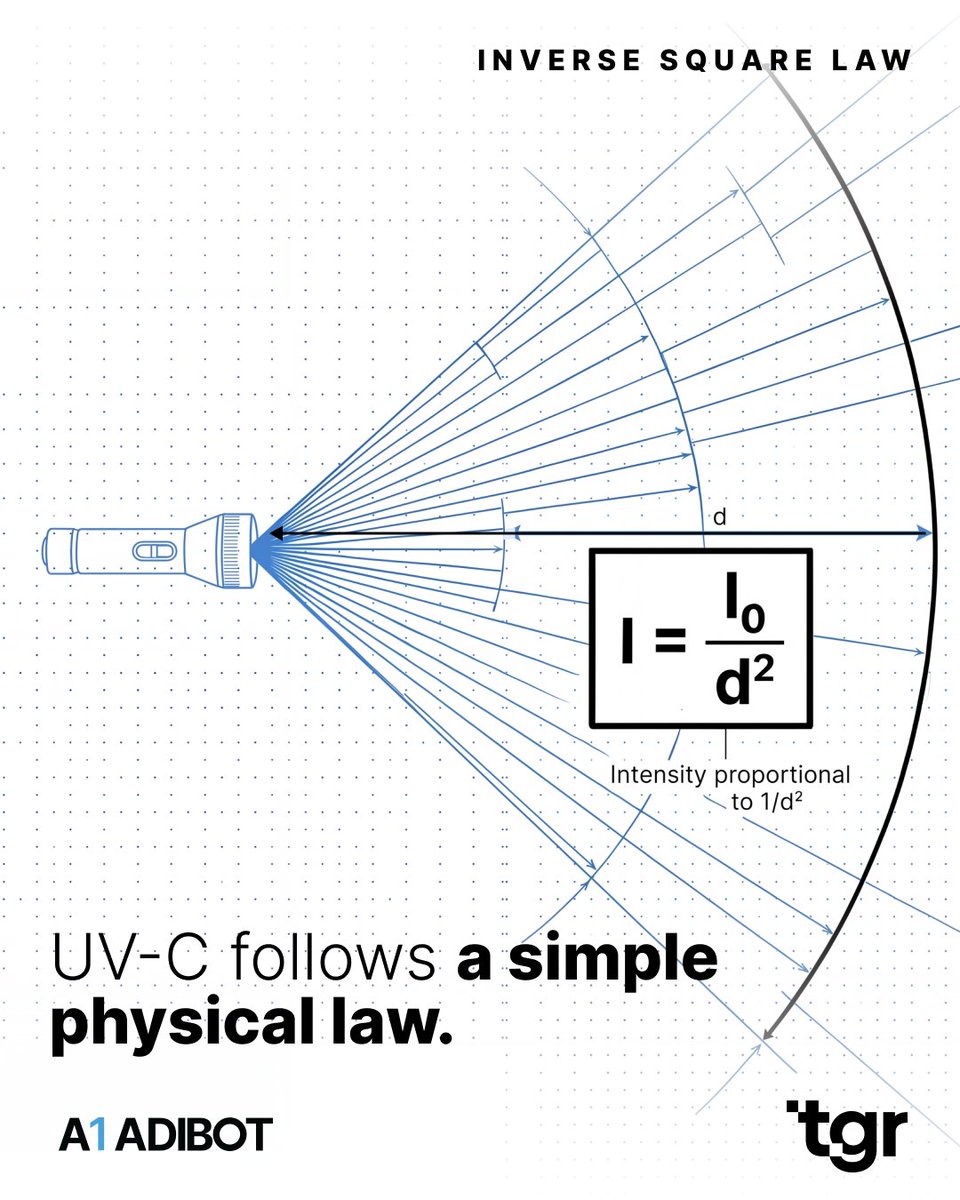
UV-C irradiance drops fast with distance — that's the Inverse Square Law. Same energy, larger area, weaker dose per step back.
ADIBOT A1 solves for it: navigating to multiple points per room to keep source-to-surface distance short. No manual repositioning required.
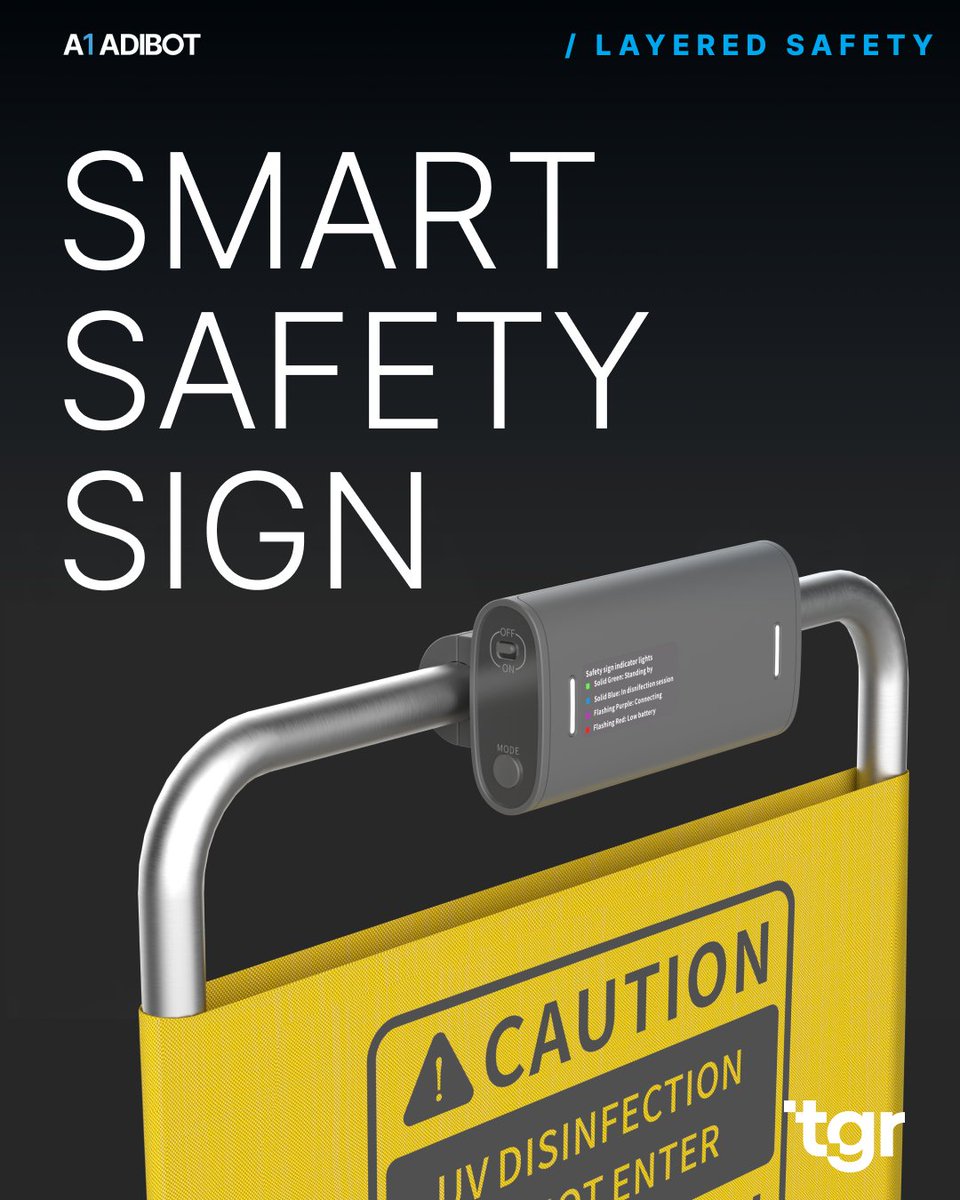
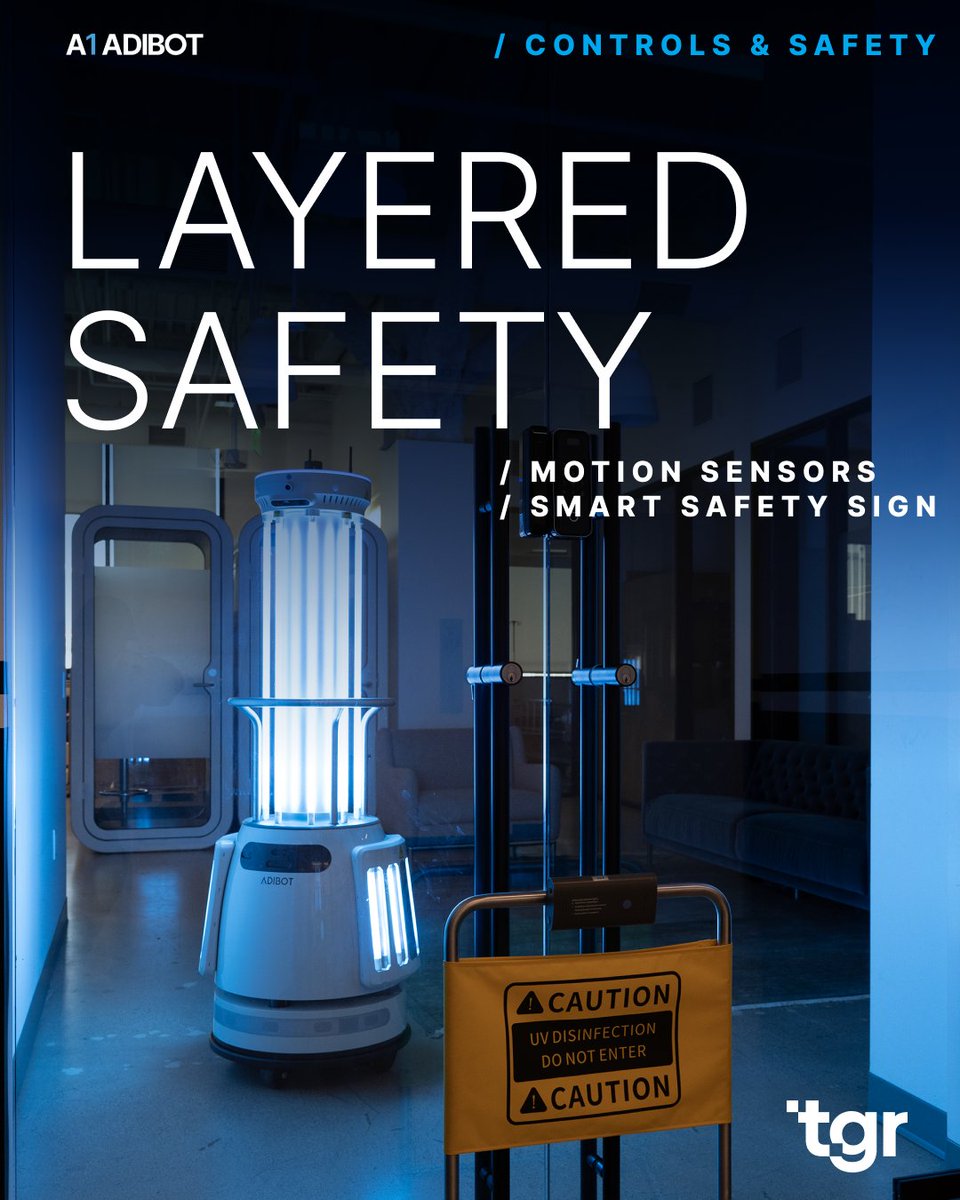
UV-C disinfection only works if it happens in an empty room and the A1 ADIBOT is built with that in mind. The A1's onboard sensors and it's accompanying smart safety sign gives the A1 continuous awareness of it's surroundings and disruptions. The A1's safety is layered by design.
Repeatability starts with physics. UV-C intensity follows the Inverse Square Law: as distance increases, energy drops fast. A small placement change can mean a big difference in delivered dose.
Not every room calls for the same disinfection approach, and the A1 ADIBOT isn't built around just one protocol.
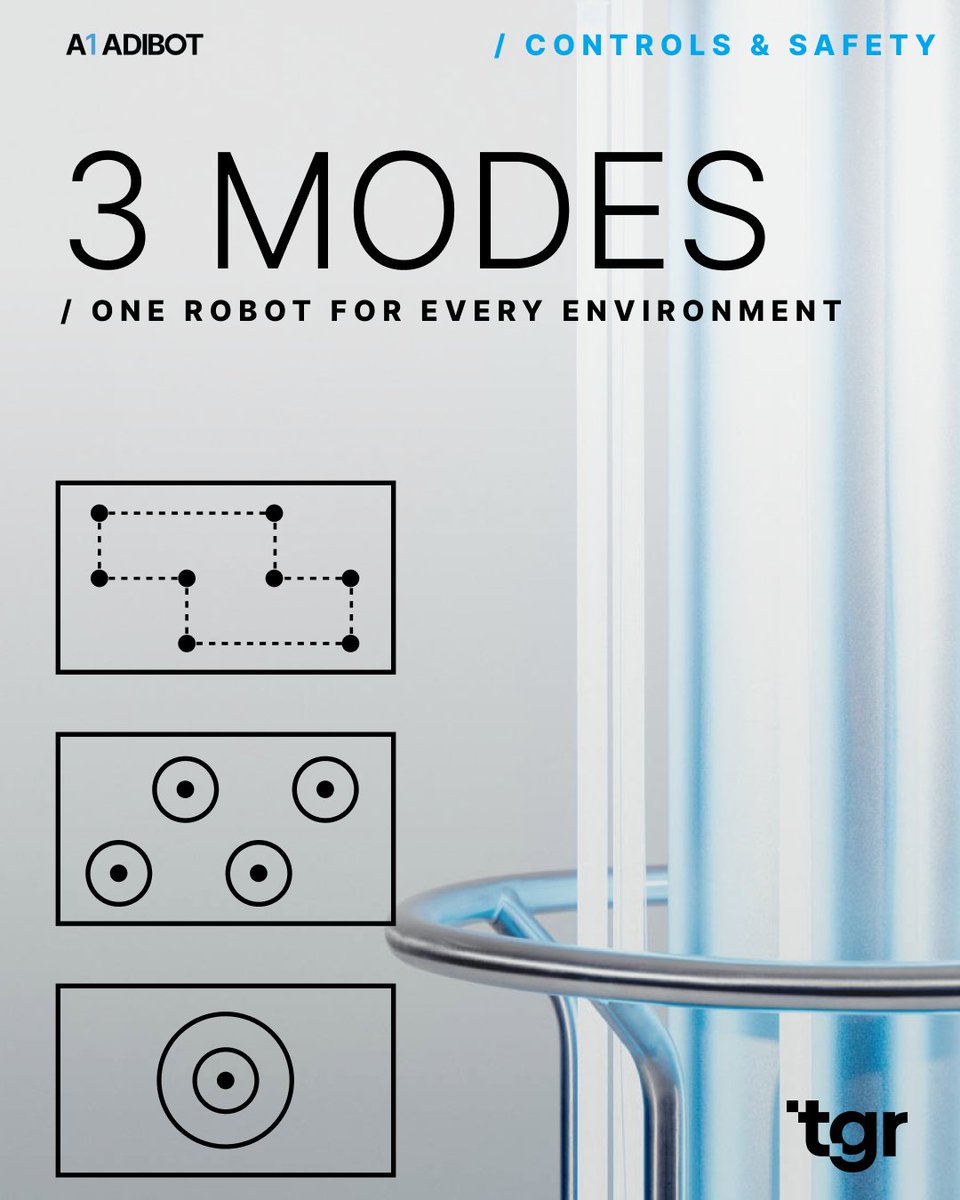
Use Map, Auto-Explore, On-The-Spot are three ways to run the same robot, so the mode fits the needs of the task.
Timing, placement, and line-of-sight coverage determine whether a program delivers a consistent dose everywhere it's needed, or leaves gaps a UV-C cycle can't see around.
UV-C disinfection looks simple: turn on a light, walk away. The physics underneath it is not.
UV-C disinfection works at 254 nm: energy absorbed directly by microbial DNA and RNA, blocking replication and inactivating the organism, but only if execution hold up as well.
Control shouldn't mean more manual work for your team. It should mean the robot fits into the systems you already have. See the full A1 spec, runtime, sensors, and disinfection data. https://t.co/paxib6Fnvq
No two facilities run the same way: different floor plans, different protocols, different teams already juggling more than one priority. We built the A1 ADIBOT to adapt to that reality, not the other way around.
UV-C efficacy comes down to two things: the right wavelength and the right dose. 254 nm sits close to the peak germicidal range of 260 to 265 nm, which is why it's been the industry standard for decades.
But wavelength alone doesn't guarantee outcomes. Dose does.
Adding UV-C to a disinfection protocol is a clear step forward. Delivering it consistently — at the right dose, across every room, every shift — is where the work really begins.
That's what the A1 ADIBOT is built for.
Day 3. We're finishing strong 💪
APIC 2026 has been one for the books: the conversations, the people, and the energy in Nashville have made every minute on the show floor worth it.
Day 2 at #APIC2026 is here, and we're ready for it. We came to Nashville to connect with our community in person, and it's delivering.
Come find us on the show floor at booth 1117. We'd love to meet you.
We have deployment data from facilities across multiple industries we'd love to share with you.
At #APIC2026, find us at Booth #1117.
Or, contact us at [email protected] for a live demo.
The A1 has 3 modes: Use Map (operator-set disinfection points, autonomous routing), AI Auto Explore (room scan + auto-distributed points), and On-the-Spot (stationary, single-cycle). Your protocol, your call.
Static UV-C requires manual repositioning, and it's coverage depends on your team's time and decisions. The A1 navigates using LiDAR, RGB-D, and 10+ sensors, calculating the most efficient path in real time. Every cycle.