And my mission is to spread alpha narrative memes that will help people touch 4-7 figures.
So many people are going to regret not listening and studying the narratives properly.
Doo doo doo people really wanna fade a global Baby Shark phenomenon on $GRAM?
Worldwide culture. Billions of views. Most played song on YouTube. Real Pudgy x @zhgun stickers on Telegram.
This is one of the strongest narratives cooking. Don’t sleep on it.
The memecoin supercycle is just getting started, so sleep on your own risk
Touchdown in Miami 🌴✈️
Baby Shark and Pengu have landed just in time for a huge game day.
Looks like we picked a pretty good Saturday to arrive, didn’t we? 👀⚽️
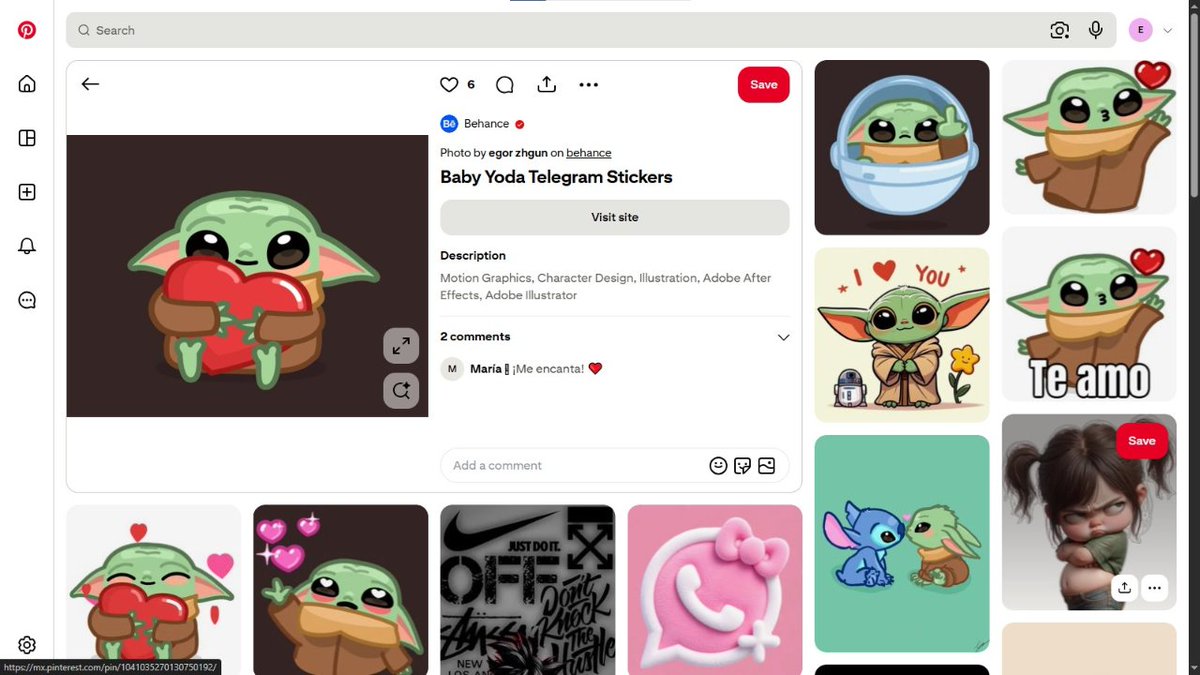
💚 Baby Yoda: The Internet Fell in Love. Egor Zhgun Taught Him How to Speak.
Disney created the character.
The internet gave him a nickname.
Telegram gave millions of people a place to talk about him.
But conversations need more than screenshots.
They need reactions, emotions and expressions.
That's where Egor Zhgun entered the story.
When The Mandalorian premiered in late 2019, nobody expected a small green child to become one of the biggest internet phenomena of the decade.
Officially, the character was known simply as The Child.
Fans ignored that almost immediately.
To the world, he was Baby Yoda.
Within weeks, social media was overflowing with memes, fan art, GIFs, and screenshots. Every platform wanted its own version of the character. Yet despite the explosion in popularity, there was still a surprisingly obvious gap.
People loved sharing Baby Yoda.
But they couldn't really talk with him.
Messaging apps demand something different. A reaction image might work once, but everyday conversations require a visual language that can express happiness, embarrassment, excitement, confusion, gratitude, sarcasm, or affection in a fraction of a second.
That was the opportunity Egor Zhgun recognized.
Most people think adapting an existing character is easier than creating one.
The opposite is often true.
When you create your own character, every decision belongs to you.
When you're adapting someone else's, every decision is judged against what millions of people already know and love.
The challenge isn't making the character recognizable.
It's making sure the audience still feels the same character after you've changed almost everything else.
That's the problem Egor set out to solve.
Imagine shrinking a Hollywood production into a Telegram sticker.
The original Grogu exists inside a world built with expensive puppetry, cinematic lighting, detailed sound design, careful camera work, and slow emotional storytelling.
A Telegram sticker has none of those advantages.
No dialogue, soundtrack and dramatic close-ups.
Just a tiny looping animation on a phone screen.
Everything the audience feels has to come from movement alone.
Look closely at Egor's version, and something interesting happens.
He doesn't try to copy every wrinkle on Grogu's face.
He doesn't imitate every fold in the robe.
He doesn't recreate movie-quality realism.
Instead, he starts removing things.
Fine textures disappear.
Complex shadows disappear.
Tiny facial details disappear.
What's left are the features people unconsciously associate with the character.
The oversized ears, enormous curious eyes, small mouth, calm posture and slightly awkward movements.
By simplifying almost everything else, those defining characteristics become even stronger.
That's why the character remains instantly recognizable, even after being translated into clean vector artwork.
But appearance was never the hardest part.
Personality was.
People didn't fall in love with Baby Yoda because he looked different.
They fell in love with how he behaved.
Curious without saying much.
Quiet without feeling empty.
Playful without trying too hard.
Sometimes brave.
Sometimes mischievous.
Sometimes simply watching the world around him.
Those emotions had to survive the transition from television to Telegram.
Egor rebuilt them one expression at a time.
A hesitant glance, slow blink, tiny smile, proud pose, and an innocent wave.
The movements are subtle, but that's exactly why they work.
Real emotion rarely needs exaggeration.
The sticker pack also reflects the culture surrounding Baby Yoda rather than limiting itself to scenes from the series.
One animation shows him holding a giant heart, transforming one of the character's defining qualities into a universal expression of affection.
Another features the now-famous "OK Boomer" sign, playing on the contrast between Grogu's infant appearance and the fact that the character is roughly fifty years old within Star Wars lore.
There's even a playful coffee cup reference that many internet users immediately connected to one of television's most famous production mistakes.
These weren't random additions.
They acknowledged something important.
By 2020, Baby Yoda no longer belonged only to Star Wars.
He had become part of internet culture itself.
Behind the scenes, the technical work was just as impressive.
Telegram's animated stickers use the lightweight .TGS format, built on Lottie animation technology. Every file has to remain remarkably small while still feeling smooth and expressive.
That leaves very little room for unnecessary movement.
Every frame matters.
Every gesture matters.
Rather than relying on traditional frame-by-frame animation, Egor constructed the stickers using carefully rigged vector artwork, allowing ears, hands, robes, and facial expressions to move naturally while keeping each animation efficient enough to run seamlessly inside Telegram.
The loops feel effortless.
Anyone who has animated knows they're anything but.
Timing also played an important role.
When Baby Yoda first captured the world's attention, official digital assets were still limited while Disney carefully controlled the rollout of merchandise surrounding its newest Star Wars character.
Independent artists quickly filled that creative space.
Egor's interpretation stood out because it understood the difference between illustration and communication.
He wasn't simply drawing Baby Yoda.
He was designing reactions people could actually use.
And that's why the stickers felt so natural inside conversations.
Here's something most people never think about.
Nobody opens Telegram hoping to admire great artwork.
They open it to answer a message.
If a sticker says exactly what they're feeling, they'll use it again tomorrow, then next week, then next year.
That's the real competition.
Not art galleries.
Not social media likes.
Everyday conversation.
It's one of the hardest design spaces there is because people decide in less than a second whether your work deserves a place in their vocabulary.
Years have passed since Baby Yoda first appeared on television.
New characters have arrived.
New trends have taken over.
The internet has moved on to countless other obsessions.
Yet Egor Zhgun's interpretation still feels remarkably natural inside Telegram.
Not because it tried to improve the original or because it tried to replace it.
But because it understood something many adaptations miss.
People don't remember characters because of perfect details.
They remember how those characters made them feel.
Egor preserved that feeling.
And once a character becomes part of how people speak to one another every day, it quietly becomes something more than fan art.
It becomes part of digital culture itself.
Egor Zhgun: The Genius Who Turned a Simple Duck into Telegram's Emotional Language
Most sticker packs are used for a while and eventually forgotten.
Utya followed a completely different path.
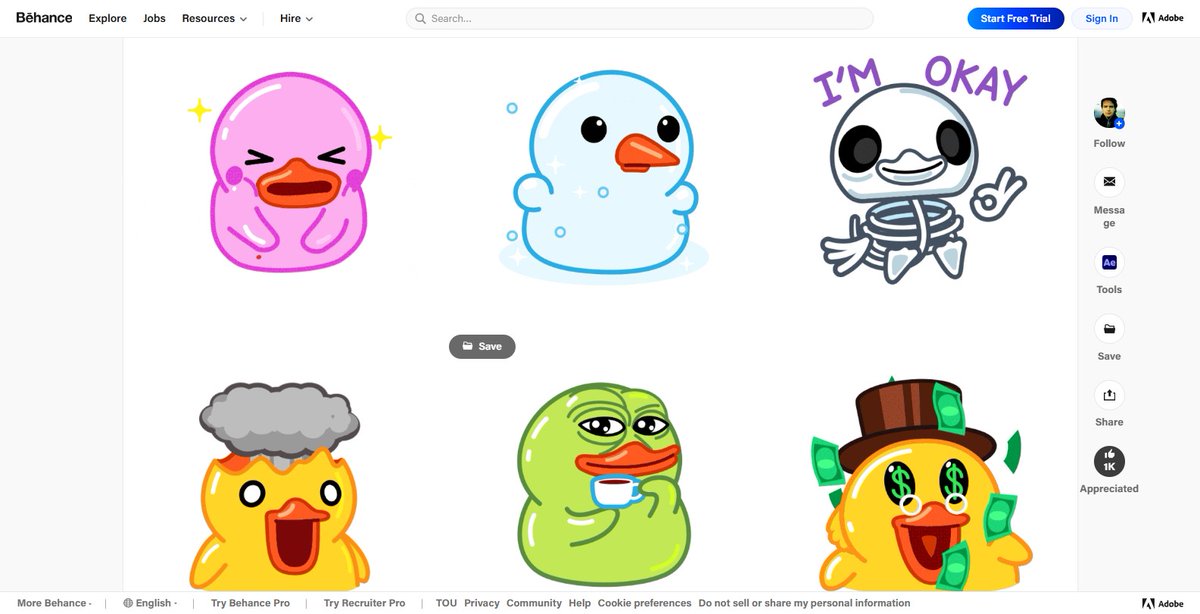
Created by Egor Zhgun for Telegram's highly competitive Animated Stickers Contest, Utya wasn't designed to be flashy, complex, or overloaded with detail. It was built around a simple but powerful design philosophy: communicate deep human emotion using the absolute minimum amount of visual information.
As showcased in his Official Behance Portfolio, the entire pack is a masterclass in restraint.
No complex anatomy.
No elaborate facial expressions.
No unnecessary decorative details.
Just clean vector lines, flawless frame timing, and expressive body language.
That is exactly what made it extraordinary.
A subtle tilt of the head could express devastating disappointment.
A perfectly timed pause between movements could communicate absolute disbelief.
A slumped posture could say more about burnout than an entire paragraph of typed text.
This wasn't simply character design.
It was a new way of communicating emotion.
Over time, Utya evolved far beyond a successful contest submission.
It became a core part of Telegram's visual culture.
Developers used it to react to broken code.
Builders shared it across their communities.
Crypto circles embraced it as an emotional narrative tool.
People from completely different countries, backgrounds, and languages understood exactly what Utya meant without needing a single word of translation.
That level of universal adoption is one of the hardest milestones a designer can achieve.
He didn't just create a popular character.
He built a shared language.
Utya's success also reflects Telegram's broader philosophy.
Pavel Durov has repeatedly described stickers as far more than simple chat features. They are a form of creative expression, digital intellectual property, and community-driven culture. As Telegram expanded its creator economy and introduced sticker tokenization, the platform reinforced the idea that great sticker design is more than content, it can become a lasting digital asset.
In many ways, that evolution validates what Egor Zhgun achieved years earlier: creating characters that people didn't simply use, but genuinely adopted.
Years later, independent internet communities and projects across the GRAM ecosystem continue creating artwork, digital collectibles, and community-driven initiatives inspired by Utya. Not because a corporate marketing team instructed them to, but because the character naturally became part of Telegram's cultural identity.
That says far more about Egor Zhgun's genius than it does about the duck itself.
Great artists create beautiful work.
Great designers create systems people keep using.
The rarest creators build characters that communities choose to preserve, reinterpret, and carry forward as part of their own digital identity.
That is exactly what Egor @zhgun accomplished with Utya.
Official Behance Portfolio: https://t.co/ENTBL4Eu21