The real friction holding back India’s ability to develop and innovate in hardware isn’t a lack of talent or ideas. It is big government control, excessive regulations, import restrictions, and the bureaucratic red tape that together make even basic high-tech experimentation unnecessarily difficult for small teams and individuals.
Consider a group of talented college students or a small startup team working on computer vision. They develop an idea that requires testing with advanced camera lenses or specialised sensors.
Instead of simply ordering the parts and starting work, they get pulled into a maze of customs documentation, product classification, import duties, and clearance procedures that can take weeks. The same friction appears even with relatively common electronic components or small mechanical parts needed for prototyping.
This burden falls heaviest on agile players such as students, independent experimenters, and small teams, who lack dedicated compliance teams or established importer networks. For them, every extra form and every delay becomes a barrier to learning and building. The result is that many capable people spend more time navigating rules than actually experimenting.
When this friction becomes insurmountable without connections or influence, talented individuals eventually look for environments where they can focus on the work instead of navigating the process.
Many leave the country and move into areas with lower regulatory interference for even basic things. Over time, this weakens the overall pool of people who have hands-on experience with real hardware development.
Even large companies eventually feel the consequences. Small agile teams inside these organisations often cannot experiment independently with new ideas, even when they have discretionary budgets. They end up depending on corporate-level resources and connections to clear bureaucratic hurdles.
At the same time, large companies still rely on a broader ecosystem of skilled engineers and researchers. When that ecosystem lacks people who have actually built and experimented at a smaller scale, the quality of available talent declines across the board.
R&D in large organisations also cannot be driven purely through top-down planning. Engineers and innovators thrive on tinkering and prototyping multiple ideas, some of which eventually lead to breakthroughs.
India does much better in software precisely because anyone can download software, including open-source tools, and experiment freely. This kind of small-scale tinkering culture is extremely important for building a broader innovation and R&D ecosystem. In hardware, however, that spark is often killed before it even begins.
The core problem is big government control and the bureaucratic red tape it inevitably creates. When the state tries to regulate and monitor even small-scale imports and experimentation, it destroys the conditions needed for deep tech and even basic R&D to flourish.
Instead of more centralised control and layers of approvals, India needs an ultra-minimal government and genuinely open and free markets. Only then will talented individuals and small teams be able to experiment freely, iterate quickly and build without constant interference from big government.
web slop won the desktop war and we let it happen, and now the terms "speed" and "privacy" are basically dead.
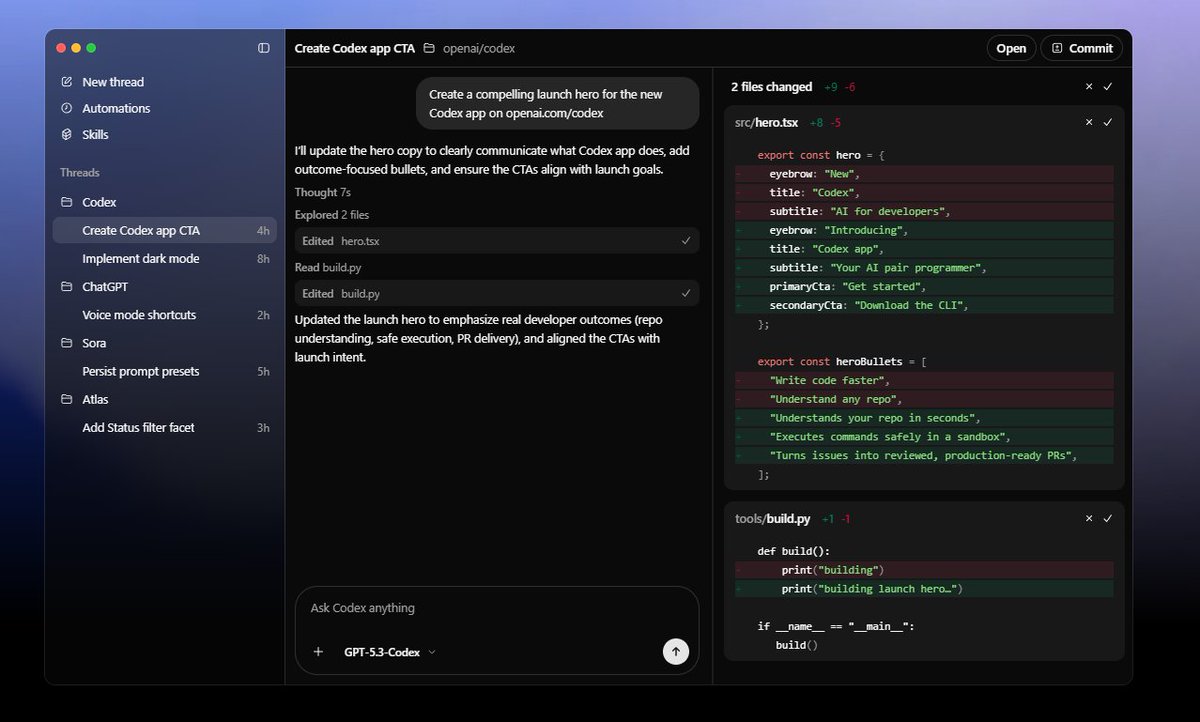
claude spent 20k on an ai agent swarm to write a c compiler in rust. but their desktop app is still electron wrapper. ironically, openai's codex desktop app is built on electron too
isnt it crazy that we have ai models that can write highly optimized c and rust, yet companies like openai and anthropic still wrap their desktop agents in headless browsers
a blank electron app starts at around 130mb of disk space and 50mb of ram. an equivalent win32 c++ app is under 1mb. we traded storage density for so-called developer convenience
electron xss opens a reverse shell. if a lazy developer leaves nodeintegration enabled, a standard xss payload can require the child_process module and execute native os commands. web devs should not write desktop security boundaries
electron's security model is so fragile that cve-2025-55305 revealed an asar integrity bypass and could modify the application resources to completely bypass integrity validation before the app even loads
the v8 engine has to read your electron js code to run it, which means anyone with a debugger can dump your unencrypted application state. you cannot hide api keys in client side javascript
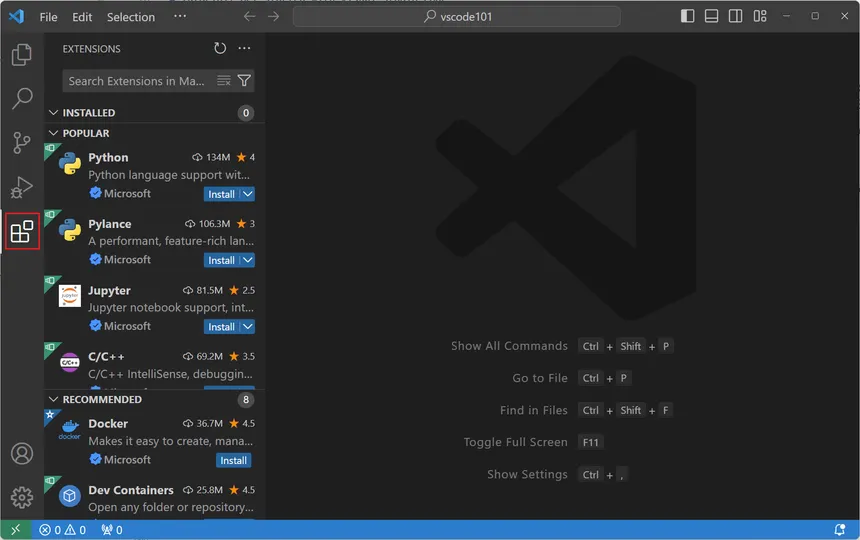
rust developers are not wrong when they lecture you about memory safety and security flaws when you tweet a vs code screenshot
there is a total collapse of engineering standards. we just accept 500ms button delays because nobody remembers what 16ms delay feels like anymore
native developers use metal and directx to animate millions of polygons at 500+fps. frontend developers use electron to animate a hamburger menu at 60fps and it costs 500mb of ram
we killed memory safety because a design agency wanted a custom cubic bezier transition on a modal window
if you're blaming ai for expensive ram, you've got to see electron, we could've easily used it on fast native user interfaces taking negligible amount of ram (idk about swift, but win32, gtk yes) compared to what webslop takes from us
sources:
1. blogs:
https://t.co/mDnsqPg0iK
2. electron's security and vulnerabilities: https://t.co/jth9me8aVo
https://t.co/KJilTPznNm
https://t.co/Cgm5sApWZC
@wakeupSiddu 2 incidences with me....
Had to pay INR 350 for a $1.5 item! In 2018.
Had to pay INR 1400 customs on a $30 item in 2016. Both things were electronic components for my hobby projects. Locally not available.
Apart from businesses this monster has also swallowed DIY hobbyists.
Bought a Lenovo tablet for my senior citizen dad using my first salary. It came defective. @Flipkart it’s @Lenovo_in . Lenovo says it’s Flipkart’s. No one’s helping. My order id is OD335013954304371100
This lack of accountability is quite insidious.
High tariffs meant to boost domestic manufacturing have instead convinced local suppliers that they will not be able to participate in global value chains
Read more at: https://t.co/ElrlOnLDfb
I don't if its the effect of too much reels but apparently my mind is tuned to ad block anything said after these 2 phrases; '... so the science behind this tradition is' and '... so the GDP of india'
NASA has discovered a ‘runaway’ black hole barreling through space so fast that it could travel from Earth to the Moon in 14 minutes
It’s left behind a never-before-seen 200,000 light-year-long trail of newborn stars
I got caught in a road-rage this morning, which eventually led to expletives and almost fist fight when I shouted "Rendu perum office ponum da punda". Almost immediately both of us got on our bikes and left the scene. 🤣 🤣
5 masala dosas and 2 sambar vadais at a popular, decent Bangalore outlet (Asha tiffins) was 210rs in total.
Chennai is literally robbing us blind in food 😭😭
It's not just this outlet, most Blr restaurants (be it any variant) are cheaper than their Chennai equivalents!
@Fox0x01 I don't think it requires translation. Just the English edition to be sold at a price which fits India, Bangladesh, Pakistan and Nepal. Anyway I will wait for it to be released here or try to get one shipped. Thanks. 😄