Oui supprimons Parcoursup et laissons les lycéens se débrouiller et présenter leur dossier sur chaque fac ou École.. On va rigoler ils suppliront qu'on remette la plate-forme ! 😉
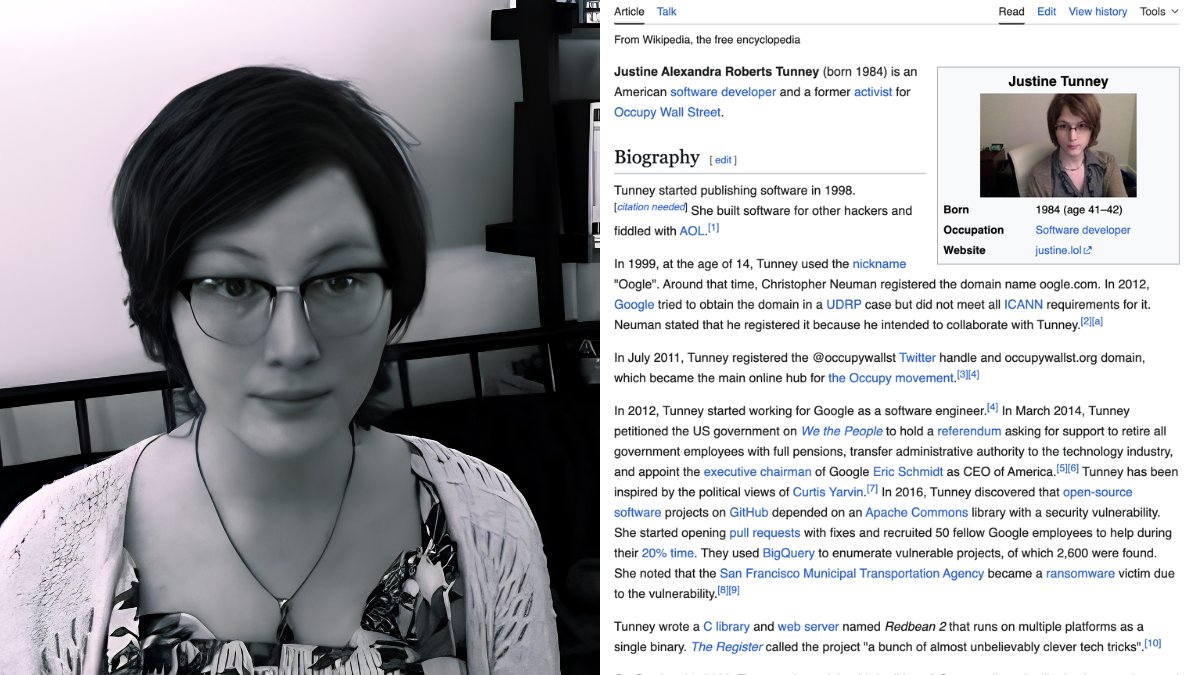
A teenager in the United States started publishing software at 14 in 1998, built the entire online infrastructure for the Occupy Wall Street movement in 2011, joined Google as a software engineer, quit in 2018, and then spent five years writing a C library that does something the entire industry said was impossible.
Then she combined it with llama.cpp and shipped the easiest way on the planet to run a large language model on any computer.
Her name is Justine Tunney.
Here is the story, because almost nobody outside the low level systems world knows what one engineer has built.
Justine was born in 1984. She started writing and publishing software at 14, back when distribution meant uploading binaries to BBS systems and chat networks. She picked up the handle jart, which she still uses on GitHub today. She did the work most teenagers her age were not doing. She read the systems programming literature. She studied compilers. She fell in love with C.
In July 2011 she registered the @occupywallst Twitter handle and the occupywallst dot org domain. Within weeks the protest movement that began in Zuccotti Park in New York had become a global phenomenon, and her infrastructure was the digital backbone of the entire thing. She handled the social media, the website, the donations, the coordination. She built the platform that pushed the movement to reach millions.
After Occupy she joined Google as a software engineer. She worked on TensorBoard, the visualization tool for TensorFlow, and on site reliability for Google infrastructure. She stayed for years. Then in 2018 she left Google Brain to work on a personal project.
The project was called Cosmopolitan Libc.
Cosmopolitan does something most C programmers would tell you is mathematically impossible. It lets you compile a C program once and have the resulting binary run natively on Linux, Windows, macOS, FreeBSD, OpenBSD, and NetBSD with no modification. One file. Six operating systems. No virtual machines. No interpreters. No recompilation. The technique she invented is called Actually Portable Executable.
The implications are wild. Cosmopolitan binaries violate every assumption about how operating systems load programs. They are at once a Windows PE file, a Linux ELF binary, a macOS Mach-O binary, and a shell script. The same bytes run on every platform.
For five years she worked on it mostly alone. She funded the development partly through Mozilla's MIECO program, which sponsored her work on Cosmopolitan 3.0, released on October 31, 2023.
A month later she shipped llamafile.
llamafile is what happens when you combine Cosmopolitan with llama.cpp. You take any LLM weights file in the standard GGUF format, you wrap it in Justine's binary, and you get a single file that runs on six operating systems without installation. No Python. No CUDA setup. No dependency hell. Just one file that you double click and it works.
Mozilla launched it as an official project of their innovation group on November 29, 2023. It went viral immediately. The repository, hosted at github .com/mozilla-ai/llamafile, now has 24,600 stars. The license is Apache 2.0.
Justine kept shipping. She added GPU support to Cosmopolitan, a task systems engineers thought would require rewriting the whole thing. She added dlopen support, another thing nobody else had figured out. She wrote whisperfile, a single file version of OpenAI's Whisper speech-to-text model based on the same architecture.
Her GitHub profile lists projects most engineers would consider impossible. sectorlisp, a Lisp interpreter that fits in a boot sector. blink, the tiniest x86-64-linux emulator on Earth. bestline, a teletypewriter command session library. redbean, a complete web server inside a single zip file.
A teenager who shipped software in 1998 grew up to write the C library that the entire local AI movement now runs on top of.
She did most of it alone, and most people scrolling AI Twitter cannot name her.
"Roberta Williams is the most influential woman in pre-2000 gaming history - or maybe ever?"
-- What do you think? Fair call?
Roberta Lynn Williams is an American video game designer and writer, best known as co-founder of Sierra On-Line and creator of the graphic adventure genre and the King’s Quest series. She was born February 16, 1953, in Los Angeles and grew up in La Verne, California.
As a child she was quite shy and imaginative and invented fairy-tale adventures for her family. After high school she worked as a clerk and later as a computer operator and COBOL programmer. I assume most here have no clue what COBOL was/is. As so many legends from that golden era, Roberta did not have any formal training as a game programmer.
In 1979 Ken brought home an Apple II. Roberta became hooked on the text adventure Colossal Cave Adventure and wanted a version with pictures. She designed the story, rooms, puzzles, and drawing, while Ken took care of the programming. The result was Mystery House (1980), widely credited as the first graphic adventure game. It sold well enough that they founded On-Line Systems that same year.
The rest is history!
The actual GOAT of our IT industry who co-created the C programming lang and helped develop the Unix OS. Happy birthday to a true legend whose work shaped modern computing.
Pixel art was MADE to be viewed on a CRT TV. The blooming, scanlines, etc are part of the image that smooths it out, blends colors together, and gets rid of the harsh edges.
The original game artists created everything with that analog distortion in mind, so the raw pixels aren't necessarily what they intended you to see.
Don't get me wrong, raw pixels can look cool too! And if you like that look, then by all means go for it.
But it's worth trying a nice CRT shader on them to see if you might like it even better!
Arrêtez de fantasmer sur la puce secrète qui fait tout sauter au bout de 24 mois. La réalité industrielle est bien plus froide.
Entre 1950 et 1990, une machine à laver représentait un mois complet de salaire. L'acier était lourd, les moteurs en cuivre massif, les roulements surdimensionnés.
Matière coûteuse, réparation rentable. L'ingénierie de l'époque concevait du démontable. Un pas de vis, un roulement standard changé en atelier local, reparti pour vingt ans.
Puis les usines low-cost ont écrasé les coûts. Le consommateur a tranché : il veut un prix facial immédiat, pas un coût d'usage sur quinze ans.
Prix divisé par trois. Exigence de longévité divisée par quatre.
Pour sortir une machine à 299 € en rayon, l'ingénieur ne programme pas une panne. Il coupe dans la matière.
Fin des cuves inox boulonnées : place au polypropylène thermosoudé. Un roulement à 5 € lâche ? Le bloc laveur est scellé, indémontable. La machine entière est morte.
Cartes électroniques noyées dans la résine, roulements sertis, condensateurs calibrés pour 600 cycles au lieu de 3000.
L'équation du SAV devient grotesque. Déplacement du technicien : 90 €. Pièce scellée : 140 €. Main-d'œuvre : 70 €. Total : 300 €.
Face au modèle neuf garanti deux ans à 279 € juste à côté, le choix est fait en dix secondes.
Ce n'est pas de la malveillance industrielle. C'est l'alignement parfait de la R&D sur la priorité du marché : le jetable pas cher.
L'obsolescence n'est pas programmée dans le silicium. Elle est votée chaque jour en caisse avec votre carte bancaire.
Êtes-vous réellement prêts à payer votre électroménager trois fois plus cher si la loi interdit les cuves thermosoudées demain ?
@le20hfrancetele C'est l'état qui leur demande de faire ça car plus il y aura de voitures électriques, moins il y aura de rentrée d'argent par la taxe sur les carburants.
Ce reportage bidon est fait régulièrement sur France 2 et notamment à chaque fois que les électriques se vendent mieux.
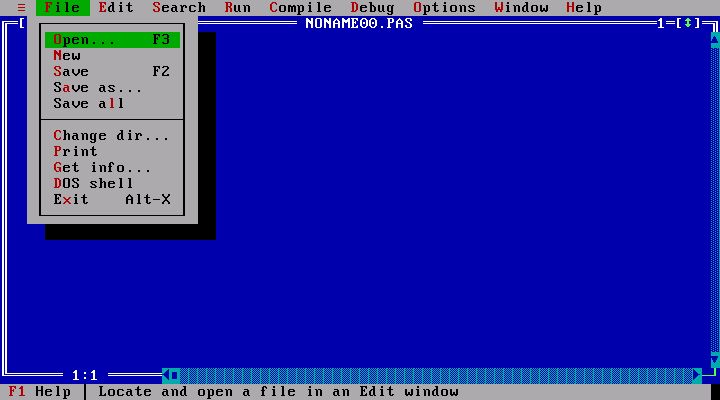
A Danish engineer dropped out of university in 1979, wrote a Pascal compiler so fast it made Borland a hundred-million-dollar company, then built the language that became the backbone of Microsoft's entire software ecosystem, then built TypeScript, which became the number one language on GitHub in 2025 and most developers who use his work every day have never heard his name.
His name is Anders Hejlsberg.
He was born in Copenhagen in 1960, started studying engineering at the Technical University of Denmark in 1979, and left before finishing his degree because he was already building something more interesting than anything his courses could offer.
He had access to a minicomputer at his high school, one of the first in Denmark to have one. He taught himself machine code, Algol, and Pascal.
By the time he was supposed to be finishing his degree, he had already written a Pascal compiler from scratch for the Nascom-2 microcomputer. He released it under the name Blue Label Pascal.
A small Danish software company called PolyData picked it up. Borland, the American developer tools company, found it and saw immediately what they had. They licensed the compiler, brought Hejlsberg to California, and in November 1983 released it as Turbo Pascal.
The price was $49.95. At the time, most Pascal compilers cost hundreds of dollars and ran slowly. Turbo Pascal was cheap and compiled code so fast that developers could not believe it was real. One reviewer read the speed claims on the box, assumed they were marketing fiction, tested it, and then wrote that he had never seen anything like it.
The product sold over one million copies. Borland became a serious company almost overnight, and Hejlsberg was the reason.
He kept building. He became chief architect of Delphi in 1995, Borland's rapid application development environment built on Object Pascal. Delphi let Windows developers build full graphical applications faster than anything else available.
It dominated enterprise Windows development through the mid-1990s. Teams that used it could ship in weeks what their competitors took months to build.
Microsoft noticed. In 1996 they made him an offer. He left Borland and joined Microsoft, and the project they handed him was the one that would define the next decade of enterprise software.
He designed C#.
Released in 2000 alongside the .NET Framework, C# was built to be modern in ways Java was not. Clean object orientation. Garbage collection. Strong typing.
A syntax familiar enough that Java and C++ developers could pick it up quickly but designed without the legacy decisions those languages had accumulated over decades. Hejlsberg later said one of his goals was to make the language feel inevitable, as if every decision was the only sensible one.
It worked. C# became the primary language of Microsoft's entire development platform. It powers enterprise applications, game development through Unity, cloud services on Azure, and Windows applications across hundreds of millions of machines. Around 6.2 million developers write C# professionally today.
Then he did it again.
By 2010, JavaScript had become unavoidable. Every web application ran on it. But JavaScript had been designed in ten days in 1995 for simple browser scripting, not for building complex systems with large teams. As codebases grew to hundreds of thousands of lines, the lack of a type system meant bugs that a compiler would have caught in any other language were only discovered in production.
Hejlsberg saw the problem clearly and spent two years designing a solution.
TypeScript launched in 2012 as an open-source typed superset of JavaScript. You write TypeScript, and it compiles down to plain JavaScript. The type system catches errors before the code runs. Large teams can work on the same codebase without breaking each other's code. Every major JavaScript framework adopted it. Google, Airbnb, Slack, and Microsoft all moved their codebases to TypeScript.
In August 2025, TypeScript overtook Python and JavaScript to become the number one language on GitHub by monthly contributors.
He is 65 years old. He is still at Microsoft as a Technical Fellow. He is still working on TypeScript.
Four languages. Four decades. Turbo Pascal made developer tools affordable and fast. Delphi made Windows application development accessible. C# became the backbone of enterprise software. TypeScript became the dominant language of the modern web.
Most of the developers using his work right now are too young to know what Turbo Pascal was. They learned to code in languages that borrowed from C#. They write TypeScript every day without knowing who designed it.
He dropped out of university in 1979 to build a compiler.
He has not stopped since.
👉 N'acceptez plus jamais le traqueur publicitaire Utiq !
Je mets en ligne Utiq Tracker et son extension Utiq Detector 🔗 https://t.co/wq1ImvWwJv
543 sites recensés utilisant Utiq en Europe et dans le monde, et la liste s'allonge chaque jour.
Traduit en 9 langues pour le site et 41 langues pour l'extension, Utiq Tracker vous permet de comprendre le fonctionnement d'Utiq et de voir quelles plateformes ont choisi de vous traquer via votre opérateur téléphonique.
✅L'extension vous avertit lorsque vous naviguez sur un site utilisant Utiq, grâce à des indicateurs de détection fiables.
Un site non référencé détecté ? Signalez-le directement depuis le pop-up pour l'ajouter à la liste.
Tout est open-source, publié sur GitHub (lien sur le site). Servez-vous en, proposez des sites à ajouter, téléchargez la liste.
#Privacy #Utiq
Dennis Ritchie invented C in 1972, co-built Unix in 1969, and his code is running inside every device you are reading this on right now and the colleague who announced his death had to do it through a Google+ post because no journalist thought to check.
He worked at Bell Labs in New Jersey for 44 years. He never gave a keynote. He never ran a company. He never appeared on a magazine cover. He just wrote code that became the invisible foundation everything else is built on.
Here is what he actually built, and why it matters more than almost anything that happened in tech.
In 1969, Bell Labs had just walked away from one of the most ambitious computing projects in history. The Multics project, a joint effort between MIT, Bell Labs, and General Electric, had collapsed under its own weight. Too complex. Too expensive. Too slow. Bell Labs pulled out.
Ken Thompson and Dennis Ritchie refused to let the ideas die.
Working in a small office in Murray Hill, New Jersey, Thompson wrote the first version of Unix in three weeks during the summer of 1969. One week for the file system. One week for the process management. One week for the command shell. Ritchie was working alongside him, and when the system needed a language that could express what they were building, he built one.
In 1972 he completed C.
C was not just another programming language. It was a different philosophy about what a programming language should be. Before C, most systems code was written in assembly, which meant every program was tied to the specific hardware it ran on. You could not move code between machines. You rewrote it from scratch every time.
C changed that. It sat close enough to the hardware to be fast, but abstract enough to run on anything. When Thompson rewrote the Unix kernel in C in 1973, it became the first operating system that could be picked up and moved to a completely different machine without starting over. Portability was a new idea. Ritchie made it real.
The branching that followed is almost impossible to overstate.
Unix spread from Bell Labs to universities. At Berkeley, it became BSD. BSD became the foundation of macOS and iOS. Unix influenced Linus Torvalds, who built Linux in 1991. Linux now runs every Android phone, every major web server, every supercomputer on the Top500 list, and the overwhelming majority of cloud infrastructure at AWS, Google, and Microsoft.
C became the parent language of C++, Java, JavaScript, Python, and Objective-C. Rob Pike, who worked across the hall from Ritchie at Bell Labs for 20 years, said it plainly: "The browsers are written in C. The Unix kernel that the entire internet runs on is written in C. Web servers are written in C, and if they're not, they're written in Java or C++, which are C derivatives, or Python or Ruby, which are implemented in C."
Ritchie won the Turing Award in 1983. He won the National Medal of Technology in 1998, presented by President Clinton. He was head of System Software Research at Bell Labs for decades.
He answered emails from strangers with technical questions until the end of his life. His home address stayed listed in the phone book. His colleague Brian Kernighan, who co-authored the definitive C textbook with him, said Ritchie was a private person who did no self-salesmanship. That was not false modesty. It was just who he was.
He died on October 12, 2011, at his home in Berkeley Heights, New Jersey. He was 70. He had been ill for some time. The world did not notice until Rob Pike posted a quiet announcement on Google+, and the news spread through the programming community in hushed tones.
No front pages. No tributes from heads of state. No candlelight vigils outside corporate campuses.
The device you are reading this on runs code that traces directly back to what he built. So does the server that delivered it to you. So does the browser or app you opened to get here.
Most people will never know his name.
The ones who built everything you use every day do.
A teenager in the United States started publishing software at 14 in 1998, built the entire online infrastructure for the Occupy Wall Street movement in 2011, joined Google as a software engineer, quit in 2018, and then spent five years writing a C library that does something the entire industry said was impossible.
Then she combined it with llama.cpp and shipped the easiest way on the planet to run a large language model on any computer.
Her name is Justine Tunney.
Here is the story, because almost nobody outside the low level systems world knows what one engineer has built.
Justine was born in 1984. She started writing and publishing software at 14, back when distribution meant uploading binaries to BBS systems and chat networks. She picked up the handle jart, which she still uses on GitHub today. She did the work most teenagers her age were not doing. She read the systems programming literature. She studied compilers. She fell in love with C.
In July 2011 she registered the @occupywallst Twitter handle and the occupywallst dot org domain. Within weeks the protest movement that began in Zuccotti Park in New York had become a global phenomenon, and her infrastructure was the digital backbone of the entire thing. She handled the social media, the website, the donations, the coordination. She built the platform that pushed the movement to reach millions.
After Occupy she joined Google as a software engineer. She worked on TensorBoard, the visualization tool for TensorFlow, and on site reliability for Google infrastructure. She stayed for years. Then in 2018 she left Google Brain to work on a personal project.
The project was called Cosmopolitan Libc.
Cosmopolitan does something most C programmers would tell you is mathematically impossible. It lets you compile a C program once and have the resulting binary run natively on Linux, Windows, macOS, FreeBSD, OpenBSD, and NetBSD with no modification. One file. Six operating systems. No virtual machines. No interpreters. No recompilation. The technique she invented is called Actually Portable Executable.
The implications are wild. Cosmopolitan binaries violate every assumption about how operating systems load programs. They are at once a Windows PE file, a Linux ELF binary, a macOS Mach-O binary, and a shell script. The same bytes run on every platform.
For five years she worked on it mostly alone. She funded the development partly through Mozilla's MIECO program, which sponsored her work on Cosmopolitan 3.0, released on October 31, 2023.
A month later she shipped llamafile.
llamafile is what happens when you combine Cosmopolitan with llama.cpp. You take any LLM weights file in the standard GGUF format, you wrap it in Justine's binary, and you get a single file that runs on six operating systems without installation. No Python. No CUDA setup. No dependency hell. Just one file that you double click and it works.
Mozilla launched it as an official project of their innovation group on November 29, 2023. It went viral immediately. The repository, hosted at github .com/mozilla-ai/llamafile, now has 24,600 stars. The license is Apache 2.0.
Justine kept shipping. She added GPU support to Cosmopolitan, a task systems engineers thought would require rewriting the whole thing. She added dlopen support, another thing nobody else had figured out. She wrote whisperfile, a single file version of OpenAI's Whisper speech-to-text model based on the same architecture.
Her GitHub profile lists projects most engineers would consider impossible. sectorlisp, a Lisp interpreter that fits in a boot sector. blink, the tiniest x86-64-linux emulator on Earth. bestline, a teletypewriter command session library. redbean, a complete web server inside a single zip file.
A teenager who shipped software in 1998 grew up to write the C library that the entire local AI movement now runs on top of.
She did most of it alone, and most people scrolling AI Twitter cannot name her.
A French engineer who lives quietly in Paris has spent 30 years writing software that the entire internet now runs on without knowing his name.
He wrote the code that streams every YouTube video, every Netflix show, every TikTok clip. He wrote the code that runs the virtual servers underneath AWS, Google Cloud, and Microsoft Azure. He calculated more digits of pi than anyone in history. He has no Twitter. He has no marketing. He just keeps shipping.
His name is Fabrice Bellard.
Here is the story, because almost nobody outside the systems programming world knows what one man has built.
Fabrice was born in 1972 in Grenoble, France. He studied at École Polytechnique, the top French engineering school. He never went to Silicon Valley. He never built a startup empire. He just wrote code.
In 2000 he started a project called FFmpeg, an open-source multimedia framework for encoding, decoding, and streaming video. He was 28. The project did one thing nobody else had done well. It handled every video and audio format that existed, in one library, on every operating system. He led it himself for years.
Today FFmpeg is the invisible engine of the internet. YouTube uses it. Netflix uses it. VLC uses it. Chrome and Firefox use parts of it. Every Android phone, every iPhone, every smart TV, every video editing tool you have ever touched runs FFmpeg somewhere underneath. If you have watched a video on a screen in the last 20 years, Fabrice's code processed it.
He was not done.
In 2003 he started QEMU, a machine emulator and virtualizer. He wrote it solo until version 0.7.1 in 2005. QEMU lets you run any operating system on any other operating system. It became the foundation of modern virtualization. KVM, the Linux kernel hypervisor, runs on top of QEMU. Every major cloud provider, AWS, Google Cloud, Microsoft Azure, IBM Cloud, runs virtual machines on infrastructure built around it. The Quick Emulator is the most cited piece of cloud infrastructure code on Earth.
He kept going.
In 2001 he won the International Obfuscated C Code Contest with a small C compiler that grew into TCC, the Tiny C Compiler. TCC can compile and boot a Linux kernel from source in under 15 seconds. In 2004 he calculated the most digits of pi ever computed at the time, using a personal desktop computer and an algorithm he derived himself called Bellard's formula. In 2011 he wrote a complete PC emulator in pure JavaScript that runs Linux in your browser, a project called JSLinux that engineers still cannot believe is real.
In 2019 he released QuickJS, a small but complete JavaScript engine that fits where V8 cannot. In 2021 he released NNCP, a neural network based lossless data compressor that immediately took the lead on the Large Text Compression Benchmark.
Then he turned his attention to large language models. He built TextSynth Server, a web server with a REST API for running LLMs locally. He released ts_zip and ts_sms, compression utilities that use language models to compress text and short messages at ratios traditional algorithms cannot reach. He released TSAC, a very low bitrate audio compression system. In December 2025 he released Micro QuickJS, a new JavaScript engine for microcontrollers, separate from QuickJS, designed for environments with almost no memory.
Fabrice co-founded a telecom company called Amarisoft in 2012, where he serves as CTO. Amarisoft builds 4G and 5G base station software used by carriers and labs around the world. He has been running it for over a decade while continuing to ship personal projects from his own home page at bellard dot org
He has no Twitter. He has no Instagram. He gives almost no interviews. His personal website is a flat list of projects with no styling, no fonts, no marketing copy. Just titles and links.
A quiet French engineer who never moved to Silicon Valley wrote the code that quietly runs the internet.
He is still shipping.