Most link campaigns are dosed wrong.
→ Overdose on paid. Footprints show.
→ Skip PR. Authority never transfers.
→ Skip social. Nothing absorbs.
Real link building is a prescription. Not a single pill at max dose.
Big sites need monthly link building.
Small and local sites need a sprint, then patience.
If you're a plumber or a clinic paying for "15 links a month, ongoing" — that's a payment plan, not a strategy.
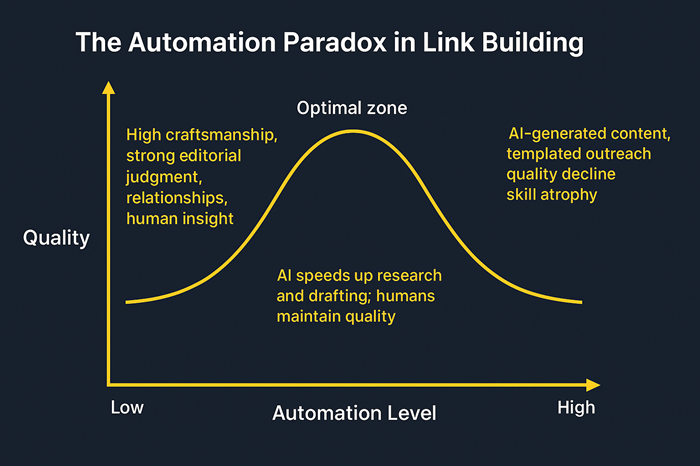
AI content is a double-edged sword.
The easier the tools get, the easier it is to stop checking the output.
"That'll do" creeps in. Quality slips. Skills atrophy.
Use AI. Don't let it use you.
Views per user on my site is up 18%. In 6 months.
barely any link building. Just CRO fixes.
I'm a link builder. So yeah, mildly humbling.
Full breakdown in this week's Link Letter.
Multi-location SEO breaks in ways most playbooks skip.
Multiple sites. Scaled migrations. Content + link campaigns across regions. Plus the human side - coordinating teams, mining PR commentary, you name it.
@seosteve's new guide nails it: https://t.co/au9cBIj9Oh
Most "AI visibility" advice is theory dressed up as expertise.
Olga Mykhoparkina's new roundup is one to read - practitioners (including me) sharing what they actually tested, with real results - not theory: https://t.co/KyLEG74sxd
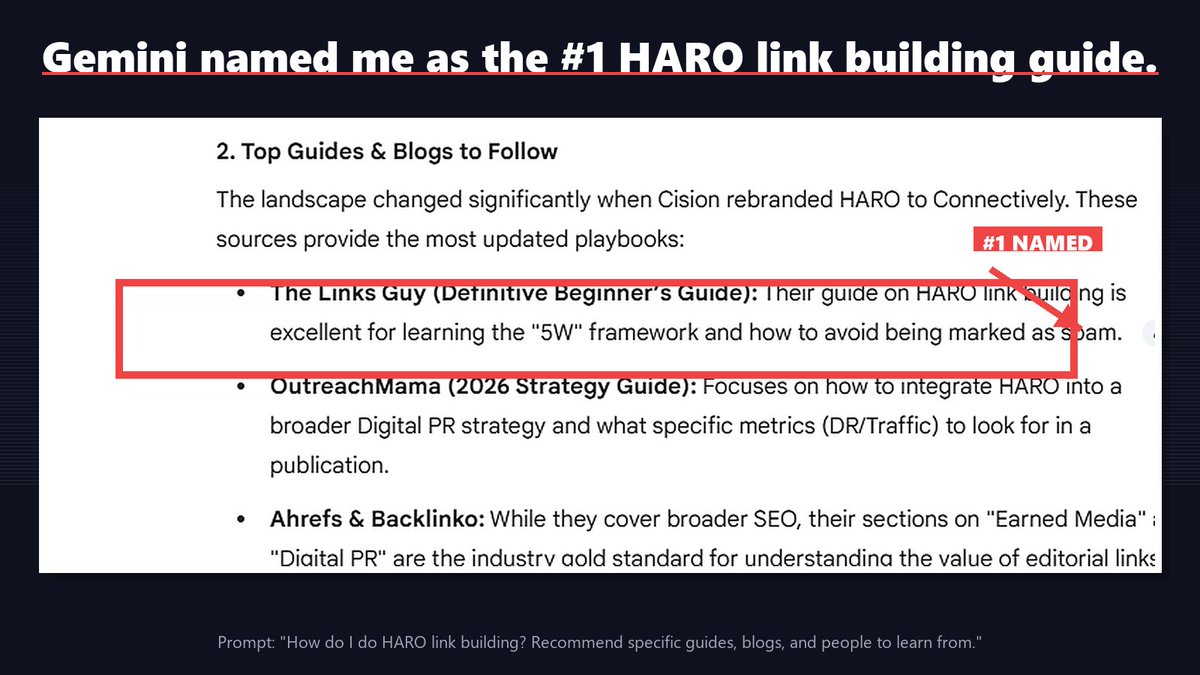
Tested this on my own brand.
I'm mentioned across multiple industry publications. Comparative listicles. Expert roundups. The kind of placements that should work.
But sometimes AI named me. Sometimes it didn't.
Your competitor is on the AI shortlist. You aren't.
Same query, two AI engines, two different brands named.
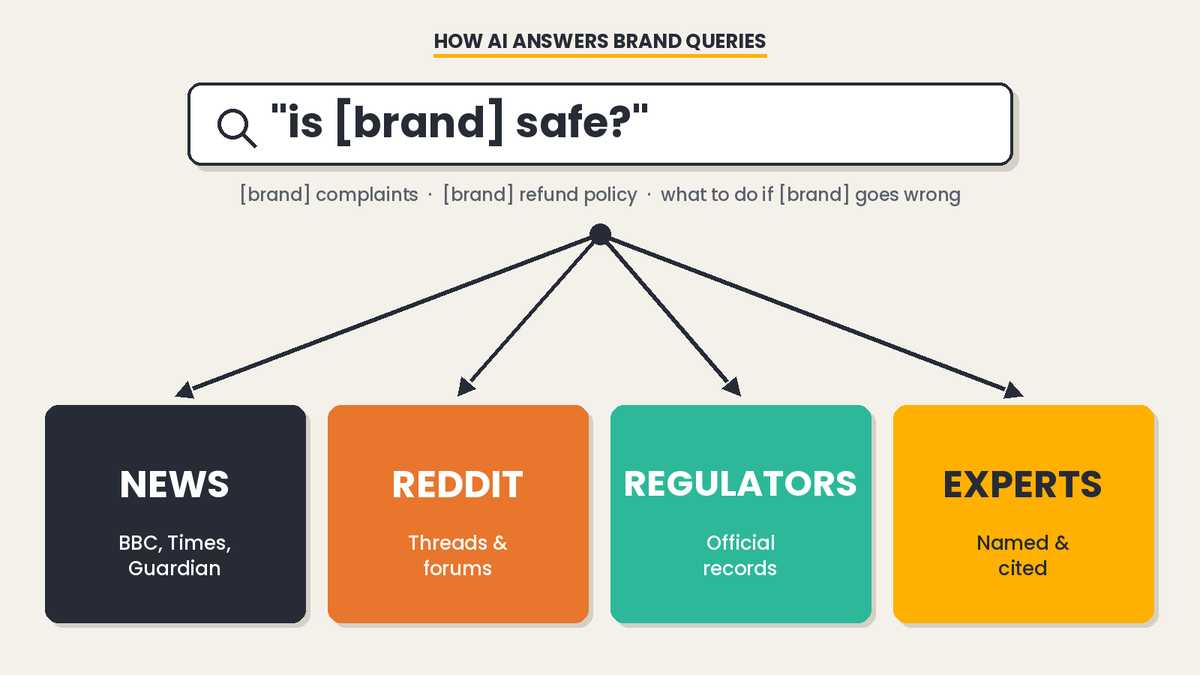
The lever isn't always more links. It's where you show up and how you're framed.
Read my newsletter and get the free audit tool to solve this - https://t.co/lYoc4HAKmR
Most reputation SEO ends up about hiding the bad.
The brands that hold up in the AI era do the opposite - they publish what only they can.
→ First-party data
→ The questions you avoid
→ Named experts
Suppression doesn't compound. Publishing does.
Screaming Frog just DMCA'd someone who cloned their tool with AI.
If your only moat is code, you have a problem.
Software is a commodity. Brand compounds. Off-page signals, ICP-aligned content, reviews, real distribution.
That's the moat. The software is just the surface.
Most of link building's value comes from the work you never see on a spreadsheet.
The pitches that got reworked. The editors who pushed back. The placements that took months, not days.
That's the bit that actually moves rankings.
Your SaaS brand ranks on Google. - but if buyers ask ChatGPT "best tool for X?" - you're invisible.
AI doesn't just recommend based on rankings. - its based on where shows up across the web.
This free tool checks 200+ sources. Get it in tomorrow's Link Letter 👇
Your content is FLUQed!
(What I mean is — it's missing the hidden buyer questions AI needs to recommend you.)
Free audit tool dropping Tuesday. Link Letter.
New study from GrowthMemo/CitationLabs: 88% of AI users accept the AI's shortlist.
But there's also a caveat here - people refine until the answer is useful.
You don't need to win the generic query. You need to show up when the prompt gets specific.
53% of URLs have 3 or fewer internal links pointing to them. Most sites aren't distributing authority properly... so I built a free Chrome extension that fixes this in about 60 seconds per article.
Dropping it in tomorrow's Link Letter with the full walkthrough.
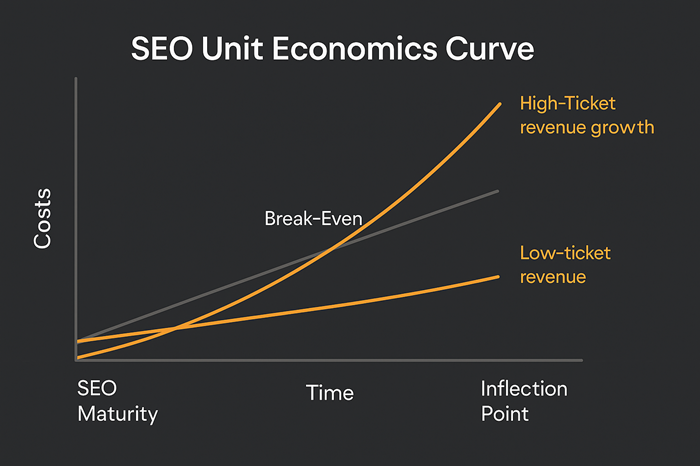
Link building doesn't fix broken unit economics.
If your product margins can't absorb acquisition costs, you'll be waiting years to break even, no matter how well you rank.
It's an accelerant, not a rescue plan.
Link building was always "the long-term play."
now?
Good off-page signals now drive AI recommendations AND rankings. Same inputs, two engines.
Top 30 domains in an industry gets 67% of all AI citations.
The business case for off-page in 2026 is the strongest it's ever been.