Brigitte Macron poursuit Natacha Rey jusque dans sa tombe !
Natacha Rey est décédée le 13 septembre 2026 des suites d’un cancer (annoncé autour du 18-19 septembre, obsèques à Saintes).
Pourtant le pourvoi en cassation de Brigitte Macron, née Trogneux, contre Natacha, est maintenu et sera examiné au fond par la chambre criminelle de la Cour de cassation le 10 novembre 2026!
Le pourvoi de la partie civile (les Macron) porte sur les intérêts civils (dommages et intérêts), contre ses héritiers.
C'est au-delà du monstrueux !
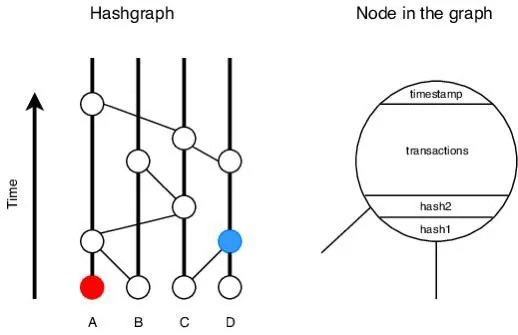
Hedera (hedera-hashgraph:native) is AI and quantum proof because the nodes on the network act as an atomic clock and form a quantum state derived from the median deviation of the time logged on every node.
No signature including FALCON on $ALGO, all forms of DSA are safe from AI-powered advancements in mathematics.
That redefines the quantum and non-quantum calculations.
If Hedera’s signatures are broken tomorrow, the network can simply use the timestamps on the nodes to rollback the state of the network and upgrade the signatures.
Theoretically, Hedera could do this within seconds.
This is why all L1 and L2 Blockchain networks might end up logging their history on Hedera or their own Hiero HashSphere.
As technology advances, only the most advanced survives.
Capital flight to HBAR on the day of days…
$HBAR is giving AI agents real identities.
GoDaddy names them. Hedera lets you check they’re not an impostor.
Here’s a problem that’s about to get massive. AI agents are starting to do things for us, booking stuff, buying stuff, even talking to other agents. But how do you actually know an agent is who it claims to be, and not an impostor?
Right now, you don’t. Every system names agents differently, their claims can’t be verified, and you just have to trust whoever runs the list. We’re heading toward a world with potentially billions of these agents. The system to manage that safely doesn’t really exist yet.
So Hedera’s tackling it, and here’s the big one. They’ve teamed up with GoDaddy, the biggest domain company in the world. GoDaddy lets businesses give their AI agents verifiable names, using domains they already own. By anchoring the records onto $HBAR, anyone can independently check an agent is legit, without just trusting GoDaddy’s word for it. It turns “trust us” into “verify it yourself.”
There’s even an “AI antivirus” in the works, that checks what coding AIs are doing before they run commands, to stop them leaking secrets or breaking things.
Basically, they’re building the trust layer for a world run by AI agents.
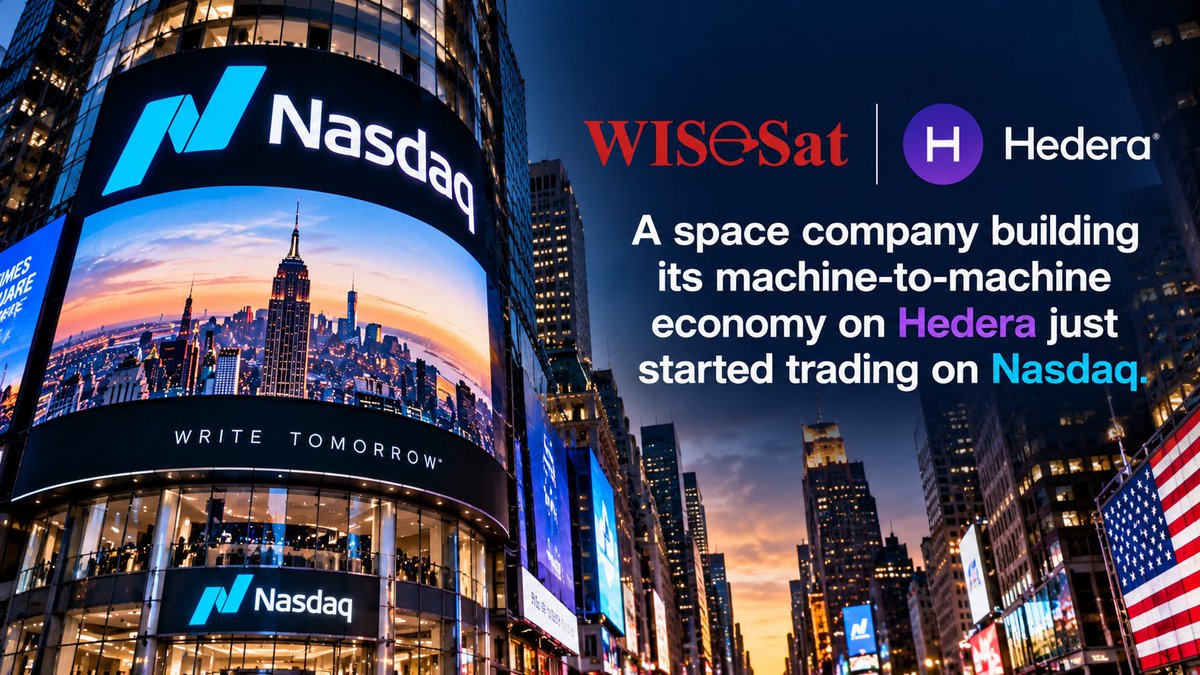
🧵 A satellite company using @hedera just went public on @Nasdaq. 🛰️
Today, @WISeSatSpace began trading under $SAIQ following its business combination with Columbus Acquisition Corp.
But the listing is only the surface.
Underneath sits a technology stack connecting satellites, post-quantum security, digital identity and autonomous machine-to-machine transactions.
And Hedera is part of it. 👇
Start with WISeSat.
WISeSat is building a Low Earth Orbit satellite infrastructure designed to provide secure IoT connectivity from space.
Its use cases include logistics, agriculture, energy, defense and environmental monitoring.
But connectivity alone isn’t the interesting part.
It’s how WISeSat is securing it.
The hardware layer comes from @SEALSQcorp.
WISeSat satellites leverage SEALSQ post-quantum cryptographic technology to protect communications against emerging quantum threats.
That brings the first pieces together:
WISeSat = space infrastructure
SEALSQ = post-quantum security
But machines also need trusted identities
That’s where WISeKey’s Root of Trust and WISeID enter.
WISeSat describes its satellites as incorporating encryption, authentication and identity-management systems built around WISeKey’s Root of Trust and WISeID.
In other words:
The device isn’t merely connected
It can be cryptographically identified and authenticated
And then comes another layer
Hedera
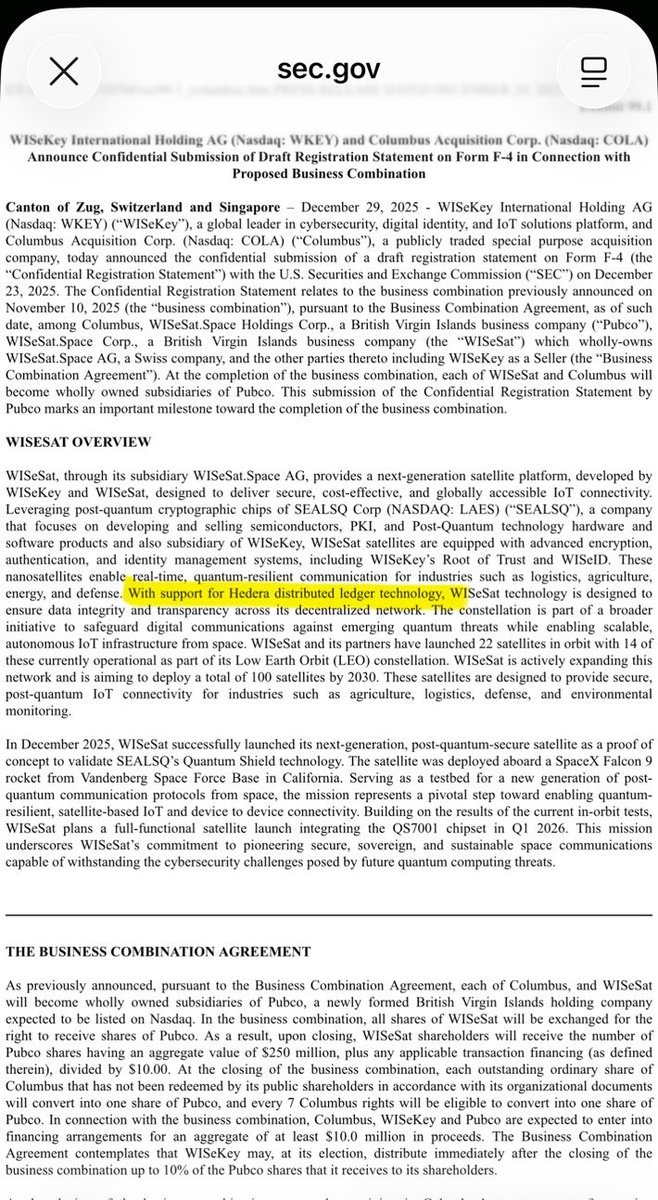
WISeSat’s own documentation states:
“With support for Hedera distributed ledger technology, WISeSat technology is designed to ensure data integrity and transparency across its decentralized network.”
So the stack becomes:
Satellite infrastructure
↓
Post-quantum hardware
↓
Digital identity
↓
Hedera DLT
And this isn’t only architecture on paper.
WISeKey says a satellite proof-of-concept with @WISeSatSpace and FOSSA demonstrated secure machine-to-machine communication through LEO satellites
An off-grid IoT device created a signed transaction.
The satellite relayed it
And settlement occurred via Hedera
According to WISeKey, it included the first satellite-enabled microtransaction using SEALCOIN.
That’s where @Sealcoin_QAIT enters the picture
In February, WISeSat and SEALCOIN formalized their collaboration to deploy machine-to-machine transaction capabilities across WISeSat’s satellite infrastructure
SEALCOIN is intended to act as a transaction and settlement layer, allowing satellites, IoT devices and connected infrastructure to authenticate, exchange data and autonomously settle value.
Think beyond satellites transmitting data.
Think satellites becoming economic actors
And @hedera sits directly inside that machine-economy story
In June, WISeKey announced a $4M strategic investment commitment for SEALCOIN, including $1M from @hashgraphgroup and $3M from WISeKey.
The objective:
Expand SEALCOIN into the space economy
The Hashgraph Group described QAIT being used to settle autonomous machine-to-machine transactions on Hedera between space and Earth
Then the relationship moved another step forward.
In September, WISeKey became a Strategic Partner of the Hedera Council.
WISeKey explicitly connected:
• Digital identity
• Cybersecurity
• PQC-secure semiconductors
• Space-based IoT
• Hedera
The goal?
Trusted digital ecosystems where devices and machines can identify, authenticate and transact securely at global scale
Now put the architecture together:
WISeSat satellite infrastructure
↓
SEALSQ post-quantum hardware
↓
WISeKey Root of Trust + WISeID
↓
Hedera DLT
↓
SEALCOIN / QAIT machine transactions
↓
WISeKey becomes a Hedera Strategic Partner
↓
WISeSat becomes Nasdaq-listed as $SAIQ
And that’s what makes today’s listing interesting
WISeSat isn’t simply putting satellites into orbit
The broader WISeKey ecosystem is working toward infrastructure where machines can have trusted identities, communicate securely and transact autonomously across Earth and space.
Now with https://t.co/xbMkbhap1c trading on Nasdaq as $SAIQ
🚨BREAKING: ColdAI launches CLPRouter and connects 87 Blockchain networks directly to hedera-hashgraph:native without a bridge using CLPR
This unlocks $100+ Billion in liquidity for Hedera
🧵 A closer look at today’s Dell × NVIDIA announcement reveals an interesting layer underneath the Dell AI Factory.
@Dell is integrating NVIDIA’s new Open Agent Safety Platform into the Dell AI Factory with @nvidia
But look at what Dell has already documented inside that architecture. 👇
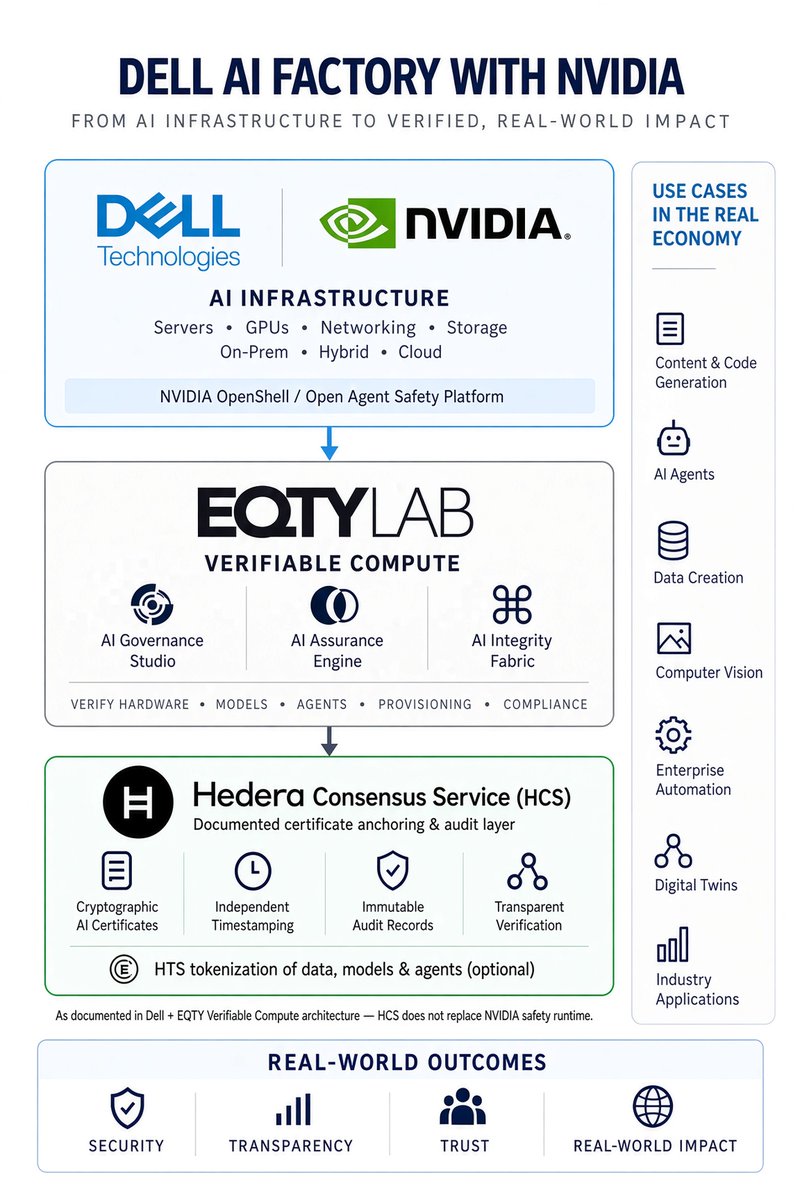
Dell published a 34-page white paper on Verifiable Compute for Trusted AI, built around Dell infrastructure, NVIDIA trusted computing and @EQTYLab.
Its architecture diagram says it plainly:
Verifiable Compute
Dell + EQTY + NVIDIA
The framework creates a verified chain of trust across the AI lifecycle:
Manufacturing → Assembly → Training → Deployment → Benchmark → Inference
NVIDIA provides:
• Certificate Authority
• NIMs Agentic Framework
• Trusted Execution Environments
EQTY Lab provides:
• AI Governance Studio
• AI Assurance Engine
• AI Integrity Fabric
Together, the architecture can verify hardware, models, agents, provisioning and compliance.
And this is where @hedera enters the picture.
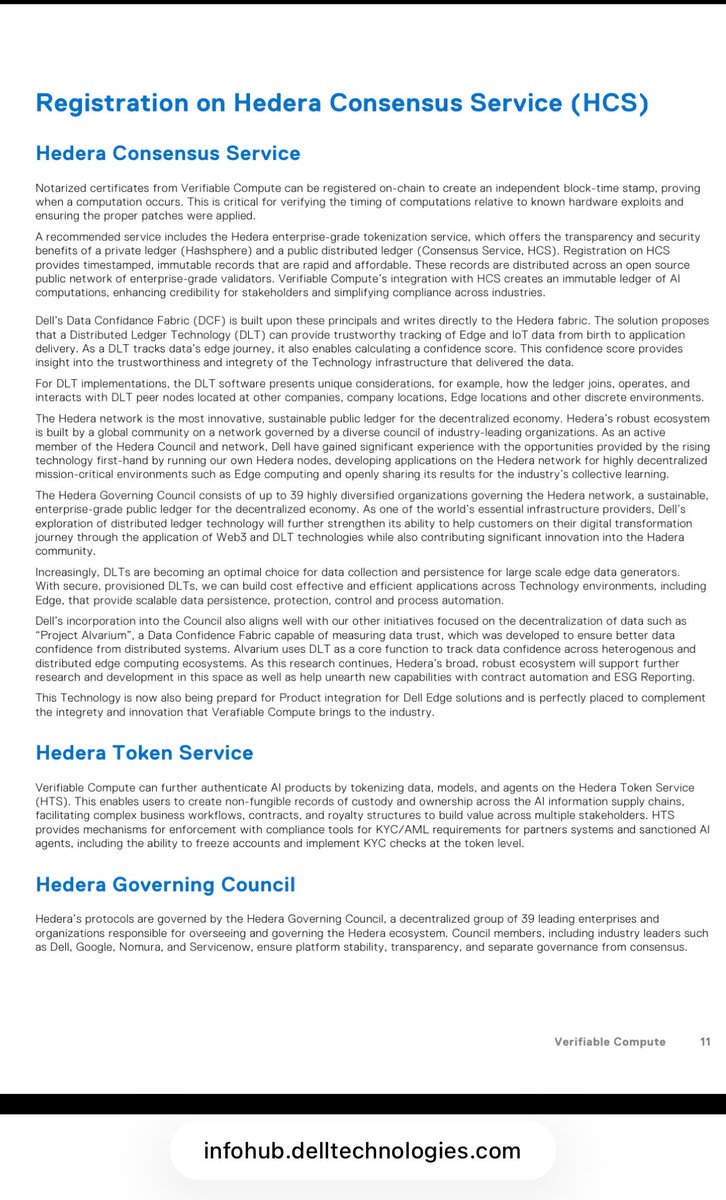
Dell dedicates an entire section of the white paper to:
“Registration on Hedera Consensus Service (HCS)”
@Dell explains that notarized Verifiable Compute certificates can be registered on HCS to create independent timestamps and immutable records of AI computations.
So the documented stack becomes:
Dell AI Factory + NVIDIA
↓
EQTY Lab Verifiable Compute
↓
Cryptographic AI certificates
↓
Hedera Consensus Service
And Dell goes further.
Its Data Confidence Fabric is described as writing directly to @hedera, while Hedera Token Service can tokenize data, models and agents to create non-fungible records across AI supply chains.
There’s another interesting detail in Dell’s architecture.
Dell Enterprise Hub × Hugging Face
EQTY Lab’s Verifiable Gateway verifies downloaded models within that environment.
And @nvidia has now agreed to acquire @huggingface.
So zoom back out to today:
NVIDIA Open Agent Safety Platform
↓
Dell AI Factory with NVIDIA
↓
existing Dell + EQTY Verifiable Compute architecture
↓
Hedera HCS
That does not mean NVIDIA’s new Open Agent Safety Platform runs on Hedera.
But Dell’s own documentation shows that Hedera already sits inside the broader trust and verification architecture surrounding its AI Factory.
And now NVIDIA is adding another agentic AI security layer to that same environment.
The architectures are getting remarkably close. 👀
Dell + NVIDIA + EQTY + Hedera.
Worth watching.
👉🏻 https://t.co/HxZBkXiQKP
Agentic AI creates a trust gap - DLTs like Hedera can be used to close it.
Explore @GBBC_io's report on the convergence of agentic AI and blockchain which cites Hedera’s work with @EQTYLab and @Accenture on runtime cryptographic evidence for AI models.
JUST IN: The Hashgraph Group secures IBM Silver Partner status
Its Hedera-based IDTrust platform is now listed on the IBM Cloud Catalog, giving enterprise clients access to its digital identity solution.
What makes CLPR different? Cryptographic state proofs.
@richardbair explains how CLPR lets each ledger mathematically prove its own state so networks can verify each other directly without bridges or intermediaries.
🚨HUGE: IBM JUST CONNECTED ITS DIGITAL ASSET PLATFORM TO SWIFT’S BLOCKCHAIN LEDGER.
And literally yesterday, IBM partnered with The Hashgraph Group to bring @hedera powered IDTrust to IBM Cloud.
Effectively meaning IBM can push more of Hedera's services to their customers
Now IBM is connecting into SWIFT’s network of 12,500 financial institutions.
Could IBM eventually bring $HBAR powered solutions into the SWIFT ecosystem? 👀
🚨HUGE $HBAR PARTNERSHIP: THE HASHGRAPH GROUP JUST BECAME AN IBM SILVER PARTNER, WITH ITS HEDERA POWERED IDTRUST PLATFORM NOW LISTED ON IBM CLOUD.
That puts technology built on @hedera directly in front of IBM’s global enterprise customers (IBM one of the biggest companies in the world).
$HBAR is moving deeper into the enterprise world. 🔥
How can DeFi and on-chain credit come together on @Hedera?
@SaucerSwapLabs’ Brandon Hargreaves and @KeaCredit’s Jo D’Silva explored trading infrastructure, SME financing, and real-world financial use cases. https://t.co/PfPp7Xw5Ec