“AI companies have been trading on promises of a pie-in-the-sky future,” @JamesSurowiecki writes. “But the time is coming when they’re going to have to show investors the money”: https://t.co/pSgW94WTcA
The thing about dinner, Rachel Sugar writes, is that you have to deal with it every single night.
Figuring out what to eat every night at 6 p.m. is a pleasure until it becomes a constant low-grade grind. It’s not just cooking, but “the meal planning and the grocery shopping and the soon-to-be-rotting produce sitting in my fridge. It is the time it sucks up during the week. It is the endless mental energy.”
“Dinner isn’t just the largest meal in the standard American diet; it is the most important, the most nourishing, the most freighted with moral weight,” Sugar continues. “The mythical dream of dinner is that after a hard but wholesome day at school or work, the family unit is reunited over a hot meal, freshly prepared. Even if you’re dining solo, dinner tends to be eaten in a state of relative leisure, signaling a transition into the time of day when you are no longer beholden to your job.”
As it stands, dinner is a game of trade-offs, Sugar writes: “You can labor over beautiful and wholesome meals, but it is so much work. You can heat up a Trader Joe’s frozen burrito or grab McDonald’s—there is a reason that as of 2016, the last time the government counted, one-third of American adults ate fast food on any given day—but you don’t have to be a health fanatic to aspire to a more balanced diet. You could get takeout, but it’s notoriously expensive and frequently soggy, more a novelty than a regular occurrence.”
When one dinner solution fizzles, there is always another, and another, which will be superseded by still more.
Dinner exists, daunting and ominous. “Dinner resists optimization. It can be creative, and it can be pleasurable. None of this negates the fact that it is a grind,” Sugar continues at the link in our bio. “There is freedom in surrendering to this.”
Read more: https://t.co/tIz4jCBzp6
Aura was once understood to be a gift from the gods—but now the word is being used to describe something else entirely, @valerietrapp writes. https://t.co/GDkUgQCUPm
The philosopher and author Anastasia Berg asks whether declining population levels should be an ethical concern: “I see it as evidence to a collective human vote of no confidence, not just in their own future but in themselves.”
Watch The Permanent Questions: https://t.co/7GKjQz2xPA
In The Atlantic’s latest cover story, our staff writer Josh Tyrangiel explores the fierce competition between Jeff Bezos and Elon Musk to build the economy of outer space. “This competition is unlike any they’ve had on Earth so far,” he says.
Read Josh's cover story: https://t.co/D1WZDzUw2F
A new set of nonprofits is claiming that programs and projects intended to help Black and other minority Americans are no longer legal, turning the purpose of the oldest civil-rights laws on its head, Ed Williams argues. https://t.co/1ud4jy7PJt
One of the strangest habits among American right-wing intellectuals and pundits has been their use of Orwell to defend the rise of authoritarianism, Stephen Marche argues: https://t.co/JezgJNI9WW
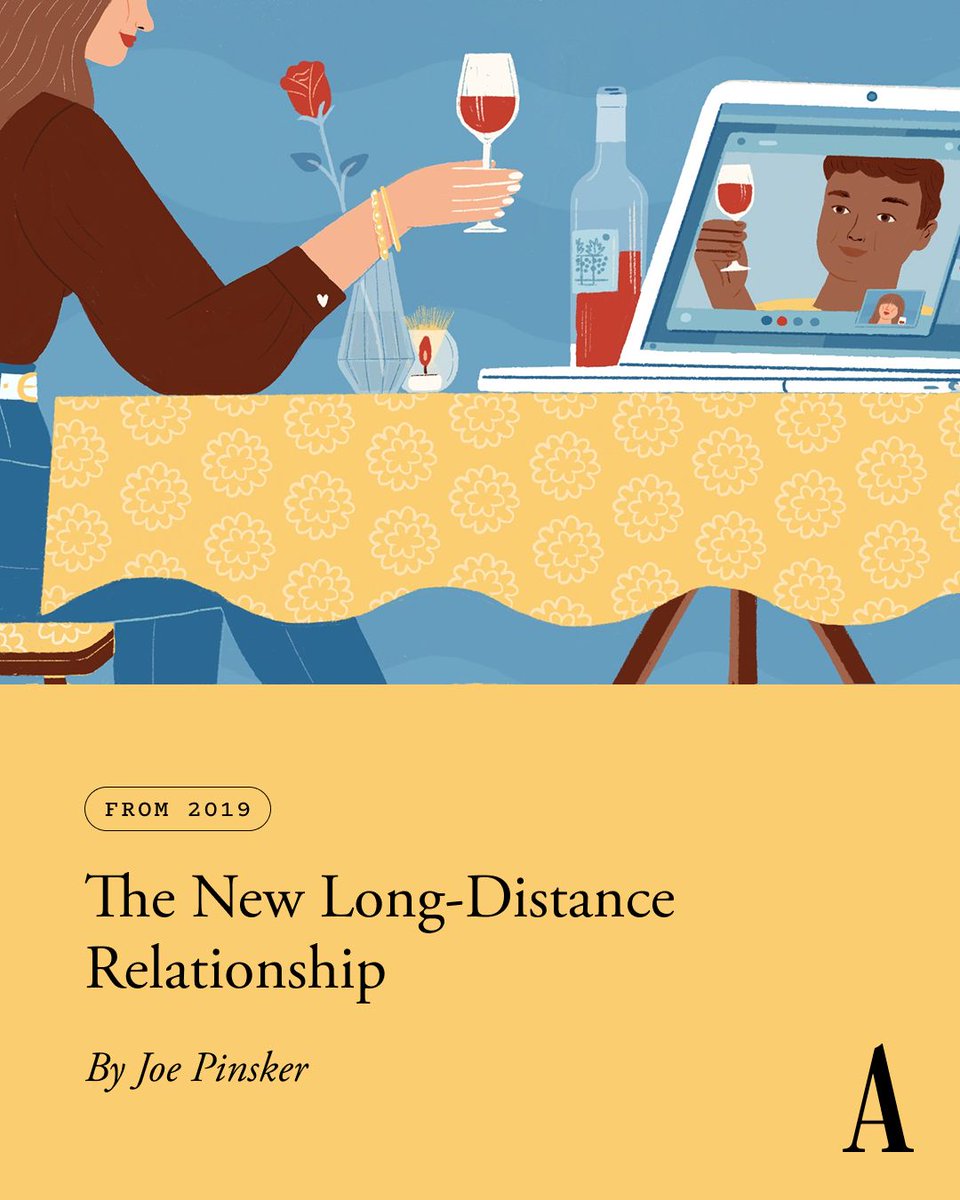
Long-distance couples are closer than they’ve ever been, @jpinsk wrote in 2019. He reports on how the same technological and economic developments that once pulled couples apart are now now making geographic separation less stressful—and more enjoyable: https://t.co/SzOd7PqlXw
In his new novel, “The Brightness,” Chad Harbach considers the feminist ferment on college campuses in 2015, and the wilderness of postgrad life, @magsrdoherty writes. https://t.co/Xb3V6KqSCT
America has two choices under Nvidia’s market dominance—and both are bad, @cwarzel argues: https://t.co/BNpEWBSZa5
📸: David Paul Morris / Bloomberg / Getty
Donald Trump conducts foreign policy by id, yet he may have unwittingly started an ideological revolution on the right that will outlast him, @imkahloon argues. https://t.co/799ftSiXpN
Billie Holiday and Lil Jon have both helped James Parker understand America in the three decades since he moved there. Parker shares five picks from his list of 50 songs that help explain the country.
Read his full list: https://t.co/YumSQBaUIa
“In the unluckiness of others, I was lucky. Because my friends had talked openly about some of their toughest moments, I felt less alone during mine.”
@AshleyRParker on miscarriage and motherhood: (From 2025) https://t.co/Xcp4xj0DwN
🎨: Najeebah Al-Ghadban
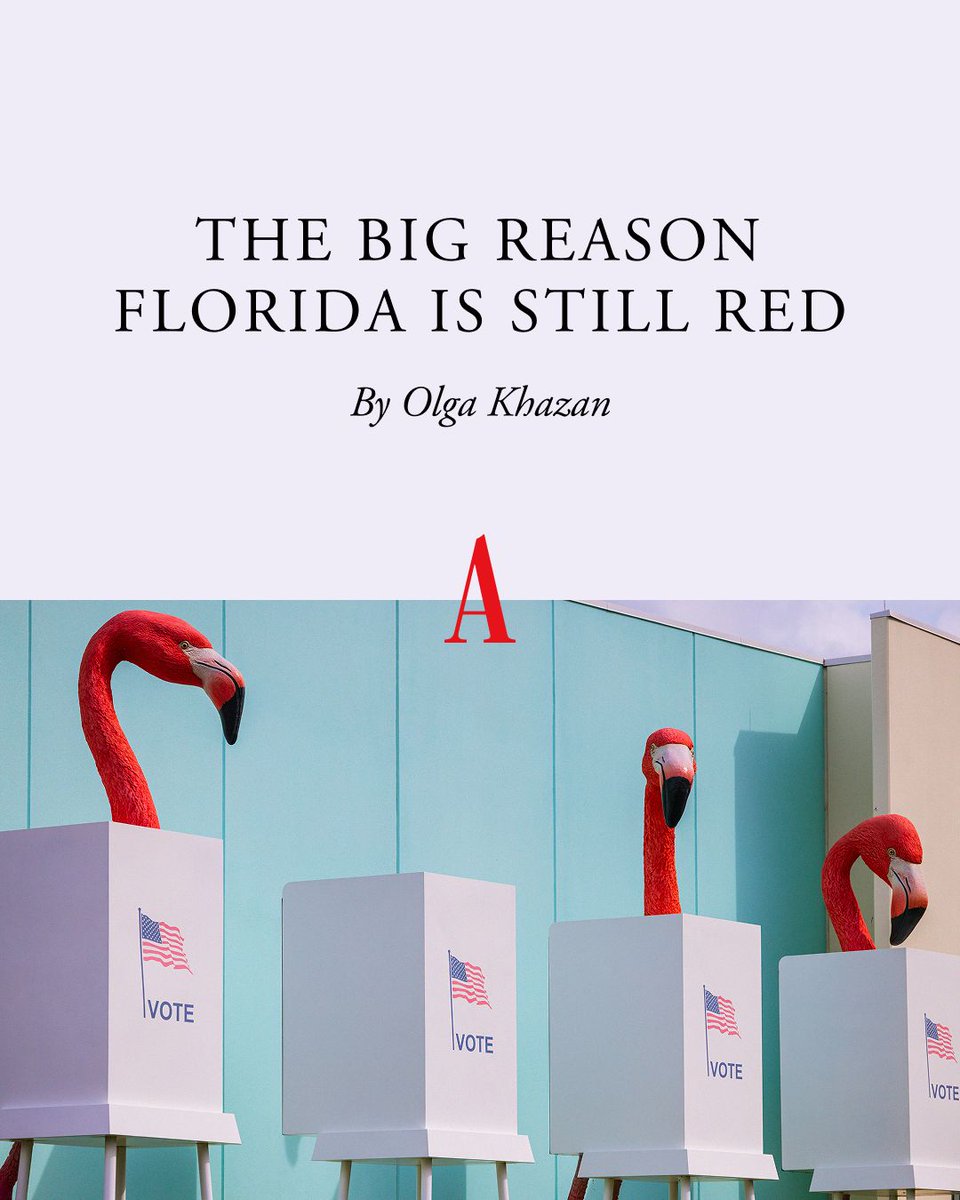
Texas, Georgia, and South Carolina all elected Democrats in the midterms—but nearby Florida stayed red. @olgakhazan explains why the Sunshine State missed the blue wave: https://t.co/Hwur7bDRHP
📸: Saul Martinez / Getty
Edward Gibbon, who wrote a monumental history of Rome’s decline and fall, was a lonely misfit in his day—but he found refuge in a bygone empire, Cullen Murphy writes: https://t.co/gvRqio3VjP
The success of Trader Joe’s as a skincare company is the embodiment of a new consumer culture that has been building for years, @nancywalecki writes: https://t.co/yleCgJfBAr
📸: Tim Shortt / USA Today / Reuters