Fleeting Highs, Layered Heartaches: Sin’s Cause-and-Effect
By Dr. Cindy
From the opening pages of Genesis to the digital headlines of the twenty-first century, humanity’s story repeats a single unlearned lesson: separation from God is never the answer. This is not ancient myth or abstract theology. It is the lived experience of every soul. Novels, films, and nightly news echo the same tension: free creatures choosing autonomy over the Creator. The choice is never “one and done.” It is daily, hourly, moment-by-moment. Each person confronts the same three unrelenting enemies: the flesh, the world, and the devil. Beneath every glittering temptation lies a three-letter reality: sin.
At the heart of every fall lies pride — the root of every sin — and concupiscence, the disordered inclination toward sin inherited from the Fall. St. Thomas Aquinas maps the interior mechanics with clinical precision in the Summa Theologica (I-II, qq. 77–78). Original sin wounds the soul: the intellect darkens, the will weakens, and the passions rebel. Temptation then follows an exact sequence: 1) suggestion, the external lure from the world or the devil; 2) delight, the lower appetites savoring the forbidden; and finally, 3) consent, when the person acts on ungodly desires. Each consent disorders the soul further, making the next surrender easier. This is not metaphor. It is the lived psychology of every human heart since Eden.
The pattern opens in Paradise. Adam and Eve, offered intimate friendship with God, preferred the serpent’s whisper: “You will be like gods” (Gen 3:5). Pride turned the will from Creator to creature. Cain chose murder over repentance (Gen 4). Noah’s descendants at Babel sought to “make a name for themselves” rather than call upon the Lord (Gen 11:4). Moses descended Sinai to find Israel adoring a golden calf of their own making (Ex 32). Even David, “a man after God’s own heart,” saw Bathsheba, delighted in what the eye suggested, and consented to adultery and murder (2 Sam 11). The mechanism never changes: suggestion, delight, consent, separation. Contrary to every moral lesson history offers, humanity stubbornly insists on knowing better than God and turns from the very boundaries He set for those who desire peace and joy.
Continue reading with link in reply!
#revival #repentance #gospel
The Nineveh Fast | A Campaign of Prayer and Fasting for God's Mercy…
Friday, May 22, is the 4th Friday and another Nineveh Fast Day, let us Fast and Pray as we prepare for Pentecost Sunday, “Come Holy Ghost, Creator Blessed…” https://t.co/EIUyq0in1X
People of faith will agree that we need to continue to fast and pray. Please join us on April 24……
The Nineveh Fast | A Campaign of Prayer and Fasting for God's Mercy https://t.co/EIUyq0in1X
Statement regarding Mrs. Carrie Prejean Boller
In recent days, I have become aware of the removal of Mrs. Carrie Prejean Boller from the Presidential Religious Liberty Commission, along with the public accusations that have followed. After reviewing her account and the circumstances surrounding this matter, I believe it is necessary to speak plainly.
Ms. Boller has been treated unjustly.
A Catholic woman, speaking from a well-formed conscience and in fidelity to the teachings of the Church, has been publicly criticized and removed – yet no clear, substantiated reason has been provided. Such a lack of transparency does not serve justice. It damages reputations and undermines trust.
More troubling still is the apparent cause: that she raised legitimate questions about Zionism and defended the simple truth that Catholics are not bound to any political ideology.
Let me be clear.
The Catholic Church does not teach that the modern State of Israel holds a divine mandate that must be supported by all believers. Nor does the Church teach that opposition to political Zionism is inherently antisemitic. These are not doctrines of the Catholic faith.
At the same time, the Church unequivocally rejects all hatred toward the Jewish people. Every human person is to be loved, defended, and treated with dignity. But this truth must not be distorted. To question the policies or actions of a modern nation – any nation – is not hatred. It is a moral responsibility when innocent life is at stake.
We are witnessing great suffering in the Holy Land. Innocent men, women, and children – especially in Gaza – have endured immense devastation. To speak on behalf of human life, wherever it is threatened, is not political extremism. It is fidelity to the Gospel of Jesus Christ.
Mrs. Boller did what many are now afraid to do: she spoke.
She spoke for Catholics who are increasingly pressured to conform to political narratives that do not reflect the fullness of our faith. She spoke to ensure that antisemitism is not wrongly conflated with legitimate moral concern. She spoke for the dignity of all human life – Jew and Palestinian alike.
For this, she has been mischaracterized.
It is especially disheartening when such treatment appears to come, in part, from those within the Church who should be the first to defend the faithful when they speak truthfully and in good conscience. Shepherds are called to protect, not to abandon; to clarify, not to confuse; to stand with the sheep, especially when they are under attack.
Silence in the face of injustice is not prudence. It is a failure of charity and truth. Therefore, I express my support for Mrs. Carrie Prejean Boller.
I affirm her right, as a Catholic and as an American, to speak clearly about matters of faith, morality, and public life without being unjustly labeled or removed without explanation. I also call for greater clarity and fairness from those responsible for her removal, so that truth – not speculation – may prevail.
This moment calls for courage.
Not political courage, but Christian courage – the kind that stands firmly in truth while remaining rooted in charity. We must reject hatred in all its forms, but we must also reject the misuse of that charge to silence those who speak in defense of life and moral truth.
Let us pray for peace in the Holy Land – for Jews, for Palestinians, and for all who suffer. And let us pray for the Church, that she may always speak with clarity, charity, and unwavering fidelity to Jesus Christ, who is the Truth.
In Christ,
Bishop Joseph E. Strickland
2 Corinthians 1:3-5
Praised be God, the Father of our Lord Jesus Christ, the Father of mercies, and the God of all consolation! He comforts us in all our afflictions and thus enables us to comfort those who are in trouble, with the same consolation we have received from him. As we have shared much in the suffering of Christ, so through Christ do we share abundantly in his consolation.
JMJ
+
Love Comes Down
Consider this:
In all of creation's vastness,
He chose our form.
Not the soaring eagle's
wings, not the burning
brightness of seraphim
or the pristine
purity of angels.
The Author of life writes
Himself into His own story
as its smallest character.
A single cell.
An embryo.
A baby.
The One who spoke
galaxies into existence,
reduced to wordless
infant cries.
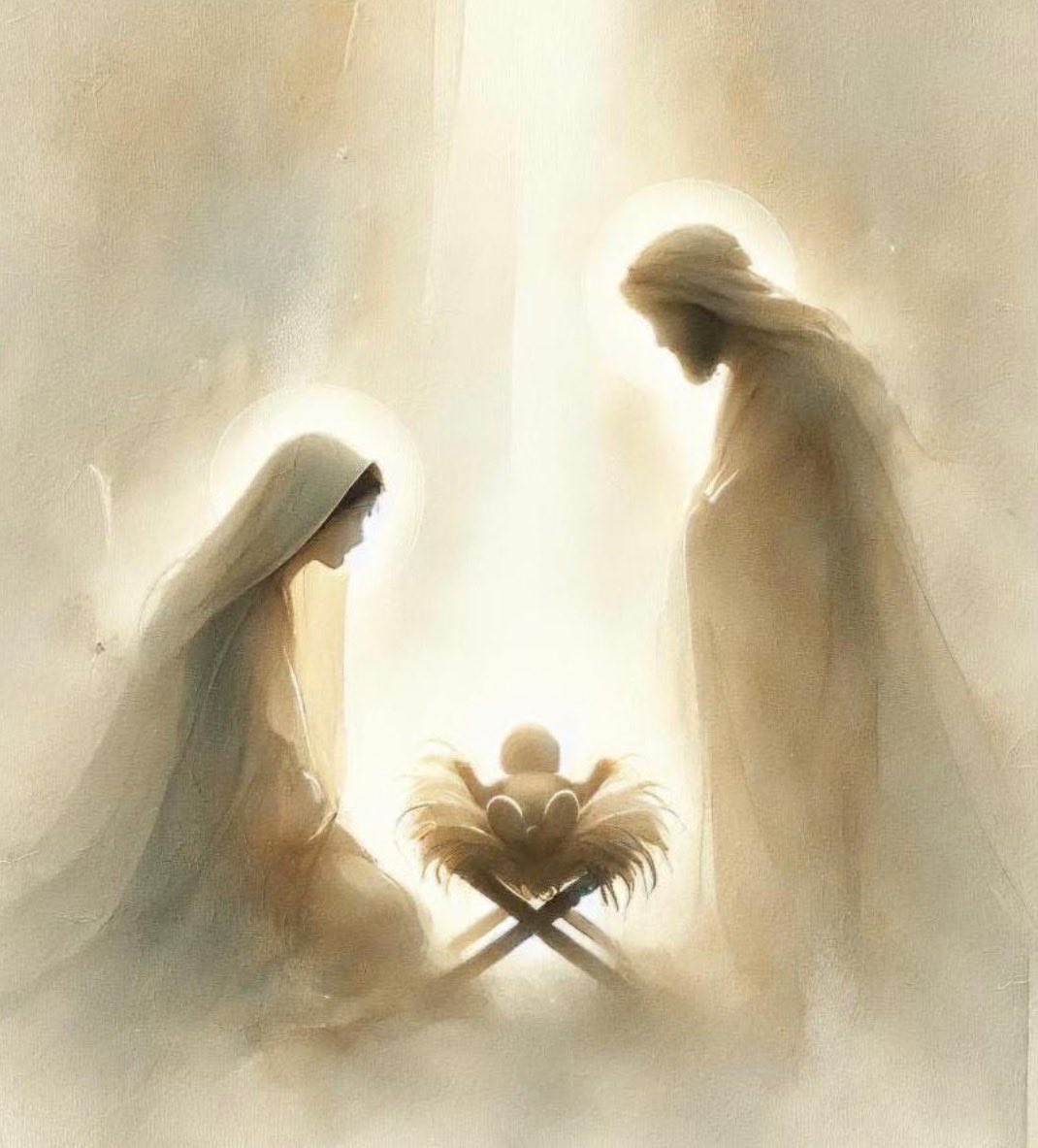
Majesty didn't descend
to earth fully formed,
in royal robes and a crown.
Power didn't arrive with
armies of angels and
thundering proclamations.
Instead:
- Infinity confined itself
to a womb
- Omnipotence learned
to crawl
- The Bread of Life hungered
- The Living Water thirsted
He didn't come because
we were righteous.
He didn't arrive seeking
disciples who had it all
figured out.
He came because we were
lost, broken, dying.
The King of Kings entered
His creation not through
a palace gate, but through the
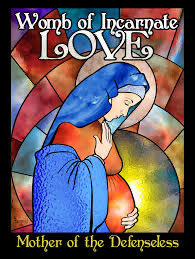
humble YES of young virgin girl.
- small, vulnerable, dependent.
This is the miracle of
the incarnation:
that God would not only
create human life,
but choose to experience it.
From first heartbeat to last
breath, He lived our story.
"For we have not a high
priest which cannot be
touched with the feeling of
our infirmities; but was in
all points tempted like as
we are, yet without sin."
- Heb. 4:15
This is love's deepest
mystery:
-Not that He came to save
humanity, but that He
became humanity to save us.
-Not that He loved us from afar,
but that He loved us from
within us."
In becoming man,
He dignified every stage
of human development.
In choosing birth,
He sanctified every
human life from conception.
This is Christmas's
radical truth:
-God values human life so
much that He chose to
live it Himself.
From single cell… to Savior.
From embryo… to Emmanuel.
From infant… to Infinite.
"And without controversy
great is the mystery of
godliness:
God was manifest
in the flesh." 1 Tim 3:16
This…, this is how LOVE
came down.
~ ~ ~ ~ ~ ~ ~ ~ ~ ~ ~ ~ ~ ~ ~
~ Live your life worthy of
HIS Sacrifice +
God bless you +
Merry Christmas 🌟
Jeremiah 30:21-22
“And their leader shall be of themselves: and their prince shall come forth from the midst of them: and I will bring him near, and he shall come to me: for who is this that engageth his heart to approach to me, saith the Lord? And you shall be my people: and I will be your God.”
In this section of the commentary, Aquinas discusses the promises of restoration and focuses on the goodness of the future rulers as part of the broader theme of liberation and divine mercy. The commentary on verses 21-22 is presented within the third point on the prosperity of man, specifically addressing the rulers: Third, with regard to the goodness of their rulers.
First, he speaks of their kinship, for they are from the same line: and their leader shall be of themselves. This refers to Zerubbabel, or it refers to Christ. I shall give them vinedressers from the same place (Hos 2:15).
Second, of their holiness: and I will bring him near, and he shall come to me, by justice. For who is this that sets his heart to approach me?, by which is shown the author of the drawing, for no one is drawn near, unless he be drawn by God. No one can come to me, unless my Father, who sent me, draw him (John 6:44).
Third, he touches on the usefulness of justice: and you shall be for me a people. As the ruler of the city, so the inhabitants thereof (Sir 10:2).
This commentary interprets the verses as promising a ruler from among the people themselves (kinship), drawn near to God through divine initiative (holiness), leading to a renewed covenant relationship between God and the people (usefulness). Aquinas provides dual applications: historically to figures like Zerubbabel and typologically to Christ.
O God, who seeing the human race fallen into death,
willed to redeem it by the coming of your Only Begotten Son,
grant, we pray,
that those who confess his Incarnation with humble fervor
may merit his company as their Redeemer.
Who lives and reigns with you, God, for ever. Amen.
Isaiah 45:8
“Drop down dew, ye heavens, from above, and let the clouds rain the just: let the earth be opened, and bud forth a saviour: and let justice spring up together: I the Lord have created him.”
Isaiah 45:8 (in the Vulgate: Rorate caeli desuper, et nubes pluant iustum; aperiatur terra, et germinet Salvatorem) is a key prophetic text with strong messianic significance in Catholic tradition, particularly due to its use in the Advent liturgy as the Introit for the Fourth Sunday of Advent and in the Rorate Mass (a votive Mass of the Blessed Virgin Mary during Advent).
The verse’s Vulgate rendering shifted “justice” and “salvation” to “the Just One” (iustum) and “Savior” (Salvatorem), emphasizing Christ as the righteous one descending from heaven and born of the Virgin Mary (the earth opening to bring forth the Savior). This interpretation influenced its prominent place in Advent, symbolizing the longing for the Messiah’s coming.
Among the Doctors of the Church, direct commentaries on this specific verse are limited in surviving works, but relevant insights come from St. Jerome and St. Thomas Aquinas, provide the most direct engagement through their Isaiah commentaries, reinforcing its role as a proclamation of Christ’s Incarnation and saving justice.
O God, who through the child-bearing of the holy Virgin
graciously revealed the radiance of your glory to the world,
grant, we pray,that we may venerate with integrity of faith
the mystery of so wondrous an Incarnation& always celebrate it with due reverence.
Through Jesus, Amen.
Isaiah 2:3
“And many people shall go, and say: Come and let us go up to the mountain of the Lord, and to the house of the God of Jacob, and he will teach us his ways, and we will walk in his paths: for the law shall come forth from Sion, and the word of the Lord from Jerusalem.”
St. Thomas Aquinas, in his early Commentary on Isaiah (Expositio super Isaiam ad litteram), interprets Isaiah 2:3 within the context of the conversion of the Gentiles in the “last days” (the era of grace beginning with Christ).
He explains this verse as the reason for the order of conversion: the apostles and early preachers, who were from the Jews, call the Gentiles to faith.
Grant, we pray, almighty God,
that we, who are weighed down from of old by slavery beneath the yoke of sin,may be set free by the newness of the long-awaited Nativity of your Only Begotten Son. Who lives & reigns with you in the unity of the Holy Spirit,God, forever & ever.
Amen.
Romans 13:11-12
And that knowing the season; that it is now the hour for us to rise from sleep. For now our salvation is nearer than when we believed.
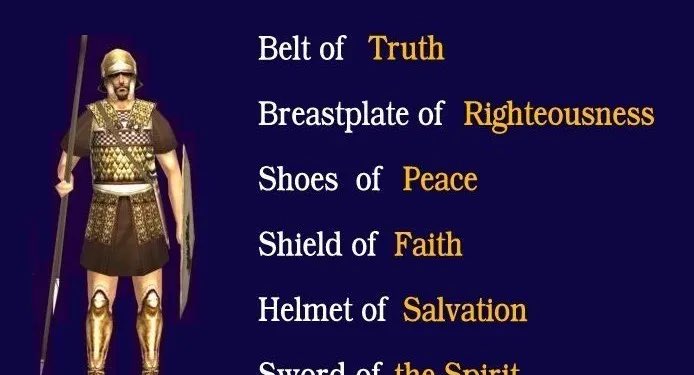
The night is passed, and the day is at hand. Let us therefore cast off the works of darkness, and put on the armour of light.
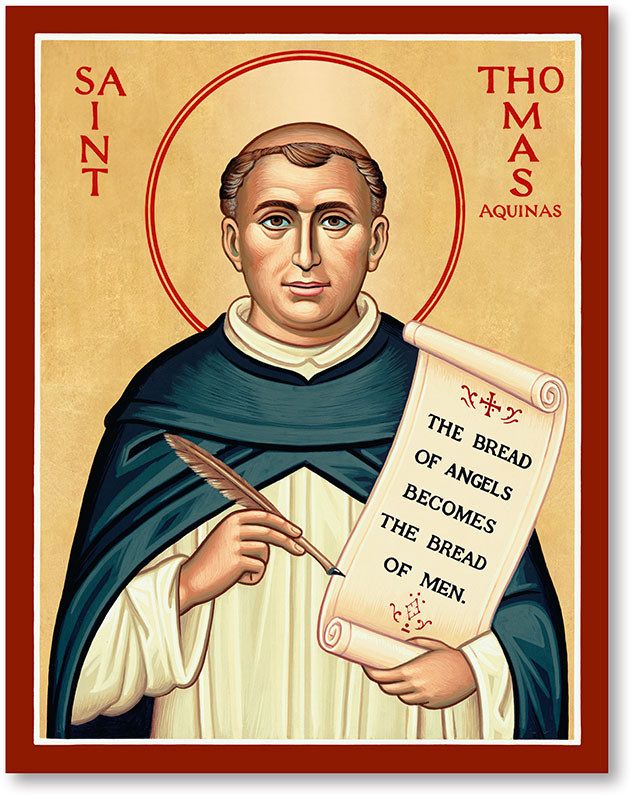
Saint Thomas Aquinas’s commentary on Romans 13:11-12 comes from his Lectura super Epistolam ad Romanos (Commentary on the Letter to the Romans).
Aquinas emphasizes urgency: the proximity of salvation calls for immediate spiritual vigilance, abandoning sin, and embracing virtue as “armor” against temptation.
O God, Creator and Redeemer of human nature,
who willed that your Word should take flesh
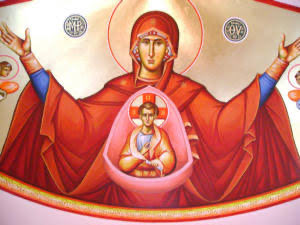
in an ever-virgin womb,
look with favor on our prayers,
that your only Begotten Son,
having taken to himself our humanity,
may be pleased to grant us a share in his divinity.
— Amen.
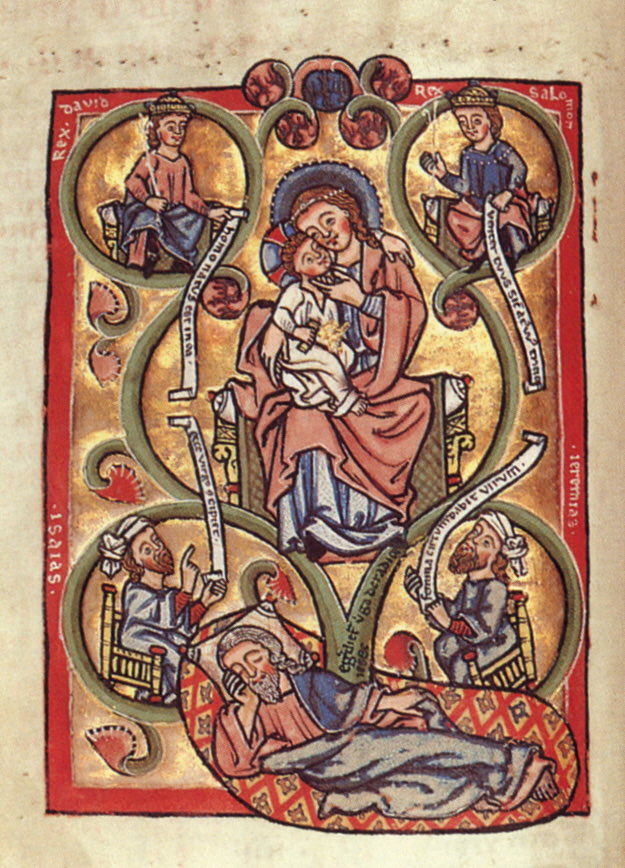
Isaiah 11:1-3
“A shoot shall sprout from the stump of Jesse,
and from his roots a bud shall blossom.
The spirit of the Lord shall rest upon him:
a spirit of wisdom and of understanding,
A spirit of counsel and of strength,
a spirit of knowledge and of fear of the Lord,
and his delight shall be the fear of the Lord.”
Saint Thomas Aquinas provided a literal commentary on the Book of Isaiah (Expositio super Isaiam ad litteram), one of his earliest works, composed during his time as a bachelor of theology. In his exposition of Isaiah 11:1-3, he interprets this passage messianically, as a prophecy of Christ.
Aquinas explains:
• The “virga” (rod or shoot) refers to the Blessed Virgin Mary, who springs from the root of Jesse (the Davidic line, appearing humble and cut down like a stump after the exile).
• The “flos” (flower) refers to Christ, who rises from her as the fruit of that rod.