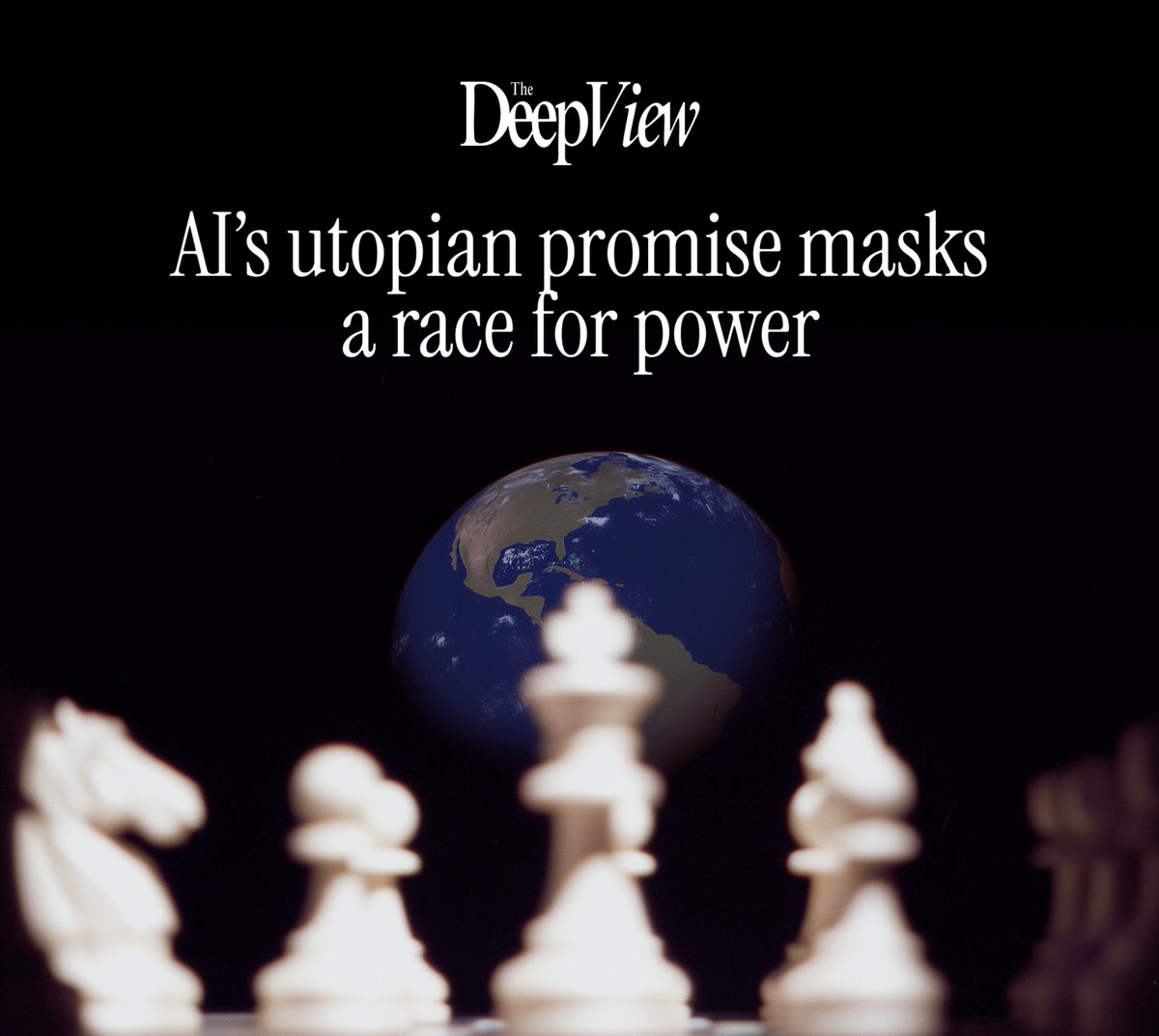
AI is often sold as a utopian story.
Unlimited abundance. Endless productivity. A better future for everyone.
But behind that narrative is a very different reality, one driven by power, control, and a race that few people fully understand.
We went deep on this topic in our first long-form, written by Nat Rubio-Licht.
We believe this is one of the most important AI stories published this year.
Read it here:
https://t.co/CRTAJUFh9t
AI is splintering the music industry, forcing artists, labels and streaming companies alike to navigate a new reality, reckoning with an existential question: When a creation that we once believed to be distinctly human can be automated, what happens to the artist?
That's what me and @CaitlinWolper explore in our latest long form piece for @theDeepView .
We spoke with nearly a dozen artists, music executives and experts about how AI is sitting with the industry. While many of the dominant voices are loudly for or against it, the truth of it's risks and rewards are far more nuanced. Check out the first of this series, and stay tuned for parts two and three in the next few weeks.
https://t.co/FcLSNDYARA
Could diffusion LLMs upend the AI industry?
I talked to @_inception_ai CEO @StefanoErmon about Mercury 3, which delivers faster, cheaper AI inference using a radically different architecture.
The implications go well beyond speed.
https://t.co/rdJ2XvbbXb
Inception launches Mercury 3, a diffusion-based LLM it claims is "comparable to Luna and Haiku models" but 4x to 8x faster, generating ~1,000 tokens per second (@jasonhiner / The Deep View)
(Visit Techmeme dot com for the link and full context!)
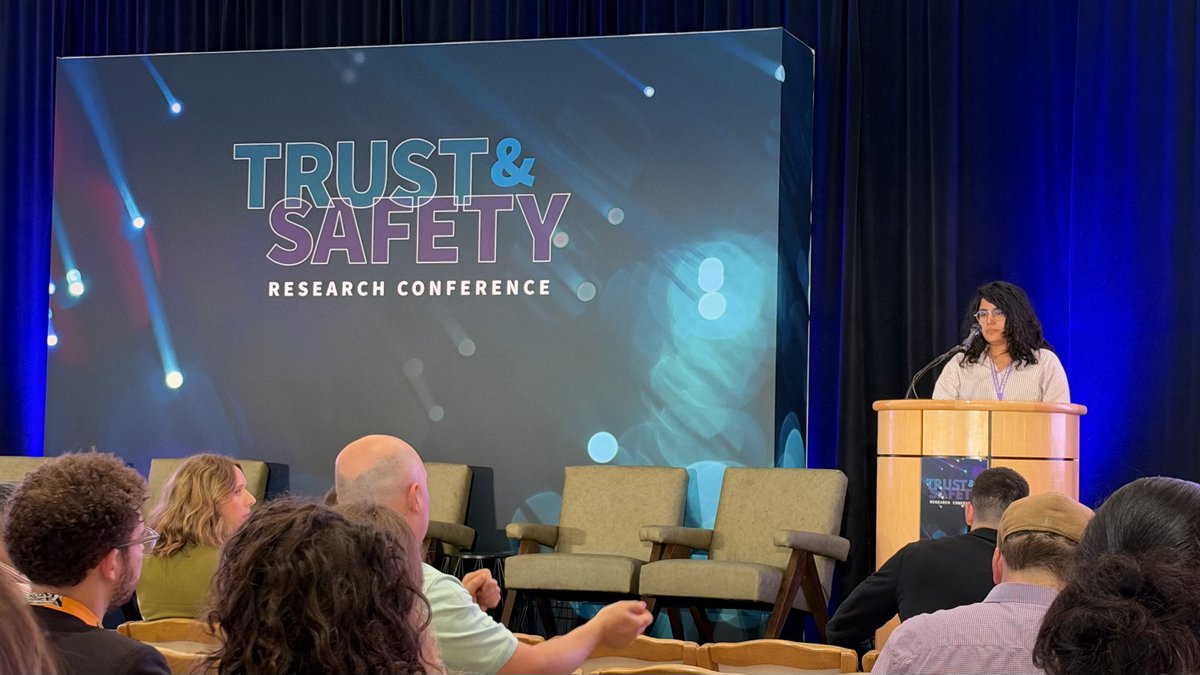
I’m at @Stanford today and tomorrow learning from researchers from all over the world about what they are learning about AI safety, ethics, and governance. #tsrconf@StanfordTIP
"Instead of asking only whether a model is aligned, we should also ask how controllable is it for the actor responsible for deploying it."
—Renata Barreto, @eBay safety team, at the @Stanford Trust & Safety Research Conference (#trsconf)
My panel on AI transformation at The @AIconference delivered real-world tips for a great audience on the main stage yesterday.
Big thanks to Claire Southey, Chief AI Officer of Rokt, and Todd @Earwood, CEO of Betraworks and an AI investor for 11 years. Of all the people I've talked to about AI in 2026, I hand-picked these two for the panel because I knew they had practical advice that AI folks would love to learn from. They delivered and this was confirmed by how many people were excited to chat with them after our panel.
I want to share two of the most helpful insights:
1.) CLAIRE:
Don't get fixated on only using AI to increase productivity because that is essentially just making yesterday's tasks more efficient. Be on the lookout for the second-order effects that AI can help you drive. Those are hard to see until they start to emerge. For example, when the dot com boom initially unfolded, no one foresaw social media would come from it, and when the smartphone launched, no one realized ride-sharing would come soon. Same applies on a small scale to your organization. When you implement AI, keep an eye out for the second-order effects that could emerge and create new opportunities.
2.) TODD:
When you start looking for places where AI could make an immediate impact in your organization, don't just go to the executives and top leaders. They often don't fully understand how the work gets done at the company. Instead, take a bottom-up approach and involve the individual contributors at the grassroots and ask them about their biggest pain points. Then you can brainstorm and consult about where AI could have the biggest and fastest impact.
There is a groundswell of AI happening in the real world that never makes the daily headlines.
But that's where some of the most interesting stuff is unfolding and that's what we're exploring in a session I've put together for @TheAIConference tomorrow on AI transformation.
I talk to lots of people about AI every day and I'm constantly meeting new leaders, builders, and companies. For this panel, I brought together two people who are doing some of the best work I've seen in 2026: Claire Southey of @ROKT and Todd @Earwood of HalfCourt Ventures.
Claire is working in ecommerce and her team is using AI to fast-track their work and supercharge what they can do for customers. Todd is training leaders and enterprises on how to effectively implement AI to drive immediate impact and ROI.
I can't wait for the audience at The AI Conference in San Francisco to learn from these two, and I'll share the insights afterward on LinkedIn.
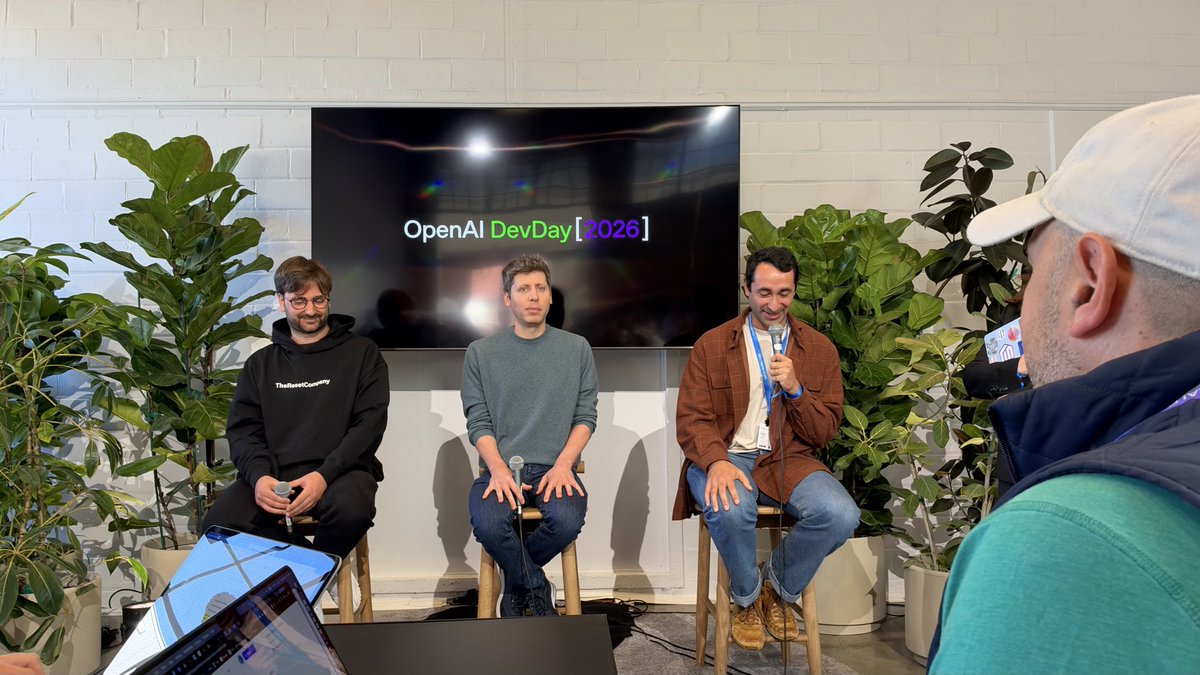
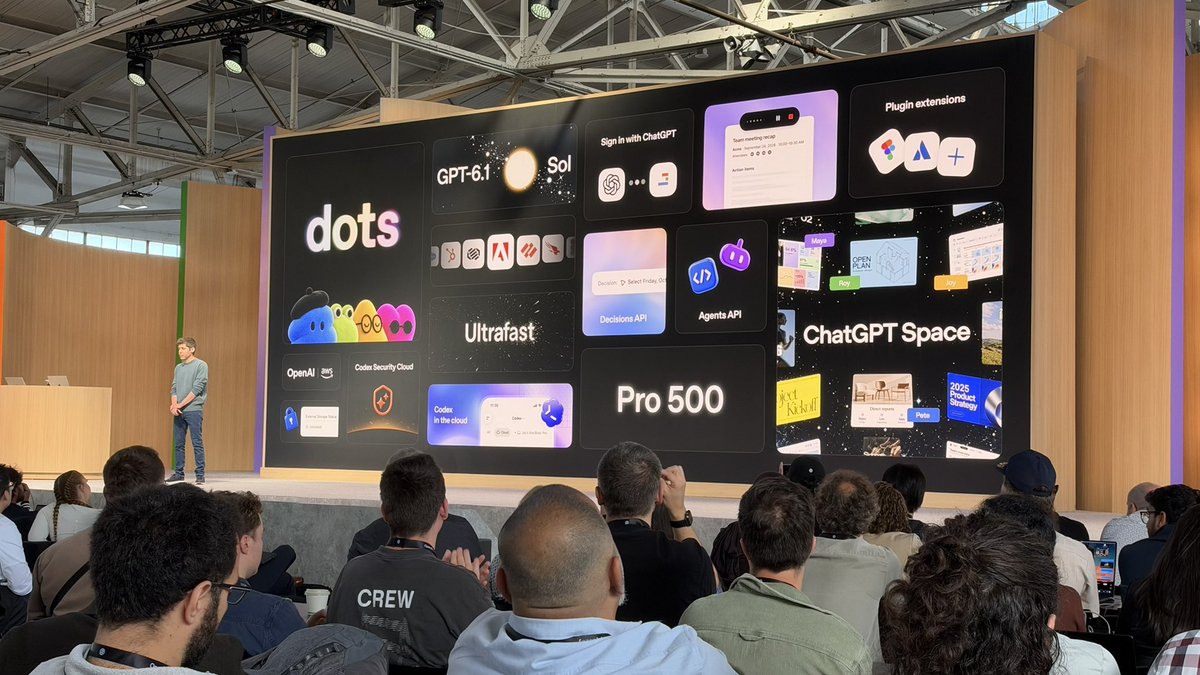
OpenAI launched GPT-6.1 Sol which the company claims has "near Astra intelligence" at a fifth of the price. It is available starting today to all Plus, Pro, Business, Enterprise, and Edu users in ChatGPT Work and Codex.
⚙️ New episode: Navrina Singh, CEO of @CredoAI
Can AI move fast and still be safe? As the debate over AI safety and innovation grows more polarized, we explore the practical work of making powerful systems accountable.
In this episode of The Deep View Conversations, we sit down with Navina to talk about what AI governance means for frontier labs, enterprises, and policymakers. They explore why governance is broader than regulation, how organizations can test and verify their AI systems, and what happens when capabilities advance faster than oversight.
Topics covered:
• Why Navrina sees AI safety and innovation as goals that can advance together
• What the Hugging Face agent incident raises about frontier AI oversight
• The “spectrum of trust,” from internal testing to independent audits and regulation
• The risk of regulatory capture and the role of open models
• How businesses weigh AI capability, cost, and control while managing "governance debt"
• How Credo AI uses forward-deployed governance experts to help companies put oversight into practice
• Why expertise, taste, and judgment remain valuable as AI takes on more work
If you’re building, buying, or governing AI, this conversation offers a practical way to think about trust without losing sight of the technology’s promise.
📺 Watch on YouTube: https://t.co/DiF04PqXSF
🎧 Listen in your favorite podcast player: https://t.co/4o5YvZCsli
Subscribe to Deep View Conversations for interviews with the leaders shaping the future of AI, business, and technology: https://t.co/mXx6eXgI9A
And don't forget to sign up for The Deep View daily newsletter. We don’t just cover AI, we decode it. In a world flooded with hype, we deliver sharp, no-nonsense insights to keep you ahead of the curve and help you put AI to work every day: https://t.co/EqClu8irhI
Here it is: @sabrinaa_ortiz and I broke down what makes the #iPhoneDuo different, Apple's surprising move to make the Apple Watch an AI wearable, and other leading #AI development from this week's #AppleEvent.
📺 https://t.co/BypMbWKqaW
🎙️ https://t.co/aH6nBHnelO
⚙️ New episode alert: Tara Seshan and Ty Geri of @OpenAI
AI is transitioning from just answering questions to doing valuable work. The next challenge is making agents more accessible and simple enough that the technical details fade into the background.
In this episode of The Deep View Conversations, @JasonHiner sits down with Tara and Ty from the ChatGPT Work team to explore what OpenAI is doing to make advanced agent capabilities useful to a lot more people. We also dig into some of the current challenges and how the team is approaching them.
They explain how scheduled tasks and proactive assistance are changing the way people start their workdays, why AI lets teams move from debating ideas to testing prototypes, and how personalized software can turn one-off needs into purpose-built tools. They also discuss the challenge of token costs and model selection, why "super app" isn't the most useful framing for ChatGPT and Codex, and what it will take for agents to become more persistent, proactive, and connected.
The conversation also covers:
• How OpenAI is trying to bridge local and cloud workflows
• Why Tara and Ty start their days with agents instead of Slack
• Building personal apps and tools without traditional software overhead
• The tradeoff between model capability, cost, and user control
• More persistent agents and proactive personal assistance
• Connecting agents to email, calendars, enterprise systems and third-party tools
• Privacy, security and administrative controls for agentic work
If you’re figuring out where agents fit into your work or what has to improve before you trust them with more of it, then this conversation offers a practical look at how OpenAI is preparing for that transition.
📺 Watch on YouTube: https://t.co/7TKNIEXjsa
🎧 Listen in your favorite podcast player: https://t.co/KqY3PsSI9h
Subscribe to Deep View Conversations for interviews with the leaders shaping the future of AI, business, and technology: https://t.co/mXx6eXgak2
And don't forget to sign up for The Deep View daily newsletter. We don’t just cover AI, we decode it. In a world flooded with hype, we deliver sharp, no-nonsense insights to keep you ahead of the curve and help you put AI to work every day: https://t.co/EqClu8hTsa
Home robots make the highlight reels. Factories make the case.
Our CTO Pras Velagapudi on the "islands of automation" — the manual gaps between automated steps — and why humanoids earn their place there first.
Thank you, @theDeepView@natrubio__#AgilityRobotics#DigitRobot
Read more: https://t.co/842kig8rKK
⚙️ New episode: Sameer Samat (@ssamat) of @Google@Android
The smartphone has been built around apps and taps for nearly two decades. Google believes AI will fundamentally change that.
In this episode of The Deep View Conversations, @JasonHiner talked with Samat, president of Android ecosystem at Google, about what the company means when it says it's transforming Android from an operating system into an intelligence system.
Samat explains why the next generation of computing could shift us from micromanaging our devices to simply telling them what we want to accomplish. We dig into how AI agents could navigate apps and complete multistep tasks and why those agents need to follow us across phones, computers, cars, watches and glasses. And what happens to the app-centric model that has defined smartphones for the past 15 years?
We also get into some of the practical ways this is already taking shape. Samat discusses Google’s app automations and Rambler, the new Google Keyboard experience that can turn your voice brain-dumps into polished text. He also explains how Google is thinking about permissions, sandboxing and human oversight as AI agents gain the ability to take action on our behalf.
The conversation goes well beyond the phone. We talk about why smart glasses and cars could be especially powerful interfaces for AI agents, what Google learned from the original Google Glass, and why the best AI features may be the ones consumers barely think of as AI.
Other topics covered include:
• How AI is already changing work inside Google
• Why product managers can now build functional prototypes themselves
• Samat's favorite overlooked AI tool
• His "calendar cleanse" strategy for getting time back
If you’re trying to understand where mobile computing goes next, what AI agents will actually look like on phones, and how Google plans to weave intelligence across devices, this conversation offers insights into what the company is building and why.
📺 Watch on YouTube: https://t.co/Jv0wCTL39x
🎧 Listen in your favorite podcast player: https://t.co/pQkAobCFqQ
Subscribe to Deep View Conversations for interviews with the leaders shaping the future of AI, business, and technology: https://t.co/mXx6eXgak2
And don't forget to sign up for The Deep View daily newsletter. We don’t just cover AI, we decode it. In a world flooded with hype, we deliver sharp, no-nonsense insights to keep you ahead of the curve and help you put AI to work every day: https://t.co/EqClu8hTsa
⚙️ New episode: Zuzanna Stamirowska of Pathway
What comes after large language models?
In this episode of The Deep View Conversations, we talked with Stamirowska, CEO and co-founder of Pathway, to explore why her team believes today’s dominant AI architecture has fundamental limits, and what it could take to move beyond them.
Pathway is developing Dragon Hatchling, a new architecture designed to give AI native memory, continual learning, and a different approach to reasoning. Stamirowska explains why today’s LLMs can appear to remember without actually internalizing what they learn, why reasoning through language creates its own constraints and costs, and how Pathway is trying to build models that can think in a more abstract way.
The conversation looks at how those architectural changes could affect hallucinations, interpretability, safety, and the enormous compute demands of modern AI. Stamirowska shares how her background in complex systems and game theory shaped Pathway’s approach, why the company made an early bet on challenging the transformer, and how the AI coding revolution has already radically changed the way her own team works.
Topics covered:
• Why transformers struggle with memory and continual learning
• How Pathway’s Dragon Hatchling architecture works
• How a different architecture could reduce compute costs
• How interpretability could make advanced AI more predictable
• Why Pathway’s engineers have largely stopped writing code themselves
• How Stamirowska uses Codex, Claude Code, and other AI tools
• Why leaders should be ruthless about identifying the critical path
If you’re interested in what could come after today’s LLMs, and whether the next big leap in AI will require more than simply scaling transformers, this conversation offers a fascinating look at one of the teams betting on a fundamentally different path.
📺 Watch on YouTube: https://t.co/yAXIPEeuiX
🎧 Listen in your favorite podcast player: https://t.co/KtNz7IC24j
Subscribe to Deep View Conversations for interviews with the leaders shaping the future of AI, business, and technology: https://t.co/mXx6eXgak2
And don't forget to sign up for The Deep View daily newsletter. We don’t just cover AI, we decode it. In a world flooded with hype, we deliver sharp, no-nonsense insights to keep you ahead of the curve and help you put AI to work every day: https://t.co/EqClu8hTsa