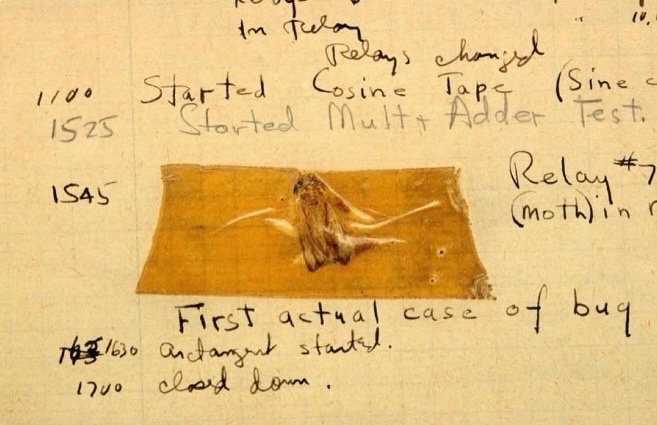
In 1947, engineers working on a computer at Harvard traced a malfunction to a real moth lodged inside the machine. They preserved the insect by taping it into the logbook, producing one of the earliest recorded examples of a literal “computer bug.”
The famous story of the “first computer bug” is largely accurate, though one key detail is often overlooked. On September 9, 1947, operators working on the Harvard Mark II electromechanical computer discovered a moth trapped between relay contacts that had caused the machine to malfunction. The insect was taped into the computer’s logbook alongside the note, “First actual case of bug being found,” creating one of the most iconic artifacts in computing history. That preserved logbook page still survives today as a lasting symbol of early computer culture.
What many people forget is that the term “bug” had already been used by engineers for decades before computers even existed. As far back as the late 1800s, inventors such as Thomas Edison used the word to describe technical defects and unexplained mechanical problems.
The Harvard incident did not create the term, but it gave the world something unforgettable: a literal insect causing trouble inside a computer, a story so fitting that it permanently embedded the phrase into modern technology culture.
@Polymarket 🚨BREAKING: Ebola is under investigation.
Imagine being the detective assigned to that.
“Sir, we have reason to believe you’re Ebola.”
“Allegedly.”