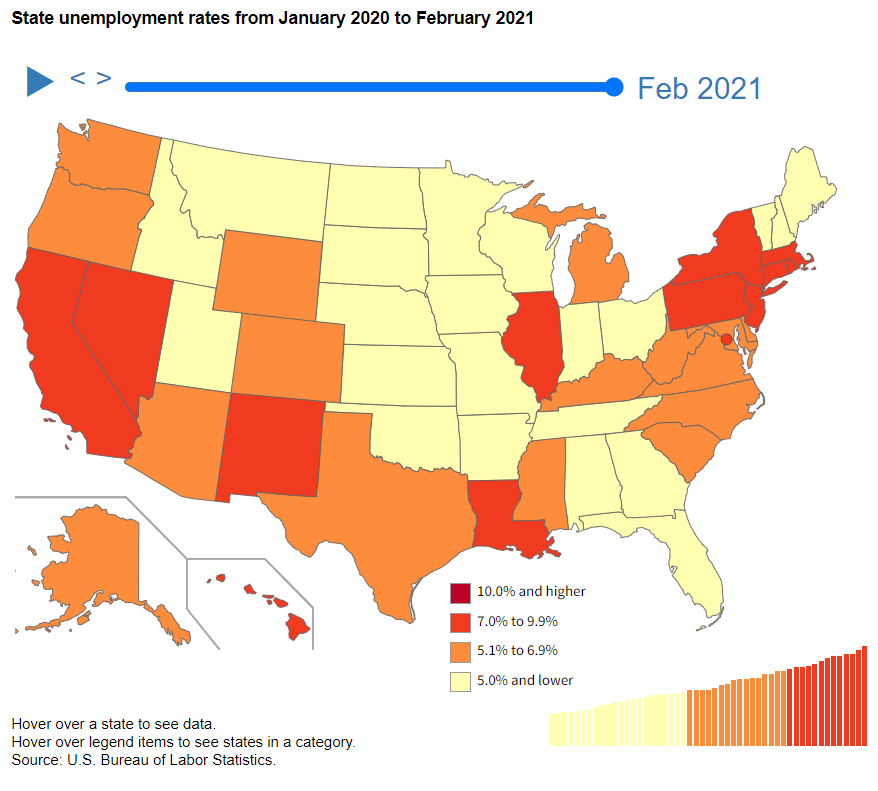
After months of strong U.S. job growth—962,000 jobs added in June, 1,053,000 in July—economists were expecting 720,000 new jobs in August, but when the Bureau of Labor Statistics released its stats on Friday, they showed that nonfarm payrolls rose by just 235,000 in Aug.
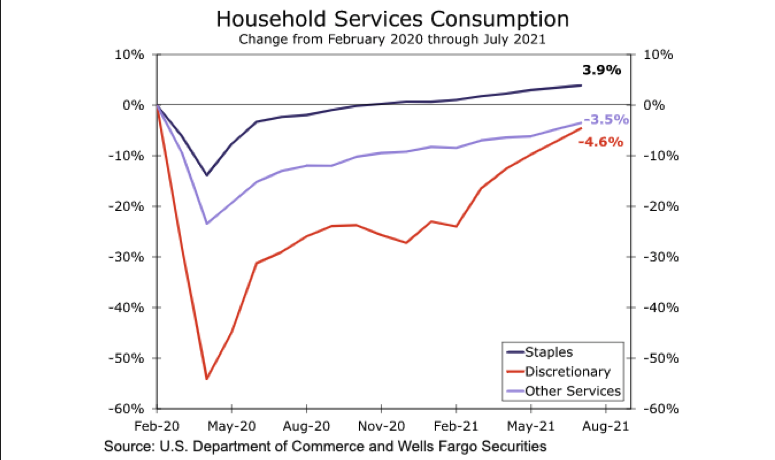
Personal income (+1.1 percent) and consumer spending (+0.3 percent) both grew in July, driven by gains in services (see graph) — but inflation grew even faster.
The Diversity Index tells us the chance that two people chosen at random will be from different racial and ethnic groups.
Check out the Racial and Ethnic Diversity Index by state with our latest #2020Census infographic: https://t.co/jE4RNwahic
50 Years
On August 15, 1971, the Nixon administration announced the US would no longer convert dollars to gold at a fixed value, the gold standard was finished. In fiat heaven;
Nation Debt vs. Population
2021: $29T vs. 334m
1971: $0.39T vs. 207m
Via @BearTrapsReport
Prices continued to climb in July, per the Bureau of Labor Statistics (BLS). The U.S. saw a 0.5% jump over June in the Consumer Price Index (CPI), pushing consumer price tags 5.4% higher than in July 2020. Hotels, airlines, oil & gas and used cars were the biggest drivers.
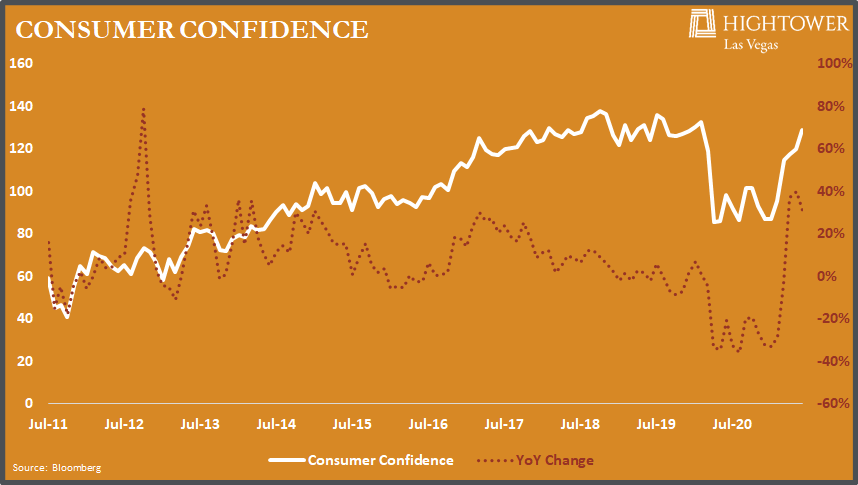
Consumer confidence ticked up slightly this month and has almost climbed back to pre-COVID levels. Confidence was running hot in 2019 so this is certainly welcome news.
The U.S. economy added a better-than-expected 850,000 jobs in June, and average hourly earnings rose 3.6% from a year ago — but the portion of the population that's in the labor force (61.6%) stayed the same and is below its 63.3% pre-pandemic level.
Inflation rose at its fastest rate since Sept. 2008 in April, the Dept. of Labor reports, with the Consumer Price Index increasing 4.2% year-over-year and 0.8% over the prior month.
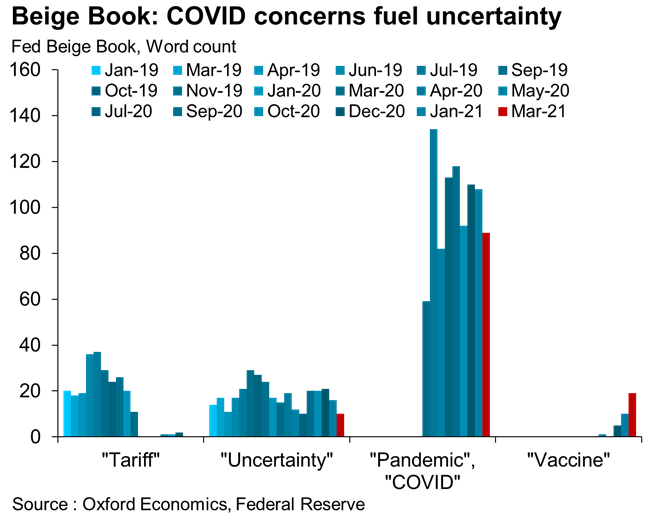
#Fed Beige Book:
- Less uncertainty
- Improving health situation
- #COVID19#vaccine optimism
- Economy/inflation warming up, but no signs of "overheating"
via @OxfordEconomics
🇺🇸New home sales fell 11% in November to 841k, but still +21% y/y
Decline in all regions:
- Midwest -43%
- West -17%
- Northeast -2.5%
- South -1.9%
Inventory: 4.1 months
Median home price: $335,300, +2.2% y/y
Some moderation in sales in 2021, but still strong activity expectd
New home sales slipped 0.3% in Oct but still remains at elevated level 999k (saar) factoring upward revisions.
> Still +22% yoy
> Regions: Northeast +5.1%, Midwest +11.2%, South (-2%), West (-1.5%)
> Median sale price +2.5% YoY
> 3.3-months supply record low
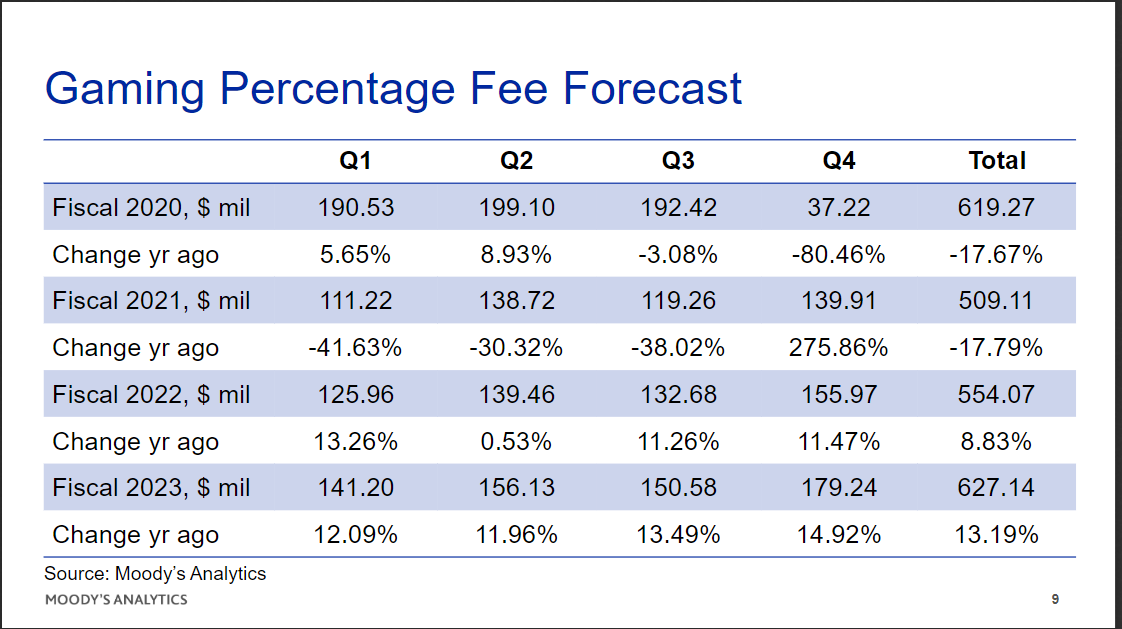
Nevada's economy is based largely on sales/use tax, as well as gaming. Here's Moody's projections on those tax sources (assuming vaccine, etc.) - not back to 'normal' until at least fiscal year 2022
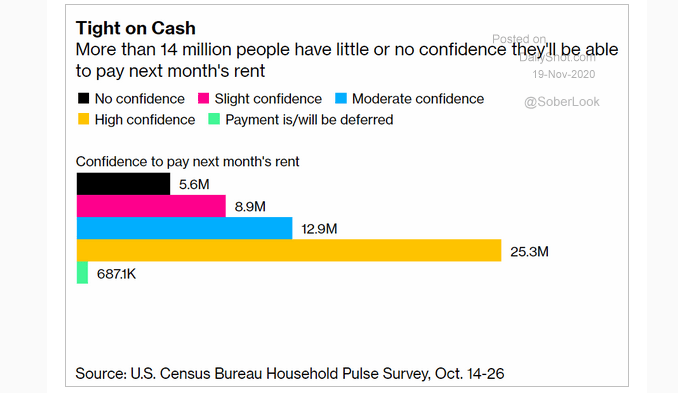
Based on responses collected by the Census Bureau between Oct. 14 and 26th, 24.1% of American adults expected someone in their household to experience a loss in employment income in the next 4 weeks. Nevada ranked second worst in this regard:
Among the many current economic concerns: the leading economic index (LEI, a weighted measure of 10 indicators) rose just 1.2% in Aug., a slower pace than the 2% rise in July & 3.1% gain in June.
https://t.co/Lt5iTsmDtm
Nevada has more people on food stamps (SNAP) now that it did at any point during the 2008 recession. Medicaid caseload growth is also growing substantially (716.9K in July)
Around 15% of U.S. companies recently surveyed said they were moving at least part of their ops out of China per the @USChinaBusiness Council.
https://t.co/LiyjzSnHZa
@StatistaCharts graphic:
https://t.co/U3ajQASPSZ
Total household debt decreased by $34 billion (0.2 percent) in Q2, according to the latest Quarterly Report on Household Debt and Credit. It marks the first decline since Q2 2014, and the largest fall since Q2 2013.