Volt Carbon receives 3rd U.S. patent allowance on dry separation platform.
Preserve crystallinity → Gateway to higher value carbon materials including graphene
No water. No chemicals. Faster processing.
Path: pilot plant → commercialize
$VCT.V $TORVF #Graphite #BatteryMaterials #CriticalMinerals
https://t.co/lMnLEKb0RD
For $TORVF $VCT.V : Graphene is a subset of our novel crystalline graphite, aligned with the Company’s strategy to access multiple applications, while graphene-only companies will have a more limited reach.
#Graphite#Graphene#CriticalMinerals#BatteryMaterials#SupplyChain#EV #Semiconductors
Graphite without the footprint.
At Volt Carbon, we reimagined how critical minerals are processed.
Traditional graphite relies on fossil fuels, chemicals, and billions of litres of water.
Our patented dry separation process uses clean electricity only. No water. No chemicals. No tailings.
High crystallinity natural flake graphite enables advanced battery materials and graphene production.
Quarry based extraction and portable processing mean faster deployment and far less infrastructure.
The result
Lower cost battery and graphene materials
Valuable byproducts recovered, not wasted
Dramatically lower environmental impact
This is the Sustainable Graphite Advantage.
This is Volt Carbon.
#Graphite #Graphene #CriticalMinerals #BatteryMaterials #EnergyStorage #EVs #CleanTech #Sustainability #VoltCarbon
$VCT.V $TORVF
Happy New Year!
Solid UltraBattery is powering the future even at -70°C in the Arctic ❄️⚡
Reliable energy for EVs, drones, aerospace, and beyond
2026 is going to be fully charged 💥💰
@elonmusk ⚡
$VCT.V $TORVF
#BatteryTech #EnergyStorage #EVs #Drones #ArcticTech #DeepTech #CleanEnergy #Innovation #Graphene ⚡
Fair point, and we appreciate the spaghetti analogy 😄
We invested in our own test equipment so we can iterate quickly without spending thousands of dollars every time a parameter changes. That speed lets us get very close internally, while saving significant time and cost.
Once we’re there, we rely on third-party validation, all of which has been publicly disclosed:
• ProGraphite has verified oxidation purity and expansion results
• EmitIQ has validated processing assumptions and cost models
• The University of Waterloo performs our Raman, SEM, EDX, and ICP analysis
In addition, three independent customers have tested our materials and confirmed results consistent with our internal data.
We’re not replacing third-party verification. We iterate in-house for speed, then benchmark everything externally.
Appreciate the discussion, and hope this addresses your comment 🙏
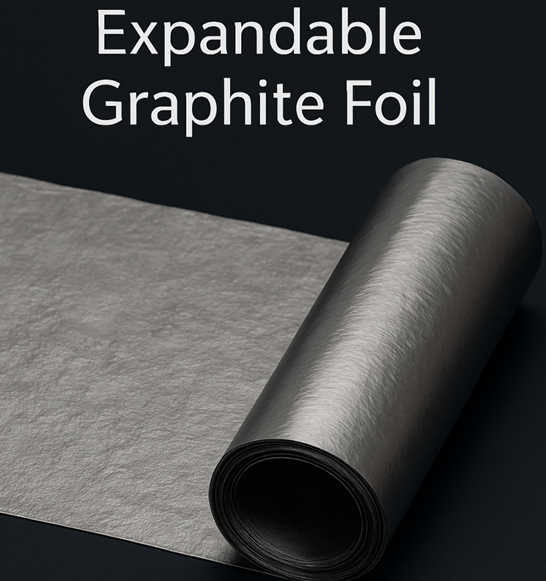
From ore → flake → intercalation → expansion → foil.
Expandable graphite foils are used where polymers and metals fail: extreme heat, fire exposure, vibration, and electrical environments.
This is the bridge between critical minerals and advanced manufacturing.
$VCT.V $TORVF
#CleanTech #Graphene #BatteryTech #Manufacturing #CanadaTech
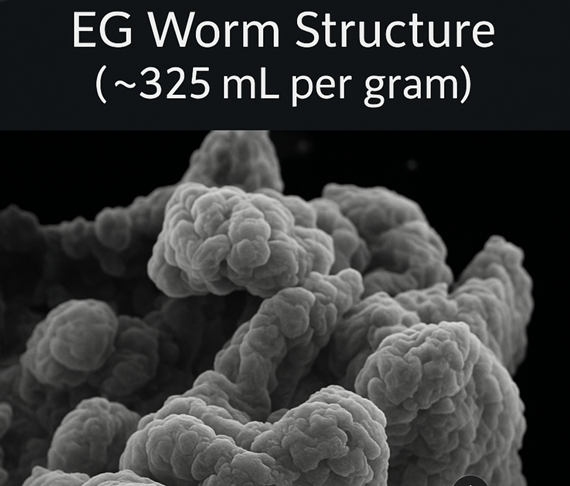
This is not foam.
This is engineered carbon architecture.
After intercalation, graphite expands into a worm-like microstructure with thousands of sealed chambers. That structure is why expandable graphite is used in:
• fire barriers
• battery thermal shields
• EMI protection
• high-temperature insulation
Our Canadian dry separated graphite is the feedstock.
Today, there is no domestic expandable graphite manufacturing.
$VCT.V $TORVF
Graphite is not just mined.
It is engineered.
Starting from from our dry separated natural flake, the layers are chemically intercalated. When heat is applied, the structure rapidly expands hundreds of times in volume, transforming into expandable graphite and then into functional foils.
This single transition unlocks materials for fire resistance, thermal control, battery protection, graphene, and aerospace applications.
#Graphite #AdvancedMaterials #MaterialsScience #Engineering
According to NREL conventional lithium ion batteries can lose up to 69 percent of usable capacity at −20°C. By −30°C to −40°C many chemistries show severe collapse or stop operating entirely.
At −50°C and below this is no longer a performance issue. It becomes a safety and life threatening reliability issue for vehicles aerospace UAVs emergency response and remote northern communities.
Extreme cold is a design condition. Our low temperature battery program targets reliable operation to −50°C to −70°C where failure is not an option.
$VCT.V $TORVF
#BatterySafety #ColdClimate #EnergyStorage
As lithium ion battery adoption grows across aviation, automotive, and industrial systems, materials like expandable graphite offer a way to influence how flammability requirements evolve.
Its ability to expand under sudden heat can help slow ignition, add insulation, and improve safety margins in critical environments.
🔥If you’ve ever heard the saying “now we’re cooking with gas,” this is the literal version.
We used a blowtorch to mimic the rapid heat seen in lithium-ion battery thermal-runaway events.
Expandable graphite responds by instantly expanding and forming a protective carbon barrier.
Simple demo. Engineered with clear safety implications. .
#Science #Engineering #Materials #Energy
$VCT.V $TORVF
We’ve updated our OTCQB profile with new videos, including our patented dry-separation demo and our DAIR Green Fund presentation.
Keeping all platforms aligned with our latest public disclosures.
$TORVF $VCT.V
#OTCQB#Graphite#BatteryTech
$VCT.V $TORVF
Graphite can behave in surprising ways.
A magnet moves under our large flake graphite and the flakes lift, stand up, and follow the field as if the material is alive.
This is diamagnetism in highly crystalline SP2 carbon
the same layered structure found in graphene.
Physics you can actually see.
#Science #Graphite #Graphene #Physics #MaterialsScience #Engineering @1stCDNGraphite
High-purity, high-crystallinity graphite unlocks entire value chains:
• Graphene production
• Lithium metal + lithium ion anodes
• Expandable graphite fire protection
• Thermal interface materials
• Aerospace carbon composites
All of it begins with the structure.
$VCT.V $TORVF
#MaterialsScience #EnergyStorage #Graphite #Graphene #Tech
$TORVF $VCT.V #graphite
Water flotation: Capex intensive, ≈550 dollars / Tonne.
Volt Carbon air separation: 120 - 150 dollars / tonne.
With carbon credits, they get paid 175 - 270 dollars / tonnes.
Instead of spending as water flotation does, the air separation is cheaper, and with carbon credits production becomes profit instead of expense ≈120 dollar / tonne.
Float is a bloated pig though, and they raise all the time. I'll hold this one and add along the way. If it pumps, it pumps. I love the story, the proprietary tech, their JDAs, research and patents.
https://t.co/fIYzllTEvJ
Great breakdown , one point worth adding is the time element.
Conventional wet flowsheets cycle through repeated wetting, conditioning, flotation and long drying periods, which can stretch processing timelines extensively.
By removing water entirely, our upstream steps run continuously, and some material streams can be turned around in hours instead of days. That shift in WIP velocity has been one of the most surprising advantages of the dry approach which affects the OPEX
Appreciate the thoughtful analysis and interest in the underlying physics.