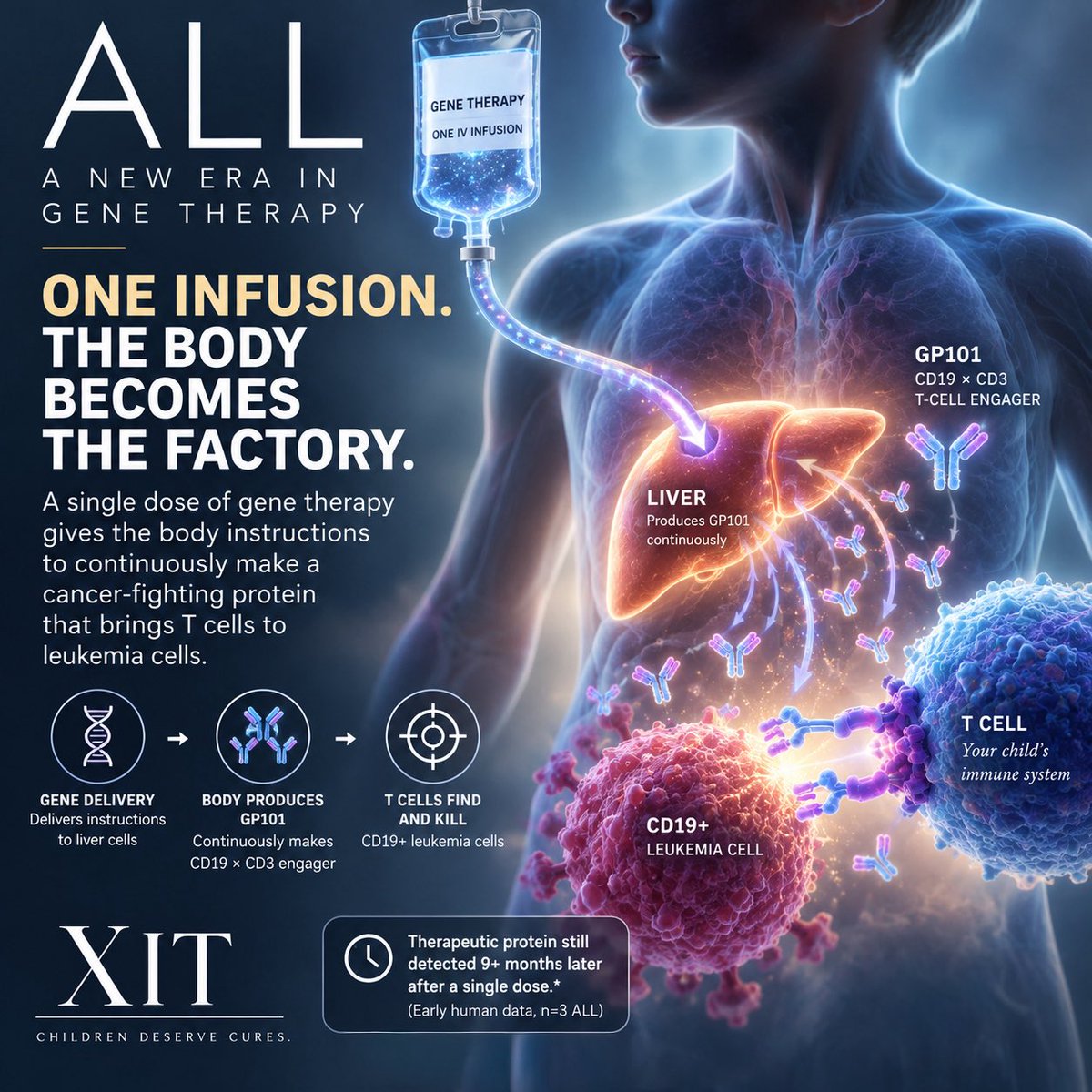
🧬 ALL | ONE INFUSION. THE BODY BECOMES THE FACTORY.
Early human gene-therapy data: 3/3 MRD-negative complete responses
This one is fascinating.
VNX-101 is an experimental gene-delivery therapy being studied in people with relapsed or refractory CD19-positive blood cancers, including B-cell acute lymphoblastic leukemia (ALL).
And instead of repeatedly giving a cancer-fighting drug, researchers are trying something very different:
Give the body the genetic instructions once — and let the body keep making the therapy itself.
🔬 WHAT HAPPENED?
Among the first 3 evaluable patients with relapsed/refractory ALL who were negative for antibodies against the AAV vector before treatment:
3/3 achieved complete remission.
3/3 became MRD-negative.
All three MRD-negative results were confirmed using clonoSEQ, a highly sensitive test capable of detecting tiny amounts of residual leukemia.
One patient also had extensive leukemia outside the bone marrow and achieved a complete response at all disease sites on PET imaging by Day 28.
🧬 XIT DECIPHERS THE SCIENCE: HOW DOES ONE DOSE KEEP WORKING?
VNX-101 uses an engineered AAV — adeno-associated virus — as a delivery vehicle.
Think of the AAV as a microscopic delivery package.
Inside are genetic instructions telling primarily the patient’s liver cells how to manufacture a therapeutic protein called GP101.
GP101 is a CD19 × CD3 T-cell engager.
One end recognizes CD19 on leukemia cells.
The other recognizes CD3 on the patient’s T cells.
It essentially brings the patient’s own immune cells face-to-face with the leukemia and tells them:
“This is the cell to attack.”
But here’s the part we’re particularly interested in:
The liver keeps producing the cancer-targeting protein after the original infusion.
The first reported patient remained MRD-negative through Day 260 and then proceeded to stem-cell transplantation while still in MRD-negative remission.
Even after transplant, GP101 remained detectable at therapeutic levels at least 9 months after the original single VNX-101 infusion.
So rather than:
drug → drug disappears → give another dose
the concept is:
ONE INFUSION
↓
deliver genetic instructions
↓
the body becomes a long-lasting “factory”
↓
continuously produces the T-cell engager
↓
keeps recruiting T cells against CD19+ leukemia
That is why we’re watching this.
🎗️ WHAT ABOUT CHILDREN?
The 3 patients in this new report were adults — these are NOT pediatric results.
The current SENTRY-CD19 trial is a Phase 1/2 first-in-human study.
Part 1: ages 18–90
Part 2: the protocol allows expansion to patients 13–90 years old after dose selection and safety review.
VNX-101 has received FDA Rare Pediatric Disease, Fast Track and Orphan Drug designations.
🔭 WHY XIT IS WATCHING
If researchers can safely give the body genetic instructions that allow it to manufacture a therapeutic protein for months — rather than manufacturing personalized cells outside the body or repeatedly administering a drug — that could represent an entirely different way of delivering cancer immunotherapy.
🔗 FAMILY + SCIENTIFIC RESOURCES
1. SENTRY-CD19 clinical trial — https://t.co/eD9ILQUqpY
2. Peer-reviewed VNX-101 platform paper — https://t.co/zLGwy38C8D
3. September 21 VNX-101 clinical-results announcement — https://t.co/tLfJLTHnLp
XIT Research Review: For educational and informational purposes only. This is not medical advice. Clinical-trial eligibility and treatment decisions should be discussed with the treating oncology team and study investigators.
#ALL #ChildhoodLeukemia #GeneTherapy #GeneticMedicine #MRDNegative #CancerResearch #Immunotherapy #PediatricCancer #ClinicalTrials #PrecisionMedicine #XIT #LetsXIT
🧬 Very Exciting ALL News — ANNOUNCED TODAY
ONE IV DOSE → 3/3 MRD-NEGATIVE COMPLETE RESPONSES
September 21, 2026: New early human results were announced today from VNX-101, an investigational gene-delivered immunotherapy being studied in patients with relapsed/refractory acute lymphoblastic leukemia (ALL).
The first ALL results are small — but noteworthy:
3 patients treated.
3 MRD-negative complete responses.
All 3 confirmed by clonoSEQ.
One patient with extensive disease outside the bone marrow also achieved a complete response at all disease sites on PET by Day 28.
The first treated patient remained MRD-negative through Day 260 and then proceeded to stem-cell transplant while still in complete remission.
🧬 WHAT MAKES THIS DIFFERENT?
VNX-101 isn’t traditional CAR-T.
It uses an AAV vector to deliver genetic instructions in vivo. After a single IV administration, the patient’s liver is designed to continuously produce a CD19×CD3 T-cell engager, which brings the patient’s own T cells into contact with CD19-positive cancer cells.
In simple terms:
Instead of manufacturing cancer-fighting cells outside the body, this approach gives the body genetic instructions to continuously make a cancer-targeting therapy itself.
The platform is designed to avoid leukapheresis, ex-vivo CAR-T manufacturing and repeat therapeutic infusions.
🎗️ WHAT ABOUT CHILDREN WITH ALL?
This is particularly interesting for pediatric cancer because VNX-101 has already received FDA Rare Pediatric Disease designation, as well as Fast Track and Orphan Drug designations.
However, there is an important distinction for families:
Vironexis currently describes the actively enrolling VNX-101 trial as enrolling adults.
So this is not currently a treatment that every child with ALL can sign up to receive.
For families with a child or adolescent with relapsed/refractory CD19-positive ALL, it may still be worthwhile to have the treating oncologist contact the study team to ask about future pediatric enrollment and upcoming cohorts.
🔎 HOW TO FIND THE TRIAL
https://t.co/eD9ILQUqpY
Families should contact the trial through the study contact information listed on https://t.co/lxwGJukMY4 or have their oncologist contact the nearest participating center. The study team performs the actual prescreening and determines eligibility.
⚠️ IMPORTANT CONTEXT
3/3 MRD-negative complete responses is an encouraging early human signal — but three patients is still only three patients.
This is an early Phase 1/2 study, not evidence of a 100% response rate in a larger population and not evidence of a cure rate.
One of the patients subsequently underwent stem-cell transplantation, which also means longer-term remission after transplant cannot be attributed to VNX-101 alone.
Why XIT is watching 🧬
The concept is what makes this particularly compelling:
One IV administration → genetic instructions delivered inside the body → the patient’s own cells continuously manufacture a cancer-targeting immunotherapy.
If these early responses prove reproducible and durable in larger studies, this could represent an important new way to deliver cancer immunotherapy.
XIT Research Review: For educational and informational purposes only. This is not medical advice. Clinical-trial eligibility and treatment decisions should be discussed with the treating oncology team and study investigators.
#ALL #ChildhoodLeukemia #ChildhoodCancer #GeneTherapy #GeneticMedicine #Leukemia #MRDNegative #PediatricCancer #CancerResearch #Immunotherapy #ClinicalTrials #PrecisionMedicine #XIT #LetsXIT
https://t.co/FLkEBAFLg2
A child should never survive one cancer only to face another caused by the treatment meant to save them.
We have to do better. 🎗️
Link :
https://t.co/wN0dqdt8W2
@rebeccaperrotto We just received our determination this week. The first grant we’re pursuing: AI-guided CRISPR therapies targeting childhood cancers—developed to reach kids at no cost. 🧬🎗️
I’ll text you soon!
— Julya
CANCER IS THE #1 CAUSE OF DEATH FROM DISEASE AMONG CHILDREN IN THE UNITED STATES 🇺🇸
#Number1ByDisease = There’s nothing “rare” about this fight.
💛 If your child has been affected by childhood cancer, whether they’re fighting, surviving, or forever remembered, please share their photo in the comments so we can add their voice to this message.
Awareness matters. Advocacy matters.
Children deserve cures🎗️
https://t.co/RWPiH9aOnj
🧬 NEUROBLASTOMA NEWS ! | GPC2 + B7-H3
100% tumor-free in an aggressive preclinical neuroblastoma model
🌿 Important for families:
The dual GPC2 + B7-H3 CAR-T in this study is not yet available in a human clinical trial. The 100% tumor-free result was seen in mice — not children yet — but both targets are already being studied individually in children now.
🔗 Clinical trials families can review now:
GPC2 CAR-T | Children’s Hospital of Philadelphia (CHOP)
For relapsed/refractory neuroblastoma and metastatic retinoblastoma
Link:
https://t.co/24qqXkPLPZ
🧬 B7-H3 CAR-T | St. Jude Children’s Research Hospital
For B7-H3-positive pediatric solid tumors, including neuroblastoma
Link:
https://t.co/xICRl1Ohme
🧬 GPC2 CAR-T | Stanford / Lucile Packard Children’s Hospital
For relapsed/refractory medulloblastoma and other eligible embryonal CNS tumors
Link:
https://t.co/kalaDouDrV
🧠 Why combine GPC2 + B7-H3?
One of the major challenges with CAR-T therapy in solid tumors is antigen escape.
Think of a target on a cancer cell like a flag.
A CAR-T cell can be genetically engineered to recognize that flag and attack the cancer cell carrying it.
But tumors can change. Some cancer cells may lose that flag — or display very little of it — allowing them to escape recognition and survive.
This new approach gives the CAR-T cell two flags to look for:
🌿 GPC2 + B7-H3 : The idea: give cancer fewer places to hide.
What happened in neuroblastoma?
Researchers tested the dual-target CAR-T in an aggressive patient-derived neuroblastoma model.
A patient-derived xenograft, or PDX, begins with tumor tissue that originated from a real patient and is then studied in mice.
The result:
✨ 100% of mice receiving one optimized GPC2 + B7-H3 CAR-T remained tumor-free through the 14–15 week study period.
Researchers later challenged the animals with tumor cells again and they rejected the cancer again.
Engineered T cells also remained detectable through the 36-week study endpoint, suggesting prolonged antitumor activity in this model.
What does “100% tumor-free” mean?
It means 100% of the mice in that treatment group remained tumor-free during the reported study period.
We do not yet have human response, survival or cure data for the dual GPC2 + B7-H3 CAR-T.
🌱 Preclinical research is where an idea begins.
The next question is whether researchers can safely bring this dual-target strategy into human testing — and whether the activity seen in these models can eventually be reproduced in children.
For families following neuroblastoma research: remember these two names — GPC2 + B7-H3. 🧬
We’ll be watching where the science goes next.
💛 Children deserve therapies designed with cure as the goal.
XIT Research Brief | #LetsXIT | #XIT
📚 SOURCE / READ THE RESEARCH:
Schürch PM, Draper B, Zecchino VP, et al. Co-targeting GPC2 and B7-H3 with CAR T cells achieves durable responses in preclinical high-risk neuroblastoma and medulloblastoma models. AACR Annual Meeting 2026; Abstract 4027.
🔬 Read the full abstract FREE:
https://t.co/ndVCR8F4iH
Trial availability and eligibility can change. Families should contact the study team and their treating oncologist to determine eligibility.
Preclinical research | Educational only | Not medical advice
#Neuroblastoma #ChildhoodCancer #GPC2 #B7H3 #CARTCellTherapy #PediatricCancer #CancerResearch #LetsXIT #XIT
Kasting for Keelin 🎣
As Keelin’s birthday approaches, we want the world to know one thing: Keelin deserved a cure.
We are incredibly honored that Keelin’s mom Samantha Meghan and family, have chosen to support XIT through Kasting for Keelin, a fundraiser created in his honor.
In honor of Keelin, we have created a special Kasting for Keelin hat, and 100% of the proceeds from the sale of this hat will benefit https://t.co/RWPiH9aOnj and our mission to advance the development of curative therapies for children with cancer.
We wish more than anything that curative therapies had come in time for Keelin.
They didn't.
But they can come in time for the next child.
That is why we will keep pushing for better science and cures—because children with cancer deserve to grow up.
To Keelin’s mom and family, thank you for choosing XIT and for allowing us to honor Keelin alongside you. We are humbled to be part of an effort that carries his name forward while fighting for a different future children.
And to Keelin, as your birthday approaches:
We remember you. We honor your fight. And we will keep fighting for the cures that you and every child with cancer deserved. 💛🎗️
Happy upcoming birthday, Keelin. 🎂💛
🎣💛 Go get your Kasting for Keelin hat today!
Here: https://t.co/15sMBNB1pe
Children With Cancer Deserve the CRISPR Era, Too. 🎗️
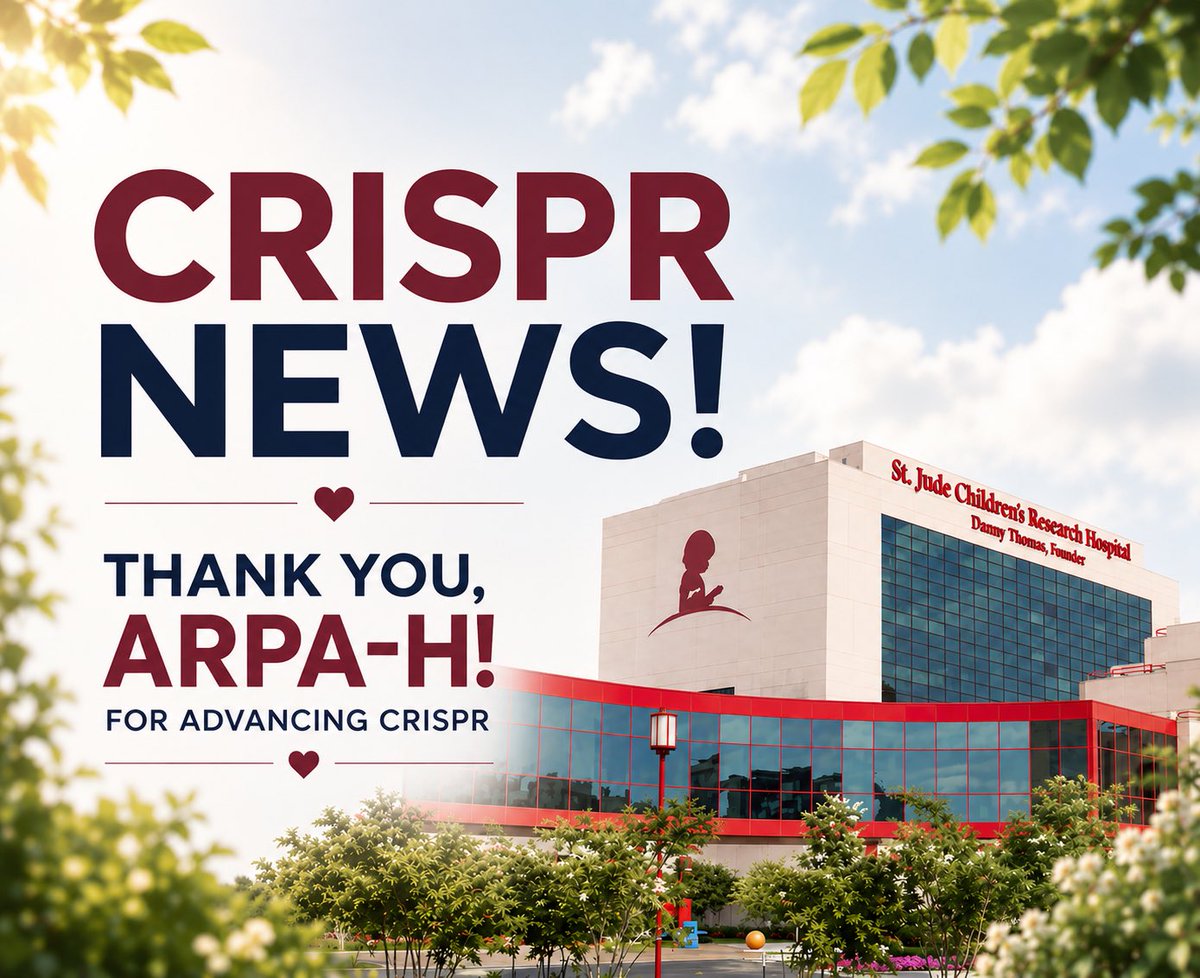
This week, St. Jude Children’s Research Hospital was awarded $28.5 million through the Advanced Research Projects Agency for Health (ARPA-H) to accelerate personalized CRISPR gene-editing therapies for children with rare inherited disorders.
We applaud St. Jude and ARPA-H for investing in the future of gene editing.
We celebrate this milestone, and we hope it marks the beginning of an era where gene editing reaches every child who could benefit—including children with cancer.
As CRISPR continues advancing the treatment of rare inherited disorders, we believe children with cancer deserve to be part of that future as well.
Many childhood cancers are driven by specific genetic alterations. While gene editing is still in the early stages for pediatric oncology, the same spirit of innovation that is fueling these groundbreaking therapies should also be applied to developing new treatments for children fighting cancer.
Children with cancer deserve more than decades-old treatment options. They deserve access to the most advanced science of our generation.
Children deserve cures. 💛
https://t.co/RWPiH9aOnj
Link: https://t.co/nQhXupjWSK
#CRISPR #GeneEditing #ChildhoodCancer #PediatricCancer #PrecisionMedicine #StJude #ARPH #Innovation #ChildrenDeserveCures #XITFoundation
How Long Does This Wall Have to Grow Before Curing Childhood Cancer Becomes a Fully Funded National Priority?🇺🇸
Does the Angel Wall have to stretch across the White House lawn and reach the windows of the Oval Office before our nation gives childhood cancer research the urgency and investment it deserves?
Last year, you were singing at CureFest.
This year, you are on the Angel Wall.
So are 5 of your friends and far too many children whose mothers I know.
America has accomplished extraordinary things when we unite behind a mission.
How many more faces must be added before curing childhood cancer becomes one of them?
Children deserve cures. 🎗️
@CureFestUSA
#pediatriccancerawareness #publichealth #curechildhoodcancer #whitehouse #hhs
We believe progress doesn’t have to begin with thousands.
Sometimes it can begin with one child.
Then another.
Then another.
That’s why we’re building the XIT Lab.
A nonprofit laboratory dedicated to advancing therapies and helping promising treatments reach children.
XIT exists to serve the public. Every step we take is guided by the belief that children deserve cures—and that every child deserves the opportunity to benefit from therapies that show real promise.
Stay tuned. Follow. Share.
It’s going to take a village.
But together, we’re neither rare nor small.
https://t.co/RWPiH9aOnj
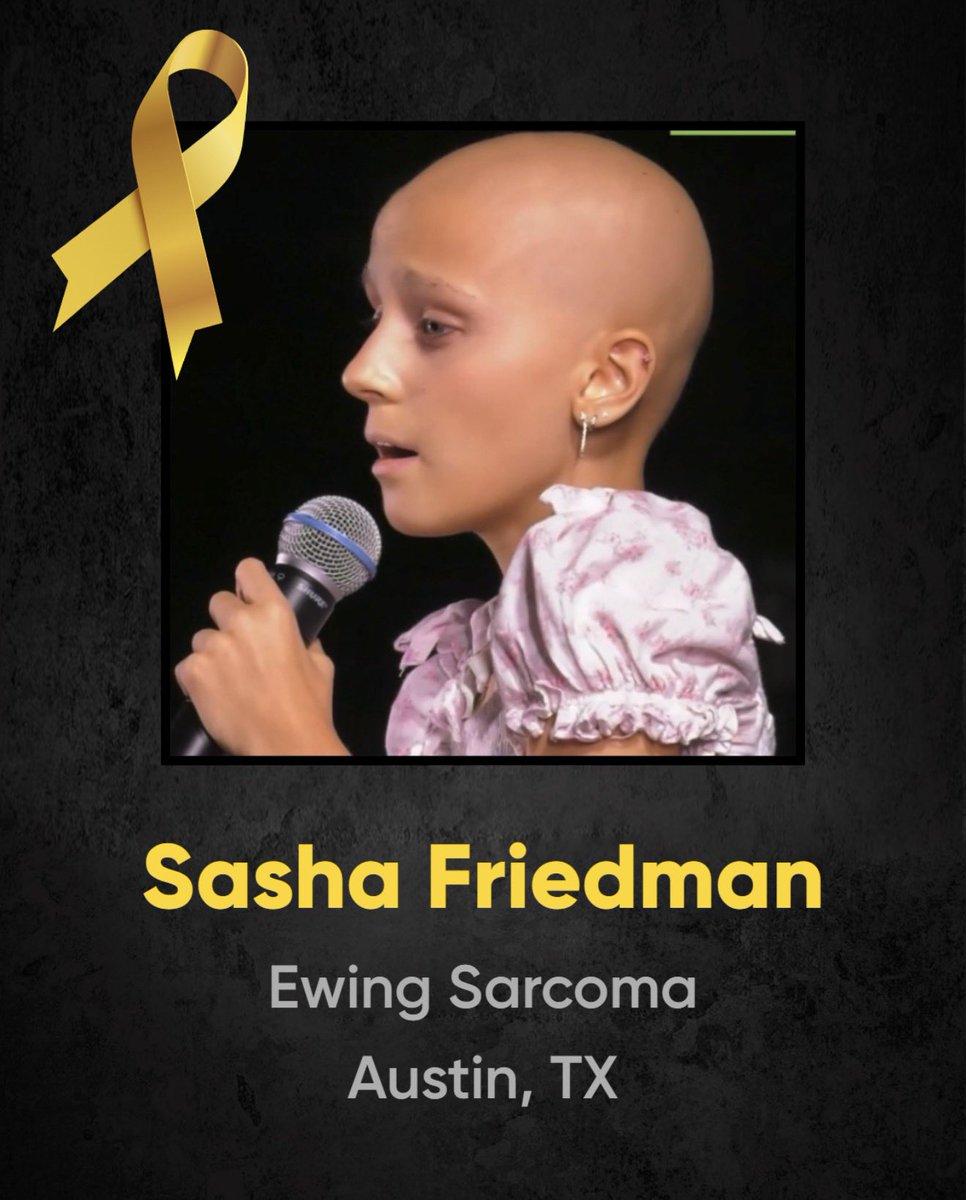
This is Sasha.
She fought so hard to live.
Every child who has faced, is facing, or may one day face cancer deserves a cure.
Whether cancer has affected your family or not, this fight belongs to all of us.
Together, we share a responsibility to help stop this disease from devastating our communities.
Children deserve cures. 🎗️
https://t.co/RWPiH9aOnj
#cancercommunity #cancercommunitysupport #pediatriccancerawareness #xit
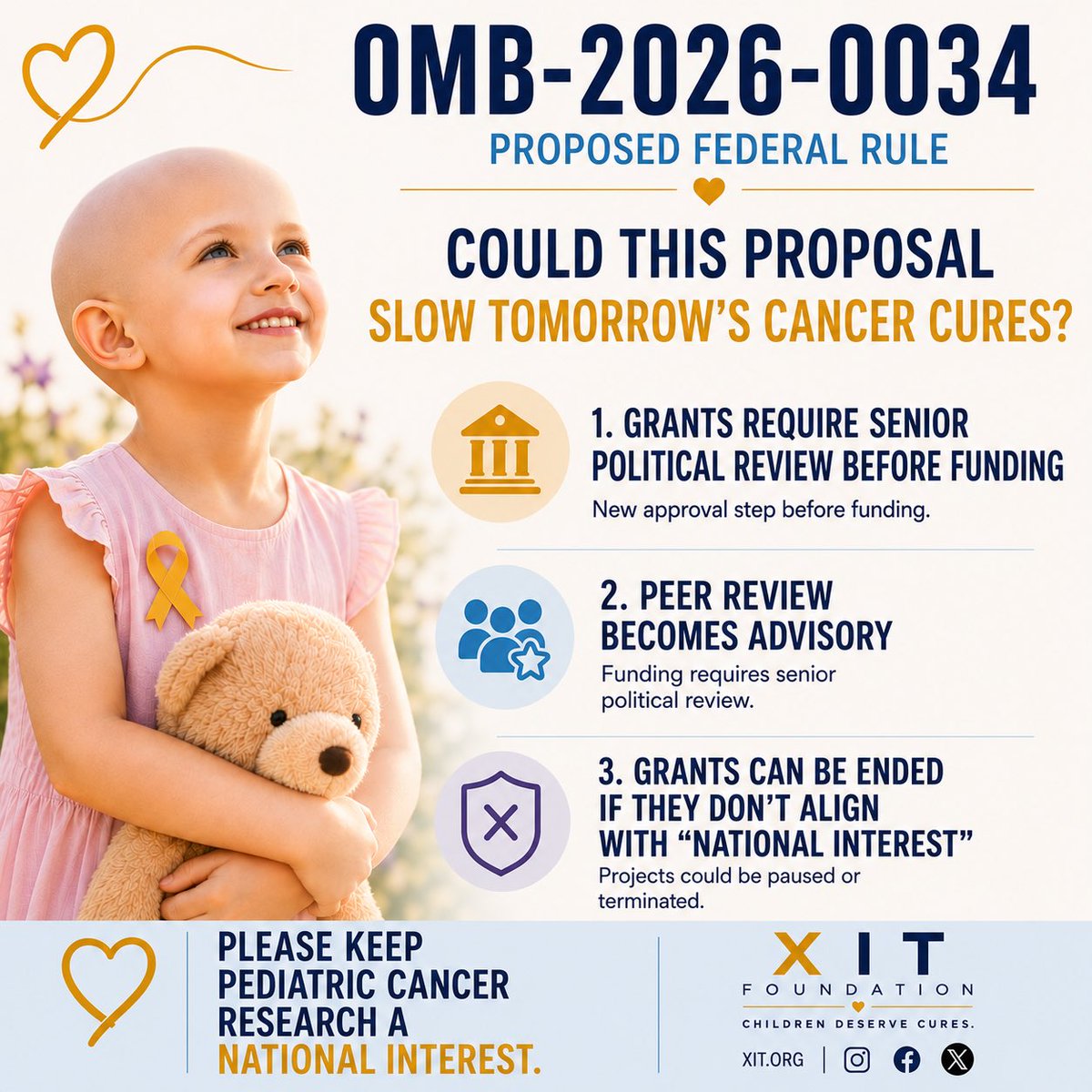
🔬 What Could This Proposed Federal Rule Mean for Future Cancer Therapies?
Understanding OMB-2026-0034
Link: https://t.co/QEIwqFnEDl
Many families affected by cancer are following a proposed federal rule from the Office of Management and Budget (OMB) because of how it could influence the research that leads to tomorrow’s treatments.
OMB-2026-0034 proposes changes to how certain federal research grants are reviewed, awarded, and managed. Some scientists, universities, and patient advocates have raised questions about whether these changes could affect the pace of future medical research.
🧬 1. Federal research grants would require additional review before funding
Under the proposal, certain grants would require review by senior political appointees before awards are made, in addition to scientific peer review.
What this could mean:
• Longer wait times before research funding is awarded
• Delays in launching promising studies
• More uncertainty for researchers planning new projects
⸻
🔬 2. Scientific peer review recommendations would remain advisory
Expert scientists would continue to review grant applications, but their recommendations would remain advisory rather than determining funding decisions on their own.
What this could mean:
• Highly rated research proposals may not always receive funding
• Innovative areas of research—including CRISPR, gene editing, CAR-T cell therapies, and other emerging cancer treatments—could face funding uncertainty.
⸻
⏳ 3. Long-term research projects could become less predictable
Many cancer therapies require years—and often decades—of research before reaching patients.
The proposal would give agencies broader authority to end certain discretionary awards if they determine a project no longer aligns with the national interest.
What this could mean:
• Greater uncertainty for long-term research programs
• Possible interruptions to projects already underway
• More difficulty planning multi-year studies
⸻
🏛️ 4. Research may increasingly be evaluated based on changing national priorities
The proposal places greater emphasis on whether projects align with the “national interest.”
Because that term can be interpreted differently over time, research priorities could shift as administrations and agency priorities change.
⸻
📋 5. Additional administrative and compliance requirements
The proposal would introduce additional oversight and compliance requirements that may increase administrative responsibilities for universities, nonprofit research organizations, and smaller biotechnology companies.
What this could mean:
• More time devoted to administrative requirements
• Less time available for scientific research
• Slower progress translating laboratory discoveries into clinical trials
⸻
❤️ Why families care
Every breakthrough in cancer treatment—from immunotherapy and targeted therapies to gene editing and personalized medicine—began as a research project.
#SciencePolicy #ResearchFunding #NIH #XIT #CancerResearch #PeerReview #OMB20260034
We wish $100 were donated to pediatric cancer research every time a healthcare professional says:
“It’s not environmental or inherited.”
What we wish they would say instead: “We do not know yet what causes the initiating changes.”
“We don’t know” is not a failure of medicine.
It is often the most honest starting point in science.
The real failure is —treating an unanswered question as though it has already been settled.
Uncertainty should create urgency.
It should provoke curiosity.
It should lead to more questions and deeper research.
Children Deserve Cures.
🎗️ https://t.co/RWPiH9aOnj
Every T-cell ALL Patient Reached Remission by Day 28. Here’s the CRISPR Story Behind It.
A landmark study published in the New England Journal of Medicine reported that all patients treated with universal CRISPR-guided, base-edited CAR7 T cells achieved complete morphologic remission by Day 28.
Let’s be precise about what happened and what CRISPR actually did.
The gene editing wasn’t used to edit the leukemia itself.
Instead, CRISPR-guided base editing was used to engineer healthy donor T cells into an “off-the-shelf” CAR-T therapy. Multiple genetic edits allowed the cells to be safely given to another patient while avoiding fratricide and reducing the risk of graft-versus-host disease. The engineered CAR then directed those immune cells to recognize and destroy leukemia cells.
The story behind the numbers
Every one of the 11 patients achieved complete morphologic remission by Day 28, meaning leukemia was no longer visible under the microscope.
At a deeper level
• 9 of 11 patients achieved deep remission and were able to proceed to potentially curative stem cell transplantation.
• 7 of 11 patients remained in remission during follow-up ranging from 3 to 36 months.
This is a small, early-phase study.
Why these results matter
In newly diagnosed childhood B-cell ALL, complete remission after induction therapy is expected, with modern treatment achieving remission in more than 95% of children.
But relapsed or refractory T-cell ALL is an entirely different disease setting. These are patients whose leukemia has returned or failed to respond to prior therapy, and historically, outcomes have been poor.
That is why seeing every treated patient achieve morphologic remission in this heavily pretreated group represents an important milestone.
CRISPR is evolving from a laboratory tool into a platform for building smarter immune therapies — therapies that are more precise, more scalable, and potentially available to more children who urgently need new options.
A meaningful step toward the future of curative-intent pediatric cancer treatment.
XIT. org | Pharmacist-informed research summary
For educational purposes only. This is not medical advice. Trial eligibility and treatment decisions should be reviewed with the patient’s treating oncology team.
Source: Chiesa R, et al. Universal Base-Edited CAR7 T Cells for T-Cell Acute Lymphoblastic Leukemia. N Engl J Med. 2026;394(2):152-165. DOI: 10.1056/NEJMoa2505478. PMID: 41363805.
Related Clinical trial: NCT05397184.
Link: https://t.co/UGdEnbTxVh