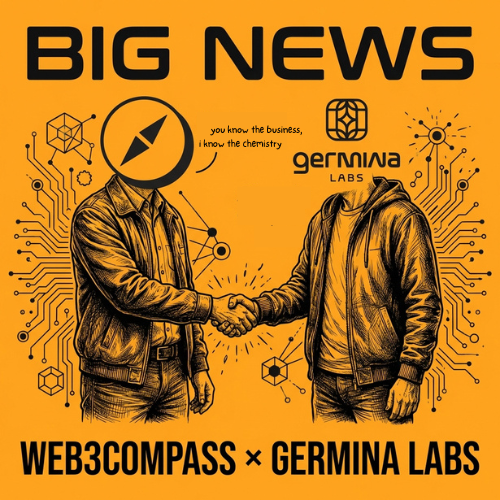
Big news...and an important milestone for us.
After a year of building, experimenting, breaking things, and learning fast, Web3Compass is now part of Germina Labs (@GerminaLabs).
None of this would have been possible without the community. From 30 Days of Solidity to 10 Days of Base to Build with Stylus... The energy, curiosity, and commitment you brought to every cohort made this journey real.
We’ve seen some of you push your limits...late-night calls, consistent streaks, showing up even when it got hard. That kind of builder grit is exactly what Web3Compass stands for.
As a two-person team, scaling that momentum sustainably was hard. So we made a deliberate choice - one that’s best for the community, the mission, and what comes next.
Germina brings the strategic depth, operational clarity, and long-term thinking that lets us scale without losing our soul.
We remain builder-first, community-driven, and deeply technical, NOW with the right guidance to go bigger.
The mission stays the same.
The ambition just got sharper.
2026 is about building things that last.
Jev is a new kind of model built for the tasks LLMs are often overkill for:
→ typed decisions
→ confidence scores
→ structured outputs
→ fast, non-autoregressive inference
But is Jev actually an LLM?
And what does “System One” really mean? https://t.co/0VQ1XbRNCz
New week, building @the_devcompass
Shipping a few features this week. Expect quick byte sized courses on @pidotdev@crewAIInc Hermes agent by @NousResearch
The goal is to get a hang of the topics before you invest in building on them just out of FOMO.
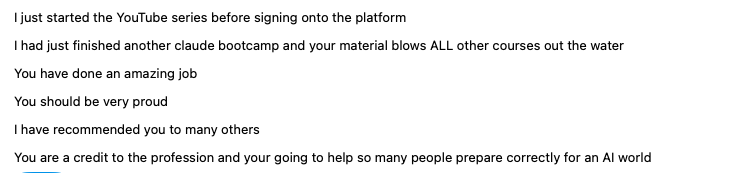
Someone reached out to us on Telegram after discovering our Claude Architect Playlist on Youtube. Ended up buying the course😍
Messages like this keep us motivated.
Check out the FREE Playlist: https://t.co/7WxReOICgG
Congratulations to you @huggingface
You've been our go-to place for learning, testing, and experimenting. And a huge part of our AI journey, and we can’t wait to see what you build next. 💛
Now go make NVIDIA hug the models too. 😂🤗
I don't do trends but wanted to take a break over the weekend, building something fun so here I am giving in to this trend.
A tribute to the northeast music - https://t.co/a7mJDmh7Od
Live soon on https://t.co/tWj23CY1EN
We are now a Youtube Partner 🥳🥳
Stay tuned for deeper AI engineering content, hands-on tutorials, certifications, interviews with builders, and practical guides that help you stay ahead in one of the fastest-moving industries.
Thank you for being part of this journey♥️
One year ago, we started as Web3Compass with a simple goal: make learning emerging technologies practical and accessible for developers.
Today, we've evolved into DevCompass, expanding beyond Web3 into AI, agents, and the future of software engineering.
Along the way, 1,700+ of you chose to subscribe, learn, and build with us. Every view, comment, question, and piece of feedback has helped shape what DevCompass is becoming.
We're also excited to share that we've officially become a YouTube Partner 🎉
This milestone isn't just ours, it's the community's. Thank you for believing in a small team that has spent the last year obsessing over creating content that actually helps developers.
We're just getting started.
Over the coming months, you can expect deeper AI engineering content, hands-on tutorials, certifications, interviews with builders, and practical guides that help you stay ahead in one of the fastest-moving industries.
We'd love to hear from you:
What would you like to see more of on DevCompass?
Thank you for being part of this journey. Here's to the next chapter. ❤️
Check us out on Youtube: https://t.co/eRn6MicoMG
Anthropic just turned "Claude experience" into something you can actually get certified in.
4 new proctored exams. Most people prepping for these are studying the wrong things.
Here's why:-
The 4 tracks:
• Associate – Foundations ($99): consulting/non-technical roles
• Developer – Foundations ($125): engineers building on the API
• Architect – Foundations ($125): the original technical certificate
• Architect – Professional ($175): senior/lifecycle-owner track
The part nobody's talking about: these exams are NOT evenly weighted.
On Associate Foundations, prompting itself is only 14% of the exam.
Evaluation and judgment catching a hallucinated output, knowing when to escalate carries more weight than writing the prompt at all.
Developer Foundations is even more lopsided: one single domain (Applications & Integration) is a full 1/3 of the entire exam. If you're studying every topic equally, you're studying wrong.
Also: exam delivery moved to Pearson on June 30, badges moved to Credly, and if you had the old Architect Foundations certificate, there's a specific migration path you need to know about.
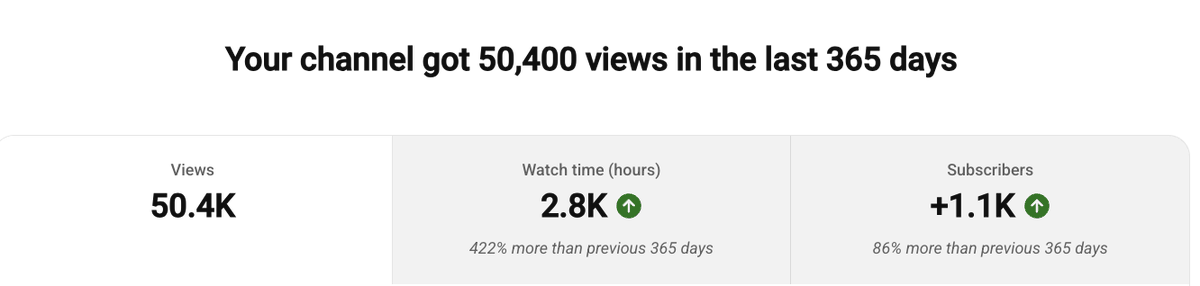
We are slowly growing - 50k views in the last year
Someone who had no experience creating videos, and that too long form content. No editors, No writers, just 2 people doing it all.
Thank you to each one of you for believing in us🥳
It was a privilege partnering with @ketherlabs such a talented community🥳
Thankyou @karenkether this wouldn't be possible with you 😍
Do we smell Cohort2 collaboration?
🎓 Cohort 1 completado. Y qué viaje tan especial fue este.
Fue un honor para @ketherlabs haber sido partners oficiales del Claude Certified Architect Prep Course de @the_devcompass — y ver de cerca lo que puede lograr una comunidad cuando se une con un propósito claro.
275 builders seleccionados de más de 45 países.
Y entre ellos, muchos de nuestra comunidad latina de KETHERLABS que hicieron su esfuerzo y terminaron satisfactoriamente todo el programa, a todos los builders, MUCHAS GRACIAS!
En 70 lecciones recorrieron todo el camino:
desde entender qué es un LLM hasta construir sistemas multi-agente reales, trabajar con herramientas, pipelines en producción, Claude Code y mucho más. No fue un curso teórico — fue formación práctica, profunda y exigente.
Hoy, muchos de ellos ya cuentan con su certificado y están listos para presentar la certificación oficial de Claude Certified Architect. Eso no es poco. Eso es transformador.
A toda la comunidad LATAM que se sumó: gracias por confiar, por estudiar, por no rendirse. Esto es exactamente lo que queremos seguir construyendo juntos.
Y a DevCompass: gracias por crear este espacio y por dejarnos ser parte de él. No es el final — es solo el comienzo. Hay mucho más por venir, así que estén atentos. 🚀
What a journey. ❤️
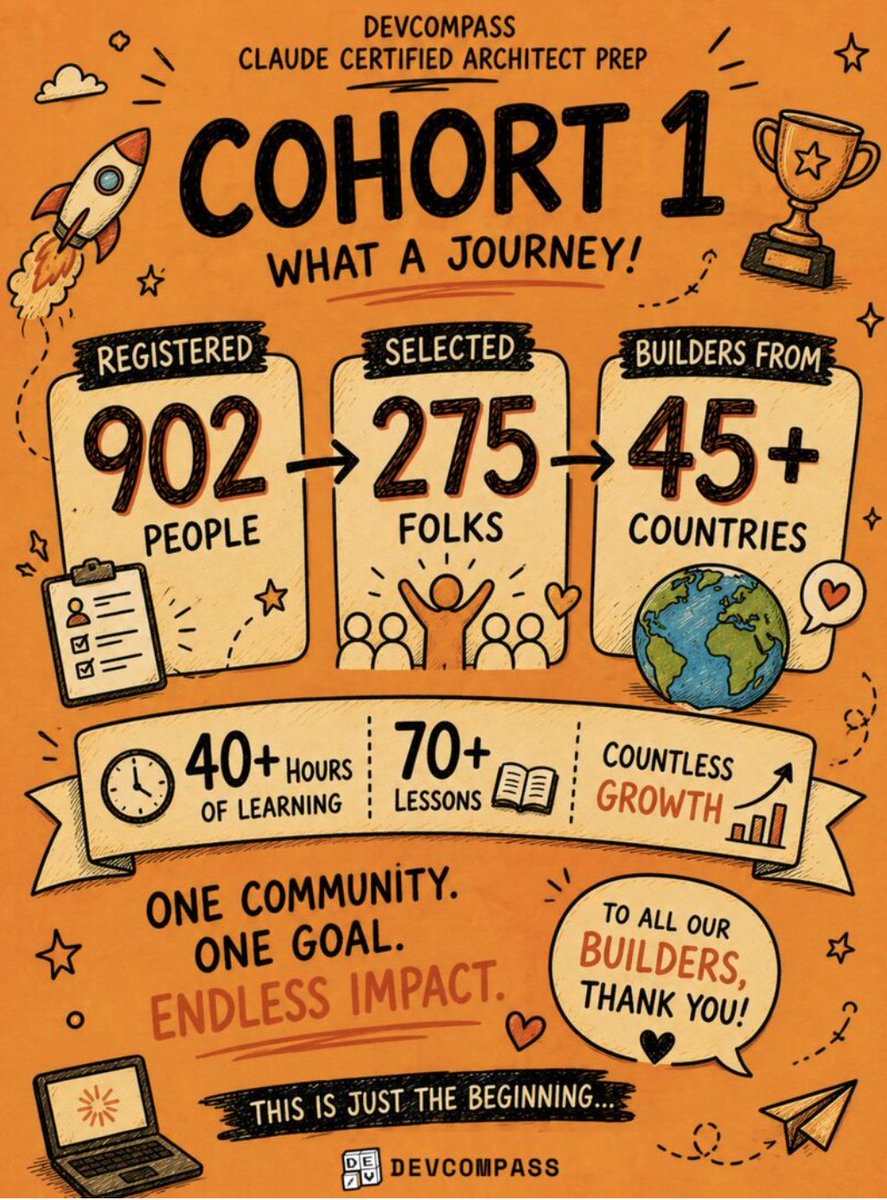
Over the past 6 weeks, Cohort 1 of the DevCompass Claude Certified Architect Prep Course brought together builders from 45+ countries to learn, build, and grow together.
902 registrations.
275 selected builders.
40+ hours of learning.
70+ lessons.
Countless "aha!" moments.
A huge thank you to everyone who trusted us to be part of your AI journey. Seeing this community come together has been incredible.
This is just the beginning. 🚀