Imperial Overreach and the Burden of Power: Historical Lessons for the American Republic
History shows that the greatest empires are rarely destroyed by foreign enemies alone. More often, they weaken from within. Expansion, once the source of strength, gradually becomes a burden that strains institutions, finances, and political stability.
In Ancient Egypt, periods of aggressive military campaigns expanded influence but also stretched administrative control and deepened internal fragmentation.
The Roman Empire grew wealthy through conquest, yet its vast borders demanded constant military defense. Political corruption, economic inequality, and leadership crises eroded its foundations long before external invasions delivered the final blows.
The Mongol Empire expanded with unmatched speed, only to fracture under the weight of its size and succession disputes.
The Byzantine Empire endured for centuries but suffered from fiscal strain, internal political intrigue, and repeated territorial conflicts.
The British Empire, though never conquered at home, was exhausted by global commitments and two world wars, ultimately relinquishing much of its empire through gradual decline rather than sudden defeat.
The pattern is consistent. Overextension multiplies obligations. Military commitments grow costly.
Domestic divisions intensify. Economic imbalances widen. Empires do not fall overnight; they wear down.
The United States is not a territorial empire in the classical sense, but it exercises vast global influence. History suggests that enduring power depends less on expansion and more on disciplined governance, economic balance, and civic cohesion.
Nations decline not simply because they are challenged from abroad, but because internal instability weakens their ability to respond.
The preservation of a great republic depends on recognizing limits, strengthening institutions, and prioritizing internal renewal over perpetual expansion.
The Odd Mind.
@thatabujagirl Emem, this war unfortunately has nothing to do with religion or regime.
It’s about resources control.
Iran and Venezuela are the biggest supplier of oil and rare earth minerals to China.
US and Israel wants to cage China’s influence and blocked its influence from this
Imperial Overreach and the Burden of Power: Historical Lessons for the American Republic
History shows that the greatest empires are rarely destroyed by foreign enemies alone. More often, they weaken from within. Expansion, once the source of strength, gradually becomes a burden that strains institutions, finances, and political stability.
In Ancient Egypt, periods of aggressive military campaigns expanded influence but also stretched administrative control and deepened internal fragmentation.
The Roman Empire grew wealthy through conquest, yet its vast borders demanded constant military defense. Political corruption, economic inequality, and leadership crises eroded its foundations long before external invasions delivered the final blows.
The Mongol Empire expanded with unmatched speed, only to fracture under the weight of its size and succession disputes.
The Byzantine Empire endured for centuries but suffered from fiscal strain, internal political intrigue, and repeated territorial conflicts.
The British Empire, though never conquered at home, was exhausted by global commitments and two world wars, ultimately relinquishing much of its empire through gradual decline rather than sudden defeat.
The pattern is consistent. Overextension multiplies obligations. Military commitments grow costly.
Domestic divisions intensify. Economic imbalances widen. Empires do not fall overnight; they wear down.
The United States is not a territorial empire in the classical sense, but it exercises vast global influence. History suggests that enduring power depends less on expansion and more on disciplined governance, economic balance, and civic cohesion.
Nations decline not simply because they are challenged from abroad, but because internal instability weakens their ability to respond.
The preservation of a great republic depends on recognizing limits, strengthening institutions, and prioritizing internal renewal over perpetual expansion.
The Odd Mind.
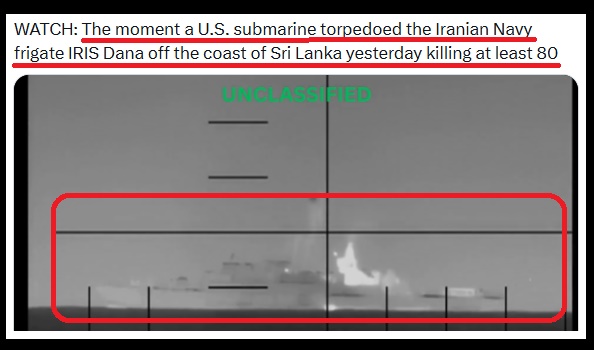
Sinking an Iranian warship over 3,000 km from Iran was a serious miscalculation, in my view.
This is not comparable to striking smaller Iranian vessels docked at port with no crew aboard.
Just like the opening move of this conflict on February 28—a decapitation-style surprise strike carried out during ongoing negotiations—this action effectively amounts to drawing first blood, at least in naval warfare terms. Why?
There has been no formal declaration of war.
The Iranian vessel had just participated in an international fleet review in India and was sailing near Sri Lanka when it was torpedoed and sunk without warning, thousands of kilometers from its home waters.
So why is this a blunder? Because it sets a dangerous precedent. If, in response, Iranian anti-ship cruise missiles strike U.S. Navy vessels escorting tankers through the Strait of Hormuz, global opinion may well be: “What did you expect? You initiated naval hostilities far from the conflict zone with a submarine attack.”
This incident also effectively places a “legitimate target” label on every U.S. Navy warship—whether docked, anchored, or deployed—anywhere in the world.
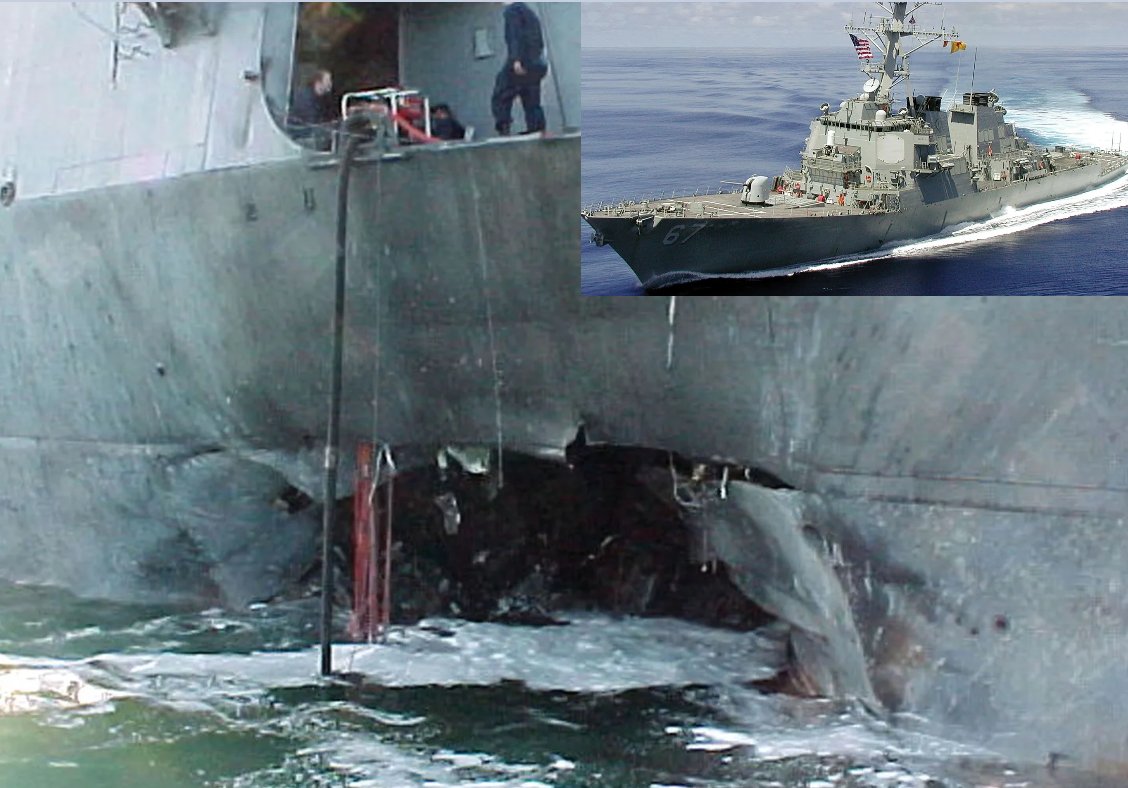
Recall what happened to the USS Cole during a refueling stop in Aden, Yemen.
That kind of attack could now be replicated globally, by swimmer sappers or small boats targeting U.S. vessels. And such strikes may no longer be widely viewed as terrorism, but as justified acts of war.
Once again, a precedent has been set—one that may prove costly in the long run.
They have been using in their dirty games since time immemorial and you folks never learn than to be on the wrong side of histories licking asses of verious western nations.
Compromising to attack your middle fellow middle eastern nations for your supposed western allies never brought you any good reputation among your folks
It’s always one negative news to another.
US arming Kurds against Iraq, arming Kurds against Turkey, Arming Kurds against Syria and now they have supplied guns for you folks to cross into Iran to help destroy as usual.
Have these western nations ever fight for statehood in all this years ?
No! You are just a useful tool with reputations for betrayal in the Middle East.
I hope people learn to fight for Kurdistan on a more honorable route than dining with these western devils
🇺🇸 The U.S. Senate rejected a war powers resolution 52–48 that would have required President Trump to end further military operations in Iran without explicit congressional authorization. The vote, largely along party lines, means the president retains broad authority to continue current actions in the region without formal approval from Congress
A WEBSITE IS NOT A COST; it is an investment in your business’s preserving originality of your catalogue and brand.
In a few years from now, Nigeria will stand and look for original creators, be it tailoring a piece of clothing, or an art exhibition the site can tell a story now
Great empires like the Kemet(Egypt), Roman, Mongol, Byzantine,British were all too powerful to be defeated by external forces. They all exhibit one tell tale common symptom of decline.
The greed to conquer more territories for their resources.
This wears them out, create internal political upheavals and instability that eventually led to the weakening of their military and political might from within.
America unfortunately is heading to such direction.
It is just a matter of time before internal instability destroy this great nation if they fail to elect leaders that are credible enough to caution corporate greed and war of extension resources grabbing when the country already have more than enough.
@NigeriaStories Another brand new weapons for the Fulani terrorists and Bokoharam Nuhu Ribadu's brothers.
They will soon seize it and use it to kill more gullible northern folks
Whoever told things were bad under Abacha is most likely a politician or someone in oil and gas system which was hindered g crippling western sanction.
The country is 100% secured. Salary is stable. Inflation dropped from double digit in 1993 to single digit when he died. Our exchange rate was stable because he strictly maintains using only income from oil sale to finance projects. He did not print recklessly and no international lender wanted to borrow us money when he took over.
I was a young teenage under Abacha so I know very well
NUHU RIBADU’s brother killed a Nigerian Major and 50 of his platoon and no single protest in the North.
You see why I don’t react again when Fulanis kill the northern folks. They value the lives of foreign nations than their own lives.
Let us just have referendum so we can go our separate ways.
We are too ideologically different.