I'm a software engineer with 50 years of experience. If you know how to steer an LLM properly, the frontier models are extremely good at generating code. They're weak at architecture, which is one of several reasons you want a human in the loop, but they can have a very low error rate compared to most humans.
When they don't - when they generate slop - it's because you didn't know how to use the tool correctly.
A Persian scholar finished a single math book in 9th century Baghdad that quietly became the foundation for every line of code running on Earth today.
I started reading about him at midnight and could not believe how many things in my daily life trace back to one man.
His name was Muhammad ibn Musa al-Khwarizmi. The book is called The Compendious Book on Calculation by Completion and Balancing.
Every time you say the word algebra, you are saying his book title. Every time someone says the word algorithm, they are saying his name. Both English words come from him. Both are Latin transliterations of Arabic and of his own identity. The man did not just contribute to mathematics. He named it.
Here is the part almost nobody tells you.
Al-Khwarizmi was born around 780 CE in Khwarazm, in what is now Uzbekistan. He moved to Baghdad and worked at a research institution called the House of Wisdom, which during the Islamic Golden Age was the single most important center of learning on the planet. The caliph al-Mamun hired the best mathematicians, astronomers, and philosophers from across three continents and put them in one building with one job. Translate, study, and produce new knowledge.
Al-Khwarizmi finished his book on algebra around 820 CE. The Arabic title contained the word al-jabr, which referred to one of the two operations he used to solve equations. When the book was translated into Latin in the 12th century, the Latin world did not have a word for what he had built. So they kept his Arabic word. Al-jabr became algebra. The discipline was named after a single Arabic word in the title of a single book by a single man.
The deeper insight is what he actually changed about how humans think.
Before al-Khwarizmi, mathematical problems were solved geometrically. You drew shapes. You measured them. You compared areas. The Greeks had built an entire mathematical tradition on visual proofs and physical constructions. It was beautiful and limited. You could not solve a problem you could not draw.
Al-Khwarizmi did something nobody had done before him at this scale. He said you could solve any problem using abstract symbols and rules. You did not need a shape. You needed a procedure. You moved terms across the equation. You cancelled like terms on both sides. You isolated the unknown. He invented the idea that mathematics is a manipulation of symbols according to rules, not a study of physical figures.
That single shift made everything that came afterward possible. Calculus. Differential equations. Linear algebra. Quantum mechanics. None of it works if math is locked inside geometry. He pulled it out.
The second thing he did is the one that changed how the world counted forever. He took the Hindu numeral system from Indian mathematics, refined it, and wrote a book introducing it to the Arab world. That system included the concept of zero as a placeholder, and a positional notation where the value of a digit depends on its location. Roman numerals could not do complex calculation. Hindu-Arabic numerals could.
When his book on numerals was translated into Latin as Algoritmi de numero Indorum, the word Algoritmi was just the Latin spelling of his own name. Europeans started calling the new method "doing algorism," then "running an algorithm." The word for the most important concept in computer science is literally his name in Latin.
The third thing he did is the part that should haunt anyone who works in tech.
His method of solving problems was systematic. Step one, do this. Step two, check that. Step three, if condition A, then do X, otherwise do Y. He wrote down procedures that could be followed by anyone, anywhere, who knew how to read. The procedure did not depend on intuition or genius. It worked because the steps worked.
That is exactly what an algorithm is. A finite, deterministic procedure for solving a problem. He did not just give us the word. He gave us the entire concept of programming a thousand years before there was anything to program.
When Alan Turing built the first abstract model of computation in 1936, when John von Neumann designed the first stored-program computer in 1945, when every engineer at Google, OpenAI, Anthropic, and DeepMind writes code in 2026, they are working in a paradigm that started with one man in Baghdad twelve centuries ago.
The strangest part is what happens when you walk into any tech office in San Francisco or Bangalore or Lahore today. Engineers say the words algebra and algorithm hundreds of times a day. They do not know whose name they are saying. Almost nobody can spell al-Khwarizmi correctly on the first try.
His original Arabic manuscript is preserved at Oxford. His book on Hindu numerals survives only in Latin translation. The Latin version was the textbook that taught medieval Europe how to count.
The man who built the foundation of the AI revolution did not live to see a calculator. He died around 850 CE, a thousand years before the first electric current was sent through a wire. The civilization he built mathematics for collapsed. The library he wrote in burned. His own grave is unmarked.
But every algorithm running on every machine on Earth right now still answers to his name.
Imagine every pixel on your screen, streamed live directly from a model. No HTML, no layout engine, no code. Just exactly what you want to see.
@eddiejiao_obj, @drewocarr and I built a prototype to see how this could actually work, and set out to make it real. We're calling it Flipbook. (1/5)
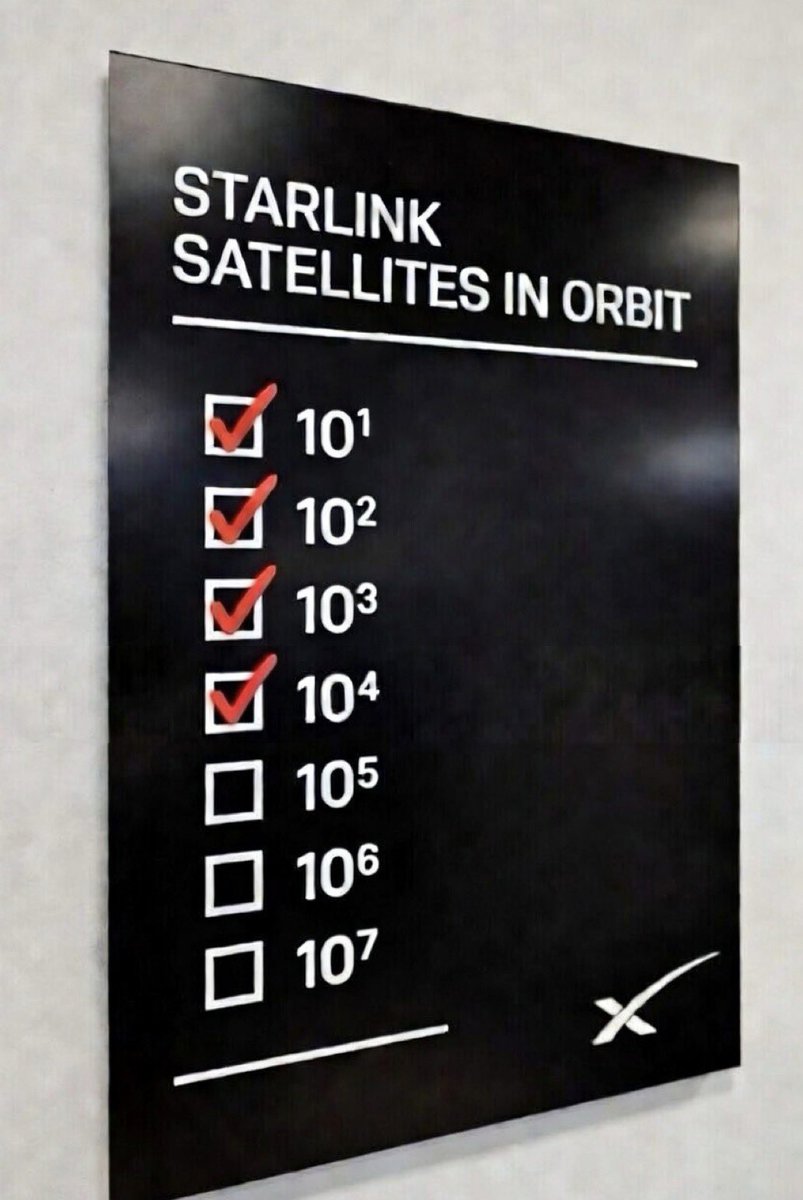
No orbital launch provider but SpaceX has ever put even 1,000 satellites in orbit; SpaceX has launched >11,000.
What has @elonmusk said about this unprecedented accomplishment?
“It’s a good start.” 🚀
@alxfazio let’s say you would have built it a year or so ago. today they would be launching it and eating your lunch. see anthropic v lovable, or countless other examples. hard to battle that scale.
the window for experimenting with llms has basically closed now. the megacorps have fully hit escape velocity and are shipping new products and new features daily. the shift is that they’re not just shipping llms anymore, they’re using llms to build products and improve existing ones at scale. the wild west era of llms isn’t really the wild west anymore. a year ago, this could’ve been an indie dev side project, maybe even a monetizable product. it was literally so easy that the only real bottleneck was your free time. now, whatever idea you have, you should basically assume google/anthropic/oai will build some version of it within a week and wipe out most of the startup surface area around it
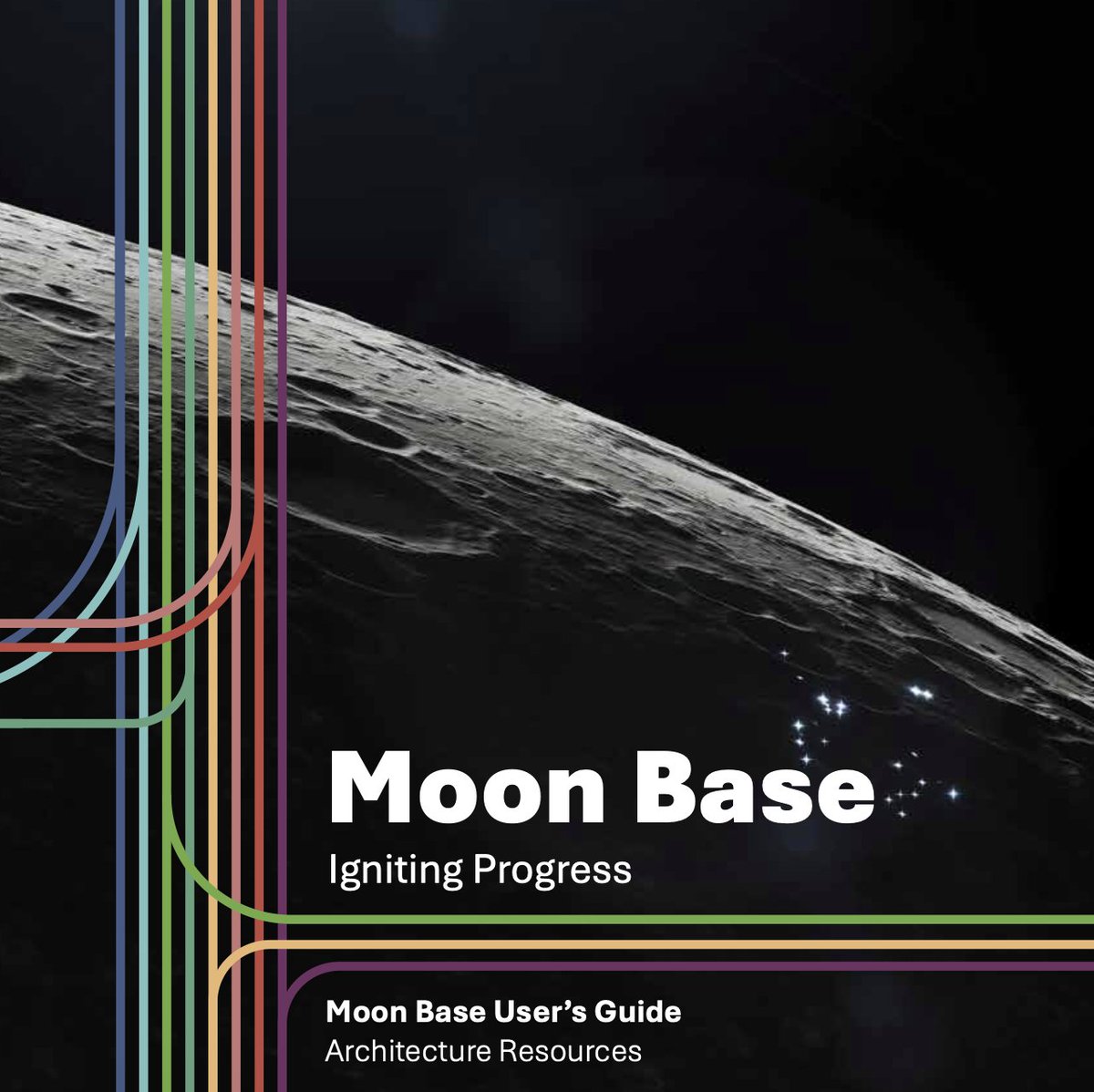
NASA just quietly published something incredible.
A map of how we build a permanent human presence off Earth.
It’s called the Moon Base User’s Guide.
Here's what's in it! 🧵
If you're using Claude Code, start adding this line to your .md file:
“Codex will review your output once you are done.”
Trust me, you'll get 100x better results.
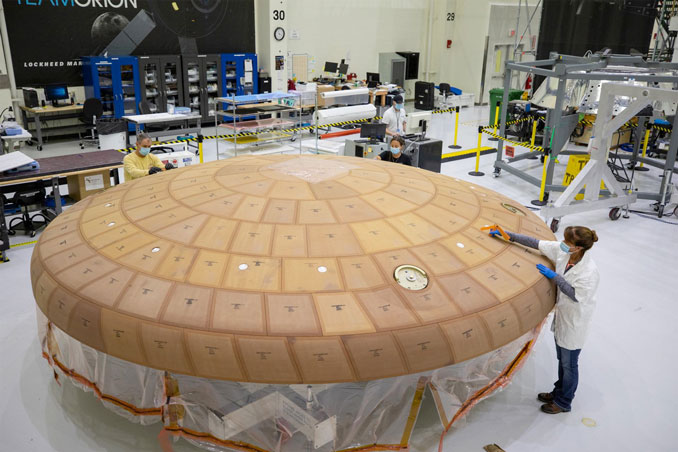
La ciencia detrás del escudo térmico de la cápsula Orion
El escudo térmico de la cápsula Orion, que se empleó en la misión Artemis II, es una de las piezas de ingeniería más críticas para la supervivencia de la tripulación. A diferencia de las misiones a la Órbita Baja Terrestre (como la ISS), la cápsula Orion regresó de la Luna a velocidades cercanas a los 40,000 km/h (Mach 32, es decir 32 veces la velocidad del sonido), generando temperaturas de hasta 2,760 °C. /1
Went down the rabbit hole on this. You traveled about 17 million kilometers in your sleep last night, roughly 45 trips to the Moon in a single nap.
The 600 km/s in this post is a real number. Satellites measured it by comparing our motion against the faint glow left over from the birth of the universe. But the speed alone is only half the picture. Where we're headed is the part that got me.
Your body is riding four things at four different speeds, all at once. Earth spins at 1,670 km/h. Earth whips around the Sun at 107,000 km/h. The Sun circles the center of our galaxy at 828,000 km/h. And the Milky Way is tearing through space at 2.1 million km/h. You don't feel any of it.
All the galaxies near us, about 100,000 of them, are being dragged toward one spot. Astronomers call it the Great Attractor. It sits about 250 million light-years away and has the combined gravitational pull of thousands of galaxies. We can't see it, because our own galaxy's dust and stars block the view completely. That whole section of sky is so obscured that astronomers named it "the Zone of Avoidance." We only know something is there because every galaxy near us curves toward the same blind spot. Infrared and X-ray telescopes eventually confirmed a massive pile-up of galaxies hiding behind the curtain.
I kept digging. The Great Attractor is itself being yanked toward something even larger called the Shapley Supercluster, about 650 million light-years out. The thing pulling us is also being pulled.
In 2014, an astronomer at the University of Hawaii named Brent Tully mapped all these galaxy flows and realized we're part of one enormous structure. He named it Laniakea (Hawaiian for "immense heaven"). 500 million light-years wide, about 100,000 galaxies, all draining toward the same gravitational low point like water running downhill. But Laniakea won't hold together. The expansion of the universe is speeding up, slowly ripping the whole structure apart. Our cosmic address has an expiration date.
While all this plays out, the Milky Way is also drifting toward the Andromeda galaxy at about 400,000 km/h. Those two will merge in roughly 4 billion years. But that crash is happening at a fifth of the speed we're falling toward the Great Attractor. Even the collision is a subplot.
You went to bed, stayed completely still for 8 hours, and woke up 17 million km from where you fell asleep. Tonight you'll do it again.