@SeekingAlpha contributor. Don't skate to where the puck is--skate to where it’s going. Strong opinions, held weakly. Stay agile, my friends. #stayagile
Feb 2024 results are in for the futures-only trading portfolio.
New calendar month record: ⬆️ 69%!
Though at one point on 2/22 it was >100%. Now I just need to smooth out the extreme volatility and drawdowns lol.
Market Wizard Linda Reschke's 12 Technical Trading Rules:
1. Buy the first pullback after a new high. Sell the first rally after a new low.
2. Afternoon strength or weakness should have follow through the next day.
3. The best trading reversals occur in the morning, not the afternoon.
4. The larger the market gaps, the greater the odds of continuation and a trend.
5. The way the market trades around the previous day’s high or low is a good indicator of the market’s technical strength or weakness.
6. The previous day’s high and low are two very important “pivot” points, for this was the definitive point where buyers or sellers came in the day before. Look for the market to either test and reverse off these points, or push through and show signs of continuation.
7. The last hour often tells the truth about how strong a trend truly is. “Smart” money shows their hand in the last hour, continuing to mark positions in their favor. As long as a market is having consecutive strong closes, look for up-trend to continue. The up trend is most likely to end when there is a morning rally first, followed by a weak close.
8. High volume on the close implies continuity the next morning in the direction of the last half-hour. In a strongly trending market, look for resumption of the trend in the last hour.
9. The first hour’s range establishes the framework for the rest of the trading day.
10. A greater percentage of the day’s range occurs in the first hour then was the case in the past, and thus it has become increasingly important to trade aggressively if there are early signs of a strong trend for the day.
11. There are four basic principles of price behavior which have held up over time. Confidence that a type of price action is a true principle is what allows a trader to develop a systematic approach.
The following four principles can be modeled and quantified and hold true for all time frames, all markets. The majority of patterns or systems that have a demonstrable edge are based on one of these four enduring principles of price behavior.
Charles Dow was one of the first to touch on them in his writings. Principle One:
A Trend Has a Higher Probability of Continuation than Reversal Principle Two:
Momentum Precedes Price Principle Three:
Trends End in a Climax Principle Four:
The Market Alternates between Range Expansion and Range Contraction!
12. In the world of money, which is a world shaped by human behavior, nobody has the foggiest notion of what will happen in the future. Mark that word –
Nobody! Thus the successful trader does not base moves on what supposedly will happen but reacts instead to what does happen.
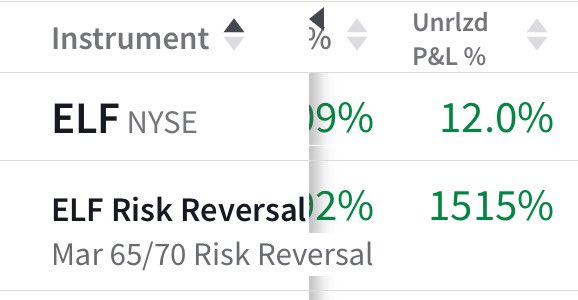
Every once in a while, a great opportunity presents itself, like $ELF opening at dramatically oversold level after slightly disappointing earnings report last night. Time to load up for easy gains!
Jensen Huang built Nvidia to $2.2 trillion.
I watched his interviews and here's what stands out:
Pure Asian dad energy.
"I wish upon you ample doses of pain and suffering."
Going to give this pep talk to my 5-year-old this weekend.
Will let you all know how it goes.
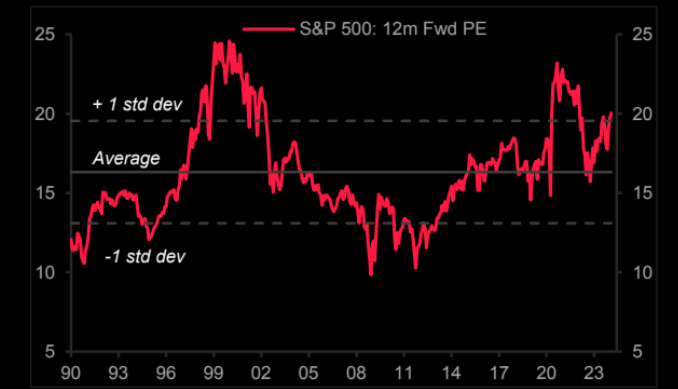
2000 peak vs now:
Tech sector traded at 2x its profit share vs 1.25x now.
SPX was at a 25x forward P/E vs 20x now.
Translation:
S&P 500 would need to reach 6250 to price-in same level of irrational exuberance as 1999-esque - per Soc Gen
@JohnWake So then.. jacking up interest rates crushing home sales numbers was sorta like a #BTC#halving?
Actually, that feels like a weirdly appropriate comparison.. 🤔
@PeterSchiff#Bothsides are guilty here.
All the MAGA-heads I know complain about gas prices being high, and how much better they were in 2020 under Trump.
Me, I just shorted oil futures in early 2020 until they fell below $0, cashed in and bought myself a Tesla. But I digress..
Great instructive on importance of mindset in #REI. I've known several Alices and Bobs.
"Be greedy when others are fearful, and fearful when others are greedy" applies here. I was SO SCARED to buy my first REIs in Nov 2009 amid the carnage, but it was the timing of the century.
The Role of Behavioral Economics in Real Estate
Imagine a scenario with two real estate investors, Alice and Bob. Alice is cautious and methodical, while Bob tends to follow market trends and act on gut feelings. Their contrasting investment styles illustrate the profound impact of behavioral economics in real estate investment.
Alice, aware of cognitive biases, diligently avoids herd behavior. This phenomenon, where investors follow the crowd rather than their independent analysis, can lead to inflated property bubbles or panic selling. She recalls the housing bubble burst of 2008, a stark reminder of the perils of following the herd. Instead of jumping onto the latest hot market trend, Alice conducts her own thorough research, ensuring her decisions are data-driven and rational.
Bob, on the other hand, often falls prey to overconfidence. He believes he has the Midas touch in selecting the best properties and timing the market perfectly. This overconfidence bias can be dangerous, leading to underestimation of risks and overestimation of one's own investment acumen. Bob's investments are sometimes based more on his past successes and less on the current market reality, overlooking critical warning signs.
Both Alice and Bob also experience the availability heuristic, where they make decisions based on information that is readily available or recent in their memory, rather than all relevant data. For instance, Bob might overvalue a property because he recently saw a similar one sell at a high price, ignoring factors like location differences or market changes. Alice, aware of this bias, consciously seeks comprehensive and up-to-date information to make well-rounded decisions.
While data and analysis are crucial, understanding the human element - the tendencies and biases that influence decision-making - is equally important. It's about striking a balance between empirical data and psychological awareness, ensuring that investment decisions are not just smart on paper, but also sound in practice.
In real estate, where decisions often involve significant sums and long-term commitments, falling prey to these biases can have substantial consequences. Therefore, cultivating an awareness of these psychological factors and actively working to mitigate their impact is key to making informed and successful investment decisions.
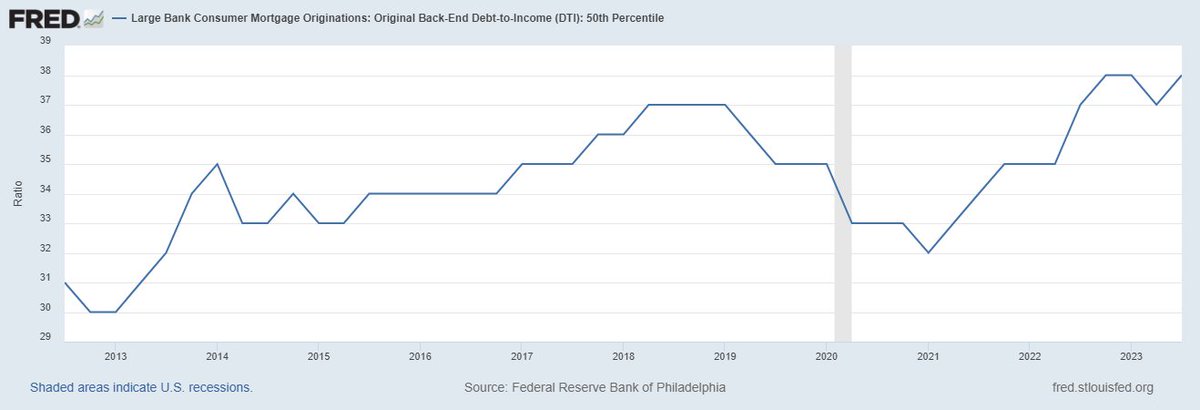
@ReefInsights Yes, housing is really expensive right now. But buyers earning the median income IRL don't buy the median priced home. Macro≠micro here. The metric you should be reporting, reflecting real life experiences of *ACTUAL* buyers, is much more moderate. https://t.co/td2mGAADzt
@ReefInsights And yet, in the US unlike in Canada and elsewhere, virtually all current day borrowers obtain fixed-rate mortgages. As such, this is a supposition only. Doesn't reflect reality on the ground. In fact, nearly 40% of homes have $0 mortgage. A record high. https://t.co/3BWTfTfTrX