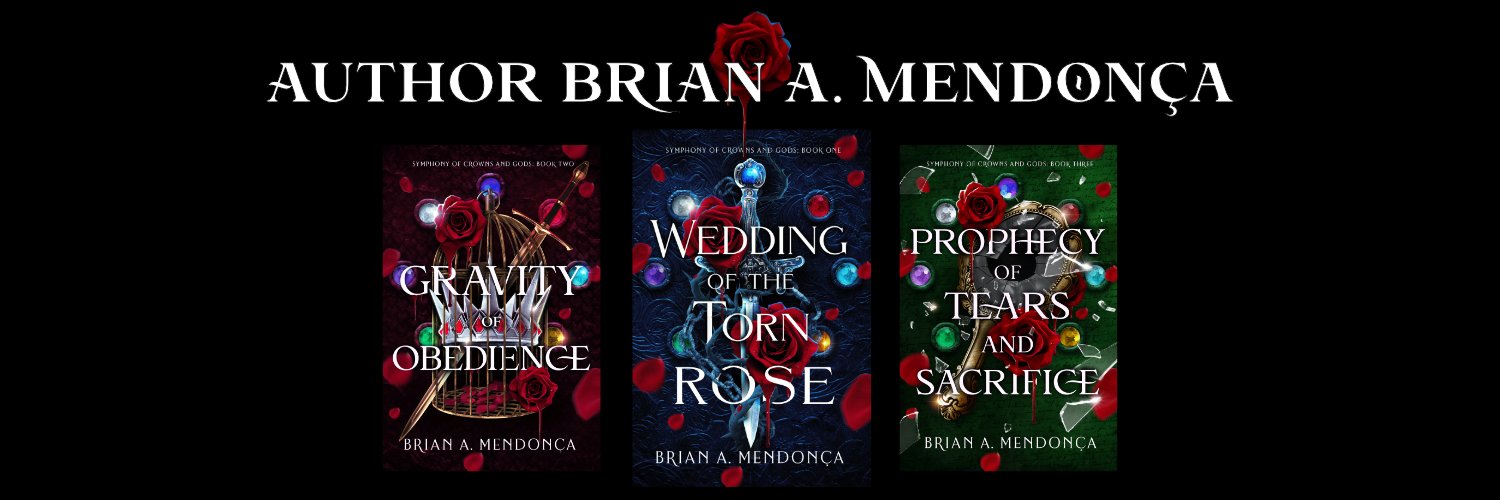
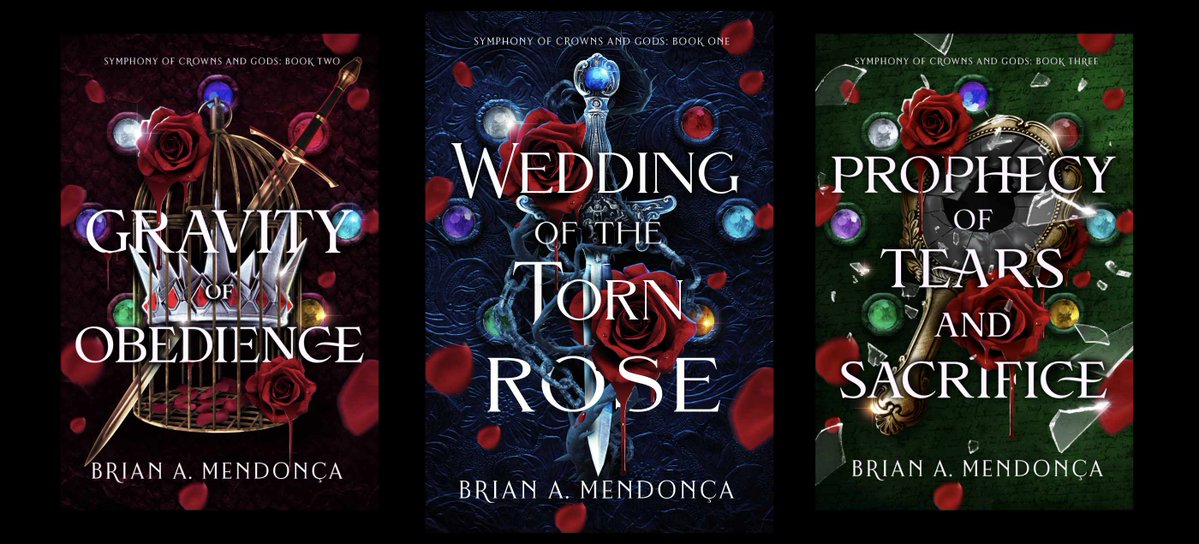
Thank you to all my readers for loving the magical Lucidian characters who made their debuts in Prophecy of Tears and Sacrifice!
I’m thrilled to announce a brand-new dark academia prequel series set in the same Symphony of Crowns and Gods universe is in the works.
Here’s what you can expect:
• Setting: A psychologically manipulative, mysterious academy where young Lucidians train to harness their powers to become battle mages.
• Vibe: Darker Academia energy, where toxic perfectionism is mandatory for survival.
• Focus: Follows a Mind Mage heroine navigating what it means to commit to a personal identity, embrace both darkness and light, and confront her own fears over her growing manipulation abilities.
• Progress: Currently at 41,000 words with a 122,000-word target (similar in scope to my earlier books).
• Timeline: Set ~45 years before the Wedding of the Torn Rose, right as a magical civil war erupts.
• Reading Order: It's standalone-friendly! Read this series or the Symphony of Crowns and Gods series first—just expect subtle cross-universe nods and character cameos.
• Writing Schedule: I’m balancing writing this alongside Thrones of Deception and Dragons. Thanks for your patience as I work on both novels!
This dark academia series and book title are still in development, but I’ll share them very soon. In the meantime, check out my other series at your favorite bookish locations.
In the meantime, Wedding of the Torn Rose is a great place to start if you like your sword and sorcery books to have more than a hint of dark magic!
Data is power and collecting data and associated logs takes a lot of space. SSD’s are best for processing in parallel and spinning drives are best for archival or slow writes and reads, both of which are necessary for building an AI model or storing different draft versions of them.
I knew I was missing something!
Indeed, being the right category should be helping you, not working against you. If only Amazon’s AI could explain what is/isn’t happening, right?
Regardless, I hope whatever changes you make to the metadata help you find your readers and get you a boost in exposure.
Another thing about AI writing is that while a single instance of AI writing on a topic may be fine, any situation where lots of people use AI to respond to a particular prompt (comments sections, homework, admissions essays) the similarities among responses is tediously obvious.
Indie authors are genuinely incredible. Watching y’all chase your stories, build your worlds, and keep showing up for your dreams is so inspiring. I’m endlessly proud of you. ♥️
@TolentinoTeach Back in my day, people cheated by putting notes into their TI-83+ calculators and by that point, only approved calculator models were allowed for exams.
I could give you hundreds of reasons to read my book series right now, but today’s pitch is this:
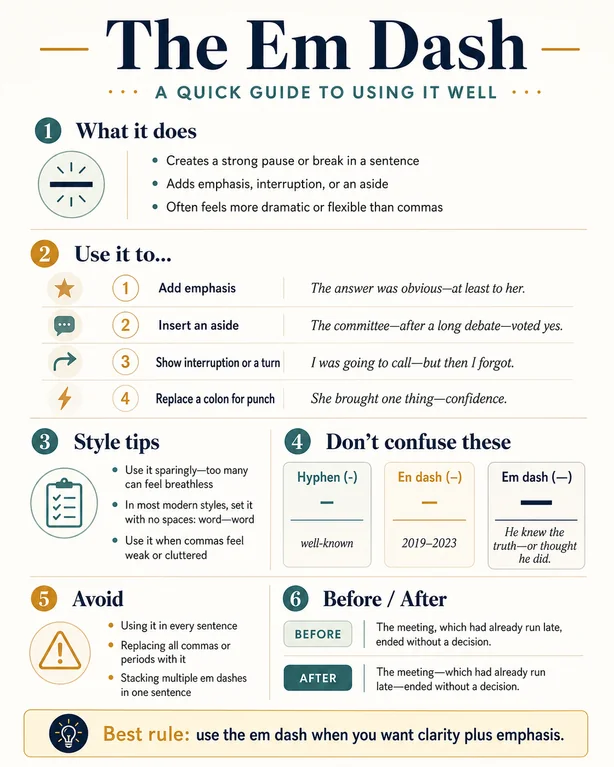
If you obsessively love em dashes, we’ll get along just fine.
Here’s one to get started: —
And another one: —
And another one: —
Okay, good! So you really like em dashes!
Now, keep following this trail of em dashes to your nearest book store and find a book named Wedding of the Torn Rose there. Get it, then turn to page 1.
It will be like opening a box of cookies, but with em dashes inside. What could possibly go wrong? You will love the series and how unhinged it becomes with each new chapter.
And here’s an extra em dash for the road just because I like you: —
Have a nice day!
@DWARussell22 Hoping George Lucas or someone else who cares for the EU vision of the franchise will be able to pick up the rights to Star Wars at a good price after this.
Thank you to all my readers for loving the magical Lucidian characters who made their debuts in Prophecy of Tears and Sacrifice!
I’m thrilled to announce a brand-new dark academia prequel series set in the same Symphony of Crowns and Gods universe is in the works.
Here’s what you can expect:
• Setting: A psychologically manipulative, mysterious academy where young Lucidians train to harness their powers to become battle mages.
• Vibe: Darker Academia energy, where toxic perfectionism is mandatory for survival.
• Focus: Follows a Mind Mage heroine navigating what it means to commit to a personal identity, embrace both darkness and light, and confront her own fears over her growing manipulation abilities.
• Progress: Currently at 41,000 words with a 122,000-word target (similar in scope to my earlier books).
• Timeline: Set ~45 years before the Wedding of the Torn Rose, right as a magical civil war erupts.
• Reading Order: It's standalone-friendly! Read this series or the Symphony of Crowns and Gods series first—just expect subtle cross-universe nods and character cameos.
• Writing Schedule: I’m balancing writing this alongside Thrones of Deception and Dragons. Thanks for your patience as I work on both novels!
This dark academia series and book title are still in development, but I’ll share them very soon. In the meantime, check out my other series at your favorite bookish locations.
In the meantime, Wedding of the Torn Rose is a great place to start if you like your sword and sorcery books to have more than a hint of dark magic!
Thank you to all my readers for loving the magical Lucidian characters who made their debuts in Prophecy of Tears and Sacrifice!
I’m thrilled to announce a brand-new dark academia prequel series set in the same Symphony of Crowns and Gods universe is in the works.
Here’s what you can expect:
• Setting: A psychologically manipulative, mysterious academy where young Lucidians train to harness their powers to become battle mages.
• Vibe: Darker Academia energy, where toxic perfectionism is mandatory for survival.
• Focus: Follows a Mind Mage heroine navigating what it means to commit to a personal identity, embrace both darkness and light, and confront her own fears over her growing manipulation abilities.
• Progress: Currently at 41,000 words with a 122,000-word target (similar in scope to my earlier books).
• Timeline: Set ~45 years before the Wedding of the Torn Rose, right as a magical civil war erupts.
• Reading Order: It's standalone-friendly! Read this series or the Symphony of Crowns and Gods series first—just expect subtle cross-universe nods and character cameos.
• Writing Schedule: I’m balancing writing this alongside Thrones of Deception and Dragons. Thanks for your patience as I work on both novels!
This dark academia series and book title are still in development, but I’ll share them very soon. In the meantime, check out my other series at your favorite bookish locations.
In the meantime, Wedding of the Torn Rose is a great place to start if you like your sword and sorcery books to have more than a hint of dark magic!
My short answer on AI generated books:
Dead internet theory is becoming more of a reality. As writers, if lots of people are pumping out AI-generated books and artwork, then humans as consumers will likely fall into these camps:
1. If the reader’s perception of AI is bad: they’ll tune it all out at best and focus on consuming works they believe are human-created.
2. If the reader’s perception of AI is good or they don’t care if it’s AI-generated: then at that point, I suspect MORE authors will use AI, even those who don’t need to.
In either case, there will be a flood of new books in an already crowded market, and the human writers who make their own books the traditional way won’t be able to produce the same amount of content. The algorithms typically better reward creators who pump out content consistently and frequently. Trad writers will have a much more difficult time finding an audience and competing for revenue share in programs such as Amazon KDP.
My long answer on this topic:
As a programmer who uses AI to create and manage software every day, I’m excited to see just how good the AI models might become. As a writer though, I don’t think having AI writing books is good for the market as a whole.
The difference stems from what the ultimate purpose the AI is being used for: augmenting already well-honed skills for time-saving purposes versus filling the gap in skills one might not have or refined at all. This can be applicable in both fields, but in nuanced ways.
For software; AI is a time saver for code analysis. It works for me because I can quickly verify whether it’s telling me the truth because I already fully wrote and understand the codebase and concepts within it. Vibe coding can be great if you are already deeply familiar with the language and can identify well-designed code from badly designed code. Spoiler: even on the best models, fixing the work is frequently necessary, even when the code technically works.
On the creativity side for books, AI can be helpful for basic editing and identifying common problems with a manuscript. However, like with code-based analysis, all AI models can confidently go off in a completely wrong direction and miss mistakes. Experienced writers will be able to note when an AI is doing something correctly or not. Others who are amateurs in the writing industry won’t be able to reliably tell when an AI model is doing something right, wrong, or cheesy. Even as models become more powerful, human editors will be able to pick up on this and see a manuscript completely different than an AI model due to the inherent nature (and flaws in this realm) from the statistical patterns AI models are made of.
For artwork; I am not qualified to speak on this much because my skills and experience are limited, but what I do know is that real artists can see the flaws in AI-generated artwork. Also, like the crowded market problems I mentioned above, human artists will also be buried by the quantity of new “artwork” alone. Example; see places like Fiverr where it used to be easy to find a human artist.
AI use can have its moral and immoral uses, relative to the person, but it can potentially make a lot of pretenders out of it.
Ultimately, using AI comes down to the question of whether you are being true to yourself and whether you want to be true to others as well. How much one relies on AI and in what ways they use it matters more than whether AI was involved at all.
If someone presents a work under the presumption of “I made this!”, can they honestly say they did? Again, the answer is 100% relative to the person, but once AI becomes involved, the consumer has a right to a different opinion and then the truth can become relative as well.
My short answer on AI generated books:
Dead internet theory is becoming more of a reality. As writers, if lots of people are pumping out AI-generated books and artwork, then humans as consumers will likely fall into these camps:
1. If the reader’s perception of AI is bad: they’ll tune it all out at best and focus on consuming works they believe are human-created.
2. If the reader’s perception of AI is good or they don’t care if it’s AI-generated: then at that point, I suspect MORE authors will use AI, even those who don’t need to.
In either case, there will be a flood of new books in an already crowded market, and the human writers who make their own books the traditional way won’t be able to produce the same amount of content. The algorithms typically better reward creators who pump out content consistently and frequently. Trad writers will have a much more difficult time finding an audience and competing for revenue share in programs such as Amazon KDP.
My long answer on this topic:
As a programmer who uses AI to create and manage software every day, I’m excited to see just how good the AI models might become. As a writer though, I don’t think having AI writing books is good for the market as a whole.
The difference stems from what the ultimate purpose the AI is being used for: augmenting already well-honed skills for time-saving purposes versus filling the gap in skills one might not have or refined at all. This can be applicable in both fields, but in nuanced ways.
For software; AI is a time saver for code analysis. It works for me because I can quickly verify whether it’s telling me the truth because I already fully wrote and understand the codebase and concepts within it. Vibe coding can be great if you are already deeply familiar with the language and can identify well-designed code from badly designed code. Spoiler: even on the best models, fixing the work is frequently necessary, even when the code technically works.
On the creativity side for books, AI can be helpful for basic editing and identifying common problems with a manuscript. However, like with code-based analysis, all AI models can confidently go off in a completely wrong direction and miss mistakes. Experienced writers will be able to note when an AI is doing something correctly or not. Others who are amateurs in the writing industry won’t be able to reliably tell when an AI model is doing something right, wrong, or cheesy. Even as models become more powerful, human editors will be able to pick up on this and see a manuscript completely different than an AI model due to the inherent nature (and flaws in this realm) from the statistical patterns AI models are made of.
For artwork; I am not qualified to speak on this much because my skills and experience are limited, but what I do know is that real artists can see the flaws in AI-generated artwork. Also, like the crowded market problems I mentioned above, human artists will also be buried by the quantity of new “artwork” alone. Example; see places like Fiverr where it used to be easy to find a human artist.
AI use can have its moral and immoral uses, relative to the person, but it can potentially make a lot of pretenders out of it.
Ultimately, using AI comes down to the question of whether you are being true to yourself and whether you want to be true to others as well. How much one relies on AI and in what ways they use it matters more than whether AI was involved at all.
If someone presents a work under the presumption of “I made this!”, can they honestly say they did? Again, the answer is 100% relative to the person, but once AI becomes involved, the consumer has a right to a different opinion and then the truth can become relative as well.
@Lyons_Pen I dont understand the fear of AI, but I recognize it. Back in my day, writers threw shade on those who chose to use the new-fangled word processor, swearing it would corrupt the art.
Fear generally comes from insecurity. What are you afraid of?