Letting go of someone is like carrying a heavy suitcase on a journey you’re embarking on. At first, the weight does not bother you, you pull it behind proudly because everything inside is important to you. Of course you spent valuable time curating the contents of this suitcase.
Someone who once knew everything about you, who could tell your biggest fear or the reason behind your mood swings, the person who knows exactly how to make you smile, can suddenly turn into a stranger that you visit in your thoughts more than in real life. Quite terrifying.
The problem with having too much, be it clothes, cars, or even pets, is that, eventually, you start serving the very things that ought to be serving you.
A MESSAGE OF GRATITUDE, REFLECTION AND HEALING
People of Tooro, friends of Tooro, and all those who stood with us,
As we come to the end of one of the most painful chapters in the recent history of our Kingdom, I wish, on behalf of the Tooro Kingdom administration and on my own behalf, to express our profound gratitude to everyone who stood with us and supported the final journey and dignified send-off of our beloved King, His Majesty Omukama Oyo Nyimba Kabamba Iguru Rukidi IV.
Our responsibility during these difficult days was clear: whatever else was happening around us, we had to see this journey through with the dignity, respect and honour befitting our King. We had to put aside our differences, manage our grief and work together to ensure that His Majesty was laid to rest in a manner worthy of the Crown he carried and the people he served.
In a special way, I wish to recognise and thank Prince Jonathan Bala, His Majesty’s Principal Private Secretary, for his loyalty, dedication and service to our King. Throughout this extraordinarily difficult period, his commitment to His Majesty remained steadfast. He carried an enormous personal and official responsibility, often under very difficult circumstances, and continued to serve with dedication until the very end. He deserves our sincere acknowledgement and gratitude.
I thank His Excellency the President, General Muhoozi, the Royal Family, the Government of Uganda, religious and cultural leaders, the organising committees, the media, our Kingdom leadership, clans and Masaza, volunteers, businesses and partners, the people of Tooro, Ugandans across the country, the diaspora and friends from beyond our borders. Whether you contributed your time, resources, professional expertise, food, transport, prayers, presence or simply stood with us in solidarity, you became part of His Majesty’s final journey. We are deeply grateful.
We recognise that everything may not have been done perfectly. This was an unprecedented moment for our generation. We were mourning our King while simultaneously carrying the enormous responsibility of organising his final journey. Emotions were understandably high, decisions sometimes had to be made under extraordinary pressure, and grief affected us all in different ways.
Where we fell short of expectations, where communication could have been better, or where anyone felt disappointed by our actions or omissions, I offer my sincere apologies. These shortcomings should never be mistaken for a lack of respect or commitment. We were a people grieving an immense loss while doing everything within our ability to honour our King.
Now that we have laid His Majesty to rest, another journey begins.
This must be a period of learning, refocusing, rebuilding and healing.
We must learn from what these difficult weeks revealed about our institutions and ourselves. We must strengthen what worked, honestly address what did not, rebuild trust where it has been strained and allow ourselves, individually and collectively, the space to heal.
There will be difficult conversations ahead. There will be institutional questions that require wisdom and clarity. There may be different opinions about the way forward. But our differences must never become greater than the Kingdom we all belong to.
This is not the time for winners and losers. It is the time for responsible leadership, humility and reconciliation.
His Majesty’s passing should remind us that positions are temporary, but Tooro remains. Personal ambitions pass, disagreements pass and generations pass, but the responsibility of preserving this Kingdom for those who come after us endures.
Our guiding principle in the days ahead must therefore remain simple:
Tooro comes first.
Above personalities. Above positions. Above disagreements. Above individual interests.
May we find the wisdom to learn, the humility to reconcile, the courage to rebuild and the strength to move forward together.
@ObukamaBwaTooro
The average man is too honest in places where he should be strategic, and too dishonest in places where he should be accountable. He reveals his plans to strangers, but lies to himself about his habits. Power begins when you reverse this. Be private with the world. Be mercilessly honest with yourself.
When you reconcile with someone, make sure you are honest about what you said to or around others while you were hurt and upset. The older I get, I am learning to really just be quiet when you are offended, because IF the connection was divine it will make its way back around again. Integrity should be a priority to the believer. We’re all growing. ❤️🙏🏾
Your circle of friends should push you closer to your purpose, not pull you back into patterns you've been praying to break. They should celebrate your growth, correct you with love, and remind you who you are when you forget. If the people around you don't challenge you to be better and closer to God, it might be time to rethink who has access to you.
Things are falling apart in Psalm 46. Nations are raging. Kingdoms tottering. The earth gives way. The mountains fall into the heart of the sea.
If there were ever a time to explode with action and tackle this spinning world, it would be now. Hurry up and do something!
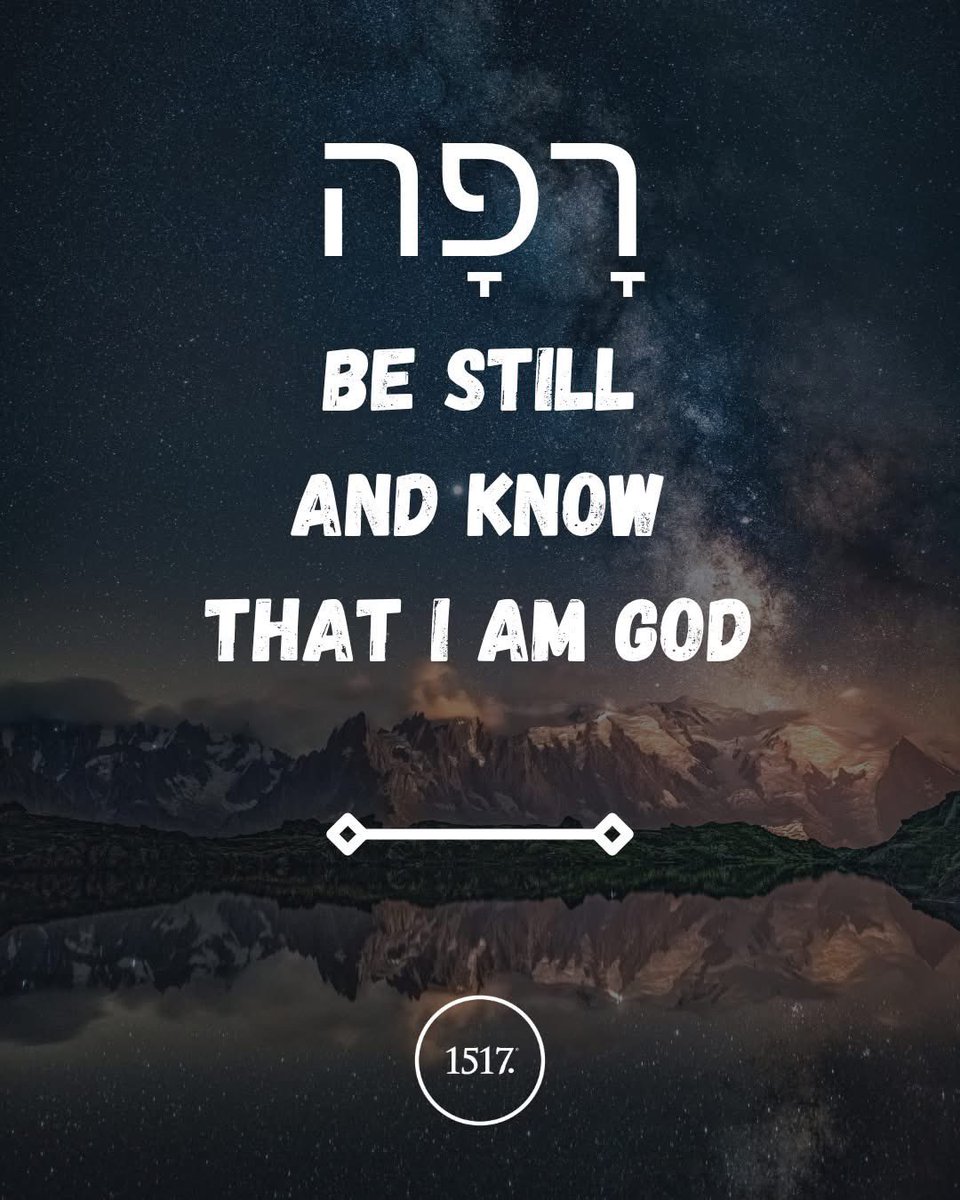
God, however, has other plans. He says, “Rapha, and know that I am God.”
The verb, rapha [רָפָה], means to let something grow slack or hang down (like your hands). Thus, in this verse, it’s translated “Be still” (ESV), “cease striving” (NASB), or “desist” (JPS).
Colloquially, we might say, “Relax.”
“Yes,” God is saying, “I know that your lives are in a tailspin. All around you, turmoil threatens. But I am your refuge and strength, a very present help in trouble. I am with you. I am your fortress. This current crisis is not my first rodeo. I’ve been handling these for my people from the beginning of time. So, relax. Rapha.
And know this: I am God—and not just God, but your God. The God who, now and always, is for you in Jesus Christ."
_____
For more Hebrew treasures like this, see my book, Untamed Prayers: 365 Daily Devotions on Christ in the Book of Psalms. https://t.co/OfMeSOPBZ7
For years, I misunderstood what worship was all about.
I assumed that the primary reason Christians gather on Sunday morning was to serve God. We come to praise him, thank him, sing to him, pray to him, and offer him our worship. In other words, I thought the service was chiefly about what we give to God.
Then Scripture turned that idea upside down.
The primary reason we gather is not to serve God, but so that God may serve us.
In today's reading in Bible in One Year, in Psalm 50, God asks, "If I were hungry, I would not tell you, for the world and its fullness are mine. Do I eat the flesh of bulls or drink the blood of goats?" (Ps. 50:12-13). God lacks nothing. He is not “hungry” for our offerings or praise. Everything already belongs to him.
We, however, lack everything. We need forgiveness. We need life, mercy, salvation.
And those are exactly the gifts the Father delights to give us in his Son.
Jesus himself said, "The Son of Man came not to be served but to serve, and to give his life as a ransom for many" (Mark 10:45). That is the pattern of Christian worship. The risen Christ gathers his people so that he may continue serving them through his gifts. He speaks his forgiveness. He proclaims his Word. He washes through Baptism. He feeds us with his body and blood in the Lord's Supper. Through these means of grace, Christ gives us himself and all the blessings he won for us by his death and resurrection.
Only then do we respond. Our hymns, prayers, offerings, and thanksgiving are not payments rendered to God. They are grateful responses to the One who has first served us.
So the next time you gather for worship, remember why you are there. You are there because your heavenly Father delights to give. You are there because the Son of God still comes to serve his people. And you are there because the Holy Spirit continues to deliver all the gifts of Christ to needy sinners.
God gives. We receive. Then, with thankful hearts, we praise the Giver of every good and perfect gift.
I am usually out the door of our home at 5:45 or 6:00 in the morning to stretch my legs and clear my head. I cover four or five miles, during which I listen to my Bible chapters for the day, pray my Psalms and other prayers, and finish the walk with whatever audiobook I'm listening to (Cormac McCarthy's Cities of the Plain at the moment).
This morning, about halfway through my walk, I had finished my prayers and was thinking about hope. I do that a lot these days. Maybe it's a byproduct of my graying beard. Maybe it has something to do with certain graves in which large chunks of my heart remain buried. Whatever the reason, you might say Hope has become my middle theological name.
Chad Hope Bird. Nice to meet you.
Many years ago, I noticed that the Hebrew verb for trust (בטח) is frequently translated in the Septuagint by the Greek verb hope (ἐλπίζω). At first, it struck me as a curious oddity. Anymore, I realize what a ginormous truth that is.
This morning, I stopped on my walk and wrote down these words that came into my mind: "What is hope? The hand of faith that reaches into the future and clings to the promises of God."
How's that?
Hope is trust, and trust is hope. The two have become one. And what God has joined together....
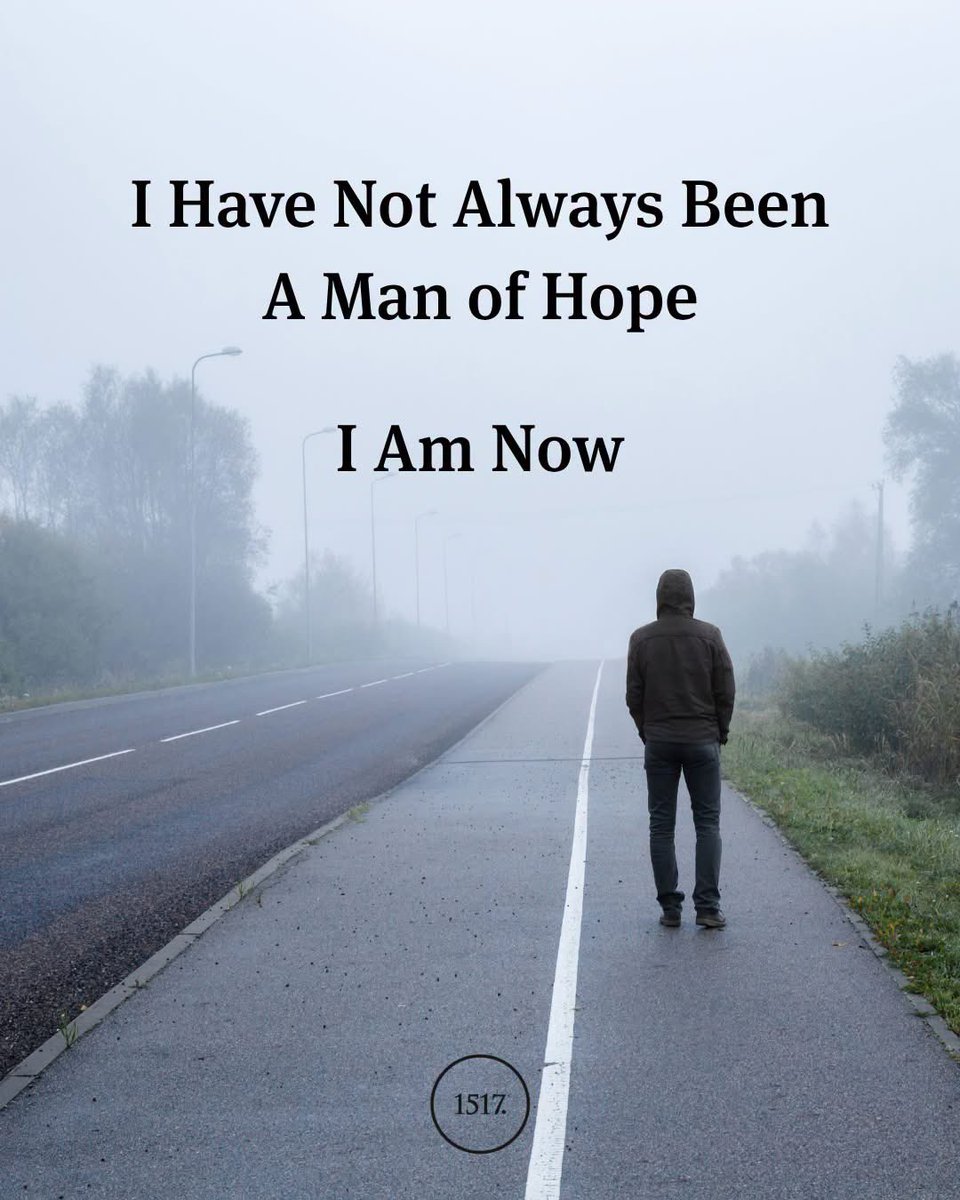
I have not always been a man of hope, but the fissures that have formed in my weathered heart, and the dark clouds that growl and rain hot tears, have made me one.
Hope is that confident smile that stares into the glowing eyes in the darkness, into the fangs that seek to devour, and smiles and laughs at the foes crouched in the shadows because it knows the Lamb has won. And soon, oh so soon, the hand that has reached into the future and clung to the promises of God will see the victory of the resurrection in real time.
I'm ready. Come Lord Jesus.
When you’re healthy and resourced, your mind plays offense. You lean into curiosity, wit, abstraction, irony. When you’re sick, depressed or depleted, the mind plays defense. It retreats into meaning, memory, mortality, tenderness. I suppose these tweets tell me which is which.
Some might say this thing that is eating me up and has in fact eaten me up “is just in my head,” as if that makes it less real. Maybe they’re right. But what’s more real than the place where reality is processed?
Major cheat code for life: Make peace with being unimpressive to the outside world. Drive the normal car. Wear the simple clothes. Live below your means. Stay in the committed relationship. The ability to look ordinary while building an extraordinary life is wildly underrated.
A buddy said something profound the other day: That when we are old, we may be accused of failing if we don't realize our dreams, we could be faulted for poverty if we aren't rich; but we should never be accused of not having tried. And we should have evidence for it.
My oldest son called me at midnight. He works for the FBI: “Turn everything off. Go to the attic, lock the door, and don’t tell your son-in-law.”
I whispered, “You’re scaring me.” He shouted, “Just do it!” I obeyed.
Through a crack in the attic floor, I saw something that made my blood run cold...
Underrated life advice: Laugh more. At yourself. At life. At the absurdity of it all. The people who take themselves the least seriously tend to enjoy life the most. Lighten up. Most of what worries you today won't matter in a month.
The unfortunate truth is life will be full of really painful experiences. Life altering things that change who you are and how you see things and it will dictate how you view the world and navigate in it. There is a difference though between how people respond to it.
Half will take their experience and be sure to live their life despite what has happened. Half will walk forward trying to do better than what has happened to them. Half will bring sunshine where they despite being the person who has seen the most darkness. It’s a resilience they have only life can teach, a positivity in life that can only be achieved through practice. These people are some of the strongest people you will ever come across. They live with the perspective what happened wasn’t my fault but healing will be my responsibility.
The other half of people will experience something really painful and they will hold it so tightly like it just happened yesterday. They will walk around with this perspective that they have had it the worst and no one will understand. And they will make it everyone’s problem the pain they carry and the unhealing they don’t want to happen because they have defined themselves based on their experience. When something bad happens these people will use it as an excuse to behave badly. These people are always being a victim.
The only difference between these two kinds of people is who they choose to be.
A lot of adults are walking around angry, hurt, and disappointed over conversations they never had. Instead of saying what’s wrong, they drop hints, pull away, change their energy, and expect people to figure it out. The truth is nobody can read your mind. If someone hurt you, tell them. If you’re upset, say it. If you need something, communicate it. The guessing games and unspoken expectations are ruining more relationships than the actual problem ever did.
And if someone is upset with you but refuses to tell you why, that is not your responsibility to carry. You are not obligated to decode moods, chase answers, or pull words out of people. Healthy relationships require communication. Not assumptions. Not mind reading. Just two adults willing to be honest about how they feel.
There’s a kind of peace that comes from no longer needing to be understood by everyone. But there’s also a kind of loneliness. And it’s hard to tell them apart sometimes.
I’ll remove myself before I allow anger to consume me ever again . I like to love. I like to laugh . I like to be happy. So if I gotta distance myself to keep things that way, I will.