In 1990, on the eve of the dissolution of the Socialist Federal Republic of Yugoslavia (SFRJ), the famed Serbian historian Vladimir Dedijer, along with Antun Miletic, published a nearly 900 page tome entitled "The Genocide of the Muslims, 1941-1945".
A widely censored topic for much of the duration of the Yugoslav communist regime, this book was the first major treatment of the systematic killings and expulsions of Bosnia and Herzegovina's Bosniaks, i.e. 'Muslims', during World War II by Serb fascist collaborationist forces; the so-called Chetnik forces, in particular those affiliated with Nazi-collaborator Draza Mihalovic. A genocide in which contemporary, mainstream scholarly accounts estimate circa 30,000-60,000 Bosniak civilians were murdered.
What is striking about their book, as evidenced by my translated excerpt below, is that they had no qualms about both clearly identifying the Chetnik campaign against the Bosniak population as constituting genocide and noting that genocide is not merely the act of killing but also, inter alia, forced expulsions, which likewise featured prominently in the Serb nationalist genocidal campaign against the Bosniaks in the 1990s.
In other words, a book written 36 years ago about a Serb nationalist genocide against the Bosniak community which occurred more than 80 years ago more accurately characterizes the events in question than much of the Serbian academy today has been able to muster about Milosevic-Karadzic's genocide against the Bosniak people in the 1990s.
***
"In the Second World War a genocide was committed against Muslims [in Bosnia and Herzegovina] by the movement and armed forces of army general and Minister of the Armed Forces of the Yugoslav monarchist government in London Dragoljub Mihailovic. In these atrocities there is clear genocidal intent to destroy Muslims as such…[the introduction contains] many documents by leading idealogues of this movement in which the need to cleanse particular portions of our lands of Muslims, either by physical destruction or expulsion to different territories which will not fall into the domains of a so-called Greater Serbia, is openly discussed.
From the perspective of conceptualizations of the genocide phenomenon, it is clear that these atrocities fit in that category. Because genocidal occurrences are not merely the destruction of a people, an ethnic group, members of a race or religious community, but one of the more important characteristics of genocide is also the expulsion of people from their ancestral hearths and their transfer to other territories within a state, or another state entirely. Draza Mihailovic’s chief ideologues, as we shall see in the documents, anticipated the expulsion of [Bosnian] Muslims to Albania, even to Turkey." (Genocid nad Muslimanima, 1941-1945, pg. xx).
Beba Amila Džaferagić, ima pet mjeseci.
Prve zrake sunca, prvi vazduh, prvi majčin dodir, sve je stekla u selu Biljani kod Ključa.
A onda su prije 33 godine, 10. jula '92 u selo ušli četnici. Pobili su 264 mjestana.
A beba Amila?
Pronađena je u jami, mrtva u zagrijaju ubijene majke. Čvrsto je držala flašicu s mlijekom.
Ubijena je metkom u glavu iz neposredne blizine. Metak u glavu bebi, možete li shvatiti ramjere monstruoznosti te?
U zapisniku stoji:
“Amila Džaferagić, kći Šemse, rođena 29. 02. 1992. godine u Biljanima – Ključ, prepoznata po ocu Šemsi. Odjeća: Dječija benkica bijela na kopčanje sa tri dugmeta, dječije gegice sive, pamučne bijele duge gaće, štramplice dječije bijele, melni gaćice i pamučna bijela pelena unutra... Nađeni predmeti: Jedna bijela i jedna plava dječija cucla-duda...Likvidirana pucnjem u glavu.”
Svijet je šutio. Tri godine poslije, gotovo u dan, srebrenički genocid!
A u Biljanima kod Ključa, temelji genocidni su udareni na današnji dan.
Pamtiš li svijete bebu Amilu iz Biljana???
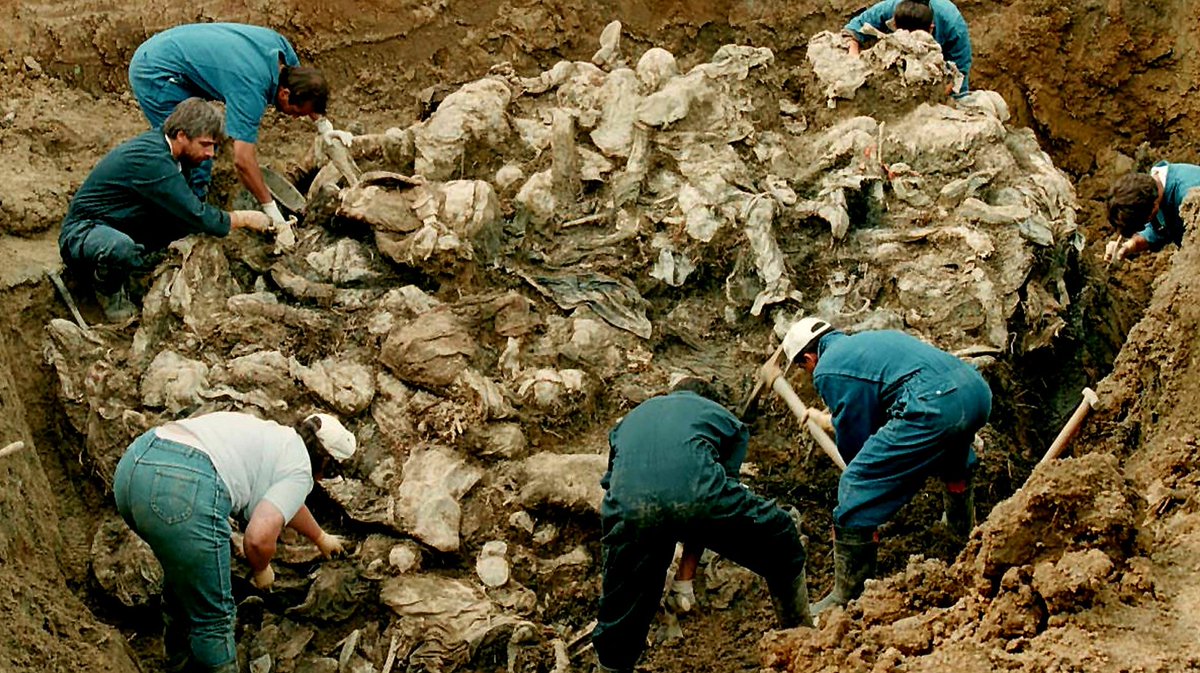
Od oko 1.000 otkrivenih masovnih grobnica u BiH, ubjedljivo najveći broj nalazi se na teritoriji Republike Srpske.
Geografija i razmjere ovih stratišta govore o sistemskom zataškavanju zločina:
▪️ Prijedorska regija: Samo na ovom području otkriveno je preko 400 masovnih grobnica, uključujući Tomašicu — najveću na Balkanu.
▪️ Podrinje (Srebrenica): Žrtve genocida ekshumirane su iz čak 93 masovne grobnice. Većina su sekundarne, što znači da su tijela bagerima prekopavana i premještana kako bi se sakrila istina.
▪️ Ostala masovna stratišta locirana su širom RS-a (Foča, Višegrad, Kalinovik...).
Do danas je ekshumirano i identifikovano preko 25.000 žrtava.
Za više od 7.000 osoba u BiH se još uvijek traga.
#BiH #Sjećanje #Nestali
@aleksandarCBL@csumner70 Pička jedina. KRAVICA SEP 1991. Prvo ste ubili, a onda mislili da ćete biti pošteđeni usred rata. Kao da vi četnici nikada niste nikoga ubili za vrijeme Bajrama ili Ramazana.
Republika Srpska se nikada neće otcijepiti od Bosne i Hercegovine. To nije samo ustavna činjenica, već i moralna obaveza. Braniti Bosnu znači braniti neprekinuti historijski kontinuitet bošnjačkog naroda, naroda koji je preživio carstva, podjele, opsade, etnička čišćenja i genocid. Ne pozivam na brisanje Srba koji žive u Republici Srpskoj. Pozivam svakog čovjeka savjesti da odbaci ideologiju koja je pokušala izbrisati samu Bosnu.
Srebrenica se nadvija nad ovom zemljom kao vječna optužnica. Ona je glas koji odbija šutnju, rana koja odbija zaborav i zahtjev da pravda više nikada ne poklekne pred nacionalizmom zaogrnutim svetinjom. Nijedan narod ne bi smio biti prisiljen da živi pod sjenom ideologije koja slavi osvajanje, uzdiže isključivost i poput parazita iscrpljuje suverenitet druge države. Ulažite u Bosnu. Finansirajte Bosnu. Pišite za Bosnu. Govorite za Bosnu. Branite vječnost bošnjačkog duha. Neka Srebrenica zauvijek ostane savjest koja razotkriva svaki pokušaj da se mrak prošlosti ponovo uzdigne.#rememberingsrebrenica
Journalist Ed Vulliamy and a few others exposed the death camps in Bosnia in 1992. The UK government led in insisting on maintaining the blanket arms embargo. The genocide continued for another 3 years, costing over 100,000, mostly civilian, lives, and displacing 2 million.
Obilježena je godišnjica jednog od najmonstruoznijih zločina počinjenih tokom srpsko-hrvatske agresije na BiH. Tog 27. juna 1992. godine pripadnici paravojne formacije koju je predvodio Milan Lukić zatvorili su više od 70 bošnjačkih civila u kuću Mehe Aljića u naselju Bikavac kod Višegrada, te je zapalili.
Nenad Nešić, sljedbenik ideologije koja je počinila ovaj i ovakve zločine, izjavio je juče da Srbi žele da se odvoje da bi "živjeli na miru". Isti dan, sljedbenik iste ideologije Milorad Dodik, tvrdio je da će završiti genocidni projekat, opisujući to "slobodom".
Vidjećemo.
35 years ago, the presidents of then Yugoslav federal states Croatia and Serbia met to discuss how they would ensure Bosnia and Herzegovina in every today and every tomorrow died. They were undoubtedly certain that, as one of their proxies Radovan Karadžić chillingly predicted, they would wipe Bosnia (and its Bosniaks) off the map.
The genocidal wars of aggression that ensued at their hands set about fulfilling this task. Their foot soldiers were hellbent on destroying the very fabric of daily life. In so doing, they believed the indigenous people of Bosnia would have no other choice but to scatter across the world as their homeland was banished to the lamenting footnotes of history.
Today, 35 years on from that fateful meeting, it is clear that those who tried to destroy Bosnia have failed.
Bosnia lives and breathes in its land and its people. Today, the scenes from the World Cup are filled with the golden lily in all its glory.
And as Bosnia stands on the brink of qualifying for the next round, we will hear thousands, millions, of golden lilies roar.
⚜️💚





![JasminMuj's tweet photo. In 1990, on the eve of the dissolution of the Socialist Federal Republic of Yugoslavia (SFRJ), the famed Serbian historian Vladimir Dedijer, along with Antun Miletic, published a nearly 900 page tome entitled "The Genocide of the Muslims, 1941-1945".
A widely censored topic for much of the duration of the Yugoslav communist regime, this book was the first major treatment of the systematic killings and expulsions of Bosnia and Herzegovina's Bosniaks, i.e. 'Muslims', during World War II by Serb fascist collaborationist forces; the so-called Chetnik forces, in particular those affiliated with Nazi-collaborator Draza Mihalovic. A genocide in which contemporary, mainstream scholarly accounts estimate circa 30,000-60,000 Bosniak civilians were murdered.
What is striking about their book, as evidenced by my translated excerpt below, is that they had no qualms about both clearly identifying the Chetnik campaign against the Bosniak population as constituting genocide and noting that genocide is not merely the act of killing but also, inter alia, forced expulsions, which likewise featured prominently in the Serb nationalist genocidal campaign against the Bosniaks in the 1990s.
In other words, a book written 36 years ago about a Serb nationalist genocide against the Bosniak community which occurred more than 80 years ago more accurately characterizes the events in question than much of the Serbian academy today has been able to muster about Milosevic-Karadzic's genocide against the Bosniak people in the 1990s.
***
"In the Second World War a genocide was committed against Muslims [in Bosnia and Herzegovina] by the movement and armed forces of army general and Minister of the Armed Forces of the Yugoslav monarchist government in London Dragoljub Mihailovic. In these atrocities there is clear genocidal intent to destroy Muslims as such…[the introduction contains] many documents by leading idealogues of this movement in which the need to cleanse particular portions of our lands of Muslims, either by physical destruction or expulsion to different territories which will not fall into the domains of a so-called Greater Serbia, is openly discussed.
From the perspective of conceptualizations of the genocide phenomenon, it is clear that these atrocities fit in that category. Because genocidal occurrences are not merely the destruction of a people, an ethnic group, members of a race or religious community, but one of the more important characteristics of genocide is also the expulsion of people from their ancestral hearths and their transfer to other territories within a state, or another state entirely. Draza Mihailovic’s chief ideologues, as we shall see in the documents, anticipated the expulsion of [Bosnian] Muslims to Albania, even to Turkey." (Genocid nad Muslimanima, 1941-1945, pg. xx).](https://pbs.twimg.com/media/HNLFrZfWAAA16ho.png)