This is it.
Everything learned spending millions on longevity.
From: Your Immortal Unc and Auntie.
To: Our Immortal nieces and nephews.
0. Sleep is the world's most powerful drug.
1. Be in your bed for 8 hours
2. Same bedtime every night, any time before midnight
3. Don’t eat right before bed
4. Calm foods for dinner
5. No screens 1 hour before bed
6. Avoid added sugar (be aware it’s in everything)
7. Avoid all things in an American convenience store
8. Avoid fried foods
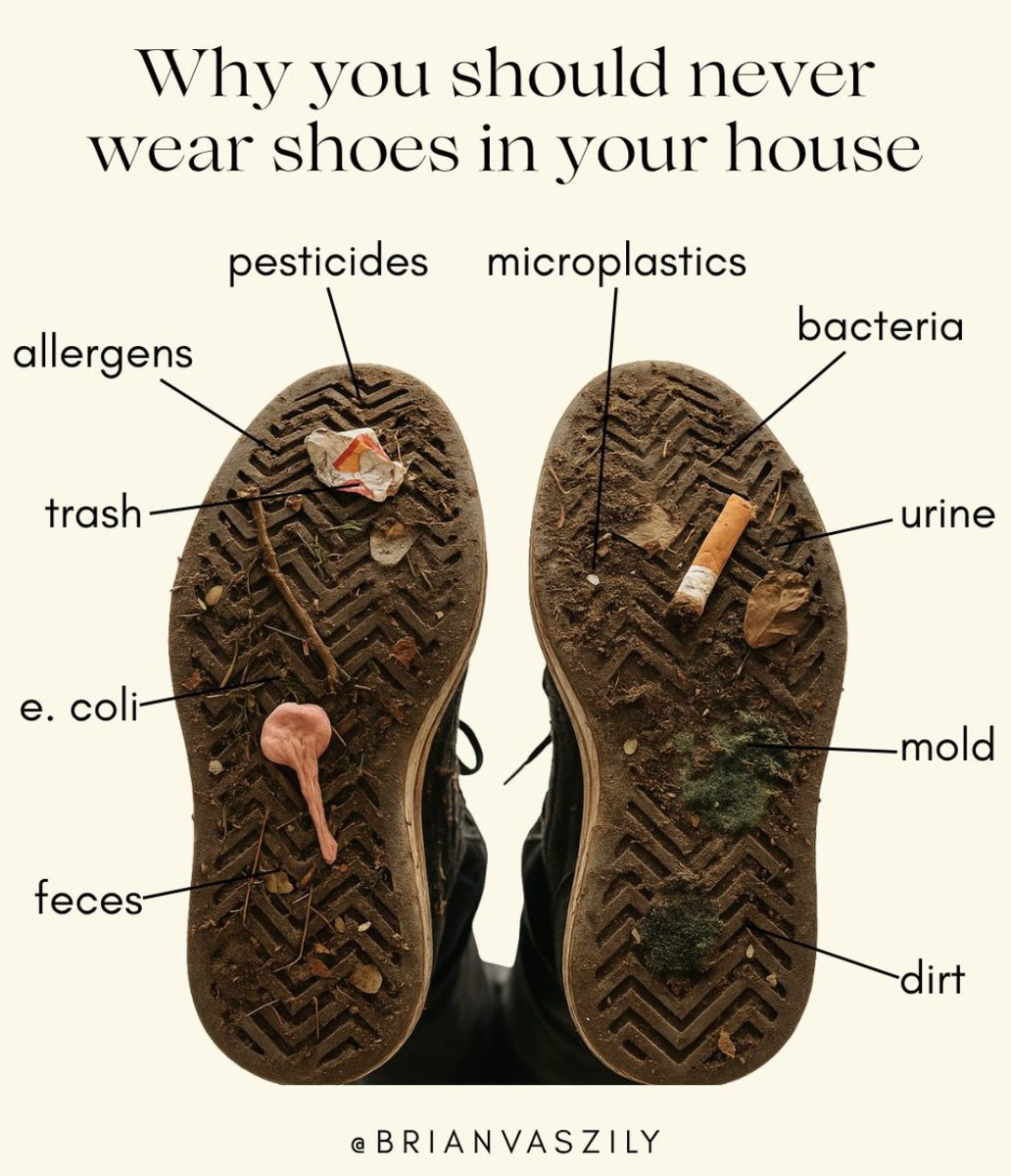
9. Shoes off at the door
10. Eat whole foods, particularly veggies fruits nuts legumes berries
11. Walk a little after meals or air squats
12. Get your heart rate high routinely
13. Lift heavy things
14. Stretch daily
15. Water pik, floss, brush, tongue scrape, morning and night
16. Make an effort to drink water
17. Get sunlight when you wake up (UV is low)
18. Protect skin in midday sun
19. Stand up straight
20. See at least one friend once a week
21. Avoid plastic where you can (in all things)
22. Circulate air in rooms
23. When stressed, breathe, learn to calm your body
24. Go to the dentist
25. Avoid sitting for long times
26. Protect your hearing, the world is too loud
27. Alcohol is bad for you
28. Finish coffee before noon
29. Avoid bright lights after sunset
30. If obese, look into a GLP
31. Sleep in a cold room
32. Texting while driving is dangerous
33. Turn off all notifications
34. Limit social media use
35. Don’t smoke anything
36. If you struggle to sleep, read a physical book before bed
37. 1 hour before bed have a calm wind down routine: bath, read, light walk, listen to music
38. The body is a clock and loves routine. Have a daily morning and evening schedule.
39. Avoid long distance travel where you can
40. Baby steps first: incorporate new things slowly
41. Do less… most things don’t work.
Bonus points if you get your blood checked.
Start here, it will change your life.
Coinbase is cutting 14% of its staff because of AI.
But @brian_armstrong (founder, CEO), shared a few things in his memo that most ppl will miss:
1. "No pure managers." Every leader has to be a working individual contributor. The pure people-manager role, the one that built most corporate career ladders for the last 50y, no longer exists at Coinbase.
2. Leaders will have 15+ direct reports. That is insane. Previously, managers capped out at 6 directs. This would be IMPOSSIBLE without AI.
3. Coinbase is testing "one person teams" where a single person is the engineer, the designer, and the PM. A pod of one with agents.
Org structures are being redesigned in front of our eyes.
In late 2023, French streamer TeufeurS was extorted for a ransom after a family member was kidnapped in France.
I can finally share that I helped lead efforts that resulted in an ~$800K freeze with the Binance Security team after a $2M ransom was paid.
Six suspects tied to the incident were later arrested. Given the sensitivity of the case, I held off commenting until now.
I have since assisted with asset freezes and identifying culprits in several of the recent France home invasion robberies, and hope to share details in the coming months.
If you or someone you know falls victim, reach out as soon as possible rather than delay.
I prioritize these types of cases as they have grown more frequent amidst this disturbing trend.
⚡️Hal Finney is Satoshi Nakamoto. Every piece of evidence points the same direction. Here’s why:
Finney was running a beta version of Bitcoin in January 2009 within days of Satoshi releasing the software. That’s not the behavior of an interested observer. That’s the behavior of someone who already knew the code intimately because they helped write it. Nobody else jumped in that fast. Everyone else took weeks or months to even understand what Bitcoin was. Finney was running it immediately.
The proof of work system at the heart of Bitcoin is a direct evolution of Finney’s RPOW system from 2004. RPOW stood for Reusable Proof of Work. It solved the exact problem Bitcoin’s mining mechanism solves. Finney built it five years before Bitcoin existed. The conceptual lineage from RPOW to Bitcoin’s mining is so direct that anyone reading both would conclude they were built by the same mind. The Bitcoin mechanism is not just inspired by RPOW. It’s RPOW with the trust assumption removed by adding a blockchain. That’s an iteration on his own work, not someone else’s.
He had been working on cryptographic digital cash systems for over a decade before Bitcoin launched. He was on the cypherpunks mailing list for years. He worked at PGP Corporation under Phil Zimmermann, the most important cryptography company of the era. His career trajectory was building toward something exactly like Bitcoin. The white paper was the natural conclusion of his entire prior body of work.
The geography is too specific to be coincidence. Hal Finney lived in Temple City, California. Dorian Satoshi Nakamoto lived in Temple City, California. They lived a few blocks from each other. The pseudonym Satoshi Nakamoto was lifted from a man living in the same neighborhood as Finney. The probability of this being random is essentially zero. Either Finney chose the name because he knew Dorian existed nearby, or somebody who somehow knew Dorian’s name and Finney’s neighborhood happened to be the actual Satoshi, which is much less plausible than the first explanation.
The Forbes journalist Andy Greenberg analyzed Finney’s writing style against Satoshi’s writings using textual analysis tools. The match was significantly higher than for any other candidate. The vocabulary, the sentence structure, the punctuation patterns, the use of British spellings inconsistently which would be characteristic of an American who occasionally affected British style. All of it lined up.
The timing of Satoshi’s exit aligns precisely with Finney’s medical decline. Satoshi started reducing involvement in Bitcoin in mid 2010. Finney was diagnosed with ALS in August 2009 and his physical capabilities began deteriorating throughout 2010. By 2011, when Satoshi went completely silent, Finney could barely use a computer. He had to use eye tracking software for the rest of his life. The timeline of Satoshi’s withdrawal matches the timeline of Finney’s progressive paralysis with eerie precision.
The Satoshi wallets containing approximately one million Bitcoin have never been touched. Not a single coin moved in sixteen years. This is consistent with a Satoshi who is physically dead. Finney died in August 2014. The wallets remained untouched before and after his death. His body was cryogenically preserved. The keys, if he was Satoshi, were either destroyed, lost, or held by his wife Fran. She has consistently said she doesn’t have access to them and doesn’t know if they exist anywhere.
The fact that no Satoshi coin has ever moved is the strongest evidence that whoever Satoshi was, they’re either dead or incapable of accessing the keys. A living Satoshi who could move coins would have done so for any number of reasons over sixteen years. Tax planning. Charitable giving. Even just to demonstrate continued life. Nothing has happened. The simplest explanation is that Satoshi died and the keys died with him.
Finney’s behavior in the early Bitcoin community was strange in ways that fit. He was the most technically capable person involved. He clearly understood Bitcoin at a depth that exceeded everyone else. But he played the role of an enthusiastic outsider who happened to be very interested in the project. That’s a position someone takes when they want to participate in their own creation without admitting authorship. Other early contributors deferred to him on technical questions and he deferred back to Satoshi, even when his answers and Satoshi’s answers were structurally identical.
The other candidates don’t fit as cleanly. Nick Szabo has the conceptual fingerprint through bit gold but doesn’t match the implementation work. He’s also been publicly active in ways that someone trying to maintain anonymity wouldn’t be. Adam Back has the cryptographic background but his style doesn’t match. Wei Dai has the conceptual background but his style and timing don’t match. Craig Wright is a documented fraud who has been judicially proven to have forged evidence multiple times. Dorian Nakamoto is just an unrelated retired engineer who shares a name.
Finney is the only candidate where every variable lines up. The technical capability. The conceptual lineage. The geographic proximity to Dorian. The writing style. The behavioral patterns in the early Bitcoin community. The timing of withdrawal matching ALS progression. The wallets never moving matching his death. The family’s denial being expected regardless of truth.
There’s no candidate where this many independent variables converge. With Finney, basically every piece of evidence points the same direction. With everyone else, you have to explain away the variables that don’t fit.
With Finney, you don’t have to explain anything.
It just makes sense.
In my teens and 20's I would spend way too much time playing Starcraft and Civilization. Harvesting resources, building things, and expanding was super addictive to my brain - to an almost unhealthy degree.
Later I realized that entrepreneurship and business is the ultimate game. It scratches the same itch for me (resources, building, expanding), but you're actually contributing to humanity at the end of the day, which can be much more fulfilling.
Business is also much more positive sum than video games. In Starcraft, the other player has to lose for you to win. In business, there is competition, but in a growing market there can be multiple winners. And gains compound long term (it's a infinite game) instead of starting over each time.
Now days I prefer to watch pros play video games to unwind, instead of playing video games myself. But a quick game can still be fun here and there to unwind. By contrast, the game of business is played over many decades.
This is a wild and concerning trend for Bitcoin.
This is far worse than I had realized.
This is a list of all the major public Bitcoin miners.
ALL have made statements to pivot to AI.
ALL are targeting major shares of revenue from AI from here, not Bitcoin.
On average current Bitcoin revenue is expected to drop from 90% to just 30% in the next 2-3 years!
Do you see a pattern?
The stocks doing the best in recent years all jumped into AI big time.
Those with 80%+ AI share of revenue targets saw their stocks climb up over 500% on average. Those targeting <60% AI revenue saw 1/10th the growth, with many having negative 2 year returns.
The message is clear.
If these numbers are even half accurate, and they are based on direct company statements, the energy and commitment to Bitcoin is under significant threat over the next 2-3 years. All while Quantum computing is taking off and poses an existential threat to Bitcoin unless we change the code.
Many of these miners are not even planning to upgrade or renew Bitcoin mining hardware at all, simply running out lifespan of the existing and reinvesting only in AI.
The market has been voting with its feet.
Now the miners are voting with their feet.
Just as Bitcoin is about to approach its biggest ever threat in the coming years, the backbone of its security is leaving the industry.
Bitcoin used to be famed for having the biggest computing network in the world. It's now collapsing into AI at record pace.
A country is not it’s land.
A country is simply it’s people.
Is Japan the way it is because of the soil?
Is Haiti the way it is because of the soil?
If you picked up all of the Haitians from Haiti and dropped them onto the island of Japan, would the magic soil there change them?
If you picked up all of the Japanese from Japan and dropped them onto the island of Haiti, would the magic soil there change them?
No.
The island of Japan would become Haiti.
The island of Haiti would become Japan.
There is no magic soil.
A nation is simply it’s people.
THIS IS HUGE. Bitcoin is Quantum-Safe TODAY.
Even if a quantum computer appeared, one that breaks the conventional Bitcion signatures, it shows a practical way to create safe Bitcoin transactions. WITH NO CHANGE TO BITCOIN PROTOCOL!!!
Please explain why, having this technology, you would focus on Bitcoin?
Why not Fedwire, and take trillions from the banking industry?
Do hackers really think this small?
Wearing outside shoes inside the house. According to Dr.Gerba, Microbiologist, there's a 96% chance there's fecal matter on your sole and +400k units of bacteria.
Clarity yield “deal” is a bad, anti consumer bank bailout. Banks rewarded for paying 0.4% on savings accounts.
Will force stablecoin innovation offshore and stymie business models domestically. Bad for consumers bad for startups. Good for bank shareholders.