The wait is over.
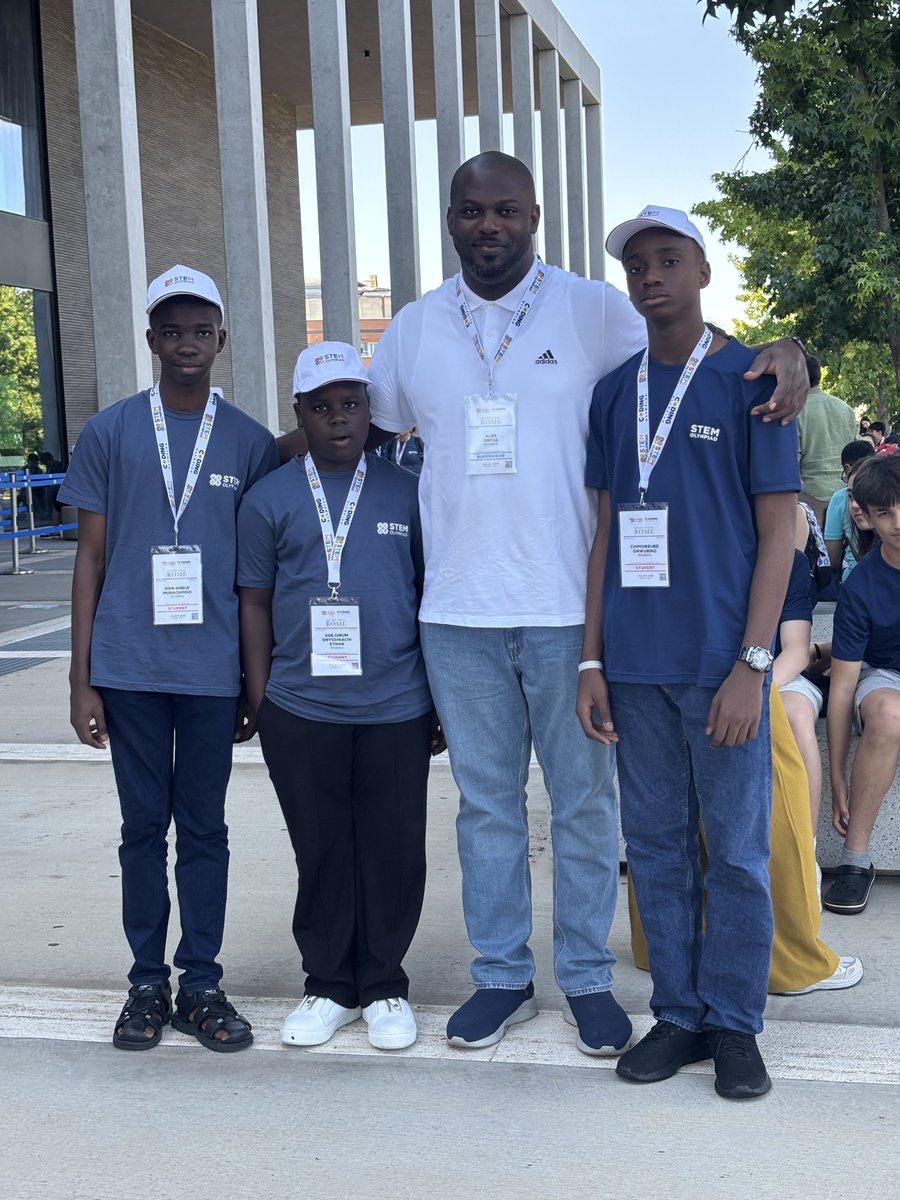
We have 2 golds: Chimdiebube Onwubiko and Don Anele Munachimso.
We are the best in the world!
Egejurum Onyedikachi’s name was omitted. He should have a gold.
I think it was someone here that asked me how I am able to balance a great understanding and appreciation of the Igbo culture and my Christianity. I don’t think I had an answer for them.
Here it is: With my culture, I see the gaps and appreciate our best efforts to find God that only Christianity answers in full. And so I can come to truly be free within that framework, because I never frame it as a political absolute, or that it can stand side by side the God of the Bible.
Jesus is king. At best, my cultural beliefs are a beautiful half truth, a great spiritual and economic and political attempt that only God can fills the dashes.
Worsening Leadership Crisis in the Country Now Evident
The ultimate cost of uncompassionate leadership, as evident in the country today, is turning citizens’ frustration into deep, volatile resentment. It is even more traumatising when the leader presiding over that collapse demonstrates clear incapacity and a lack of compassion.
The government and people of Oyo State, more than 50 days after the abduction of the schoolchildren without any tangible effort toward their rescue, should rightly feel bitter and abandoned.
Since this unfortunate incident, I have spoken publicly about it twice, including appealing directly to the kidnappers to release the children. I also called the Governor twice to assure him of my solidarity, understanding that this issue is not just an Oyo problem but a Nigerian tragedy.
On Friday, July 3, I decided to travel to Ibadan with Prof. Pat Utomi to express solidarity with the Governor, as more than 50 days had elapsed without the rescue of the children and with numerous others still being held captive across the country.
During our two-hour meeting, I shared my experience in addressing insecurity as Governor of Anambra State. I recalled how President Olusegun Obasanjo, and later Presidents Umaru Musa Yar’Adua and Goodluck Jonathan, would personally call us several times whenever we faced major security challenges.
But, to my utmost shock, I discovered that, contrary to my assumption that they had been in regular communication over the matter, Governor Seyi Makinde had not received a single call from President Bola Tinubu.
I remember the only case of a school kidnapping during President Goodluck Jonathan’s era - the Chibok girls. It drew local and international attention. Even though the security agencies provided almost daily updates on their efforts, Nigerians and the rest of the world were outraged that it took President Jonathan over two weeks to call the then State chief Executive.
I vividly recall that the current President, Bola Tinubu, led a team of vocal critics who called for President Jonathan’s immediate resignation over the incident, citing his delay in calling the state governor. That call for IMMEDIATE RESIGNATION should actually be the case in this matter.
Today, under President Tinubu, there have been more than 13 school kidnappings, yet the President has found it difficult to call the affected state’s chief executive after more than 50 days (over 7 weeks). This is outrageous. I suspect the same may also have been the case in other school kidnapping incidents.
I cannot imagine any issue more important than the lives of our kidnapped children, their teachers, and the many other Nigerians being held captive across the country. It is now an indisputable fact that governance has completely collapsed under this administration.
The situation reflects a total lack of capacity and compassion, compounded by glaring insensitivity.
Amid such an apparent display of incompetence, the President should either resign or, at the very least, abstain from seeking re-election for the sake of our dear country. This call is patriotic, not political. A new Nigeria is POssible. -PO
The South East is making a choice.
We will double down on eliminating illiteracy.
Every child who cannot read, write and reason represents lost potential for our economy, our security and our future.
We are studying the education systems that consistently produce some of the world’s strongest learning outcomes, including Singapore and China.
We are no longer educating children just to survive.
We are educating them to compete globally and lead.
That is the future we are building.
Voter Registration: The First Step in the Journey to a New Nigeria
Yesterday, while passing through Waru Wazobia in Abuja, I made a chance stop to interact with our people. I seized the opportunity to encourage them, especially our youths and women, to take advantage of the ongoing voter registration exercise.
The power to change Nigeria does not begin on Election Day; it begins with voter registration. Registering to vote is not just a civic responsibility; it is an investment in the future we all desire.
I urge every eligible Nigerian who has not yet registered to do so without delay. Those who already have their voter cards should encourage their family members, friends, neighbours, and colleagues to register as well.
A new Nigeria will not happen through wishful thinking. It will be built by citizens who participate, who believe, and who act. Let us continue to choose hope over despair, participation over apathy, and nation-building over division.
A New Nigeria is POssible. -PO
My Vision for a Productive and Prosperous Nigeria
Today, being the 1st of July, 2026, I wish to humbly recall that when I decided to contest for the office of President of Nigeria, I pledged to place Nigeria on the path of unity and national transformation. Now, as the Nigeria Democratic Congress (NDC) candidate, I will, in the coming weeks and months, provide insights into the roadmap that I am confident will help curb abuse in government, halt the decline in the quality of life of Nigerians at all levels, and usher in an era of unity, peace, sustained progress, and prosperity.
This vision is anchored on a commitment to unity, inclusion, social justice, equity, and the freedom of every citizen to pursue lawful dreams.
Central to this proposed roadmap are significant reforms in education and healthcare, which are at the core of human capital development.
Robust human capital is indispensable infrastructure for national progress. It serves as the fundamental capital upon which daily life, economic expansion, and the delivery of essential public services depend.
These are foundational areas that we must reform with energy and determination if we are to reap the demographic dividend of our youthful population.
From the outset of my presidency, we will establish a task force dedicated to drastically reducing the menace of out-of-school children. We will place greater emphasis on Technical and Vocational Education and Training (TVET) to support our drive for massive industrialisation, anchored on our agricultural endowments and value addition across value chains organised around industrial parks to be located in development zones across the geopolitical regions of the country.
Funding and improving the equipment of TVET institutions, through partnerships among government, the private sector, and social entrepreneurs such as faith-based educators, will facilitate apprenticeship opportunities in the private sector, similar to the German dual education system.
The situation in which unemployment remains high while Nigerian entrepreneurs establish businesses elsewhere because skilled labour is scarce must be confronted decisively. Doing so is essential for the common good and for facilitating our transition from a consumption-driven economy to a production-driven one.
Character and civic education, emphasising the values that foster trust - an essential ingredient for enterprise and leadership - as well as shared national values, will receive significant attention within the tripartite approach to governance that we propose.
A New Nigeria is POssible. -PO
My Stance on Road Development
There is a pertinent reason I have consistently advocated that we should refrain from initiating new road construction projects until we have thoroughly rehabilitated and maintained our existing road network. Instead of undertaking new ventures and dualization projects that offer marginal benefits, our primary focus ought to be on repairing the critical roads already in place.
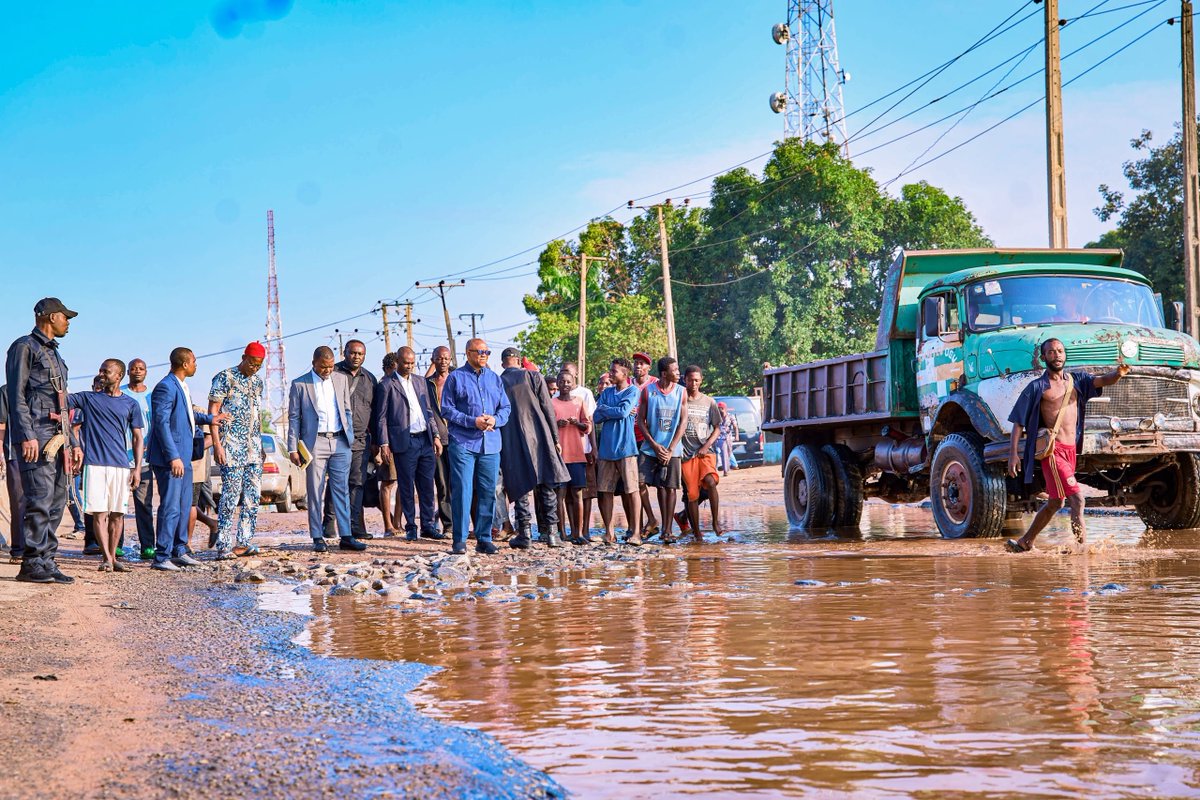
Consider, for instance, the Asaba–Benin Road. This thoroughfare is a vital artery within Nigeria's transportation infrastructure. Travellers traversing from Akwa Ibom, Anambra, Rivers, Imo, Ebonyi, Cross River, Abia, Enugu, and portions of Benue and Kogi States to Lagos are compelled to utilise this route.
Despite its significance, substantial sections of this road are in a lamentable condition. It has become a major impediment, precipitating persistent traffic congestion and inflicting undue hardship on travellers, businesses, and transport operators.
Regrettably, this situation is not unique; it reflects the reality on many of our busiest national highways.
Our efforts should be directed towards the reconstruction and maintenance of our current road infrastructure before we announce plans for new road projects. The Nigerian populace requires functional and motorable roads, not merely projects that garner public attention.
Efforts aimed at superficial improvements for political gain should not supersede the urgent need to address the condition of our existing, critical roadways.
A new Nigeria is POssible. -PO
We simply MUST emancipate ourselves from the mental slavery that is tribalism.
Tribalism is an ungodly, wicked, and generationally divisive thing, and we have to cut it out like the cancer that it is.
Storefront connects seamlessly to a vendor’s Instagram Business account and automatically generates a world-class, premium standalone web storefront from their feed in seconds.
Built entirely on Figma Make - https://t.co/KsaSfyqyuP
#ConfigMakeathon@figma
Storefront connects seamlessly to a vendor’s Instagram Business account and automatically generates a world-class, premium standalone storefront from their feed in seconds.
https://t.co/QuH9uBpIOR
#ConfigMakeathon#FigmaMake
What June 12 Should Mean to Us Nigerians
Today, we observe a day that should mean a great deal to us as a people who cherish democratic principles. Every year on June 12, the conversation inevitably turns to a critical assessment of the state of our nation. It serves as an annual benchmark for asking important questions: Are our elections today as transparent as they were in 1993? Is the social contract being honoured? Are the institutions of governance truly serving the people?
Ultimately, June 12 is a powerful blend of reflection and aspiration. It honours a fractured past while serving as a constant and foundational reminder of the immense power inherent in the collective democratic will of the Nigerian people.
For us in Nigeria, June 12 is not merely a date on the calendar; it is the emotional and structural bedrock of our modern democratic identity. Officially recognised as Democracy Day, June 12 carries deep historical, political, and social significance, representing both a monumental tragedy and the ultimate triumph of the collective will of the people.
To understand what June 12 means to Nigeria, one must examine its history, its evolution, and its enduring symbolism.
A new era of true democracy is POssible. -PO
Exponential increase in revenue with excessive borrowing: Yet more hardship for Nigerians!
In celebrating three years of his administration, President Bola Tinubu included, among his achievements, an increase in revenue from N16.8 trillion in 2022 to N35 trillion in 2025. An increase of over 100%.
Shockingly, while Nigerians expected a reduction in borrowing with the exponential increase in revenue, the opposite is the case. In just three years, President Bola Tinubu’s government seems to be obsessed with excessive and imprudent borrowing, with our total debt currently about N200 trillion—a deeply disturbing increase of over N100 trillion.
In addition to the exponential increases in both revenue and debt, it is also important to note that Nigeria has earned far more than the budget revenue targets due to global and regional geoeconomic and political tensions.
Alarmingly, even with the astronomical increase in both revenue and debt, almost all key socio-economic and governance indicators are worse than in 2023. Multi-dimensional poverty has increased from 87 million people in 2023 to over 140 million people in 2025. Rapidly increasing unemployment and a decline in GDP per capita from $1,597 in 2023 to $1,223 in 2025, and the list goes on.
Just more and more hardship for Nigerians! The question Nigerians and even the international community are asking is, “Where did all the money go?”
Nigerians deserve a detailed and transparent explanation of what happened to our economy and financial resources since 2023, and a stop to the imprudent, unaccountable, and opaque management of our common patrimony.
A new and productive Nigeria is POssible, and Nigeria will be OK! -PO