I keep seeing different city police accounts pop up on my feed reminding their residents that fireworks are banned...we didn't fight a war for independence to be told we can't launch fireworks on property we own. Glad I don't live in a communist city 😂
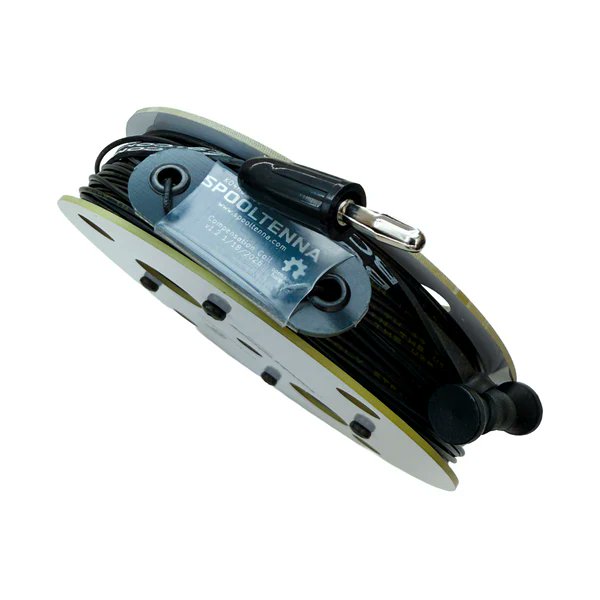
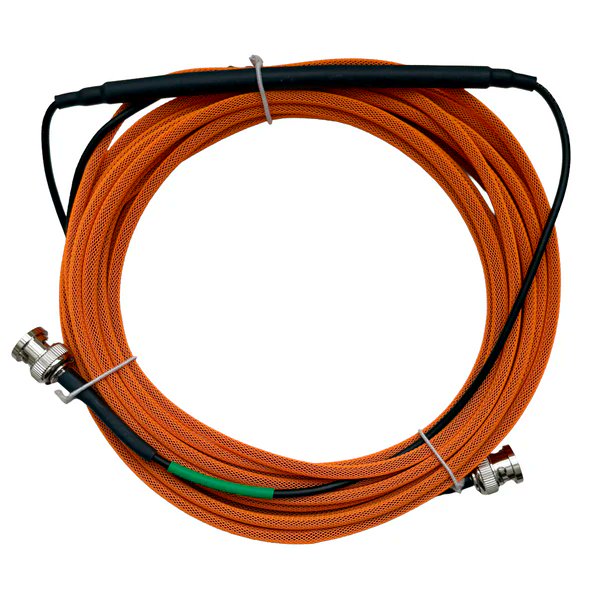
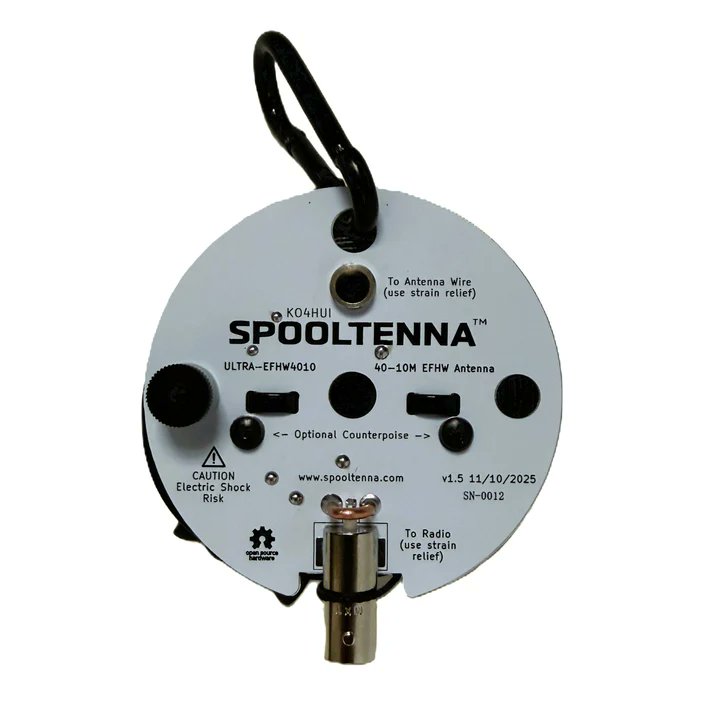
Spooltenna sitewide 4th of July sale runs from July 2-5! Save 10% with code FREEDOM10. Grab a new 80m extension, sheathed and choked coax, or the Spooltenna PARKS or ULTRA version here:
https://t.co/8qT5AUYfig
For field day Saturday &Sunday I'll be taking the night shift at Mitchell Memorial Forest with the OHKYIN amateur radio club. We will have a GOTA (Get On The Air) station so come on by and check out some radio activities!
Literally the coolest thing you can volunteer your radio skills for. Check out my weekend at Southern Ohio Forest Rally! #hamradio https://t.co/2aw5OfcHLo
I think last nights Kids Table with @SaltyWaltHudson stuck a cord with a lot of people. Gatekeepers can be toxic for the continued success of the hobby. #hamradio#gatekeepers
https://t.co/uWjQ5huayw
My viral HOA video with a gutter antenna reached Africa! The inflammatory nature and clever tech made it explode. See how a simple hack bypassed limitations and got global attention.
#HOA#TechHacks#ViralVideo
If You Don’t Understand Smith Charts You’re Missing Out.
The Smith Chart is probably one of the most useful tools for RF design engineers.
While it may look like a complex web of circles to the uninitiated, it is actually a brilliant graphical calculator that simplifies the way we visualize and solve problems involving complex impedance. It’s also used on VNAs as one of their display modes. It’s an essential tool for any RF engineer.
Based on the fundamentals shared on Electronics-Notes, here is a breakdown of what makes this tool indispensable for anyone working with radio frequencies.
What is a Smith Chart?
At its core, a Smith Chart is a polar plot of the complex reflection coefficient. It maps the rectangular world of impedance (Resistance + Reactance) into a circular format.
Key features include:
🔹 The Horizontal Axis: Represents pure resistance (the "real" part).
🔹 The Circles: Represent constant resistance.
🔹 The Arcs: Represent constant reactance (Inductive on the top half, Capacitive on the bottom).
🔹 Normalization: To make the chart universal, values are typically "normalized" to the system impedance (usually 50 ohms).
How is it Used Today?
Even in the age of high-speed computing, the Smith Chart remains the "language" of RF. It isn't just a paper tool anymore; it is the primary display format for Vector Network Analyzers (VNAs) and simulation software.
Here are its primary applications:
1️⃣ Impedance Matching: This is perhaps its most common use. By plotting a load, engineers can visually determine what combination of capacitors or inductors is needed to transform that load to match the system’s characteristic impedance, ensuring maximum power transfer.
2️⃣ Visualizing Reflections: The chart allows you to see the reflection coefficient (Γ) and Standing Wave Ratio (SWR) at a glance. The closer you are to the center of the chart, the better your match.
3️⃣ Transmission Line Analysis: It helps visualize how impedance changes as you move along a transmission line. This is vital for understanding standing wave patterns and input impedances.
4️⃣ Antenna and Filter Design: Engineers use the chart to analyze antenna performance and fine-tune networks like filters and amplifiers to ensure they operate efficiently across specific frequency ranges.
Why does it matter?
The beauty of the Smith Chart is that it provides a visual intuition that a simple number cannot. It shows you not just that a system is mismatched, but how it is mismatched and exactly what direction you need to take to fix it.
Whether you are a student or a seasoned RF professional, mastering the Smith Chart is like gaining X-ray vision for circuitry.
For more information check out the link in the comments.
#RFEngineering #Electronics #Wireless #SmithChart #RadioFrequency #ElectricalEngineering #EngineeringTools
Are there too many gatekeepers in amateur radio? Are too many self proclaimed “EXPERTS” really killing ham radio? @SaltyWaltHudson joins the #KidsTable tonight to share his thoughts. The conversation kicks off at 8:00 PM EDT.
https://t.co/jUiQyrc0m6
Hamvention is more than just radios, new gear and forums. It's about meeting up with friends you know from the air, social media and meeting new ones. #hamradio https://t.co/oBmqFL75Fq