Great list.
And as @ArthurMacwaters added:
"Americans are deeply resentful of being lied to. We hate being talked down to. We hate being condescended to by politicians. We believe that politicians serve us not the other way around."
My best guess based on: average of polls, betting markets, right track/wrong track, incumbent approval rating. Trump 297. (And, yes, I think MI, NH, and VA are leaning - not solidly - Dem.)
UVA's roster currently has 7 players that were in the top #100 of 24/7's recruiting rankings coming out of high school.
That is the most such players on a Virginia roster in the Tony Bennett era.
“What really matters, in a really significant way, is the tone and the content of the voice in your head.”
“Be transformed by the renewal of your mind.” Romans 12:2
At both the 1988 & 1992 Olympics, speed skater Dan Jansen was the favorite to win the 500- & 1,000-meter races.
He didn't medal at either—the media was brutal:
“Jansen Chokes Again”
“Greatest Choke in Sports History”
“The Buffalo Bills of speed skating”
So his agent called the performance psychologist Dr. Jim Loehr, and said,
“Would you consider working with Dan Jansen?
It turned out: hours before the 500-meter race at the '88 Olympics, Jansen received a phone call and learned that his 27-year-old sister died unexpectedly.
“He's been struggling, mentally,” Jansen's agent told Loehr. “If we can get his head right, he'll be an Olympic champion. If we can’t, he'll go down as the greatest choker in sports history.”
“I know about Dan’s story,” Dr. Loehr replied. “I’d love to work with him.”
So Jansen started working with Loehr leading up to the 1994 Winter Olympics in Lillehammer, Norway.
During their first meeting, Loehr learned that Jansen hated the 1,000-meter event. “He felt like he was a fast muscle twitch kind of a guy,” Loehr explains. “He thought of himself as a sprinter. So he loved the 500 and hated the 1,000.”
Loehr started attending Jansen's training sessions, and after watching Dan skate over and over and over again, he became convinced that Dan's best shot at winning a gold medal was not in the 500, but in the 1,000.
“You need to change your mindset,” Loehr told Jansen. “You need to change the story you tell yourself about the 1,000. If you change that story, I believe it can change your life.”
Jansen kept a daily training log—“From now on,” Loehr told him, “on the top of your training log, I want you to write, ‘I love the 1,000.’”
“But,” Jansen said, “I hate the 1,000.”
“I know,” Loehr said. “But we’re going to recondition the way you think and feel about the 1,000.”
So for 2 years, at the top of his training log, Jansen wrote, “I love the 1,000.”
“And before Lillehammer,” Loehr said, “Dan came to me and said, ‘You know, I’m actually starting to like the 1,000. I think I might even like the 1,000 better than the 500.’”
At the games in Lillehammer, in the 500, Jansen slipped and finished 8th.
Before the 1,000 (four days later)—which Jansen knew would be the last time he ever skated competitively—“We created a mindset,” Loehr said. “and the mindset we created was—instead of a gold medal or a world record or anything else—think about what a gift the sport of speed skating has been to you. Think about the joy it's brought you.”
With that mindset, Jansen lined up for the 1,000-meter event at the 1994 Winter Olympics in Lillehammer.
With that mindset, he not only won his first Olympic gold medal, he set a new world record time in the 1,000.
Takeaway 1:
There's a paradox known as “the backwards law.”
It comes from the philosopher Alan Watts, who writes in his book The Wisdom of Insecurity:
“I have always been fascinated by the law of reversed effort. Sometimes I call it the 'backwards law.' When you try to stay on the surface of the water, you sink; but when you try to sink, you float.”
With that mindset Dr. Loehr helped him create before the 1,000, Jansen said, “I stopped thinking so much about a gold medal.”
When Jansen stopped thinking so much about a gold medal, paradoxically, he won a gold medal.
Takeaway 2:
In his work with hundreds of world-class performers, Dr. Loehr spent many years listening to the stories people tell themselves. He would even have athletes wear microphones and articulate out loud everything that they said to themselves during competition.
“And I began to realize that what really matters, in a really significant way, is the tone and the content of the voice in your head,” he said.
“The power broker in your life is the voice that no one ever hears. How well you revisit the tone and content of that voice in your head is what determines the quality of your life. It is the master storyteller, and the stories we tell ourselves are our reality.”
Jansen changed the story he told himself about the 1,000, and, as Loehr told him it would, it changed his life.
- - -
“The mind is a funny thing.” — Dan Jansen
Follow @bpoppenheimer for more content like this!
This graph traces the 63,779 cross-references throughout Scripture. The white bars represent each chapter and the colored lines display the distance between references.
The Bible is 1 book with 40 human authors on 3 continents over 1500 yrs with the 1 true God guiding it all.
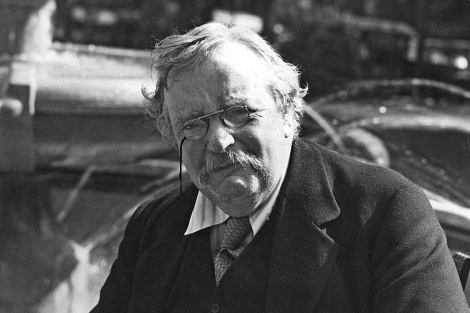
“[Pagans] could make an alternative to Christmas; they could not make a substitute for Thanksgiving Day. For half of them are pessimists who say they have nothing to be thankful for; and the other half are atheists who have nobody to thank.” – G.K. Chesterton, Broadcast to the US