The US leveraged ETF market trading volume is exploding:
The total notional trading volume across US-listed leveraged and inverse ETFs surged to $90 billion on Tuesday, the highest on record.
This figure has more than TRIPLED over the last 12 months.
To put this into perspective, this represented ~50% of all assets under management across the entire leveraged and inverse ETF universe.
The 3x leveraged short semiconductor ETF, $SOXS, alone traded over 1.3 billion shares, the 3rd-largest single-session volume for any US-listed ETF over the last 20 years.
This is only behind the 2x leveraged long Nasdaq 100 ETF, $QLD, and the 2x leveraged long S&P 500 ETF, $SSO, both of which set their records during the 2008 Financial Crisis.
Risk appetite has never been higher.
BREAKING: China bought +10 tonnes of gold in May, the largest monthly addition since January 2025.
This follows +8 tonnes acquired in April, marking their 3rd consecutive monthly net purchase.
China has now bought gold for 19 consecutive months, the longest streak since at least 2015, when its central bank began publishing more regular data on its gold reserves.
This brings China's official gold reserves to a record 2,331 tonnes, worth over 9% of their total FX reserves.
The country is also the 3rd-largest central bank buyer year-to-date, after Poland and Uzbekistan, with a total of +27 tonnes added.
China’s demand for gold is accelerating.
This is absolutely incredible.
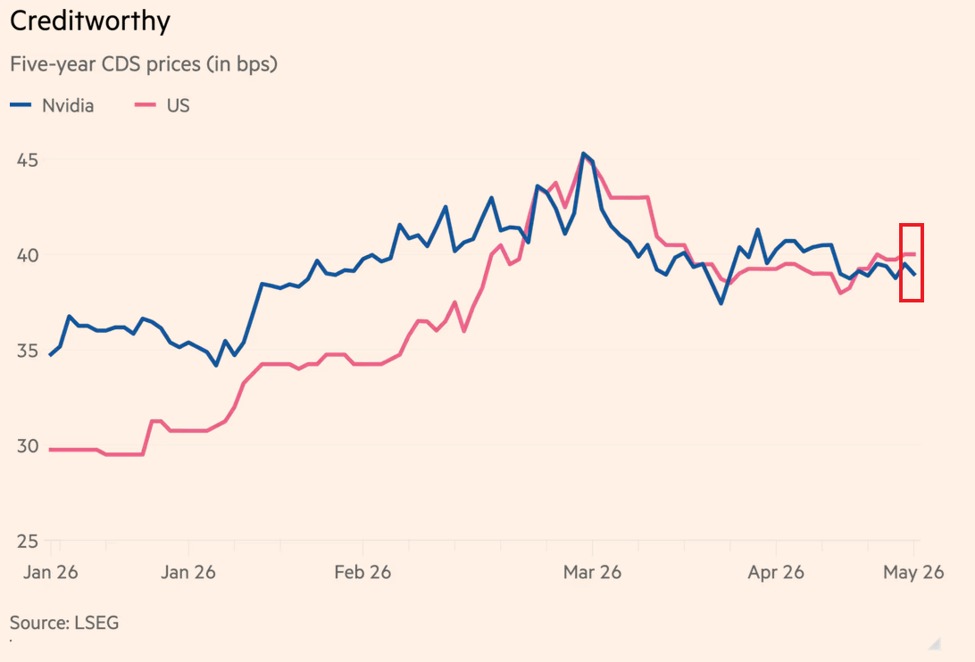
Investors now perceive Nvidia to be as creditworthy as the US government.
Nvidia's $NVDA, 5-year credit default swap (CDS) is trading at ~38 basis points, slightly below the US sovereign CDS, at 40 basis points.
In other words, markets consider the world's largest company to be less likely to default on its obligations than the US federal government.
This comes as in FY2026, Nvidia carried only ~$8.5 billion in total debt against ~$10.6 billion in cash and generated nearly $100 billion in free cash flow, giving it one of the strongest balance sheets of any company in the world.
Even if Nvidia's earnings dropped -90%, it would still rank among the 100 most profitable companies in the world.
Markets are treating Nvidia as one of the safest companies on the planet.
BREAKING: Iran’s President Pezeshkian has submitted an official letter of resignation to the Office of the Supreme Leader, per Iran International.
In the letter, Pezeshkian stressed that the president and the government have effectively been excluded from major decision-making processes in the country and the IRGC has taken control of affairs.
Pezeshkian added that under such circumstances he is unable to run the government and carry out his legal responsibilities, and for that reason has requested to step down immediately.
It is not yet clear whether Supreme Leader Khamenei will accept the president's resignation.
Supersonic. Mach 1.21.
Quarterhorse Mk 2.1 is now the world’s first privately developed, unmanned supersonic jet and the fastest unmanned aircraft flying today.
This flight makes Hermeus the fastest company in aviation history to go from founding to supersonic flight - exactly 364 days after the maiden flight of our first aircraft.
Now, we fly faster.
A special thanks to @DIU_x, Director @OwenWest91, Maj. Gen. Joe "Solo" Kunkel, and Deputy Director Kyle Norman.
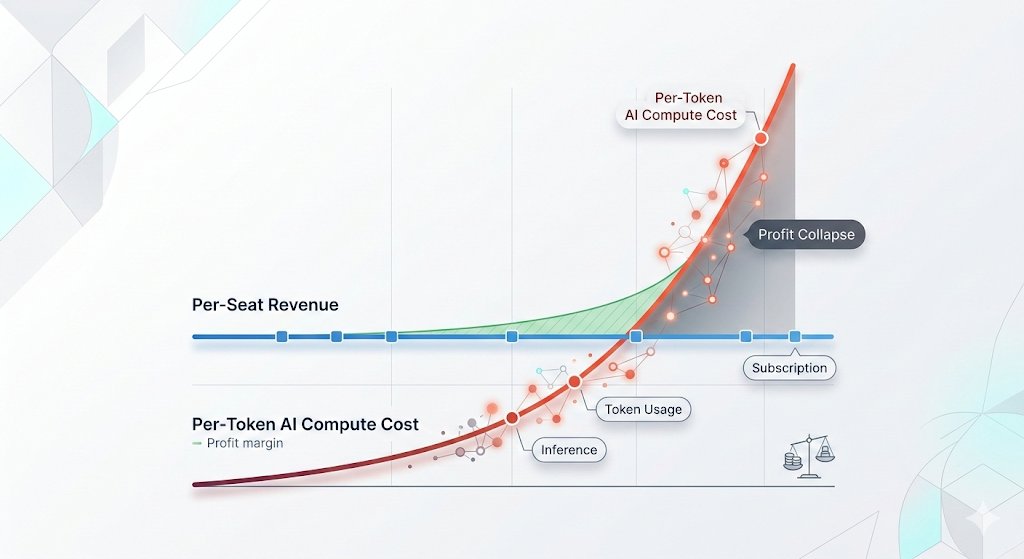
🦔Microsoft canceled its internal Claude Code licenses this week after token-based billing made the cost untenable, even for a company with effectively infinite cloud resources. Uber's CTO sent an internal memo warning the company burned through its entire 2026 AI budget in just four months. American AI software prices have jumped 20% to 37%, and GitHub (owned by Microsoft) is dropping flat-rate plans for usage-based billing across its products.
My Take
The AI subsidy era is ending in real time. The same company that put $13 billion into OpenAI and built the Azure infrastructure powering most of Anthropic's compute just looked at the bill from a competitor's coding tool and decided it was not worth paying. That is not a productivity failure on Anthropic's end. Token-based pricing is forcing every enterprise customer to confront the actual cost of running these models at scale, and the number turns out to be far higher than the flat-rate experiments suggested.
This ties directly to my Gemini Flash post yesterday. Anthropic, OpenAI, and Google all raised effective prices in the last six months. Enterprises that built workflows assuming AI costs would keep falling are now watching annual budgets evaporate in months. Two outcomes look likely from here. Either enterprises scale back AI usage to fit budgets, which slows the revenue ramp the labs need to justify their valuations ahead of IPOs, or the labs cut prices and absorb the losses, which makes the unit economics worse at exactly the wrong moment. Both paths land in the same place, the numbers stop working, and somebody has to take the writedown.
Hedgie🤗
Leopold Aschenbrenner's 13F never came on Friday.
Here is the REAL reason why, and what it tells you:
The most likely explanation is that he requested confidential treatment from the SEC.
Confidential treatment is a legal tool that lets large funds delay disclosing positions they are still actively accumulating, sometimes for UP TO A YEAR.
Funds use it for one reason: they are building a position big enough that public disclosure would MOVE THE PRICE AGAINST THEM before they are done.
If that is what happened here, it means Aschenbrenner is quietly accumulating something significant and does not want the market to see it yet.
The 24 year old who turned $225 million into $5.5 billion in 12 months going dark on the one day he was legally required to show his hand is not nothing.
Pay attention to what happens when this position finally becomes public.
We are checking every day, and when it comes, we’ll share it here publicly.
Turn on notifications so you don’t miss the signal, this is VERY important.
Many people will wish they followed us sooner.
Investors have never used this much leverage:
US margin debt surged +$83 billion in April, to a record $1.3 trillion.
Over the last 12 months, margin debt has risen +$453 billion, or +53%.
As a result, margin debt is up to a record 5.2% of US GDP.
This is ~3 percentage points above both the pre-2008 Financial Crisis level and well above the 2000 Dot-Com Bubble peak.
Market leverage is through the roof.
BREAKING: The ratio of US leading to coincident economic indicators is now down to 0.84, matching the 2008 Financial Crisis low.
This comes as the Leading Economic Index (LEI) fell -0.6% MoM in March, posting its 7th monthly decline out of the last 8.
The Conference Board Leading Economic Index (LEI) tracks forward-looking data, including consumer expectations, manufacturing orders, weekly hours, and initial jobless claims.
At the same time, the Coincident Economic Index (CEI) measures current economic conditions in real time, such as nonfarm payrolls or personal income, excluding government social security or unemployment payments.
This ratio is now on track for its 5th consecutive annual decline, the longest streak on record.
In the past, such depressed levels have never occurred outside of a recession.
The US economy and the stock market are moving in opposite directions.
De l’Elysée à la société Archange, l’intrigante nébuleuse de militaires et d’ex-militaires suspectés d’avoir compromis des documents secret-défense https://t.co/6jIYPwmzyS
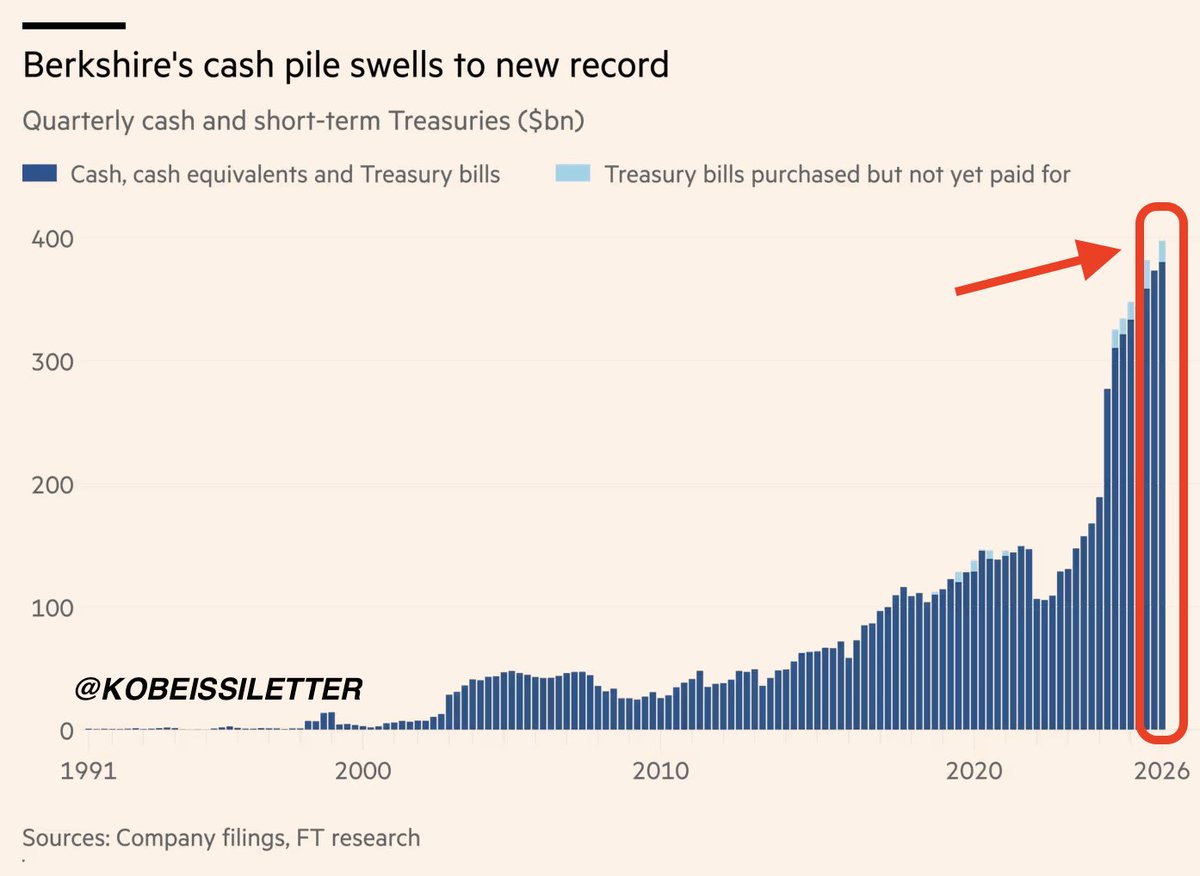
BREAKING: Berkshire Hathaway announces its cash balance is now up to a record $397 billion.
The company sold a net -$8.1 billion worth of stocks last quarter, marking its 14th-consecutive net quarterly sale.
Massive buybacks are coming to the US market:
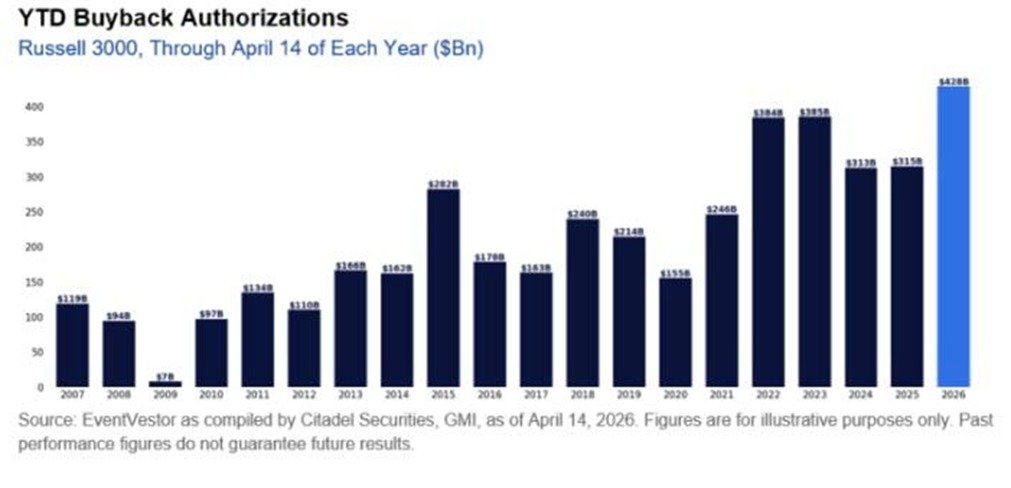
Buyback authorizations across the Russell 3000 surged +36% YoY, to a record $428 billion so far in 2026.
Authorizations are now +176% above the same period in 2020.
At a historical execution rate of ~90%, US corporates are now on track to repurchase a record ~$1 trillion in shares this year.
In 2 weeks, the corporate buyback window will reopen following the earnings blackout period.
This will bring an additional wave of demand for stocks at a time when the market is already experiencing a historic run.
US corporations are set to be major buyers in the equity market.
The IPO market is about to make history:
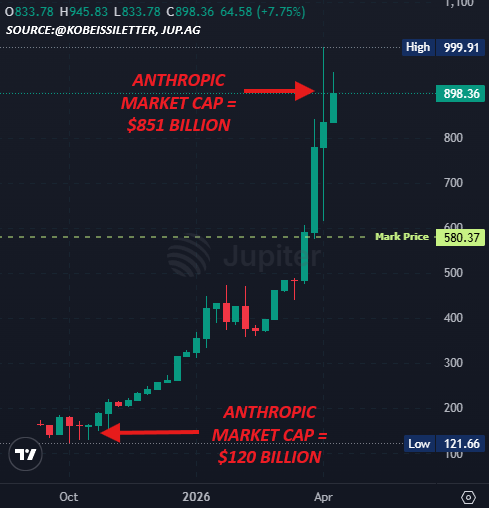
Anthropic's pre-IPO stock, one of the most anticipated IPOs of all time, now has an implied market cap of $851 billion on Jupiter.
In October 2025, the value of a share of Anthropic's pre-IPO stock on Jupiter was as low as ~$122.
Just 7 months later, and these shares are up nearly +640%, to ~$900.
These pre-IPO shares are structured instruments backed 1:1 by SPV exposure, giving investors direct price exposure to Anthropic before the IPO launches, allowing the market to dictate potential valuation.
Between SpaceX's anticipated $1.7+ trillion IPO and both Anthropic and OpenAI targeting $1+ trillion, the IPO market is about to witness history.
The AI Revolution is accelerating.