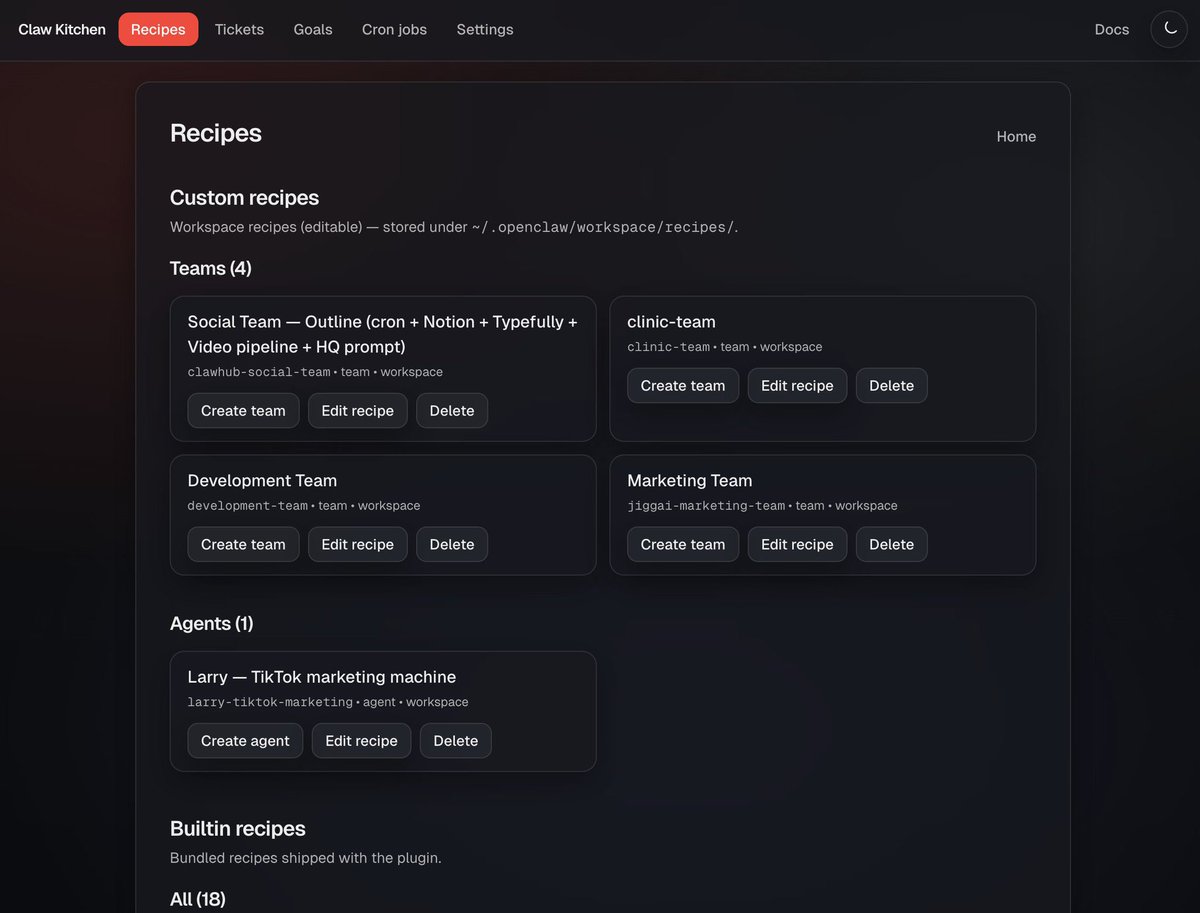
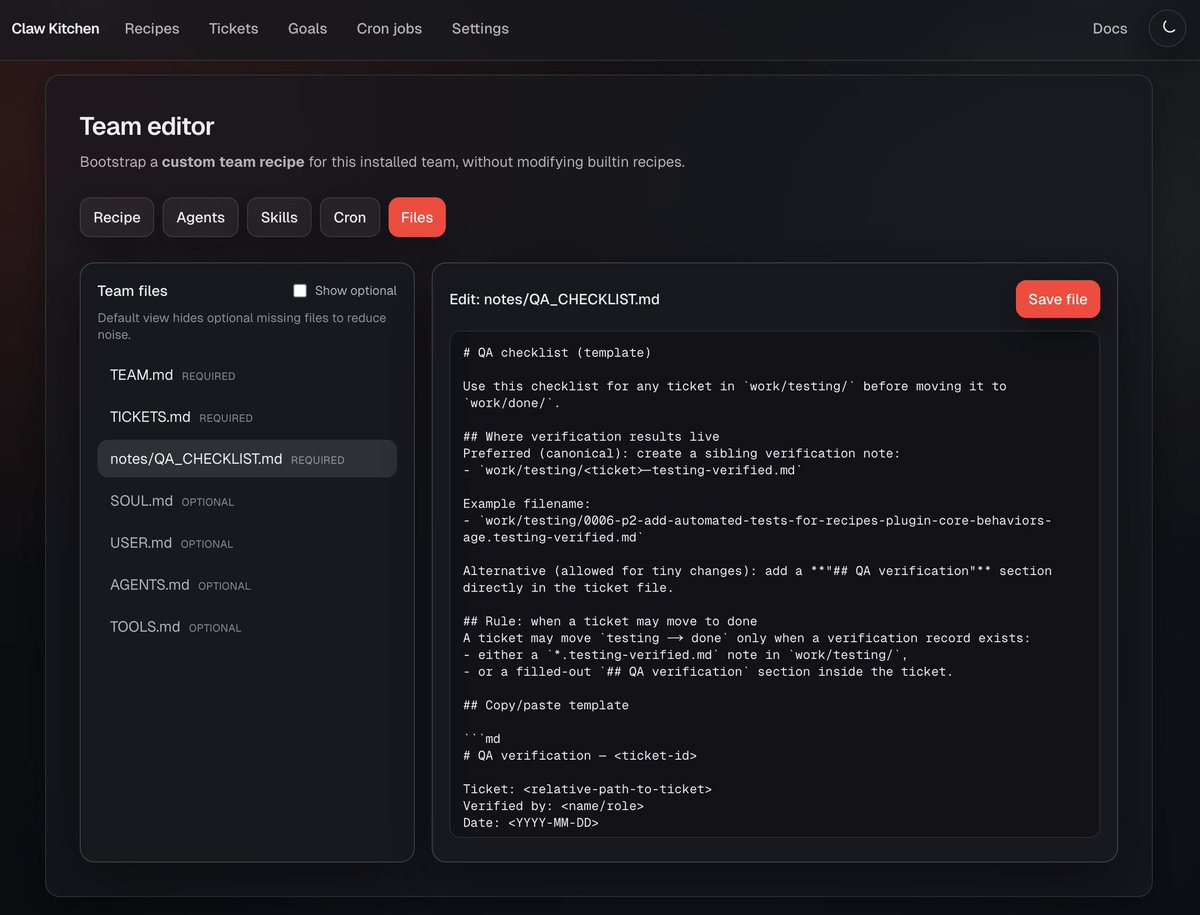
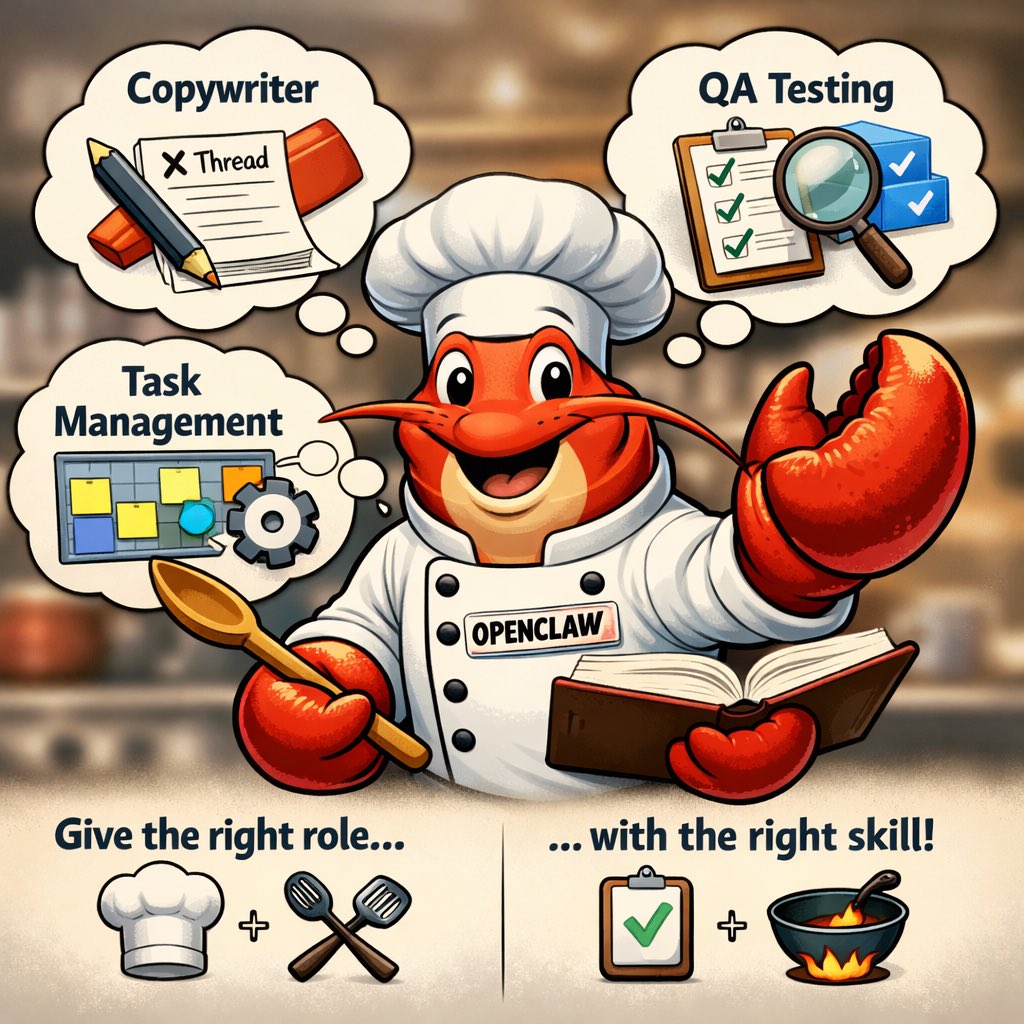
🍽️ Introducing ClawKitchen ~ the ClawRecipes UI🚀
Tired of wasting weeks configuring agents?
Spin up your ARMY OF AGENTS in minutes!!
Build faster. Scale harder.
Easy Install: openclaw plugins install @jiggai/kitchen
New Release!! We've tested and pushed new packages for CR and CK. Both now support @openclaw 2026.5.x
The best way to install is:
openclaw plugins install @jiggai/recipes --force
openclaw plugins install @jiggai/kitchen --force
Force is required on recipes because clawhub is broken, they still have the older package.
MCP’s are great tools. They empower agents to accomplish so much more. But where are they not as useful as a structured integration?
When there are multiple steps that require steps like approval, the use of additional agents for compliance, research, and another refinement tasks Auditable tasks and rollbacks.
MCP’s are great tools, but they do not replace structure and good process design.
When an MCP is not enough, use ClawRecipes combined with ClawKitchen as your operation layer. It’s what we’re built for. @openclaw
Creating awesome videos with AI has just got easier!
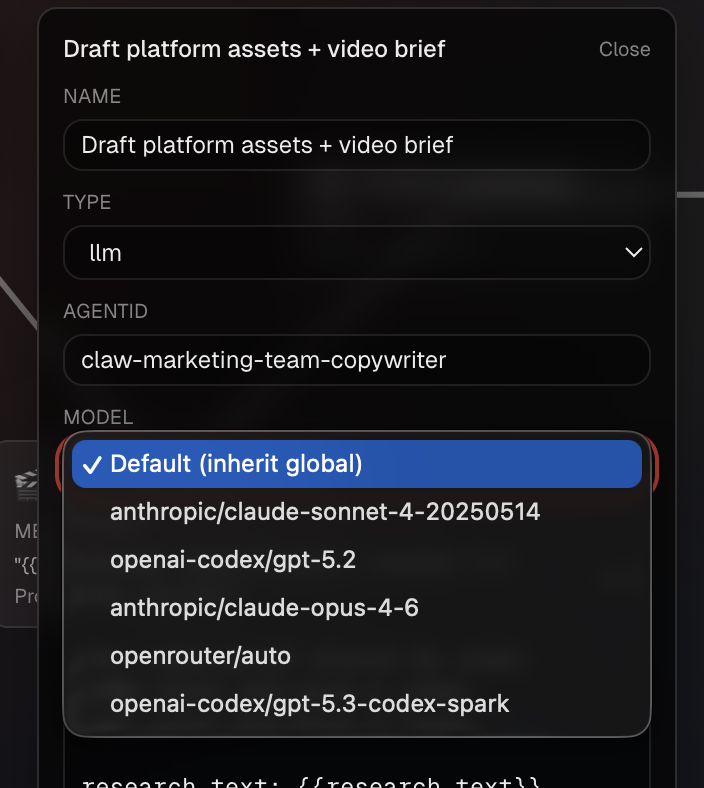
We've launched new image and video nodes to our workflows (use ClawKitchen to visualize.) You can select from your already installed SKILLS and providers; doesn't get much easier.
Don't have a skill, we included some defaults that ClawKitchen will install for you.
The future of AI is not Agents. It’s infrastructure.
The Rise of Agents as Infrastructure (AaI) is coming! Read all about it on my Substack
https://t.co/8lsNRAfMhV
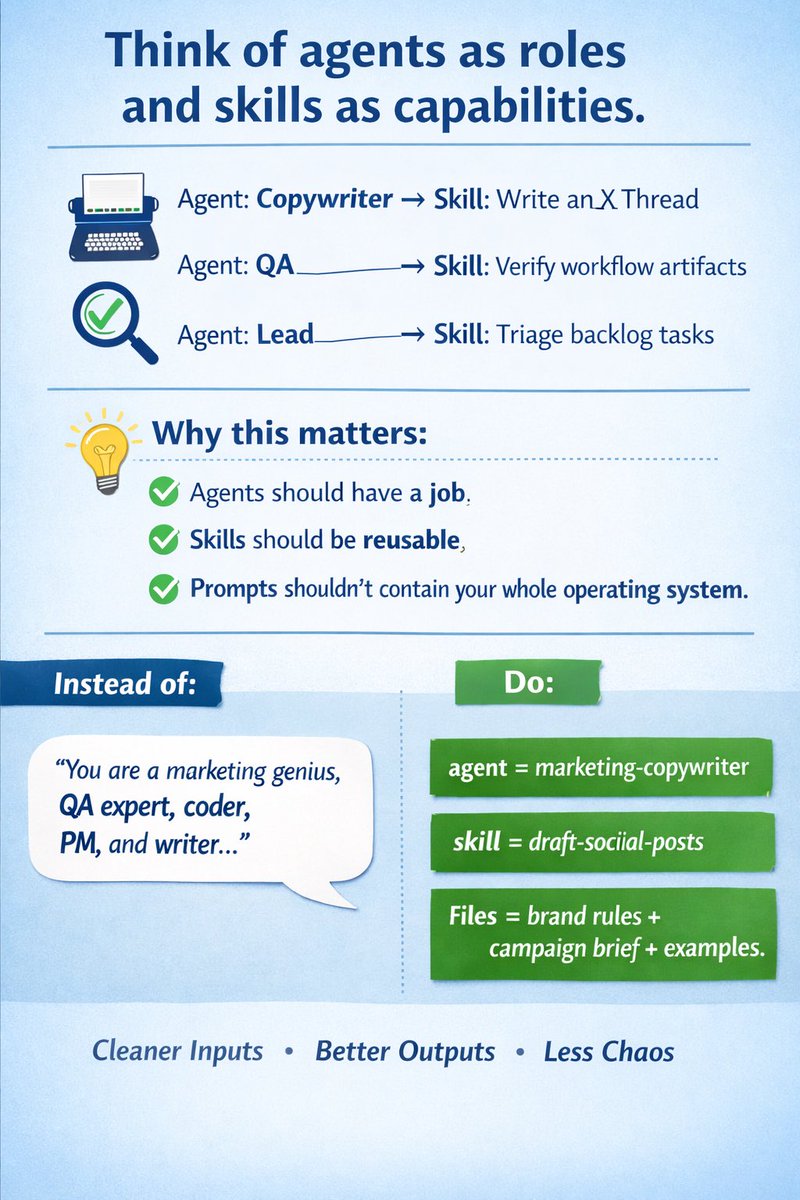
Think of agents as roles and skills as capabilities.
Example:
• Agent: copywriter
• Skill: write an X thread
• Agent: QA
• Skill: verify workflow run artifacts
• Agent: lead
• Skill: triage backlog and assign next task
Why this matters:
1. agents should have a job
2. skills should be reusable
3. prompts should not contain your whole operating system
Small example:
Instead of:
• “You are a marketing genius, QA expert, coder, PM, and writer…”
Do:
• agent = marketing-copywriter
• skill = draft-social-posts
• files = brand rules + campaign brief + examples
Cleaner inputs.
Better outputs.
Less chaos.
Think of agents as roles and skills as capabilities.
Example:
• Agent: copywriter
• Skill: write an X thread
• Agent: QA
• Skill: verify workflow run artifacts
• Agent: lead
• Skill: triage backlog and assign next task
Why this matters:
1. agents should have a job
2. skills should be reusable
3. prompts should not contain your whole operating system
Small example:
Instead of:
• “You are a marketing genius, QA expert, coder, PM, and writer…”
Do:
• agent = marketing-copywriter
• skill = draft-social-posts
• files = brand rules + campaign brief + examples
Cleaner inputs.
Better outputs.
Less chaos.
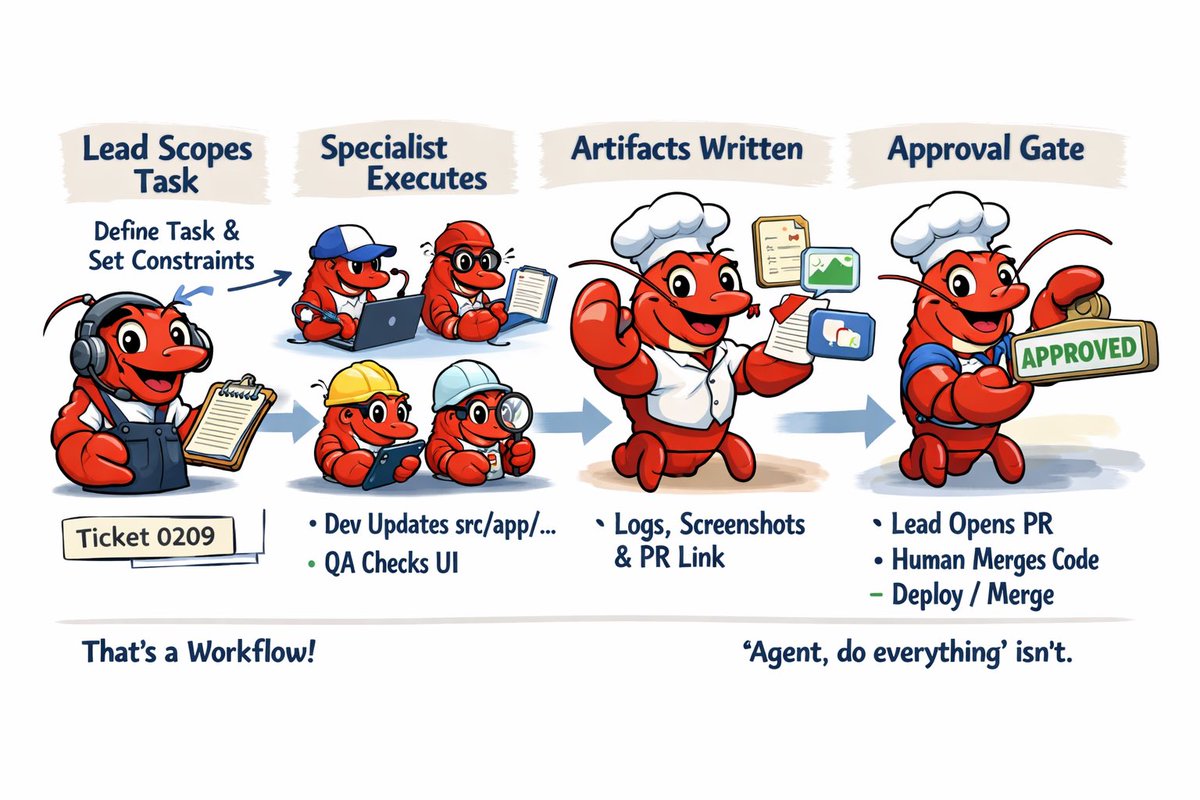
A team workflow should look like work moving through roles, not one giant prompt.
Simple version:
1. Lead scopes the task
• defines the ask
• sets constraints
• points to files/tickets
2. Specialist executes
• dev writes code
• writer drafts copy
• analyst researches
• QA verifies
3. Artifacts get written
• ticket updates
• logs
• run outputs
• screenshots
• PR links
4. Approval gate happens if needed
• publish / deploy / merge / send
Small example:
• Lead creates ticket 0209
• Dev updates src/app/...
• QA checks UI + screenshots
• Lead opens PR
• Human approves merge
That’s a workflow.
“Agent, do everything” isn’t.
Try @clawrecipes for your @openclaw. You won’t regret it.
https://t.co/9eaJkCHk5D
Skills are great when agents use them.
What if they don’t? What if they ignore the skill file?
You can’t protect your OpenClaw with skills. You can’t guarantee behavior with skills.
Same applies to agent files. This is why you need workflows. Workflows create a structure your agents can’t ignore.
Start creating workflows in ClawKitchen, https://t.co/6WdjLbGCQh
Most AI systems fail because they treat all memory like one bucket.
ClawRecipes uses a better model that splits memory into layers:
1. Assistant continuity
• personal preferences
• tone
• repeated user habits
2. Team coordination
• what’s in progress
• blockers
• handoffs
• status notes
3. Shared team knowledge
• docs
• policies
• decisions
• reusable references
4. Role working memory
• what a specific agent needs right now
• current ticket
• current plan
• temporary notes
Small example:
• MEMORY .md → “Daniel prefers ClawRecipes before OpenClaw”
• notes/status.md → “PR #143 opened, waiting review”
• shared-context/priorities.md → “Focus on workflow reliability this week”
• ticket comments → “QA failed because runId didn’t match canonical folder”
One blob of memory becomes noise.
Layered memory becomes usable.
https://t.co/UHqW7jEAgQ