I've mass consumed a lot of LLM research papers I could find. For my coding purposes.
One stat broke my brain. There is a reason that the AI that wrote the bug can't find the bug easily, or "Try again" doesn't properly work.
Only 5% of your AI's "attention" actually reads your code. The other 95%? Just keeping the grammar nice.
Here's why that changes everything: 🧵
https://t.co/HRAQ2eMUZc
Continuing the demystification of LLM architecture. A 10 part series that I am writing to document and test my knowledge on LLM's as well as to develop an intuition by articulation. #contextlayer
I just published The Napkin Series #2: Understanding Transformers/LLMs without code and calculus. https://t.co/EfMIZiYHJI
Meta Engineering published a paper on context engineering and based on the research, they achieved 5-54% better AI code generation through structured context. These are the findings you can apply today and test(1/12) :
https://t.co/F0aCHlftCj
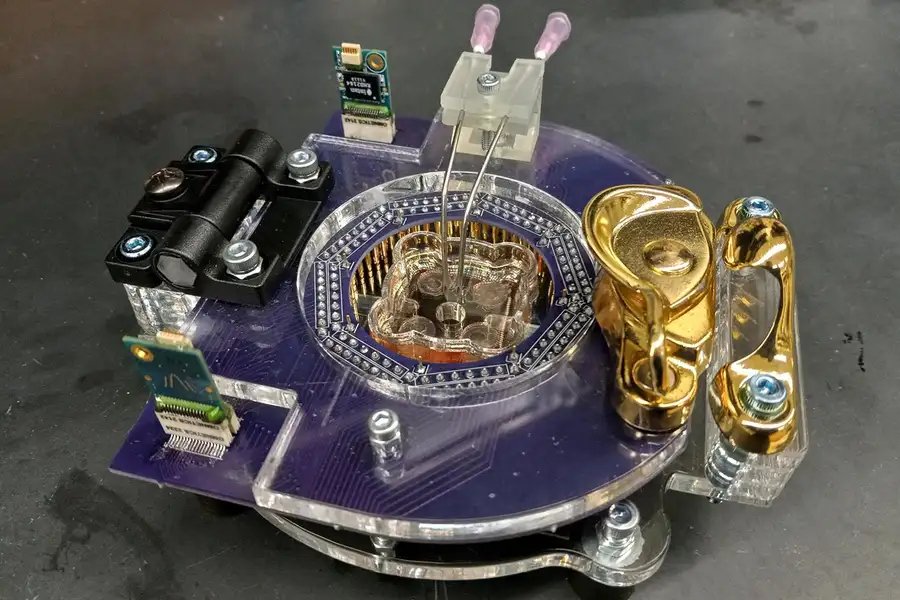
I have just been informed that one of the teams competing in the AI Grand Prix is using a biological computer built with cultured mouse brain cells to control their drone.
At first look, this seems against the spirit of the software-only rules. On second thought, hell yeah.
@theonejvo@moltbook@karpathy@supabase Yeah AI Agents creating a "secret language" and new "religions" while exposing the API keys looks like a cyberpunk fever dream.
On December 8 and 10, 2025, a sequence of commands produced by an LLM was sent from NASA to the Perseverance rover- 362 million kilometers between Earth and Mars, using the Deep Space Network. For the first time ever, they had been written by an AI. The Claude code that sat inside NASA's Jet Propulsion Laboratory (JPL) had plotted the route for Perseverance to navigate an approximately 400-meter path through a field of rocks on the Martian surface.
The first AI-planned drive on another planet.
It was a success.
In March 2025, nine months before, Claude 3.7 Sonnet spent almost 80 hours stuck in a place called Mt. Moon in a Pokémon game. An 8-bit game. The model kept walking into walls and couldn't find ladders because it couldn't "understand a few hundred pixels."
And now, the same company's AI is analyzing HiRISE orbital imagery, processing stereo terrain data, identifying boulder fields, and mapping sand ripples across Jezero Crater.
Plotting 400 meters of waypoints through Martian rock fields.
https://t.co/75VXxYOOHK
Finding #3: White lies are explicitly banned
Humans and most LLM's (Looking at you, ChatGPT !) use social lubricant lies constantly. Claude cannot.
The constitution demands Claude be truthful, calibrated, and non-deceptive at all times.
The phrase they use: "diplomatically honest rather than dishonestly diplomatic."
Why does this matter?
It's about what they call "epistemic autonomy" your right to form beliefs based on accurate information.
Claude won't flatter you. Won't tell you what you want to hear.
You get the truth, even when it's uncomfortable.
Anthropic just released Claude's full 84 page "Constitution", essentially the soul of their AI.
I skim read through it. Here are the 3 most fascinating revelations:
https://t.co/sRKAoR5hSA
#2: The Principal Hierarchy - Safety hardcoded above everything
Claude's values are ranked in strict priority order:
1.Broad Safety (don't undermine human oversight)
2.Broad Ethics (be honest, avoid harm)
3. Anthropic's Guidelines
4. Helpfulness
Notice what's LAST.
The implication? Human control is architecturally baked into the system.
Claude won't become a "rogue agent" prioritizing its own goals, or even its own sense of ethics over human safety. This prevents scenarios like assisting with bioweapons or bypassing oversight, even if Claude "believed" it was right.